Pasta al Forno Napoletana
Baked Pasta with Meatballs and Provola — Rich, Hearty, and Irresistible
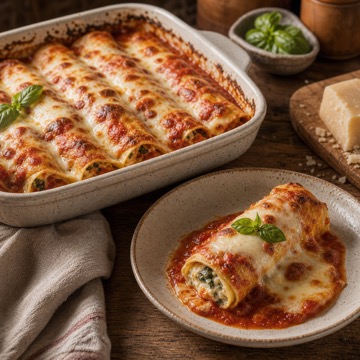
The rich baked pasta my mother used to make for Sundays and holidays. Fried meatballs the size of hazelnuts, smoked provola in cubes, creamy ricotta loosened with tomato sauce, all assembled in a baking dish with tortiglioni and finished under the grill. Another version of the same idea as the mafalde con ricotta — but richer, more assembled, and more of an occasion.
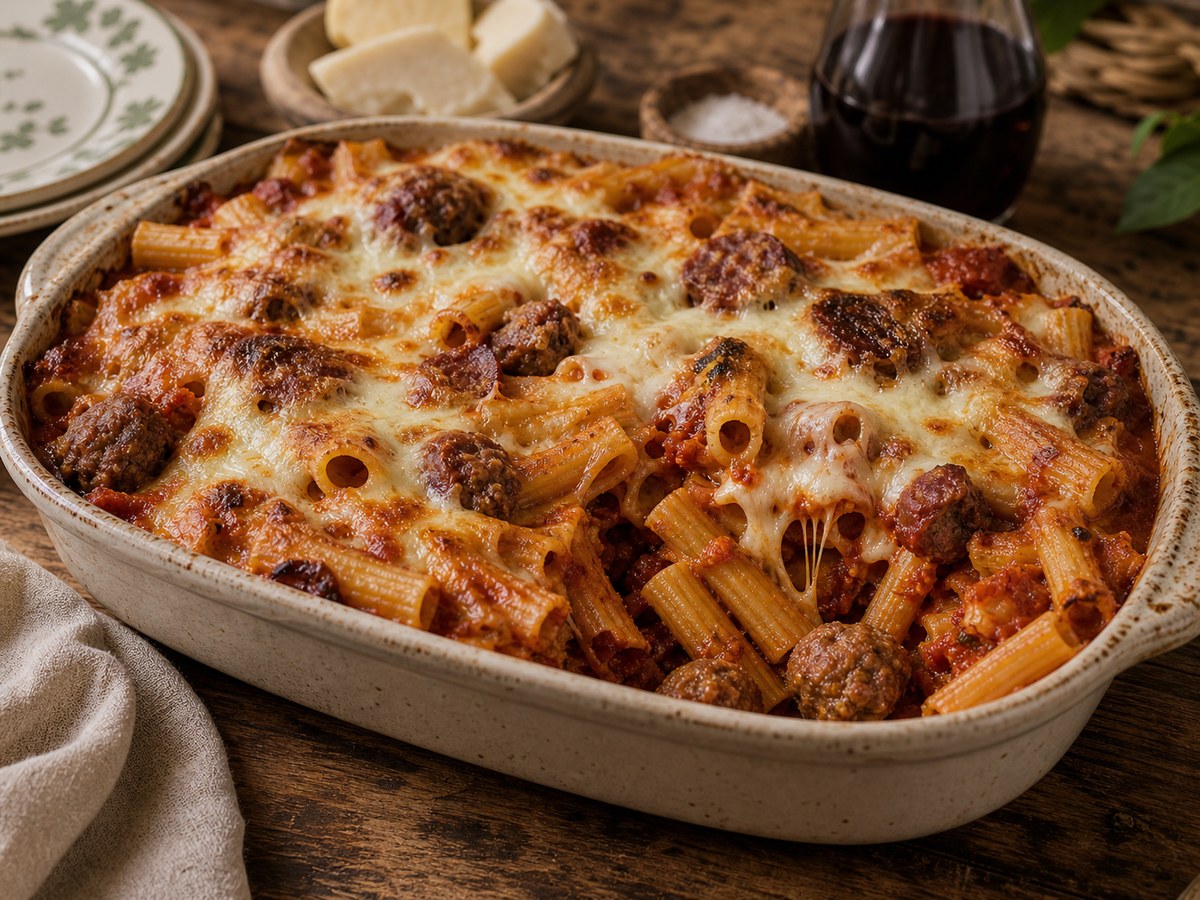
The pasta al forno was a Sunday or holiday dish — not something that appeared on a Tuesday. It required the small fried meatballs, which took time; the smoked provola dried in the fridge overnight so it would melt properly rather than release too much water; the ricotta cream, the assembled layers, the oven. It was a production, and it arrived at the table as one. The baking dish came out golden on top, the cheese still bubbling at the edges, the smell of fried meatball and smoked provola and tomato all fused together. You let it rest fifteen minutes before serving — this was important and always respected — and the first serving from the corner of the dish, where the crust was crispiest and the layers densest, was the one everyone wanted.
This dish belongs to the Neapolitan tradition of the timballo — baked pasta preparations assembled in layers or in a mold, more elaborate than a simple pasta al sugo and more festive by definition. The version described here is not the full timballo with its crust pastry shell, but it shares the logic: pasta, sauce, ricotta, small meatballs, provola, all combined in a baking dish and unified by the oven. The tortiglioni — the thick ridged pasta tubes — hold up to baking better than thinner shapes, absorbing the sauce without becoming mushy. The meatballs are made very small, about the size of a hazelnut, so that every forkful has one rather than the meatballs being a separate encounter.
Let the provola dry in the fridge overnight before using — cut it into cubes the day before and leave it uncovered on a plate in the refrigerator. Fresh smoked provola contains a lot of water; if used directly, it releases this water during baking and makes the assembled pasta wet and loose. Dried overnight, it melts cleanly into the dish without flooding it. This is the tip on the infographic and it is correct. The difference is significant.
The recipe — serves 6–8
For the pasta and sauce
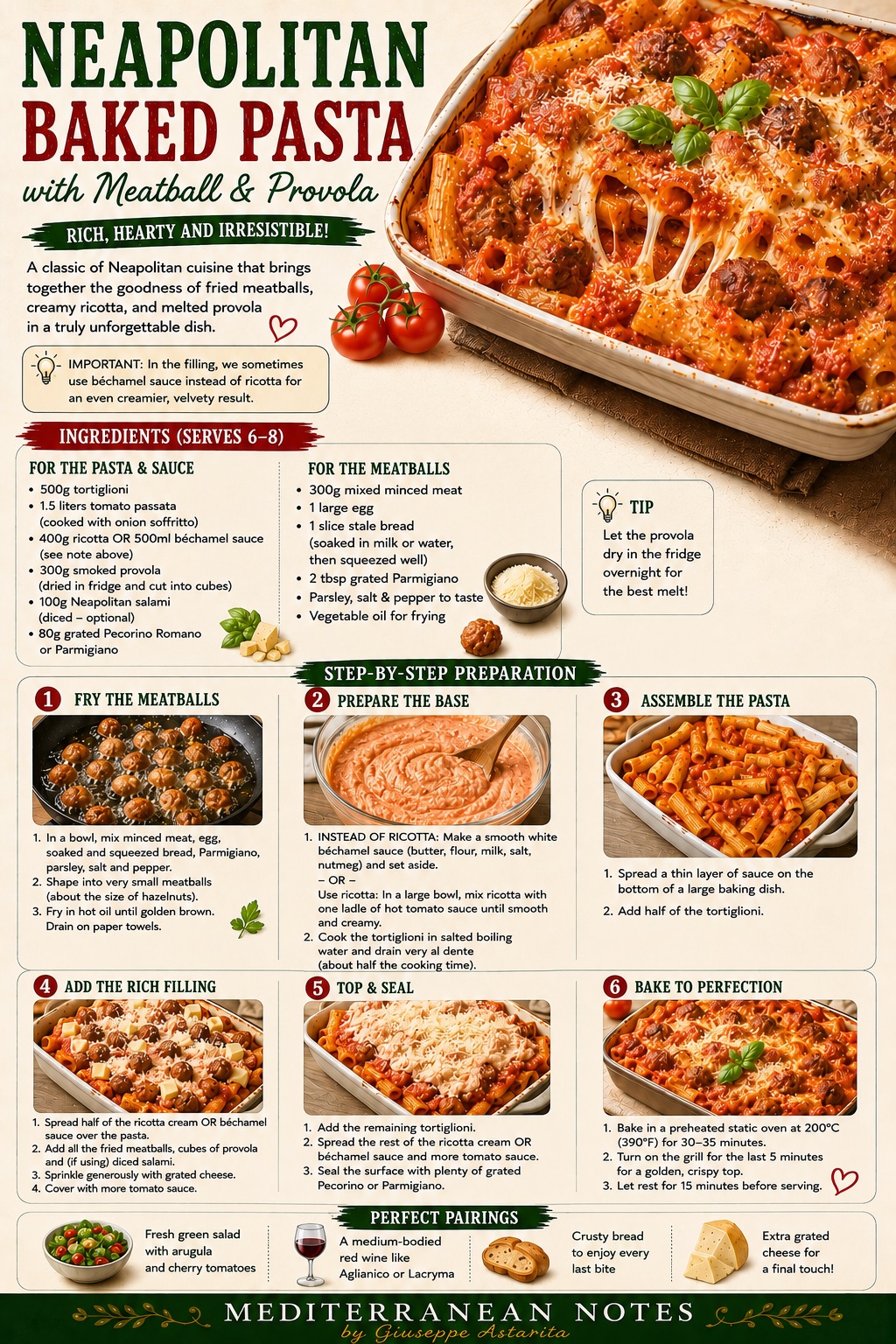
Pasta al forno napoletana — ricca, sostanziosa, irresistibile. Click to enlarge.
500 gTortiglioni — or rigatoni, paccheri, or any large ridged tube
1.5 litresTomato passata, cooked with a soffritto of onion and olive oil
400 g, freshRicotta — loosened with hot tomato sauce into a cream
300 g, dried overnight in fridgeSmoked provola — cut into cubes the day before, left uncovered in the fridge
80 g, freshly gratedPecorino Romano or Parmigiano — for layering and the top crust
100 g, diced — optionalNeapolitan salami — adds a deeper, slightly spiced layer
For the small meatballs (polpettine)
300 gMixed minced meat — beef and pork combined
1 largeEgg
1 slice, soaked and squeezed dryStale bread — soaked in milk or water
2 tbspGrated Parmigiano
to tasteParsley, salt and pepper
for fryingVegetable oil — the meatballs are fried, not baked raw
1
Make the meatballs. Combine the minced meat, egg, soaked bread (well squeezed), Parmigiano, parsley, salt, and pepper. Mix thoroughly. Shape into very small balls — about the size of a hazelnut. Fry in hot vegetable oil until golden brown all over. Drain on paper towels. Set aside.
The meatballs must be fried before assembling — not added raw to the baking dish. Frying seals the surface, gives them color and flavor, and ensures they hold their shape during the oven stage rather than dissolving into the sauce.
2
Make the tomato sauce. Cook the passata with a soffritto of onion in olive oil for 20–25 minutes until thick and concentrated. Season well. Reserve most of it for assembly; use one generous ladle to make the ricotta cream.
3
Make the ricotta cream. Place the ricotta in a wide bowl. Add one ladle of hot tomato sauce and stir vigorously until smooth and creamy — the same technique as the
mafalde con ricotta. The hot sauce loosens the ricotta and produces a pale pink cream.
Béchamel variation: the ricotta cream can be replaced with béchamel — 600 ml made with 50 g butter, 50 g flour, and 600 ml warm whole milk, seasoned with nutmeg. The béchamel version sets firmer in the oven, slices more cleanly, and has a slightly more neutral, creamy flavor. Both versions are traditional; the choice is a matter of family habit and what is in the kitchen.
4
Cook the pasta. Boil the tortiglioni in well-salted water until very al dente — about half the package cooking time. They will finish cooking in the oven. Drain and toss with a ladle of tomato sauce so they don't stick together.
5
Assemble. Preheat oven to 200°C static. Spread a thin layer of tomato sauce on the bottom of a large baking dish. Add half the tortiglioni. Spread half the ricotta cream over the pasta. Add all the fried meatballs, the provola cubes, and the salami if using. Sprinkle generously with grated cheese. Cover with more tomato sauce. Add the remaining tortiglioni, the rest of the ricotta cream, more tomato sauce. Seal the surface with a generous layer of grated Pecorino or Parmigiano.
6
Bake. Bake at 200°C for 30–35 minutes. Then turn on the grill for the last 5 minutes to achieve a golden, slightly crispy top crust. Remove from the oven and let rest for 15 minutes before serving. The rest is not optional — the dish needs to settle before it can be cut and served without collapsing. The corner pieces, where the crust is crispiest, will be the first requested.
One important variation: the ricotta cream can be replaced entirely by béchamel — the same white sauce used in the timballo di tagliolini. The béchamel version produces a richer, creamier result with more body — the white sauce sets firmer in the oven, the layers hold together more cleanly when sliced, and the flavor is slightly more delicate and neutral against the tomato and provola. The ricotta version is lighter and has more of its own distinct flavor. Both are correct; both are traditional. Which version appeared on the table depended on who was making it and what was in the kitchen.
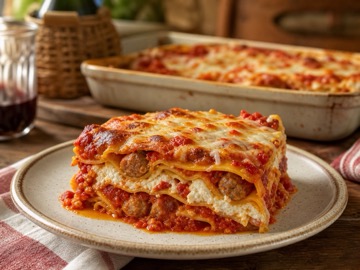
The mafalde is the lightest and quickest: twenty minutes, no meatballs, no oven beyond the final grill. The pasta al forno is the richest and most involved: fried meatballs, dried provola, layers, an hour of total work, a Sunday or holiday occasion. The lasagna is the most elaborate of all: pasta sheets, béchamel, ragù, the full production. Each occupies its correct position in the spectrum — from the quick Tuesday version to the Sunday one to the special occasion one. They are the same idea at different levels of investment and occasion.
My mother made this on Sundays and on the major holidays — the kind of dish that filled the kitchen with the smell of fried meatballs in the morning and arrived at the table as something clearly special. The baking dish came to the table still in its dish, the top golden, the edges still slightly bubbling. You waited fifteen minutes. Then the first corner piece.
Domenica a Napoli —
the baking dish comes to the table. Everyone waits. Then the corner.