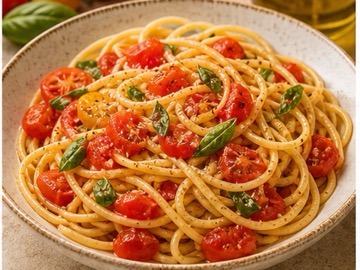
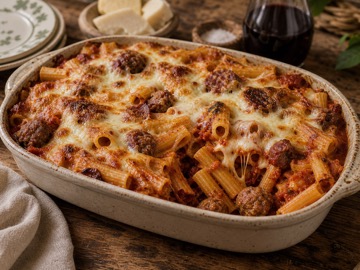
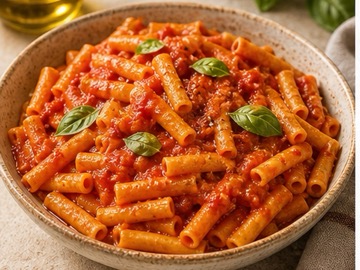
Mafalde con Ricotta e Pomodoro
Manfredi with Ricotta — A Napoli Sunday Classic
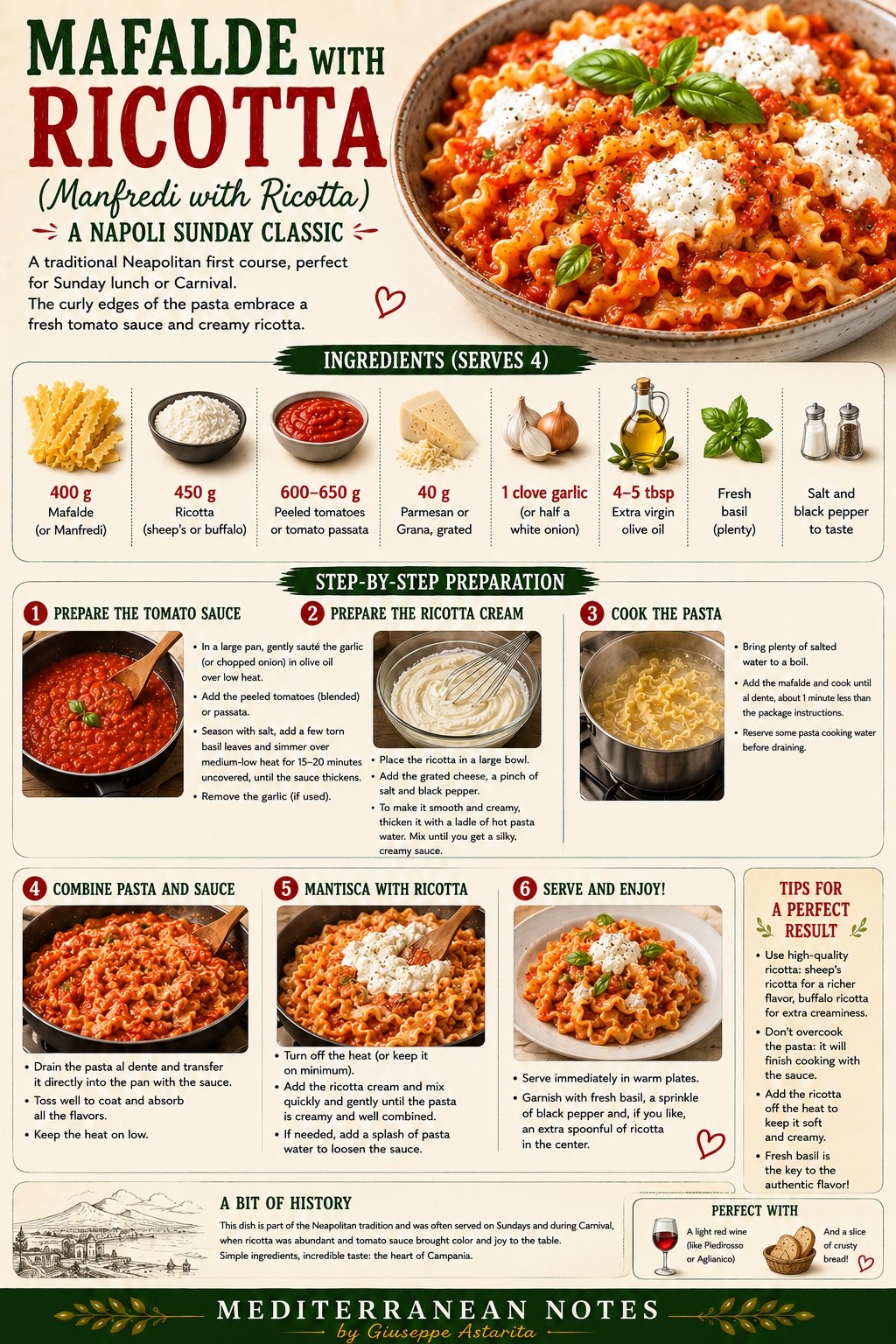
A traditional Neapolitan first course, perfect for Sunday lunch or Carnival. The mafalde — also called manfredi, the long ruffled pasta with wavy edges on both sides — embraces the fresh ricotta and tomato sauce in a way that flat pasta cannot. Simple ingredients. Incredible taste. The heart of Campania.
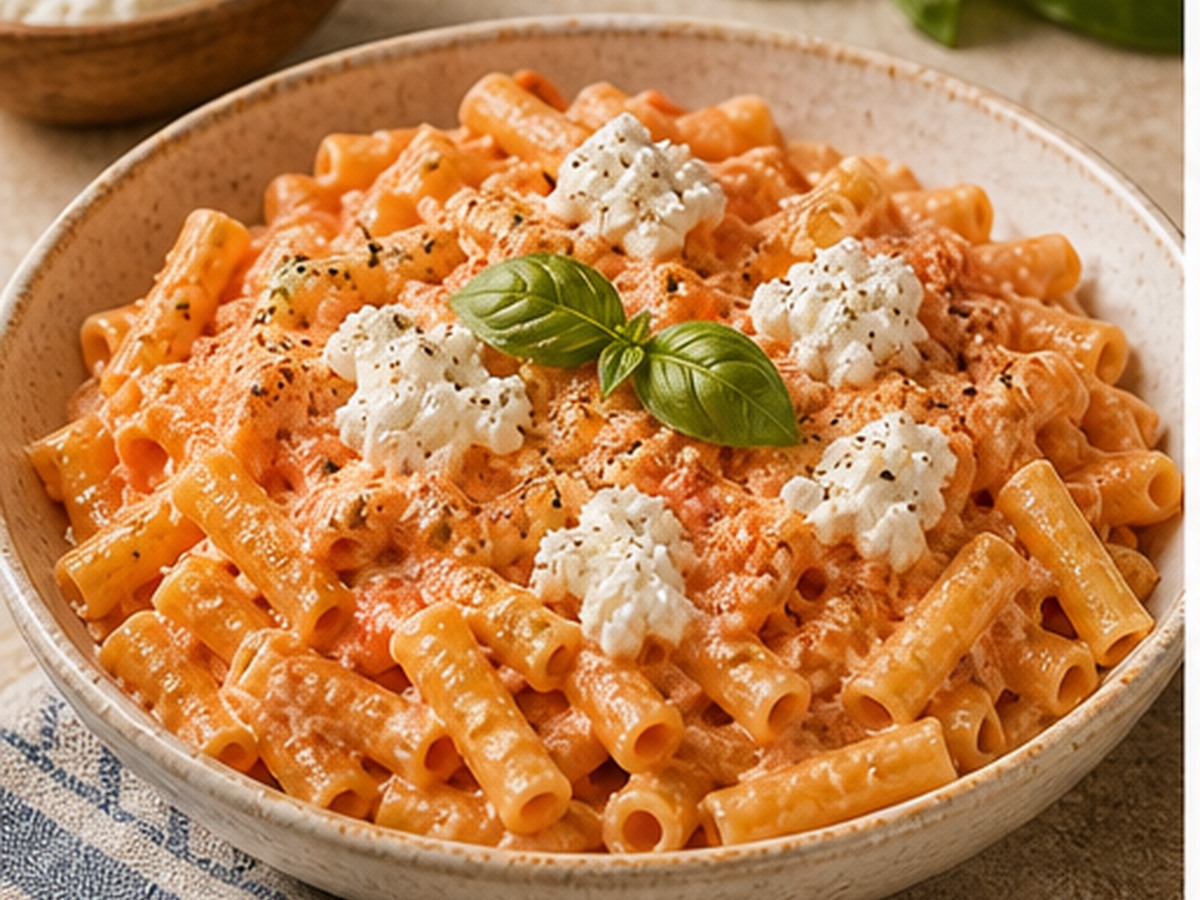
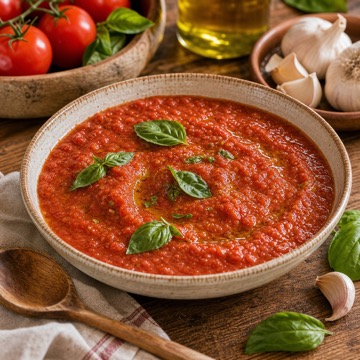
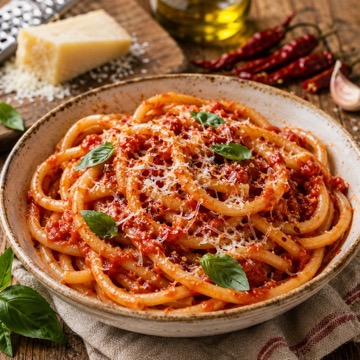
This dish is part of the Neapolitan Sunday tradition and was often served during Carnival — the period before Lent when ricotta was abundant, tomato sauce brought color and joy to the table, and the combination of the two in a single bowl was considered exactly right for a festive but unfussy first course. The ricotta is not used as a topping here: it is loosened with the hot tomato sauce until it becomes a creamy, pale pink coating that clings to the pasta. Then the remaining red sauce is added on top — both sauces visible in the bowl, the dish arriving at the table already beautiful before anyone touches it.
The mafalde — named after Queen Mafalda of Savoy, the daughter of King Vittorio Emanuele III, whose crown the ruffled edge was said to evoke — is the traditional pasta for this preparation in Naples, where it is also called manfredi. The wavy edges are not decorative: they hold more sauce than flat pasta would, the ruffles catching and retaining the ricotta cream in their folds. In the absence of mafalde, other curly or textured shapes work — riccioli, fusilli, reginelle — but the long format of the mafalde is the correct one, the shape that belongs to this dish by tradition and by logic.
The recipe — serves 4
Fresh ricotta is technically not a cheese but a whey protein concentrate — it is made from the whey left after cheese production, heated again (hence ri-cotta: re-cooked) to precipitate the remaining whey proteins, primarily lactalbumin and lactoglobulin. These whey proteins have a different structure from the casein that makes up most of aged cheese: they are globular proteins that denature easily under heat. When hot tomato sauce is added to ricotta and the mixture is stirred vigorously, two things happen simultaneously. The heat begins to denature the whey proteins very slightly, making them more fluid, and the mechanical stirring breaks up the protein aggregates into smaller particles that distribute evenly through the tomato liquid. The fat from the ricotta and the olive oil in the tomato sauce are simultaneously emulsified by the mechanical action. The result is a stable, creamy emulsion — the pale pink sauce — that is qualitatively different from simply mixing cold ricotta with cold sauce, which remains grainy because the proteins don't distribute.
Sheep's milk ricotta contains significantly more fat than cow's milk ricotta — typically 14–20% fat versus 8–12% — and a more complex flavor profile due to shorter-chain fatty acids (including caprylic and capric acids) characteristic of small ruminant milk. These fatty acids contribute the characteristic slight tang and richness that makes sheep's milk ricotta the preferred choice for dishes where it plays a central flavor role, as here. Buffalo milk ricotta — where available — has even higher fat content and a pronounced creaminess from the higher proportion of glycerides with medium-chain fatty acids. The tomato sauce provides lycopene, which is more bioavailable from cooked tomatoes than raw; the olive oil that carries the sauce further enhances lycopene absorption, as it is fat-soluble.
The Neapolitan Sunday table in Carnival season had this as the first course — the ricotta was seasonal, abundant, and inexpensive; the tomato sauce was the same one that appeared in various forms throughout the week; the mafalde were the shape that tradition assigned to the combination. Simple ingredients, incredible taste: the heart of Campania expressed in a bowl that arrives at the table already beautiful, the red and pink visible together, the fresh basil on top. A light red wine alongside — a Piedirossa or an Aglianico. And a slice of crusty bread, always.
Mafalde con ricotta — domenica a Napoli.
Simple ingredients, incredible taste.