Pane, burro e marmellata: the Italian breakfast that needs no recipe
For years this was breakfast. Fette biscottate or fresh bread — we never toasted the bread, we didn't toast it then. Good butter spread generously. Good jam on top. Three ingredients that have been the Italian morning since before anyone can remember, and that still are.
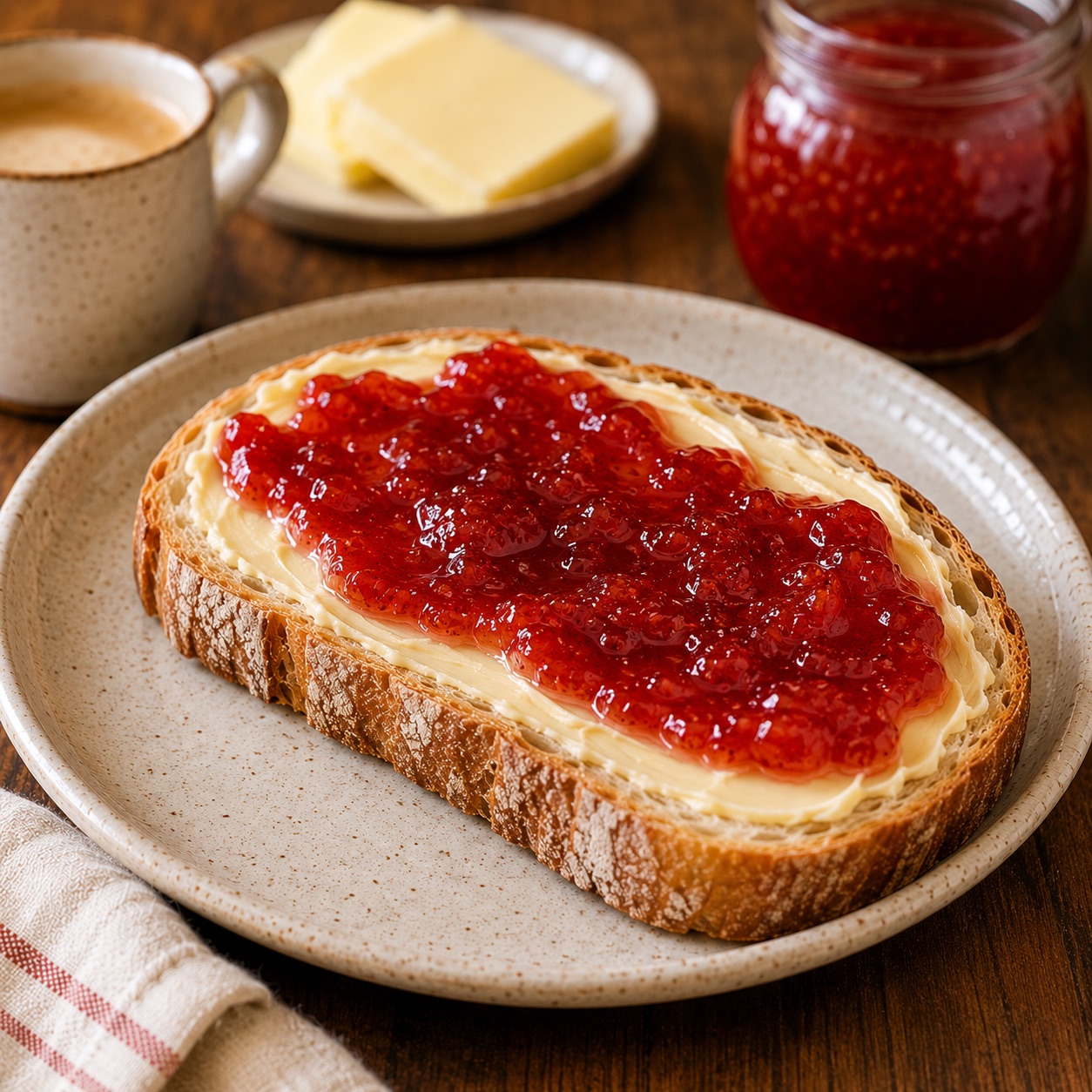
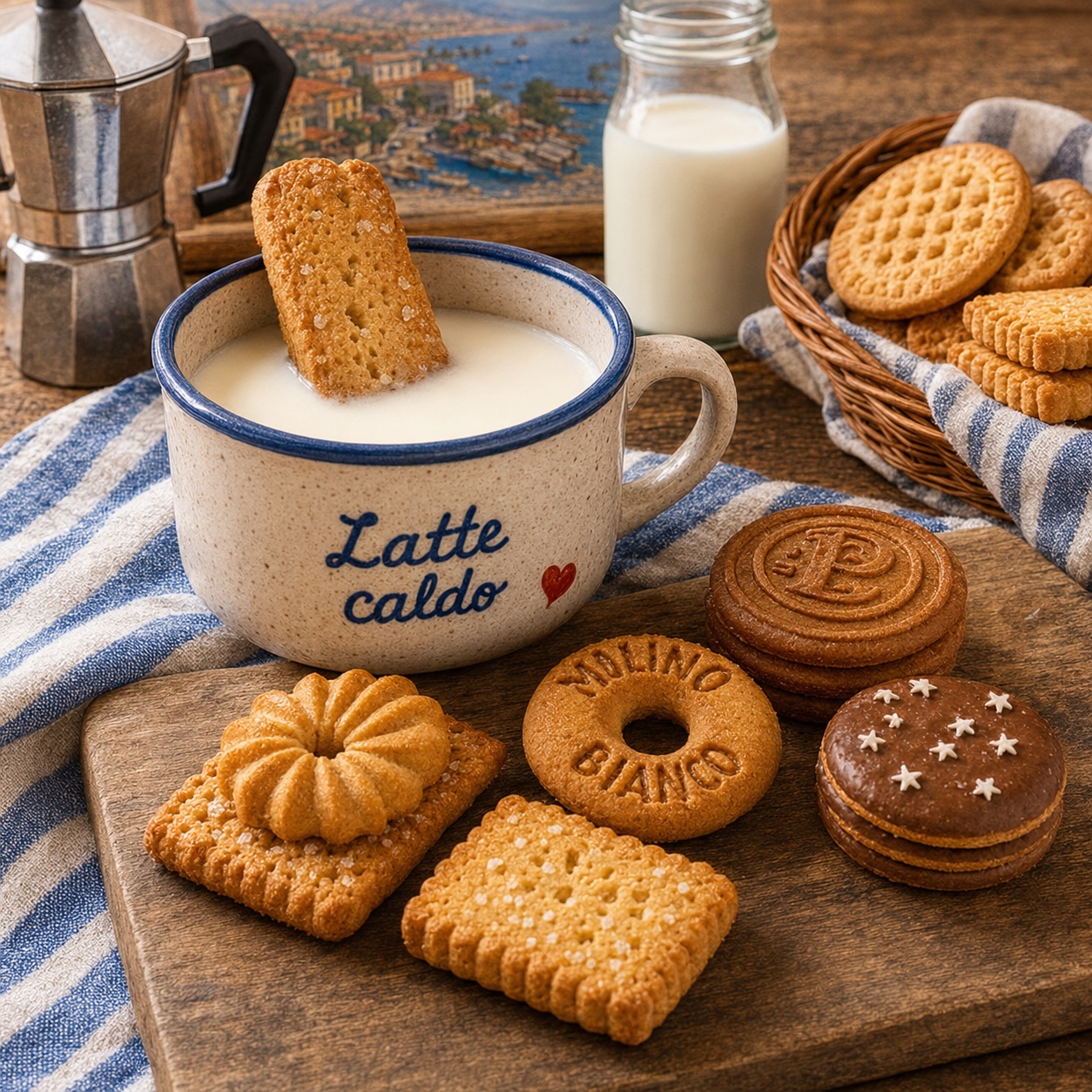
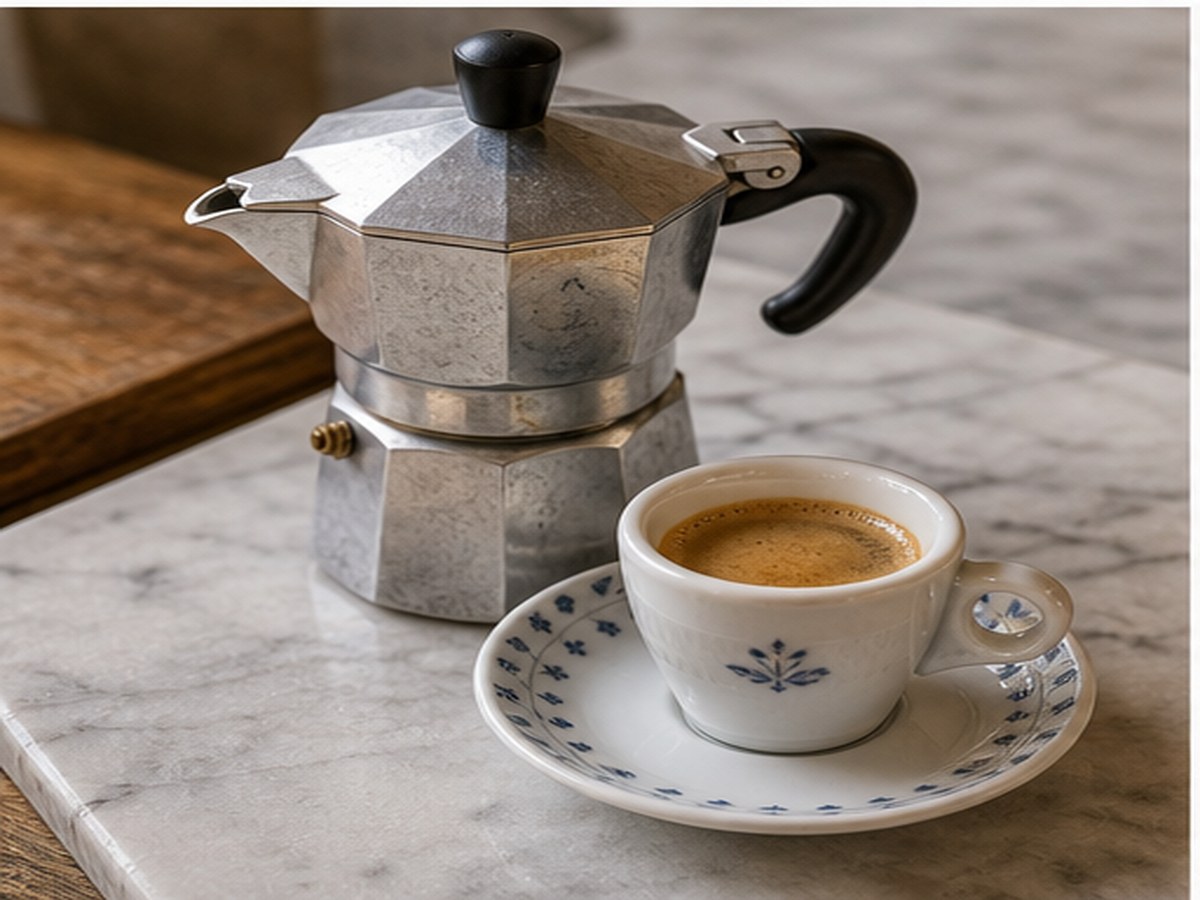
There is no recipe here. There is only the assembly of three things — bread, butter, jam — and a few observations about what makes the difference between a good version and a forgettable one. The Italian breakfast tradition is famously simple: a coffee drink and something sweet to dip in it or eat alongside it, consumed quickly, usually standing at the bar or at the kitchen counter before the day begins. The cornetto is the bar version. The pane burro e marmellata is the home version. They belong to different moments — the bar is a quick stop; the home breakfast is the table with the family in the morning before school, before work, the few minutes when the kitchen is quiet and warm and the day has not yet made demands.
Bread in Campania was not something you made at home. There was no need. At every corner, or nearly so, there was a bakery — a forno or panificio — that produced fresh bread throughout the day and that sold it at prices low enough that bread was simply always present in the house. The standard loaf was pane casareccio — country-style bread, crusty outside, soft and slightly open-crumbed inside, made with durum wheat semolina or a blend, with a flavor that comes from long fermentation and a crust that shatters when you break it. You bought it in the morning, still warm, and brought it home wrapped in paper. This is the bread that belongs to pane burro e marmellata: not a processed sandwich loaf, not anything sliced before purchase, but a proper rustic loaf broken or cut thick at the table.
The fette biscottate — the twice-baked rusks, dry and crisp, sold in long paper-wrapped packets — were the other option and a valid one. They keep indefinitely, they have a crunch that fresh bread cannot replicate, and they are the substrate that allows the butter to soften on top without immediately being absorbed — there is a moment, about ten seconds after the cold butter hits the warm rusk, when both textures coexist in a specific and pleasant way. Many Italian households kept both: fresh bread for the morning, fette biscottate for whenever the fresh bread was finished. The plumcake allo yogurt, already in this collection, was made when neither was available or when someone wanted something more substantial.
The butter was good. Italian butter, particularly northern Italian butter, has a fat content and a flavor that distinguishes it from the generic butter of many other markets — this is what is called European-style butter in the American market, with a minimum 82% fat content compared to the US standard of 80%. The flavor is more pronounced, the texture slightly different at room temperature, the richness more immediate. Spread on fresh bread or on fette biscottate at room temperature, where it softens and pools slightly into the surface without melting to liquid, it is a different experience from cold refrigerator butter spread with difficulty. Butter for breakfast should be at room temperature. This is not a gourmet preference. It is simply how it works.
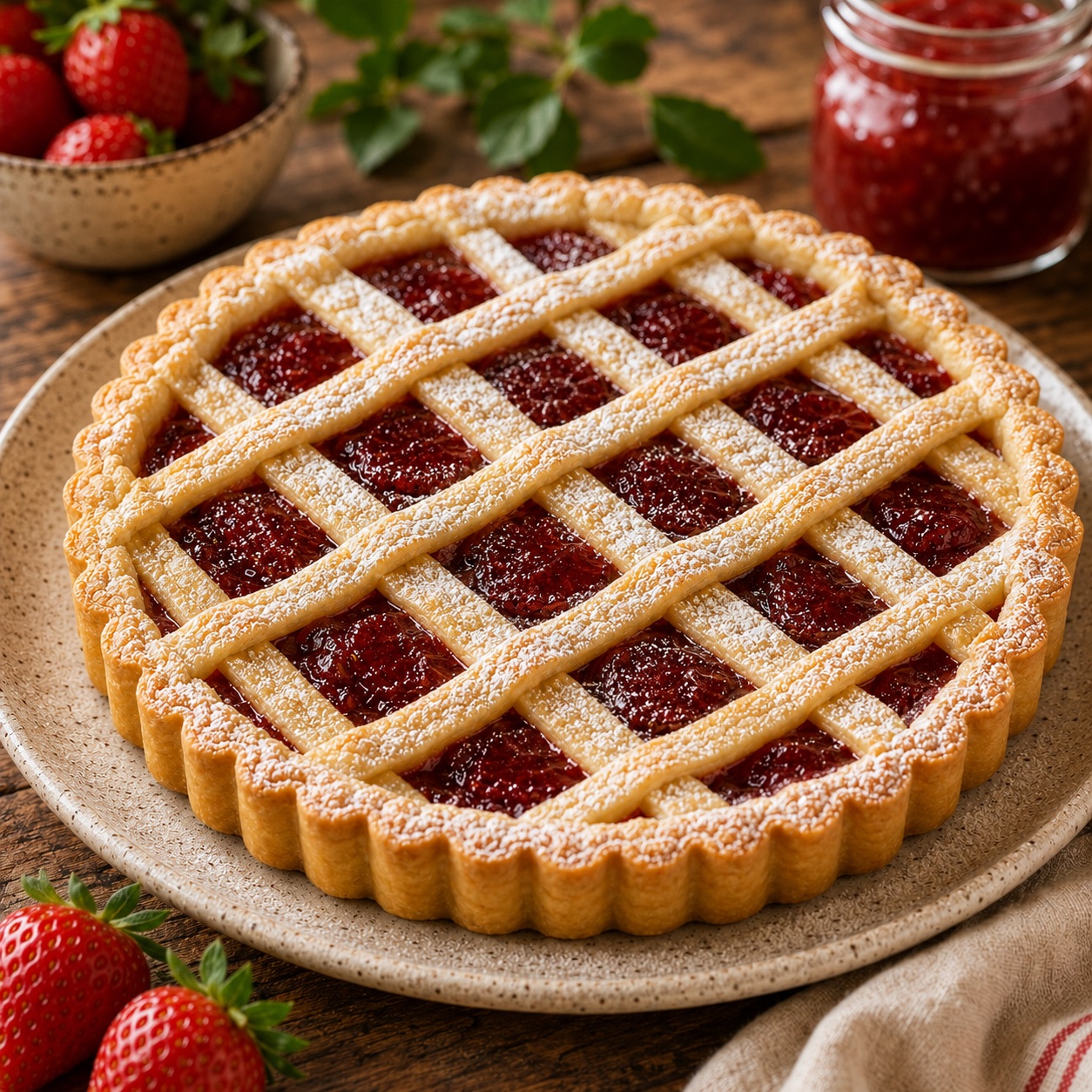
The jam was whatever was in the house. Strawberry most often, or apricot, or the bitter orange marmalade that is perhaps the most traditional Italian preserves choice. The homemade version — from the crostata fragole post earlier in this collection — is obviously better than anything from a jar, but a good commercial jam with high fruit content and low added sugar is perfectly adequate for morning toast. The jam goes on top of the butter, not mixed into it, which produces the visual and textural contrast that is the whole point of the combination.
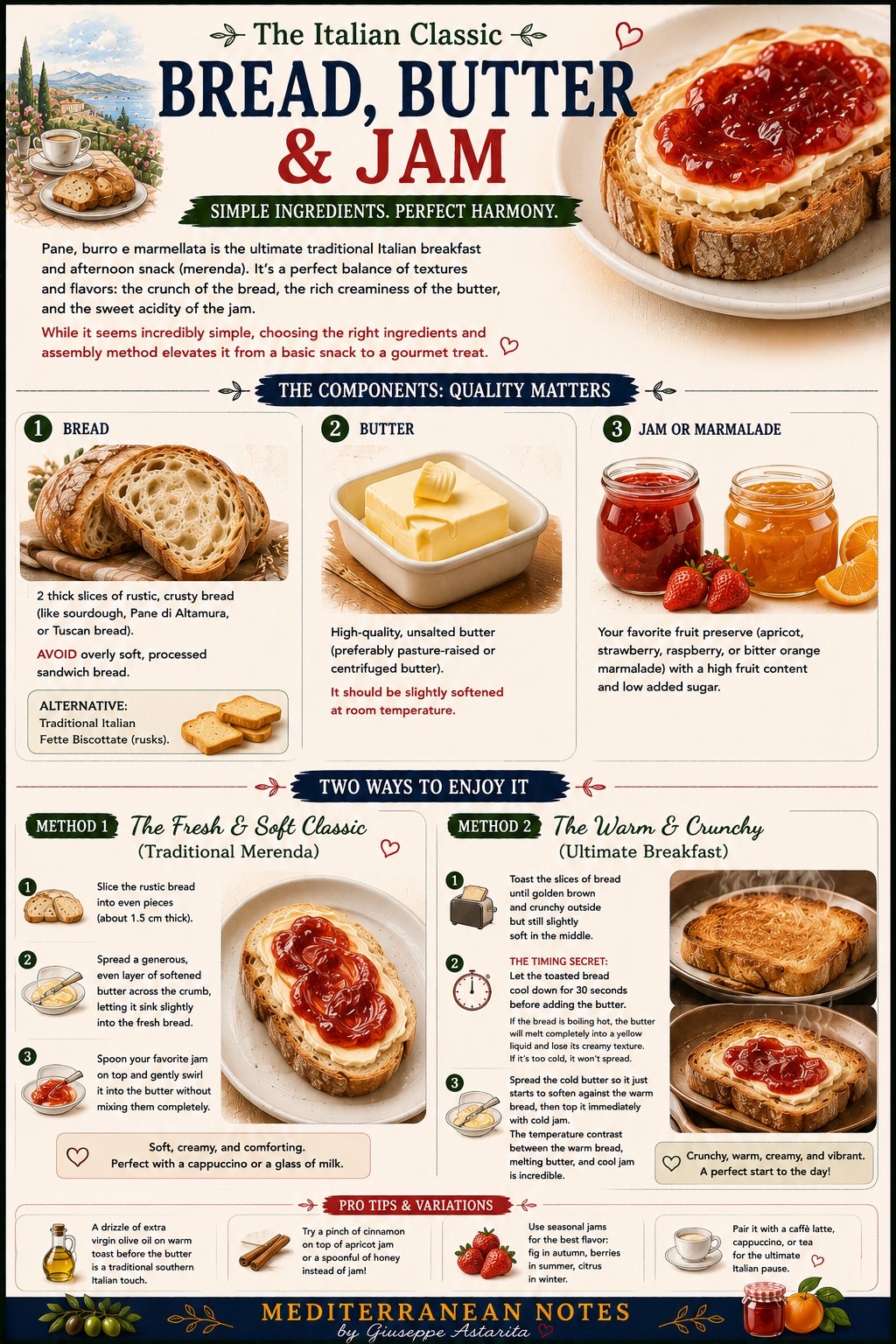
The three components — what actually matters
The bread
Rustic, crusty, dense-crumbed — pane casareccio, pane di Altamura, sourdough, Tuscan bread. Avoid soft sandwich bread: it has no structural integrity and the butter soaks through without resistance. Fette biscottate are the perfectly valid twice-baked alternative. Cut thick — 1.5 cm at minimum. The bread is the platform and it must be able to support what goes on it.
The butter
Good quality, unsalted, at room temperature. European-style (82% fat minimum) if available. Soft enough to spread without tearing the bread, firm enough not to slide off. Applied generously — not a thin scraping but a real layer that creates its own texture against the jam. The butter is not a vehicle for the jam; it is an equal partner in the combination.
The jam
High fruit content, low added sugar — the label should list fruit first, not sugar. Strawberry, apricot, bitter orange marmalade, fig, raspberry: all are correct. Applied on top of the butter without mixing — the jam sits on the butter, the butter sits on the bread, and you eat through all three layers in each bite. Homemade jam, from the crostata fragole post, is better than anything from a jar. But a good jar is perfectly fine.
The two methods — a debate no one wins
The infographic presents two methods: fresh and soft (untoasted — the Campanian way, the way we ate it), and warm and crunchy (toasted — the version that produces the butter-melting moment that many people prefer). Neither is wrong. The untoasted version produces a contrast between the slight resistance of the crust and the softness of the crumb, with the butter remaining visible on the surface. The toasted version produces heat that softens the butter and creates a specific moment — about ten seconds after spreading — where everything is in the right state simultaneously.
Growing up in Campania, the bread was not toasted. It was fresh from the bakery in the morning, still slightly warm from the oven, and you broke or cut it and spread butter and jam directly. The toast version came later, from somewhere else, and is now equally common — but the original domestic version was the fresh bread, unaltered, with everything spread on its room-temperature surface. Both are correct. The one you grew up with is the right one.
A note on nut butter: it was not present. Growing up in Campania in the 1980s and early 1990s, peanut butter did not exist as a household item — it was an American thing, encountered in the crostata fragole post when the first jar arrived from abroad and was met with confusion and then very gradual acceptance. The Italian breakfast in those years was bread, butter, jam, and occasionally Nutella, which is in a category of its own and deserves its own meditation. Nut butter came from somewhere else entirely, much later.
Buona colazione.