Mozzarella in Carrozza
The Neapolitan fried cheese sandwich — crispy outside, molten inside
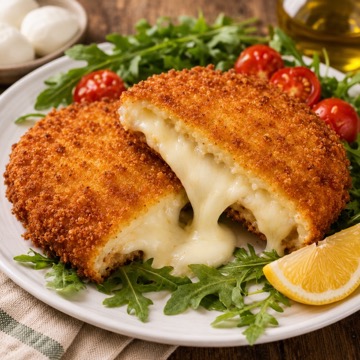
Two slices of crustless white bread with a thick slice of well-drained mozzarella inside, sealed at the edges, dipped in beaten egg and coated in breadcrumbs, fried in hot oil until deeply golden. In Naples this is street food — bought at the friggitoria, wrapped in paper, eaten standing up while it is still hot enough to pull strings. The name means mozzarella in a carriage, which describes exactly the relationship between the cheese and the bread that surrounds it.
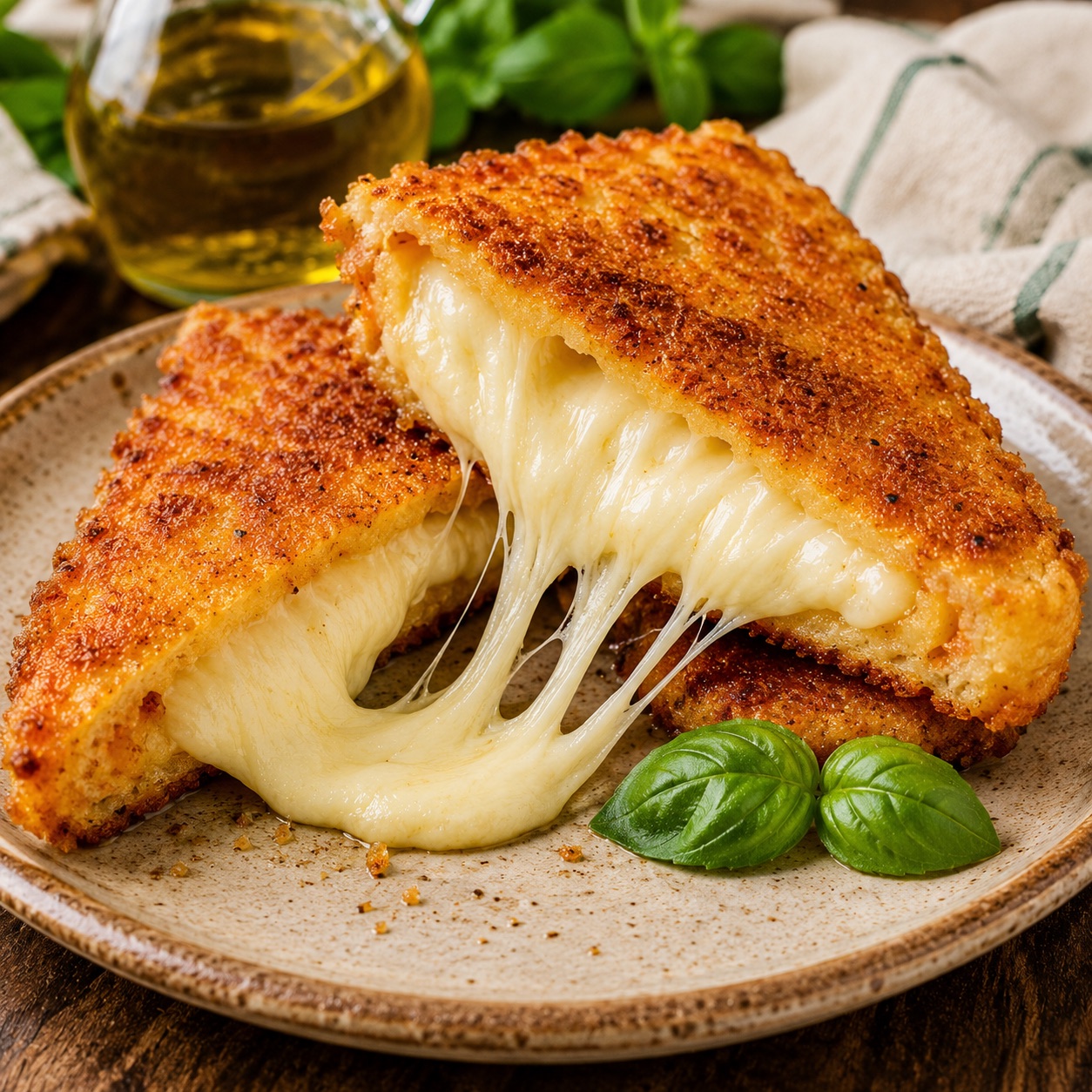
The mozzarella in carrozza is one of the oldest Neapolitan street food preparations, predating the pizza fritta and most other fried street foods by centuries in its basic form. The concept is elementary: good mozzarella, enclosed in bread, fried until the exterior is golden and the interior is completely molten. What sounds simple requires attention in practice, because the enemy of this dish is moisture — the moisture in the mozzarella that, if not properly controlled, steams inside the bread during frying, separates the coating from the sandwich, and produces something soggy rather than crisp. The technique exists to manage this single problem, and every step in the recipe contributes to solving it.
In Campania, this dish has a particular advantage: we have the real mozzarella, and the real mozzarella, when properly drained, produces a result that the rubbery blocks sold elsewhere cannot approach. Fior di latte from a good local dairy — ideally made that morning, or at most the day before — has a freshness and a milky sweetness that survives the frying and arrives at the center of the sandwich still recognizably itself, just molten. Mozzarella di bufala also works, though its higher fat content and stronger flavor require a little more care with the draining. Either way, the mozzarella must be drained for at least thirty minutes in a colander before use, pressed gently between paper towels to remove as much surface moisture as possible, and sliced thickly — too thin and it disappears into the bread, too thick and the sandwich does not close properly at the edges.
The bread is white sandwich bread with the crusts removed. The crustless edge is what gets pressed to seal the sandwich, and it needs to be soft enough to bond with the egg wash that holds everything together. The sealing of the edges is not decorative — it is structural. A poorly sealed mozzarella in carrozza opens in the oil and the cheese escapes into the pan, which is a waste and a mess and the end of that sandwich. Press the edges firmly before dipping and press them again after.
The sealed bread edges serve two functions during frying. First, they prevent the internal steam generated by the melting mozzarella from escaping through the sides, which would both release the moisture that should stay inside the sandwich and potentially break the seal between bread and coating. Second, they provide a continuous barrier that forces the steam to remain contained, creating an internal pressure that keeps the mozzarella in contact with the bread interior rather than pooling at the bottom of the crust. A well-sealed mozzarella in carrozza arrives at the table with the cheese distributed throughout the interior; a poorly sealed one has the cheese pooled at the lowest point and empty bread at the top.
The egg coating does several things simultaneously. The proteins in the egg white coagulate rapidly in hot oil and form a continuous film that adheres to both the bread surface and the breadcrumb layer, bonding them into a unified crust. The lecithin in the egg yolk acts as an emulsifier between the water in the egg and the fat in the oil, helping the coating stay intact rather than separating when it contacts the hot oil. The Maillard reaction between the egg proteins and the reducing sugars in the breadcrumbs produces the characteristic golden color and the nutty, toasted flavor of the crust. All of this happens in the 2–3 minutes of frying, which is why the oil temperature matters: below 170°C the reactions proceed too slowly and the oil penetrates the coating before it has set; above 180°C the exterior darkens before the interior cheese has melted fully.
The recipe
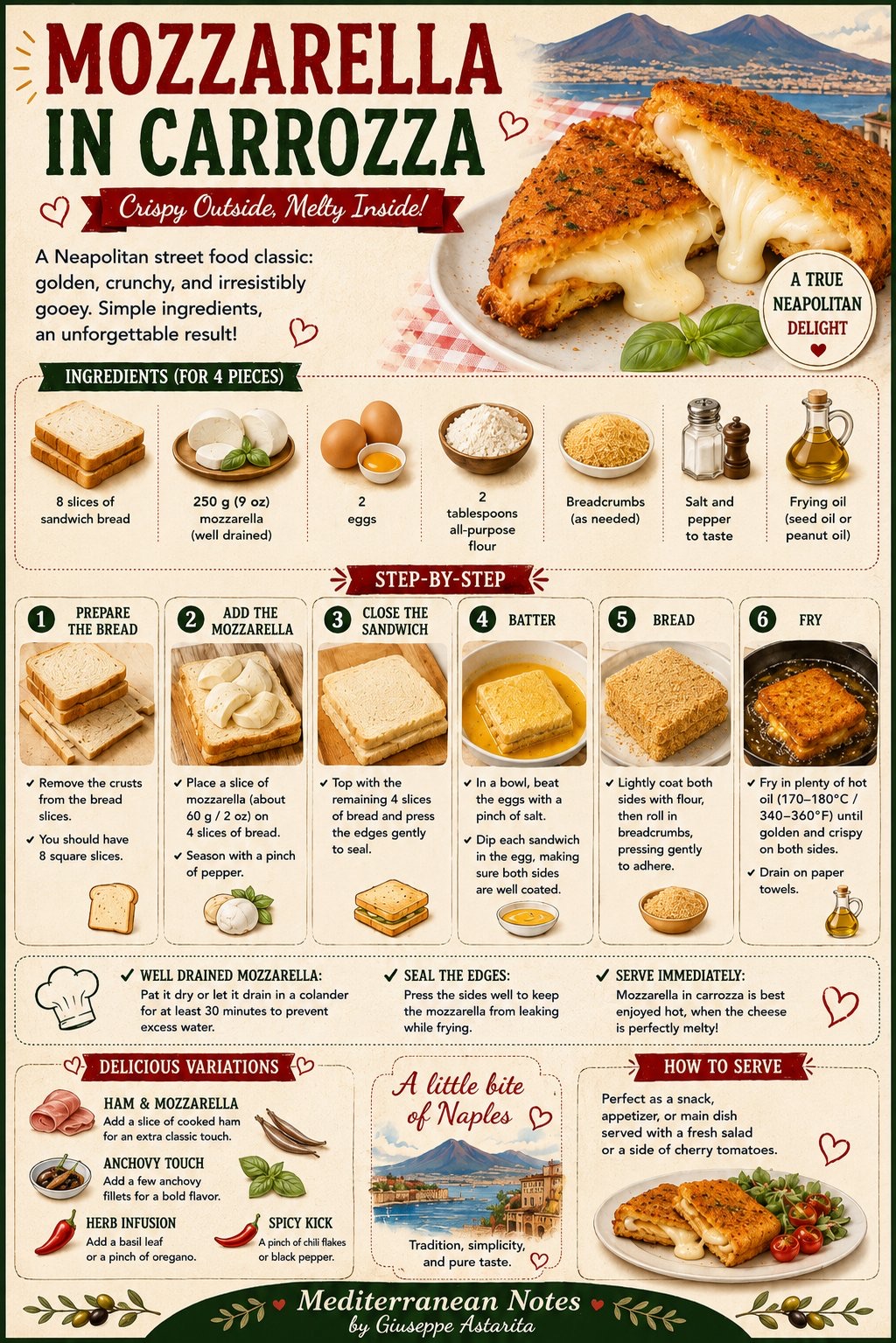
Makes 4 pieces. The draining of the mozzarella is not optional and cannot be shortened. Begin at least 30 minutes before you plan to fry. Work quickly once the sandwiches are assembled — the longer they sit before frying, the more the egg soaks into the bread and the less the crust will crisp.
Variations
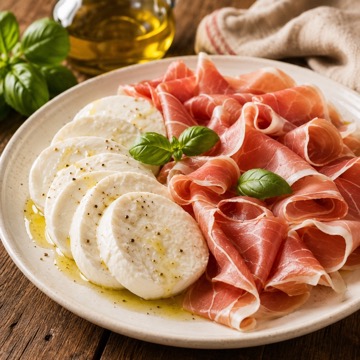
A slice of cooked ham inside with the mozzarella — the simplest and best addition, the ham's salt complementing the milky cheese. A few anchovy fillets laid over the mozzarella before closing — they melt during frying and add an intense, savory depth. A basil leaf, a pinch of oregano, a smear of tomato on the bread before closing. All of these work. The plain version with nothing but mozzarella is still the classic and the test of the technique.
Buon appetito — e mangiatela subito.