Mozzarella alla Milanese
Breaded fried mozzarella -- but in Campania we have the real thing
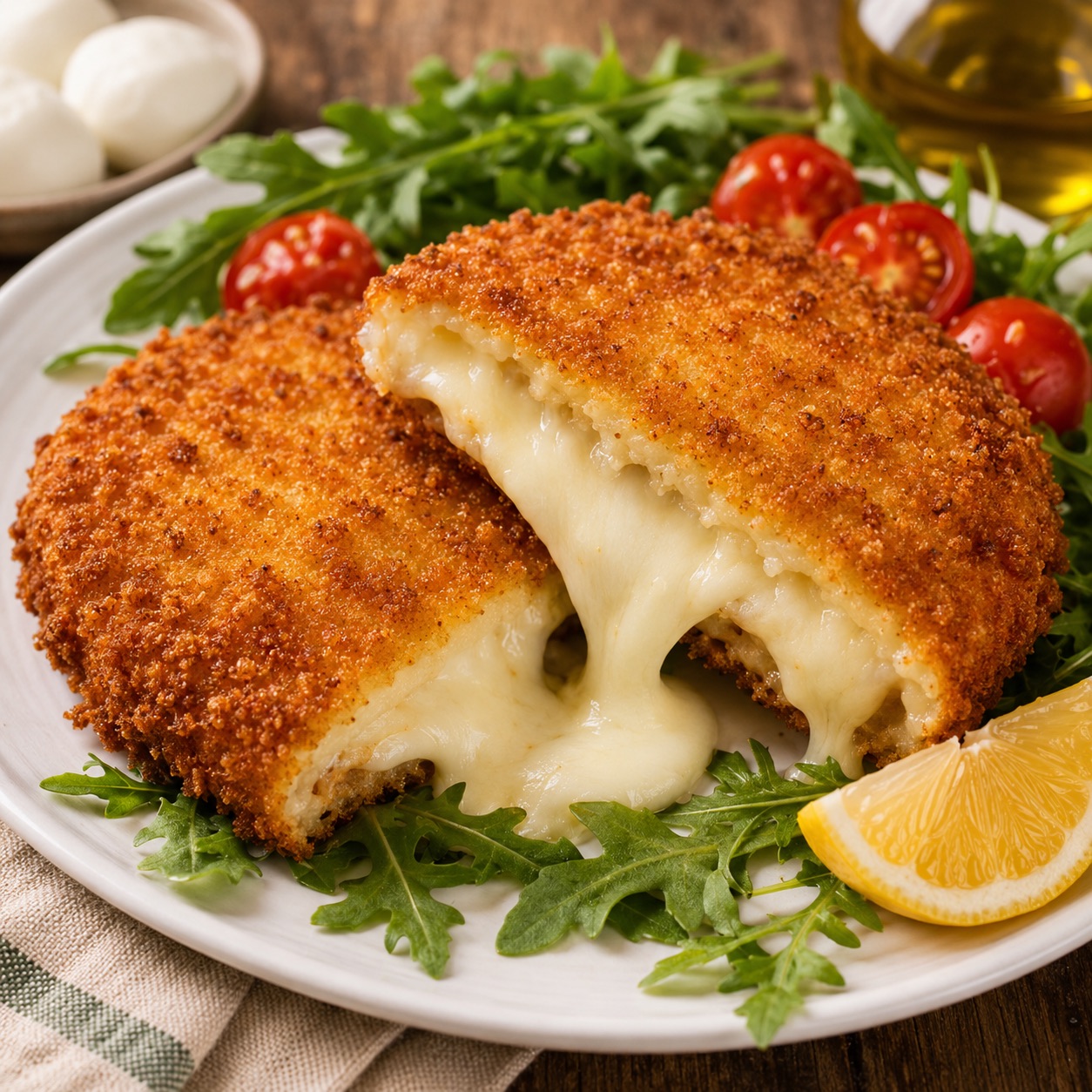
The mozzarella alla milanese was born in Milan in the post-war years -- the same era and the same technique that produced the breaded veal cutlet: flour, egg, breadcrumbs, hot oil. Applied to mozzarella the result is a golden crust around a melted, stretching interior that arrives at the table still pulling strings. It is a straightforward and very satisfying dish. The Milan version is correct. The Campanian version is better -- not because the technique differs, but because of what goes inside the breadcrumb crust.
In Campania we have the real mozzarella. Not the rubbery blocks sold for pizza in supermarkets, not the imported fior di latte of uncertain age, but the genuine article -- mozzarella di bufala campana DOP from the plains between Caserta and Salerno, or the best local fior di latte from a dairy that made it that morning. The difference when it goes into the pan is significant: genuine Campanian mozzarella melts into a pool of rich, milky creaminess that the inferior versions cannot replicate.
But -- and this is important -- you cannot fry same-day fresh mozzarella. A mozzarella made this morning is too wet; the excess moisture will steam inside the crust, the coating will separate from the cheese, and the whole thing will fall apart in the oil. The correct mozzarella for this preparation is one or two days old, left in the refrigerator overnight in its packaging. It has lost enough moisture to hold its shape through the breading process, to be refrigerated for the 15-minute rest that firms the coating before frying, and to still melt beautifully inside the crust. In Campania we know this because we have access to mozzarella fresh enough that we actually have to wait a day before frying it.
Fresh mozzarella contains approximately 52-60% water by weight. When a high-moisture mozzarella slice is placed in hot oil, the internal moisture vaporizes rapidly and generates steam pressure that pushes outward through the coating. If the coating has not adhered firmly -- which requires a relatively dry surface for the flour and egg to grip -- the steam separates the coating and the breading opens or falls off entirely. A mozzarella refrigerated for 24 hours loses approximately 5-8% of its initial moisture, enough to reduce the steam pressure to a manageable level and provide a dry surface for the flour coating to adhere to. The 15-minute rest in the refrigerator after breading further firms the coating: the egg dries slightly and forms a firm bond with both the flour layer below and the breadcrumbs above. Without this rest, the coating is fragile at first contact with the hot oil.
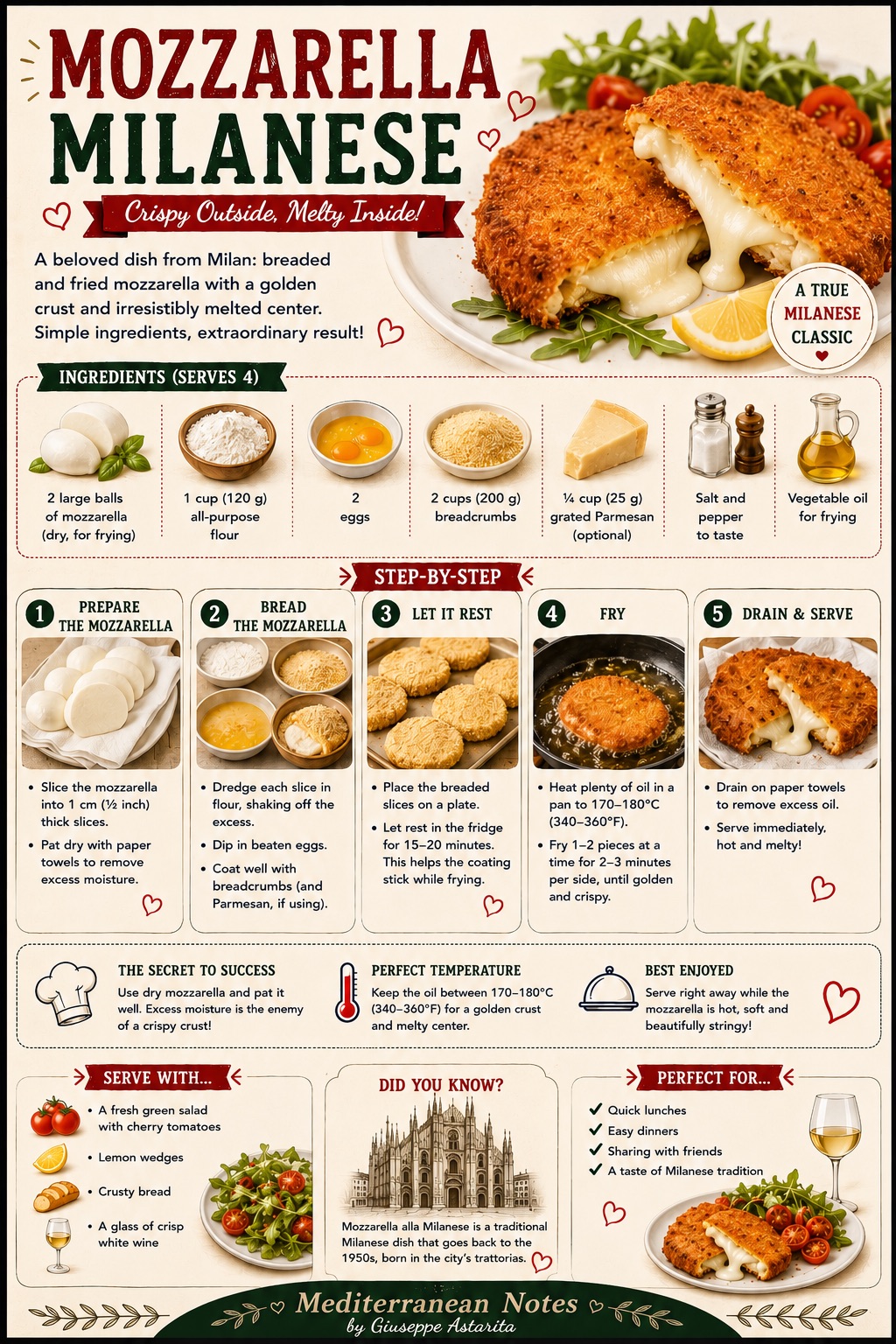
The recipe
Serves 4. The most important instruction: mozzarella 1-2 days old. Everything else follows from this.
Buon appetito.