Campanian kitchen · Street food · Fried · Seafood · The real version
Frittura di paranza
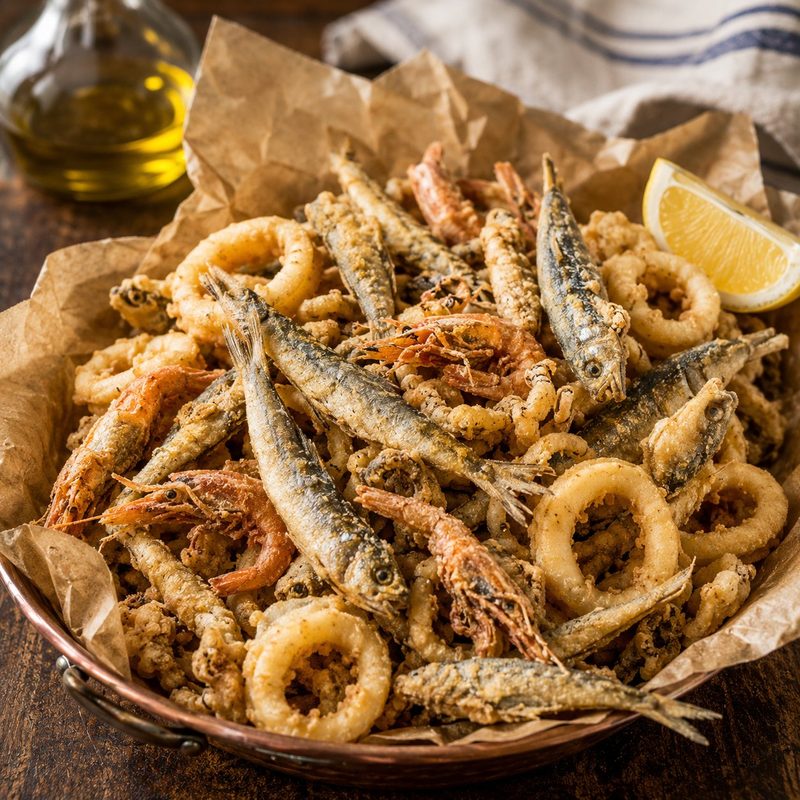
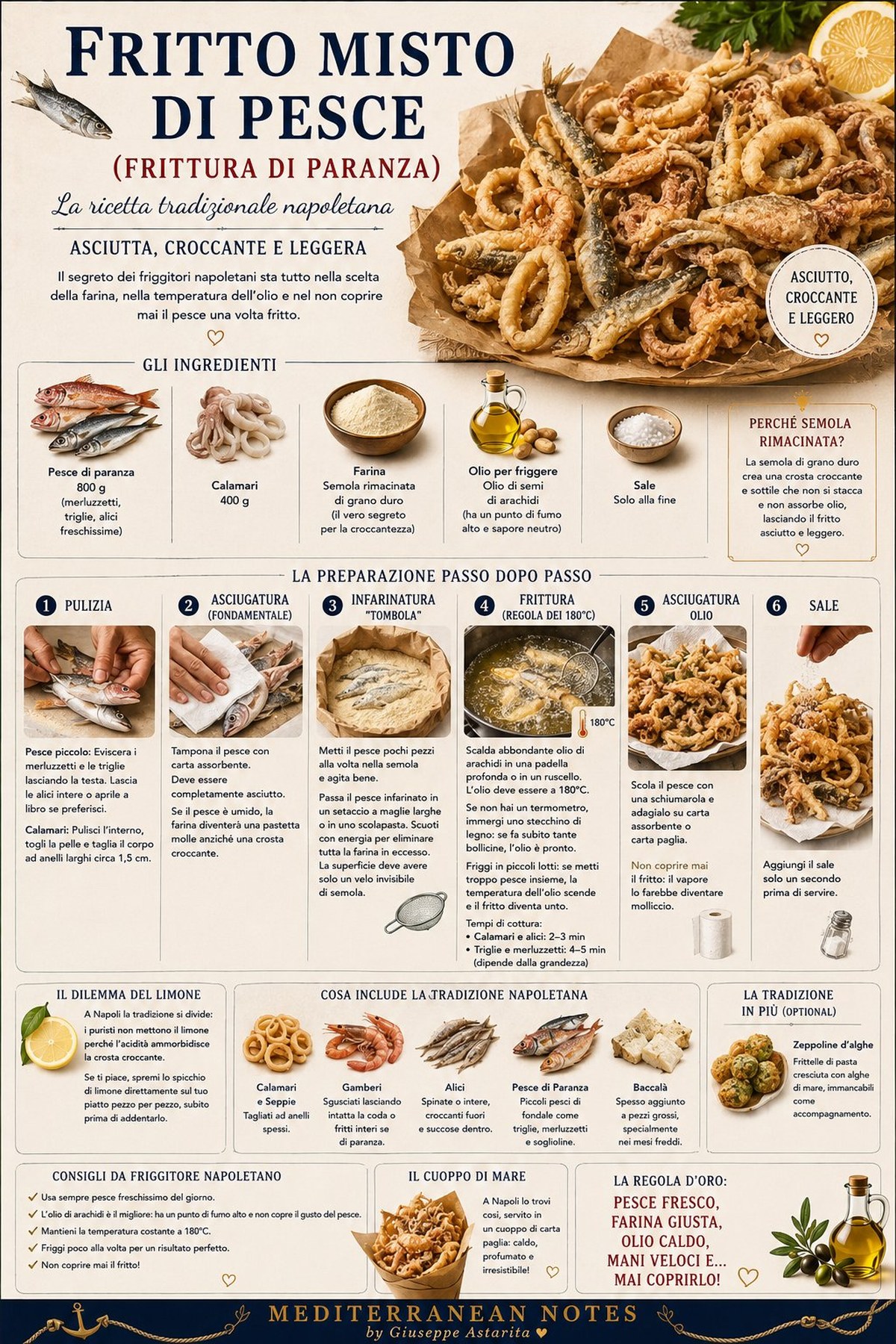
Fritto misto di pesce alla napoletana — the whole small fish, the calamari rings, the alici. Dredged in semolina, fried at exactly 180°C in olive oil, salted only at the last moment, never covered. Dry, light, crisp. The dish that defined Friday at our table, and the one I have spent a lifetime searching for in the street.
My father was not a man of the sea. He ate puttanesca on fish nights, baccalà occasionally, and was otherwise largely indifferent to seafood. The frittura di paranza was the exception. When my mother fried the small fish — the merluzzetti, the triglie, the alici — my father arrived at the table with something different in his attention. All the pesce di paranza came his way. We ate the calamari; he ate the small whole fish, and he ate them with a ritual: fork and knife to open the fish along the spine, a little salt added inside, a squeeze of lemon directly onto the flesh, then the fork to lift the meat away from the bone. Or, if the fish was small enough, the spine crisped through in the oil and he ate the whole thing. He ate every triglia that came out of the pan. This was notable because he ate very little else from the sea.
The frittura di paranza is not a casual dish despite appearing simple. Everything depends on three technical decisions made correctly: the flour, the temperature, and the covering — or rather, the absolute refusal to cover. The flour must be semola rimacinata di grano duro — twice-ground hard wheat semolina — not plain flour. Semolina produces a crispness that plain flour cannot: the coarser grain structure forms a drier, more open crust that absorbs less oil during frying. The temperature must be 180°C without variation — too low and the fish absorbs oil and becomes heavy; too high and the outside burns before the inside is done. And the covering is the most important rule of all: once out of the oil, the fish is never covered with anything, not a lid, not foil, not paper. Steam is the enemy of the fried crust. The fish must breathe.
The name paranza comes from the fishing boats — the traditional Neapolitan trawlers that dragged their nets along the seabed. The large and valuable fish went to the wealthy markets. The small fish that remained in the net — merluzzetti, trigliette, alici, soglioline, latterini — these were the fish of the people: cheap, fresh, fried the same day they were caught. The fritto misto di pesce served in good Neapolitan friggitorie today is the direct descendant of that catch. In the street, it came in a cuoppo di mare — a cone of waxed paper, the fried fish piled inside, eaten standing up. I spent years after leaving Naples searching for a cuoppo that matched the memory. It is harder to find than it should be.
The fish — what the paranza tradition requires
Merluzzetto the heart of the dish
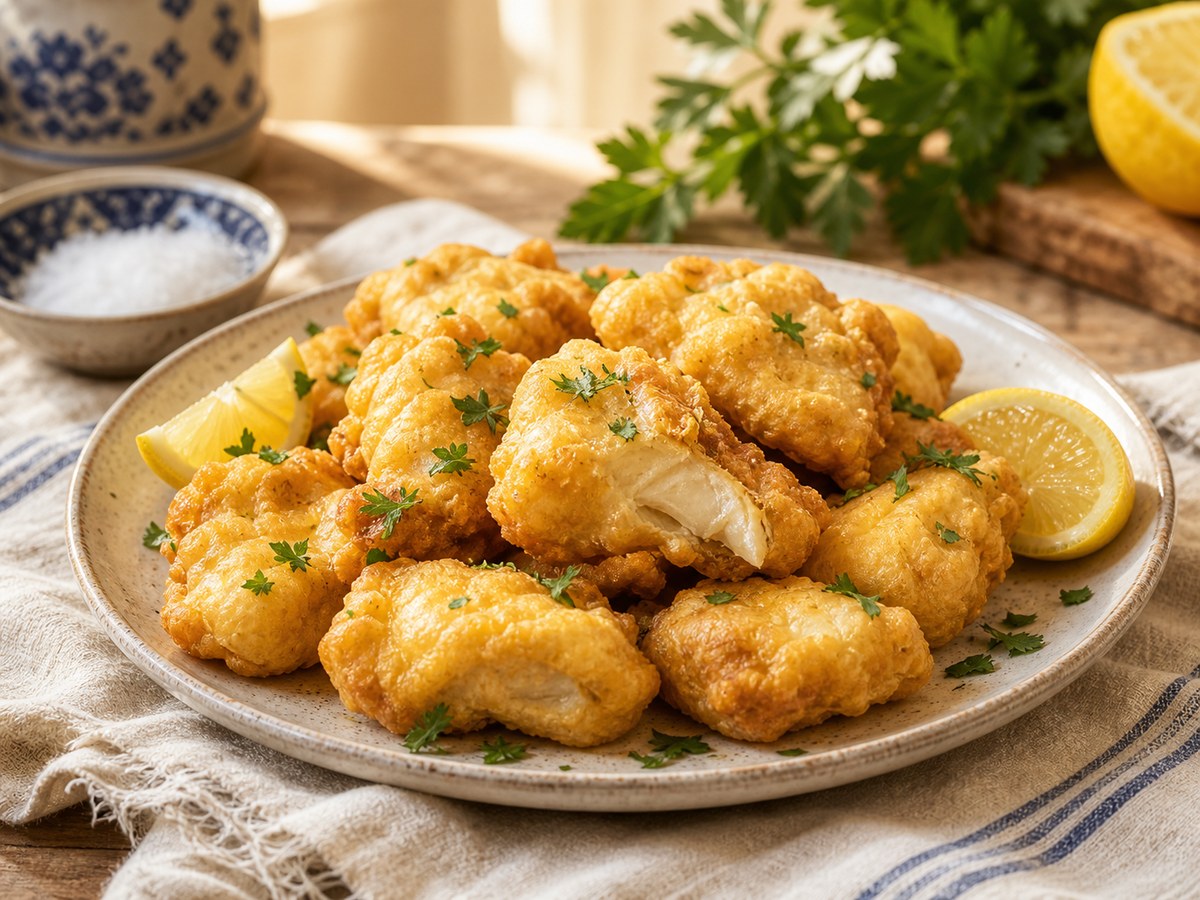
Small hake — white, delicate, sweet flesh. From the trawl net. Fried whole with the head on. In the smallest specimens the spine crisps and is eaten whole; in larger ones it lifts cleanly away after frying. My father's fish.
Triglia the heart of the dish
Red mullet — recognisable by the pink-red skin and the two barbels under the jaw. Intense, slightly musky flavor, a reminder of the crustaceans it feeds on. The skin crisps perfectly in hot oil, protecting the moist flesh inside. My father ate every one.
Alici
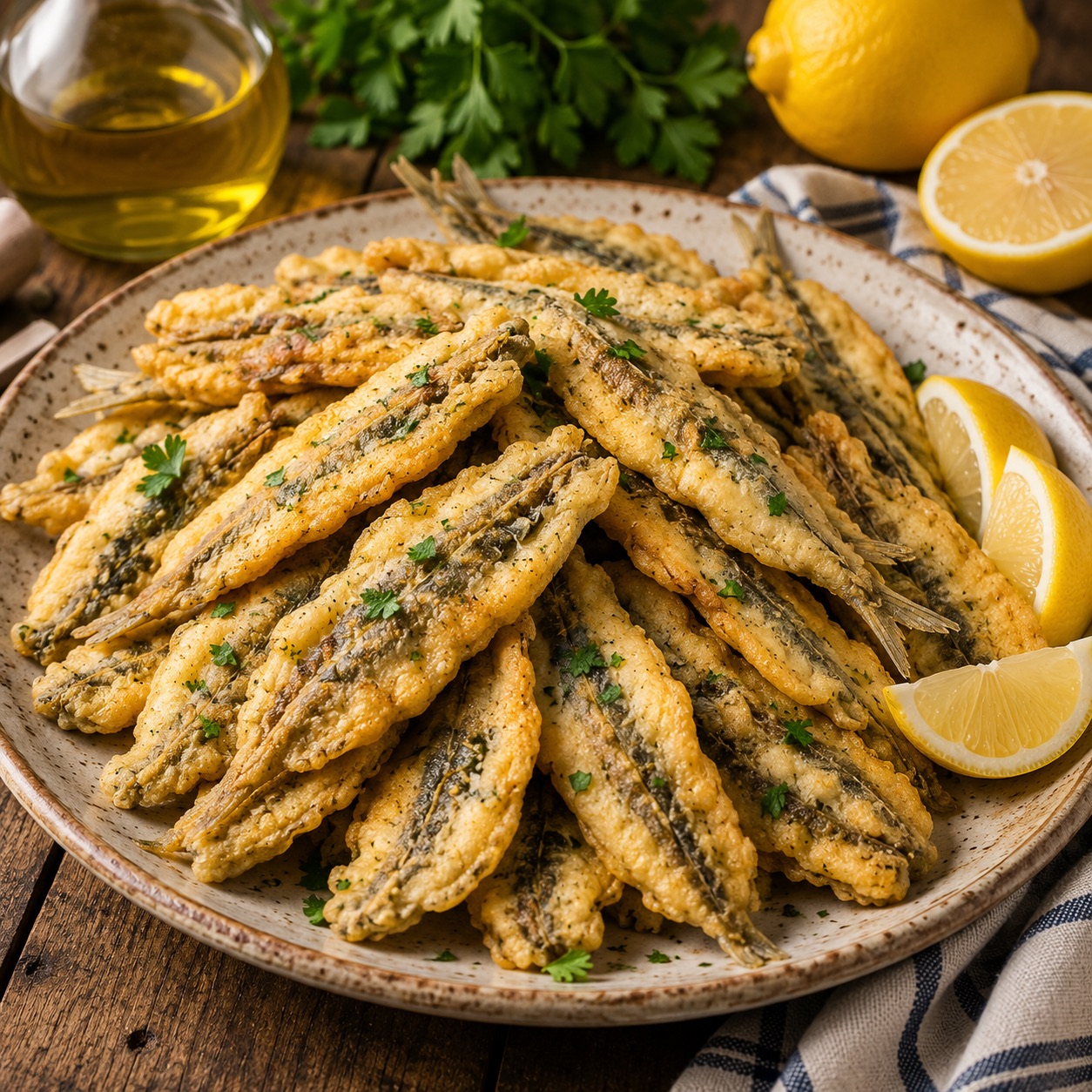
Anchovies — fried whole or butterflied. Crisp outside, slightly oily and intensely flavored inside. 2–3 minutes in the oil. The contrast between the thin crispy exterior and the rich flesh is its own reward.
Calamari
Cut into 1.5 cm rings. Clean, sweet, slightly chewy. 2–3 minutes — not more. Overcooked calamari becomes rubbery; properly fried it is tender inside the crisp semolina coat.
Latterini / Cicenielli
The tiny transparent fish — increasingly rare at the market due to European fishing quotas on juvenile fish. When available, fried in small tangled clusters, eaten whole. The hardest to find now; the most prized in the true cuoppo di mare tradition.
Gamberi di paranza
Small prawns from the trawl net — fried shell-on or with the tail left intact. Optional but traditional. Their shells fry to a crackling texture that is eaten whole.
Why semolina produces a better crust than plain flour — and what 180°C does that other temperatures cannot
Semola rimacinata di grano duro (twice-ground hard wheat semolina) differs from plain wheat flour in two key ways relevant to frying. First, its protein content is higher (typically 12–14% vs 10–11% for plain flour) and its gluten structure is more rigid — the semolina coating forms a stiffer network around the fish surface that is less prone to absorbing oil during frying. Second, the slightly coarser particle size creates a more open, porous crust structure with more air pockets, which gives the distinctive light crunchiness of Neapolitan fritto rather than the denser, heavier crust that plain flour produces. The critical role of 180°C: at this temperature, the surface water in the fish evaporates almost instantly on oil contact, creating a steam barrier that prevents oil from penetrating the crust while the Maillard reaction proceeds rapidly on the outer surface. Below 170°C the steam barrier is insufficient and oil absorption increases significantly; above 190°C the outer surface browns too fast before the interior is cooked. The technique of frying in small batches preserves this temperature — a large cold load of fish drops the oil temperature and shifts the frying environment toward the lower, oil-absorbing range. Never covering the fried fish prevents the steam released by the hot crust from condensing back onto the surface and softening it.
2. Shake off all excess semolina through a sieve — only a ghost of flour should remain on the surface.
3. Fry in small batches at 180°C — a crowded pan drops the temperature and produces greasy fish.
4. Never cover the fried fish — not with a lid, not with foil, not with paper. Steam is what destroys the crust.
Recipe — serves 4
Ingredients
Method
Clean and gut the fish. Gut the merluzzetti and triglie but leave the heads on — the head protects the flesh during frying and carries flavor. Anchovies can be fried whole or butterflied open. Clean the calamari — remove the skin, the internal quill, and cut the body into 1.5 cm rings; leave the tentacles whole.
Dry completely — this is fundamental. Pat every piece of fish and every calamari ring firmly with kitchen paper until absolutely dry. Work methodically. A wet fish makes paste, not crust. If the fish has been on ice, this step takes longer than it seems necessary — take the time.
Dry the inside of the gutted fish too, not just the outside.
The tombola flour. Put a generous amount of semolina in a large paper bag or wide bowl. Add the fish a few pieces at a time and shake or toss to coat. Then transfer to a wide sieve or colander and shake vigorously — the goal is to remove all excess semolina until only the finest invisible veil remains on the surface of the fish. This step is what separates a light Neapolitan fritto from a heavy one.
This is worth doing properly. Too much flour on the surface produces a thick doughy coat that absorbs oil. You want almost nothing — just enough to be there.
Heat the oil to 180°C. Use plenty of olive oil in a deep pan — at least 4–5 cm depth. Heat to exactly 180°C. Without a thermometer: dip a wooden skewer into the oil — if it immediately produces many small steady bubbles, the temperature is right. If it sizzles gently and slowly, wait. If it smokes, reduce the heat.
Fry in small batches — never crowd the pan. Add a small handful of fish at a time. Too much at once drops the temperature. Calamari and alici: 2–3 minutes until golden. Triglie and merluzzetti: 4–5 minutes depending on size. The fish is ready when the skin is deep gold and fully dry-looking — not pale, not dark brown.
Keep the heat consistent between batches. Let the oil return to 180°C before adding the next batch — a minute between batches is enough.
Drain and never cover. Lift each batch with a slotted spoon onto kitchen paper or the traditional carta paglia (straw paper). Spread them in a single layer — never pile them while hot. Do not cover with anything. Let the steam escape freely. The crust is forming as the fish cools slightly; covering stops it.
Salt at the last possible second. Add salt only in the final moment before serving — never during frying, never while resting. Salt draws moisture; moisture destroys the crust. A pinch of fine salt over the pile as it goes to the table.
And the lemon: the Neapolitan tradition divides here. Purists say no lemon on the fritto — the acid softens the crust. The practical position: squeeze a wedge directly onto each piece of fish as you pick it up to eat, not over the whole pile. The crust on the piece you are eating stays intact; the rest is unaffected.
The cuoppo di mare — the street version
In the street, the frittura di paranza came in a cuoppo di mare — a cone made from waxed paper or carta paglia, the fried fish piled inside hot from the oil, eaten standing up outside the friggitoria. It was warm, the paper transparent with the oil it had absorbed, the fish still crackling. The cuoppo is not a container — it is part of the experience: the heat conducted through the paper to your hands, the smell arriving before the first bite, the obligation to eat immediately. I spent years in various Italian cities and in the United States searching for a cuoppo that matched. The authentic version, made with real pesce di paranza piccolo — the latterini, the trigliette, the merluzzetti — is increasingly rare. European fishing quotas on juvenile fish have made the smallest and most traditional catch harder to find at the market; what passes for frittura di paranza in many places now is largely calamari and gamberi, which are not wrong but are not the same thing. The real version is still there in Naples, in a few friggitorie that source their paranza properly. Ask specifically for frittura di paranza, not fritto misto. They are not the same order.
My father ate it at home — my mother's version, which was the Friday version, which was the proper version. He ate the merluzzetti and the triglie. He did not need the cuoppo or the street. He needed the fish to be fresh, the oil to be right, and all the paranza to come his way. These conditions were reliably met every Friday of my childhood.
Pesce fresco, farina giusta, olio caldo — e non coprirlo mai.