Cozze Gratinate
Mussels on the half shell, stuffed with breadcrumbs garlicky and fragrant, moistened with their own steaming liquid, grilled until golden. The antipasto my mother made for every holiday meal.
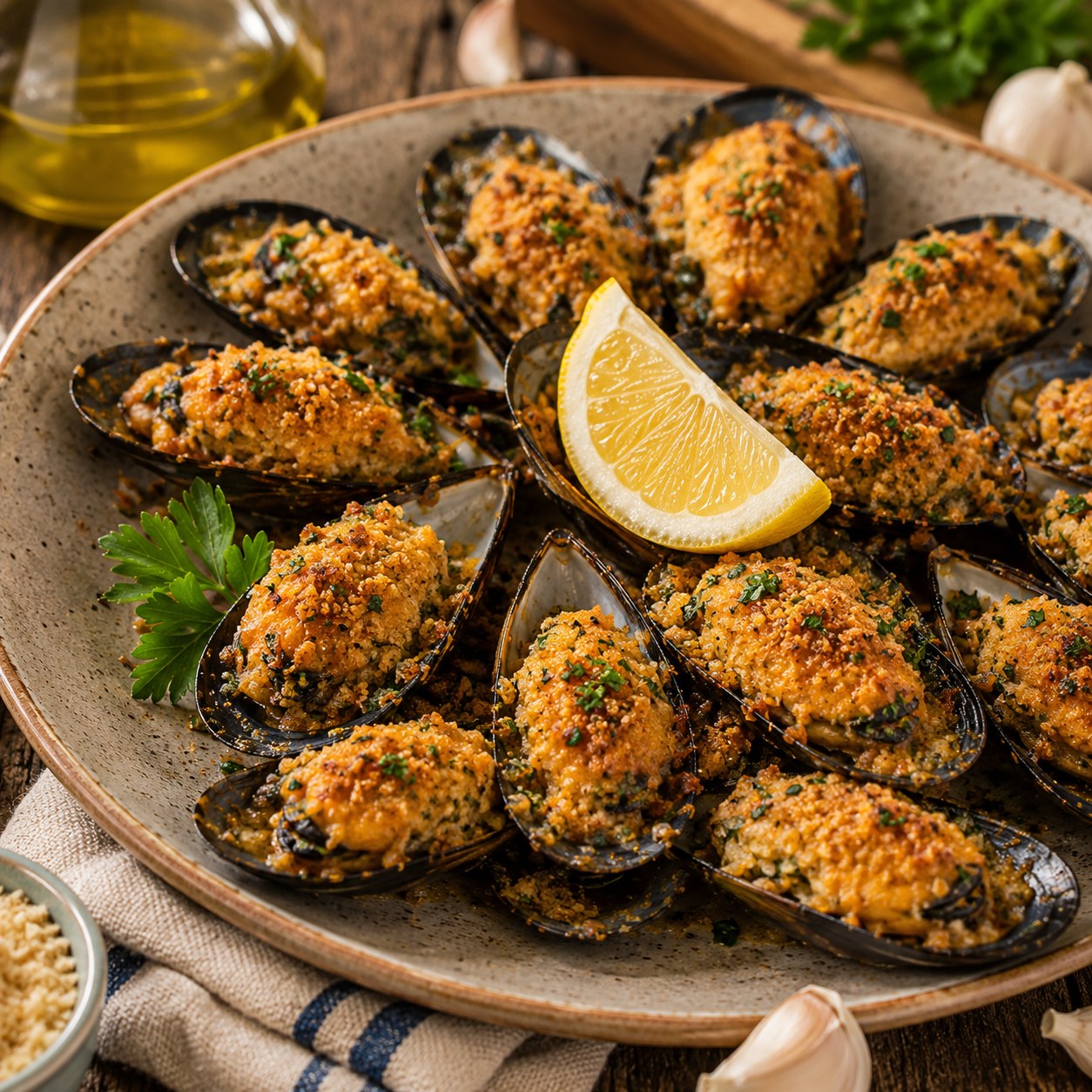
There is a particular category of antipasto in southern Italian cooking that announces a serious meal. Not the everyday starter that opens a Tuesday dinner, but the kind that appears only at Christmas, Easter, or when the whole family gathers and the table needs to say something. In our house in Caserta, that announcement was cozze gratinate — mussels on the half shell, their flesh barely cooked and still trembling, covered with a breadcrumb stuffing that had absorbed the mussels' own briny steam, grilled under the broiler until crackled and golden.
My mother made them as the first thing to arrive at the holiday table, while the rest of the meal was still assembling itself in the kitchen. They came out in a single pan, still sizzling, and were eaten immediately — too hot, burning fingers, with a squeeze of lemon and a piece of bread to catch the oil and juices that ran down the shell. Nobody waited until they cooled. That would have been wrong.
The technique is simple but exacting in its logic. The mussels are steamed open in a pan with oil, a smashed garlic clove, and optionally a splash of white wine. They are removed from the heat the moment they open — even thirty seconds longer and the flesh becomes rubbery. The liquid at the bottom of the pan is filtered through a fine sieve to remove any grit and set aside. Half of each shell is discarded; the mussel stays in the other half. Then the filling: breadcrumbs, minced garlic, minced parsley, optional grated Pecorino or Parmigiano, olive oil, and enough of the reserved mussel liquid to bring the mixture to the consistency of wet sand. Crumbly but moist, not dense, not pasty.
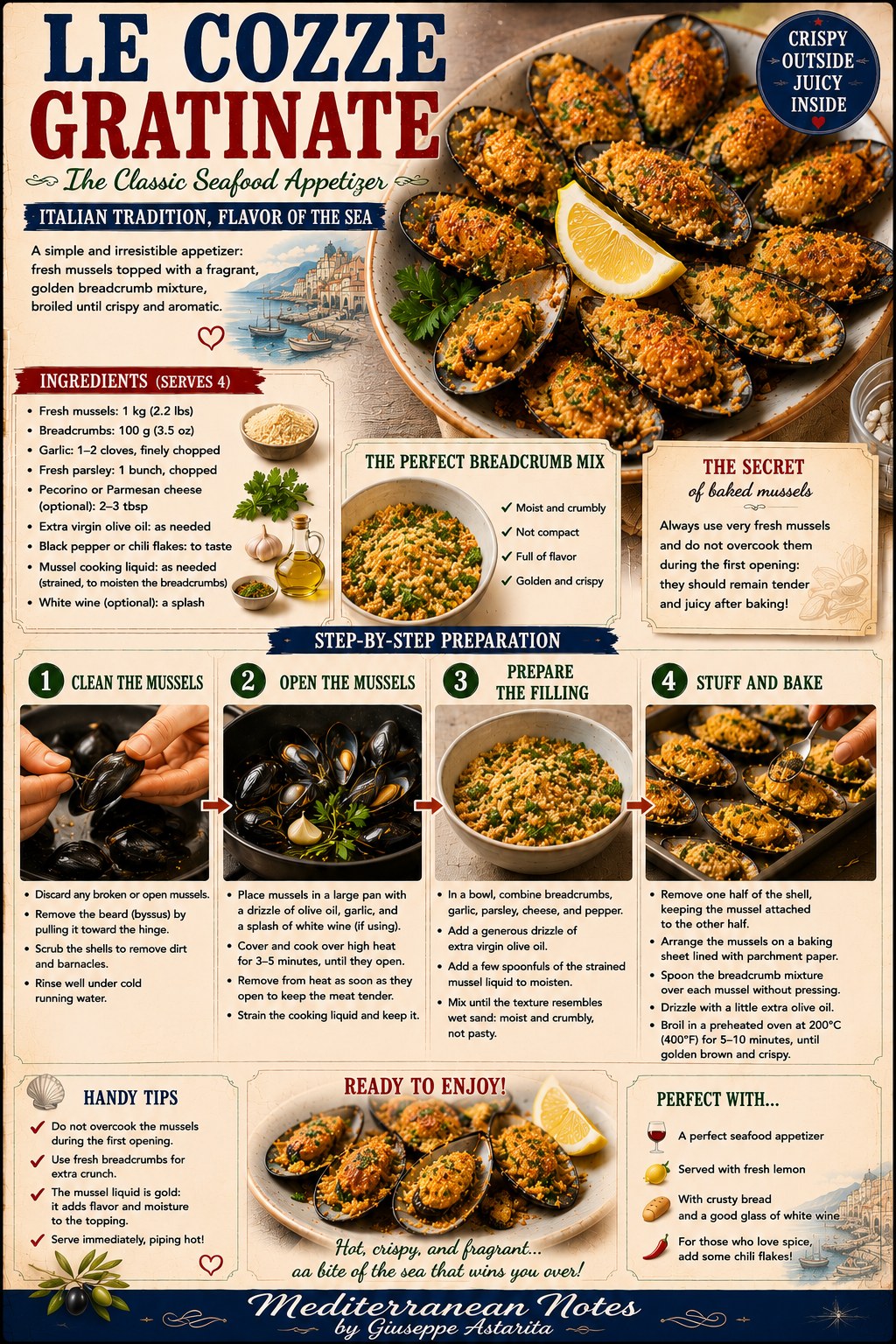
Tap to enlarge — Le cozze gratinate passo dopo passo
Recipe — serves 4 as antipasto, 30 minutes
- 1 kg fresh mussels scrubbed, debearded, any open ones discarded
- 100 g fine breadcrumbs homemade from stale bread is better
- 1–2 cloves garlic finely minced
- 1 bunch fresh flat-leaf parsley finely chopped
- 2–3 tbsp Pecorino Romano or Parmigiano optional but good
- Extra-virgin olive oil generous
- Black pepper or fresh chili to taste
- Filtered mussel steaming liquid to moisten the filling
- White wine a splash — optional, for steaming
The lemon wedge alongside is not decoration. Squeeze it over everything just before eating — the acidity cuts through the richness of the oil and brings out the brine of the mussel. My mother always served them with bread, specifically to scoop the hot oil and breadcrumb residue from the shell, which was sometimes better than the mussel itself.
This is the kind of dish that says something about a meal before the meal has started. It sets a register — careful, generous, festive — that everything following has to live up to. In my memory, it always did.