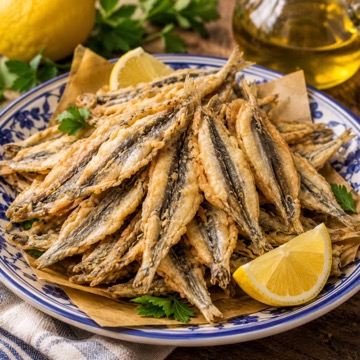
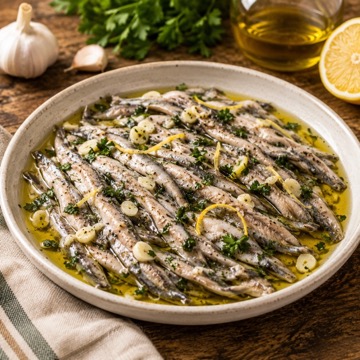
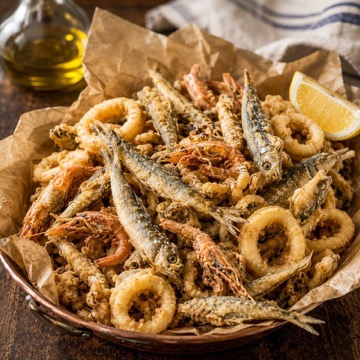
Seafood · Frittura · Neapolitan Classic
Alici Fritte
Fresh anchovies, cleaned, dried bone-dry, dredged in 00 flour, fried fast in batches at 170–180°C, salted only at the end. The secret is dry fish. Everything else follows from that.
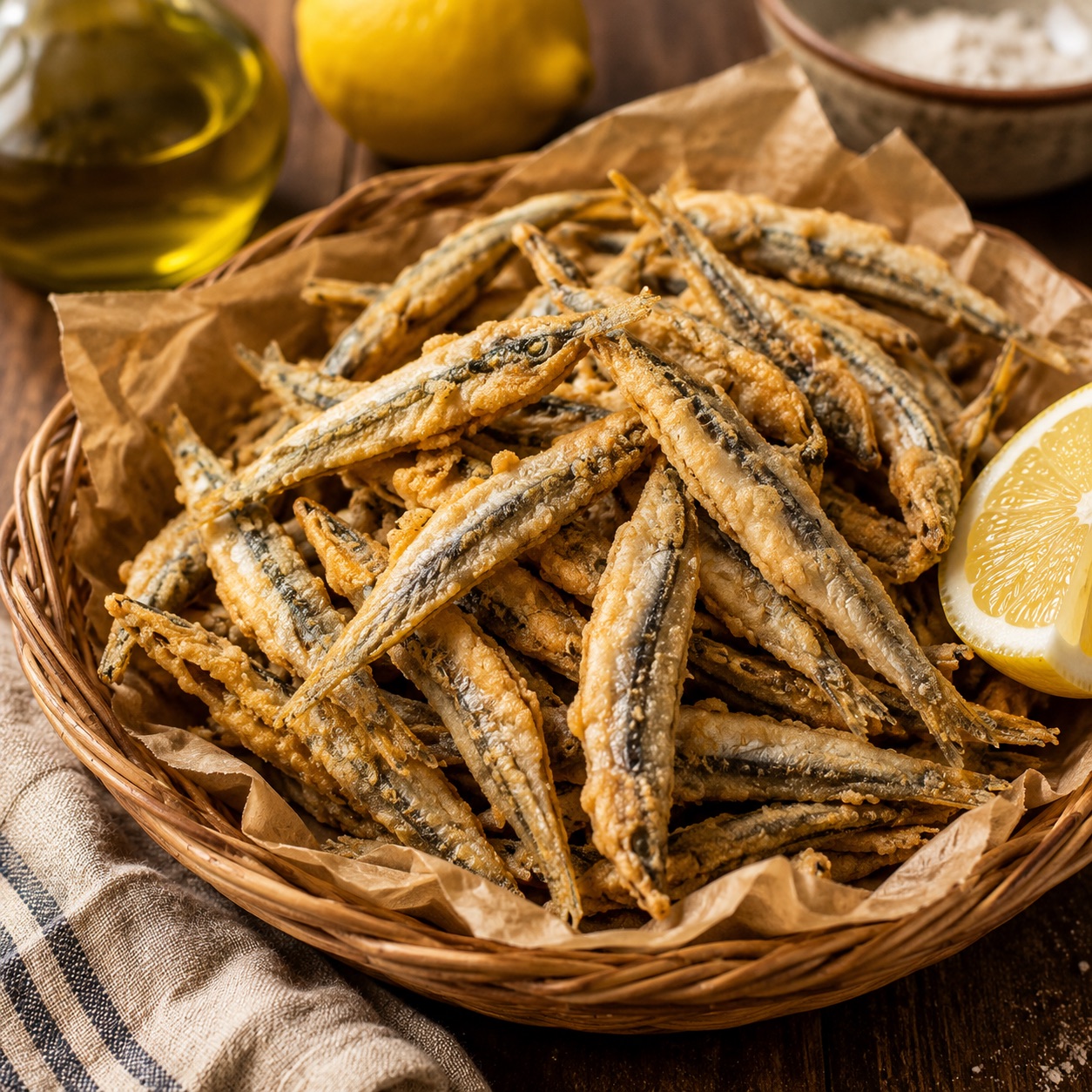
The fresh anchovy — alice in Italian, acciuga in more formal registers — is a different ingredient from the salted or oil-packed anchovy that appears in sauces and stuffings. Fresh, it is a small, delicate, mildly flavored blue fish that tastes of the sea without the intensity of the preserved version. Fried, it becomes something with a specific texture that is hard to replicate with any substitution: the thin flesh cooks in under two minutes, the crust forms quickly from the flour coating, and the result is a fish that is simultaneously crisp on the outside and just barely cooked through — soft and sweet inside, almost dissolving.
In Naples and along the Campanian coast, alici fritte appear as part of the frittura di paranza — the mixed fry of small fish, often including also smelts, small squid rings, and baby shrimp — or on their own as a standalone antipasto or secondo. The standalone version is the one that rewards closest attention to the details: the cleaning, the drying, the flour, the oil temperature, the salting. None of these is complicated. All of them matter.
The cleaning is the first thing. You pinch the anchovy just behind the head, pull gently downward, and the head comes away with the guts attached in a single motion if the fish is fresh and the angle is right. This takes practice to do quickly, but the motion itself is simple. Rinse the cleaned fish briefly under cold running water — briefly, not soaking — then lay them on paper towels and pat thoroughly dry. The infographic states this plainly and correctly: dry fish is the secret. Surface moisture on the fish prevents the flour from adhering properly and causes the oil temperature to drop sharply when the fish goes in, producing a steamed rather than fried result. The coating becomes wet and slides off. The fish is not crisp. Dry is correct.
00 flour gives a thinner, more delicate crust than all-purpose. Semolina flour gives a crunchier, grainier texture — the "even more crunchy" option the infographic mentions. Both work; the choice depends on what texture you are after. The technique is the same: dredge in the flour, then shake vigorously in a colander to remove all excess. Too much flour on the fish burns before the fish is cooked and produces a thick, doughy crust rather than a thin, crisp one.
Why dry fish and hot oil — the physics of a crisp fry
When a wet piece of fish is placed in hot oil, the surface water vaporizes almost instantly into steam. This steam creates a barrier between the fish surface and the oil, preventing direct contact and — crucially — preventing the Maillard reaction from occurring at the flour coating. The result is a pale, soft exterior rather than a golden, crisp one. The steam also causes the oil temperature to drop sharply, because the energy required to vaporize water (about 2,260 kJ/kg) is drawn from the oil itself. A pan at 175°C can drop to 150°C or below when wet fish is added, especially in batches.
Dry fish, by contrast, allows the flour coating to contact the oil directly. At 170–180°C, the Maillard reaction between the flour proteins and the small amounts of sugar present begins almost immediately, producing the characteristic golden color and the aromatic compounds associated with fried foods. The crust sets quickly, providing a physical barrier that traps steam from the fish flesh inside — which is what keeps the interior moist while the exterior is crisp. This is also why frying in small batches matters: adding too many fish at once drops the oil temperature below the threshold for effective crust formation.
Peanut oil or sunflower oil are the practical choices for deep-frying fish: both have a high smoke point (around 225–230°C), neutral flavor, and good thermal stability. Any neutral vegetable oil with a high smoke point works. Olive oil — despite its cultural appropriateness — has a lower smoke point and a stronger flavor that competes with the delicate fresh fish; reserve it for pan-frying smaller quantities.
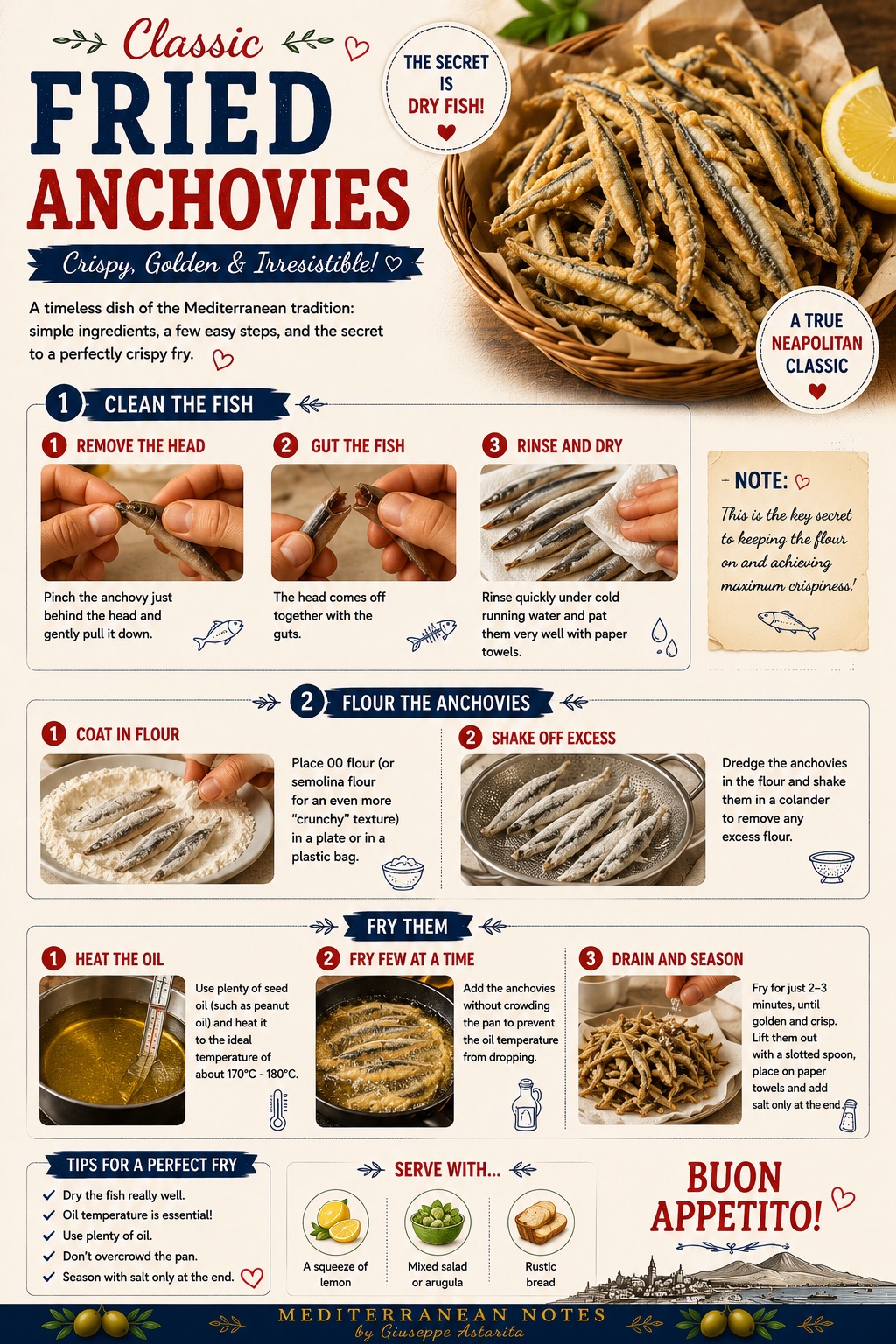
Tap to enlarge — Alici fritte: pulire, infarinare, friggere. Il segreto è il pesce asciutto.
Recipe — Alici Fritte
Serves 4 as antipasto, 2 as secondo · Active time 20 min
- 500 g fresh anchovies the freshest available — eyes bright, flesh firm
- 00 flour or semolina for a crunchier crust
- Peanut or sunflower oil 1 liter minimum — plenty of oil matters
- Coarse salt added only at the end, after draining
- Lemon for squeezing at the table
The alici fritte exist in the same category as the frittura di paranza — the general Neapolitan tradition of frying small sea creatures in quantity and eating them immediately from the paper. The anchovy version is more focused, asking more of the individual fish, depending more completely on freshness and the quality of the cleaning and drying. A good frittura di paranza tolerates average fish at high temperature. Alici fritte require the best fresh anchovies you can find and the patience to prepare them correctly. The difference between the two is the difference between a crowd pleaser and a precise argument about a single ingredient.