Alici Marinate
Fresh anchovies cured in lemon and vinegar -- light, fresh, a taste of the Neapolitan coast
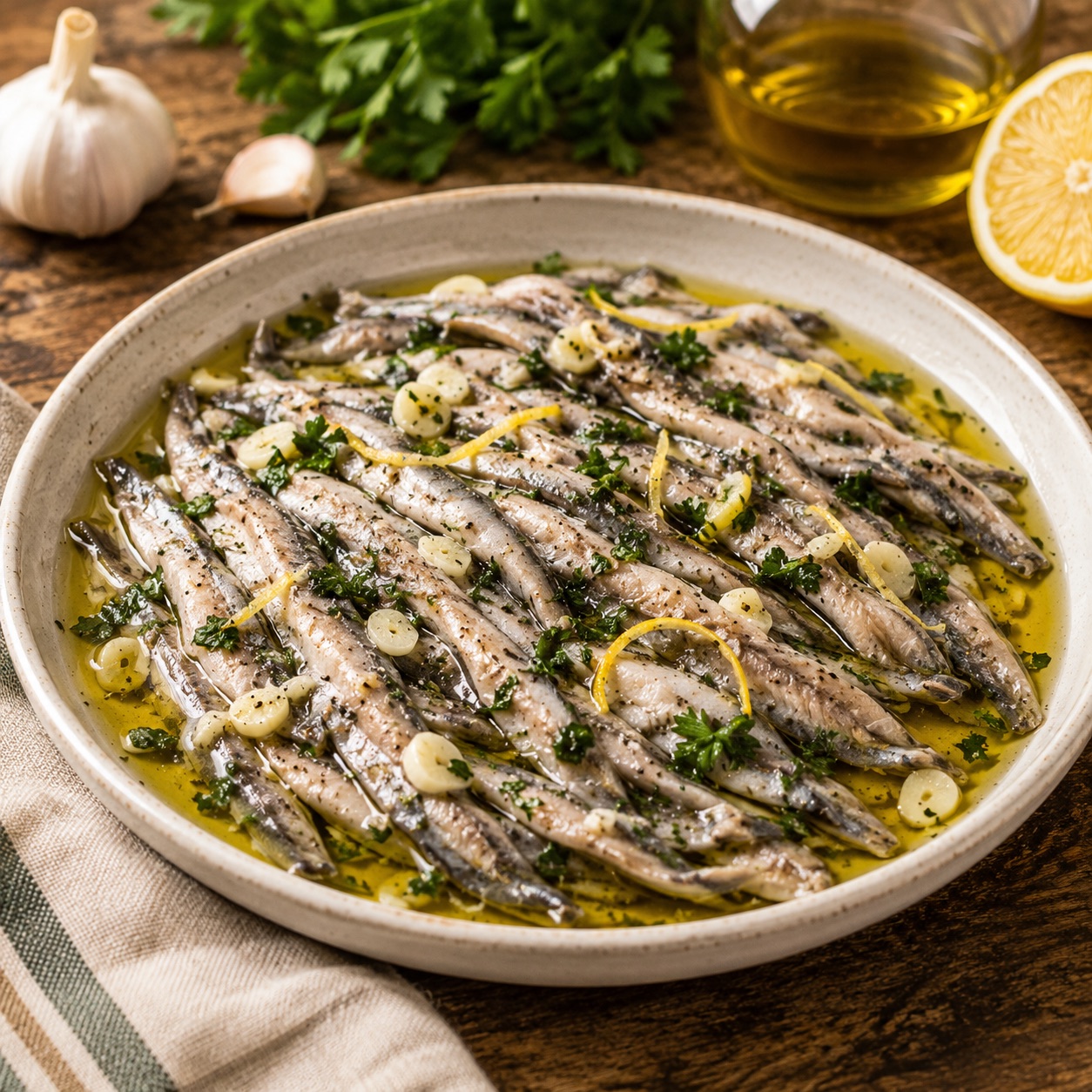
The alici marinate are the opposite of the alici fritte in every technical respect -- no heat, no oil for cooking, no batter, no urgency -- and yet they share the same essential requirement: the anchovies must be genuinely fresh. The marinade of lemon juice and white wine vinegar cures the anchovy fillets through acid denaturation rather than heat, producing a result that is delicate and white-fleshed, firm but yielding, with a clean sea flavor and none of the intensity of salt-preserved anchovies. The process takes between three and twelve hours depending on the size of the fillets and the strength of the marinade, and the result is one of the simplest and most beautiful antipasti on the Neapolitan table.
The curing process -- marinatura -- is technically a form of cooking in the sense that the acid denatures the proteins and firms the flesh in the same way that heat does, though without the Maillard browning and the structural changes that heat produces. The flesh goes from translucent and soft to white and firm. The texture is different from heat-cooked fish -- more tender, more yielding -- but the food safety outcome is similar: the acid environment inhibits bacterial growth and the low pH denatures many of the pathogens of concern in raw fish. The quality of the anchovy matters doubly here: the marinade concentrates and clarifies the fish's own flavor rather than masking it, so a stale anchovy becomes a stale-tasting marinated anchovy.
The proteins in fish muscle -- primarily actin and myosin -- begin to denature when the pH drops below approximately 4.5, the threshold achievable by lemon juice (pH 2-3) and white wine vinegar (pH 2.5-3.5) when applied directly to the fish surface. Denaturation unfolds the protein chains and causes them to aggregate and coagulate, producing the white, opaque, firmer flesh of cured fish from the translucent, soft texture of raw fish. This process proceeds outward from the surface inward over several hours -- which is why the marinating time must be long enough for the acid to penetrate the full thickness of the fillet. The low pH environment also inhibits the growth of most fish-borne pathogens, though it does not eliminate all risks -- which is why the freshness of the raw fish is the primary safety guarantee.
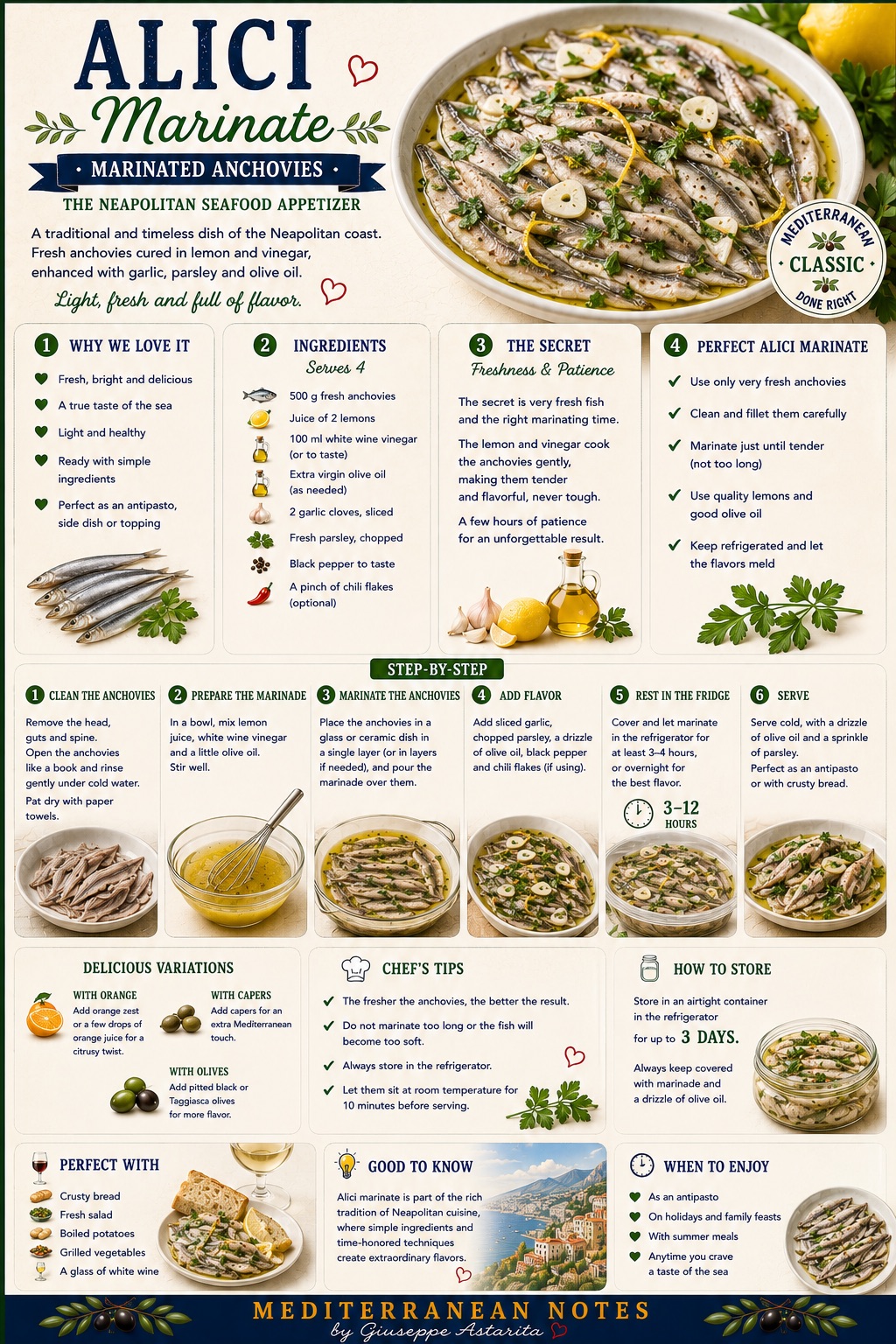
The recipe
Buon appetito.