Alici Fritte in Pastella
Fresh anchovies, cold sparkling batter, very hot oil -- salt and lemon, immediately
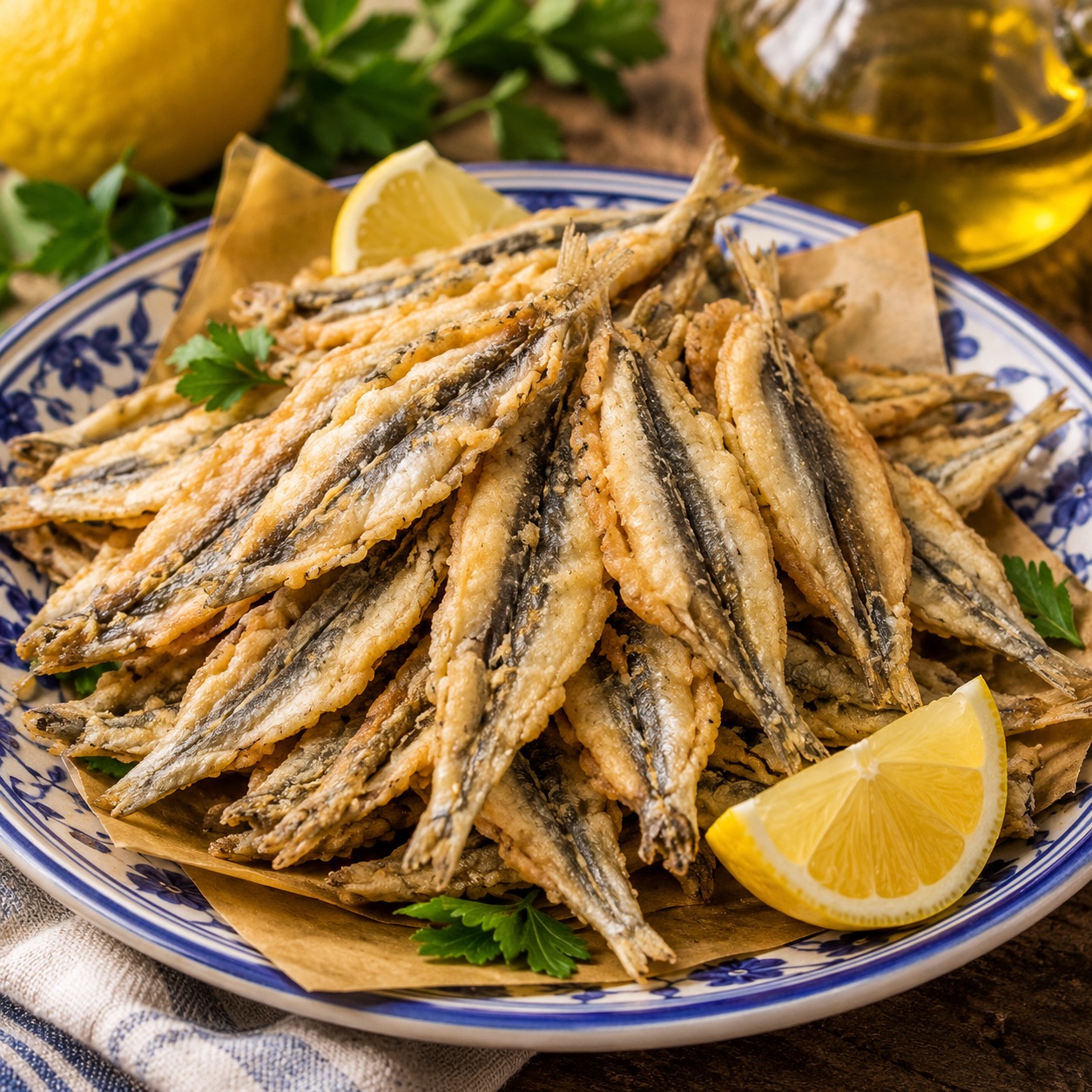
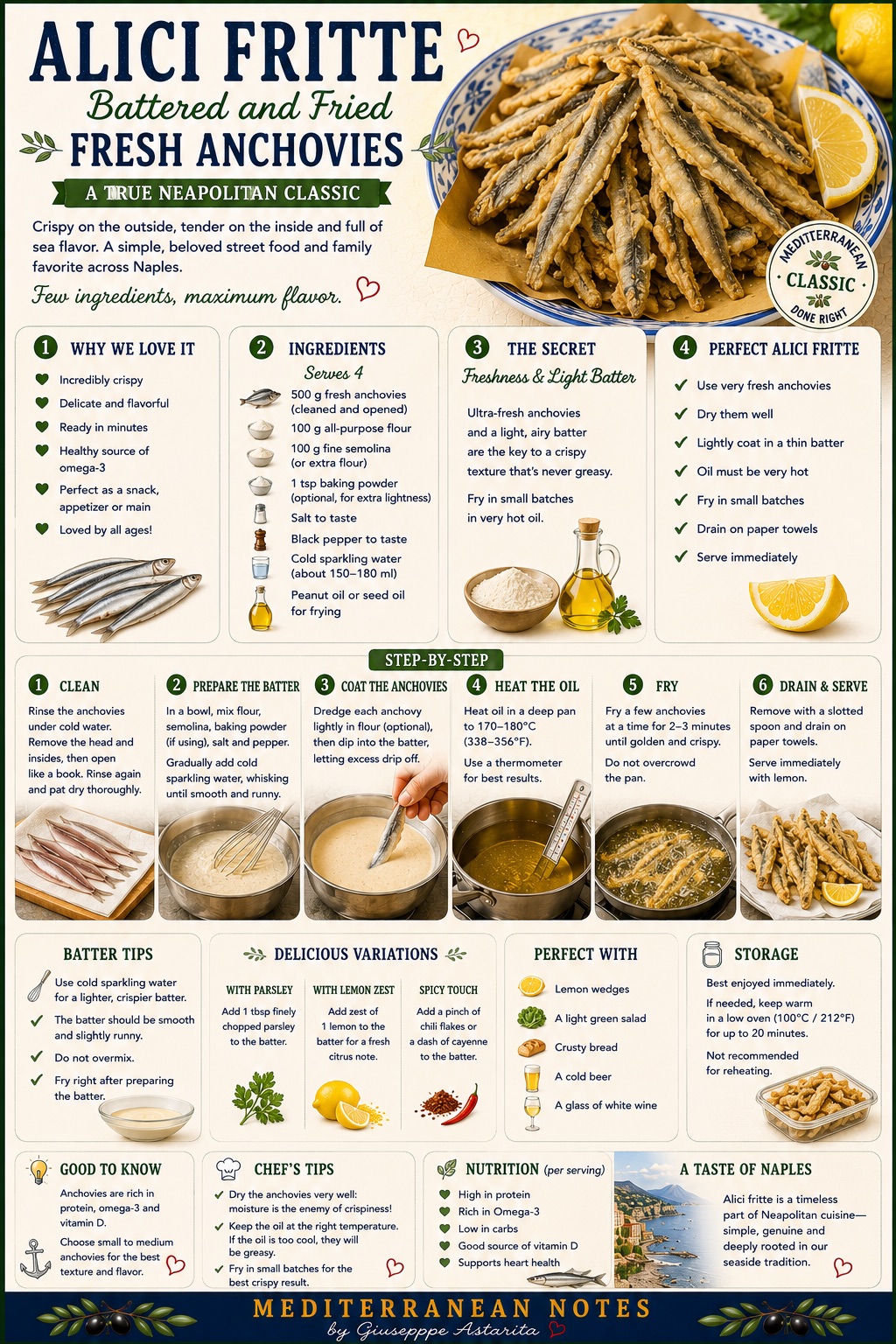
The alici fritte are one of the things I look for first when I go back to Caserta. Not in a restaurant, necessarily -- at the fishmonger. The best fish shops in Campania will fry fresh anchovies for you on the spot, scooped into a paper cone while they are still audibly crisp, so hot you have to wait a moment before eating and then cannot stop. Salt and lemon over the top. That is the whole preparation. The anchovies are gutted, opened like a book, dipped in a light batter of flour and semolina with cold sparkling water, dropped into very hot oil for two to three minutes until golden, and handed to you immediately. There is no version of this dish that is better than the one eaten standing outside the fish shop while the paper cone is still warm.
The freshness of the anchovy is not negotiable. A fresh anchovy -- caught that morning or the day before, its flesh still firm and its smell clean and of the sea rather than of fish going bad -- produces a fried result that is delicate, slightly sweet, with a mineral sea flavor that is nothing like the salt-packed preserved anchovy used for everything else. A day-old anchovy produces something heavier and more aggressive. This is why the dish belongs to the coastal towns and to the fish market rather than to the inland supermarket, and why it is genuinely difficult to replicate at the same level in Massachusetts, where fresh anchovies are almost impossible to find. When I find them, I fry them.
Cold water slows the hydration of the gluten proteins in the flour and keeps the batter temperature low, which delays further gluten development during the brief interval between mixing and frying. The result is a batter with minimal gluten network -- thinner, lighter, and less chewy than a batter made with warm water. Sparkling water adds CO2 bubbles that are trapped in the batter when it hits the hot oil, expanding rapidly and producing a more airy, porous crust structure. The semolina in the batter (coarser particles than flour) provides texture contrast within the crust -- small hard particles that remain crunchy even after the flour component has absorbed some moisture. The oil temperature of 170-180C is critical: below this range, the batter absorbs oil rather than immediately setting its structure; above it, the batter darkens before the anchovy inside has cooked through. At the correct temperature, the batter sets within seconds of contact, trapping steam from the anchovy and creating the characteristic crispy-outside, tender-inside result.
The recipe
The fishmonger in Caserta sometimes has them ready. If you are lucky enough to be there, that is the version. Everything else is a good approximation.
Buon appetito -- con tanto limone.