Zuppa di Soffritto
O zuffritto, the zuppa forte — pork offal simmered with lard, chili and tomato into the fieriest old dish of Naples. My mother and grandmother ate it with joy. I document it from a safe distance.
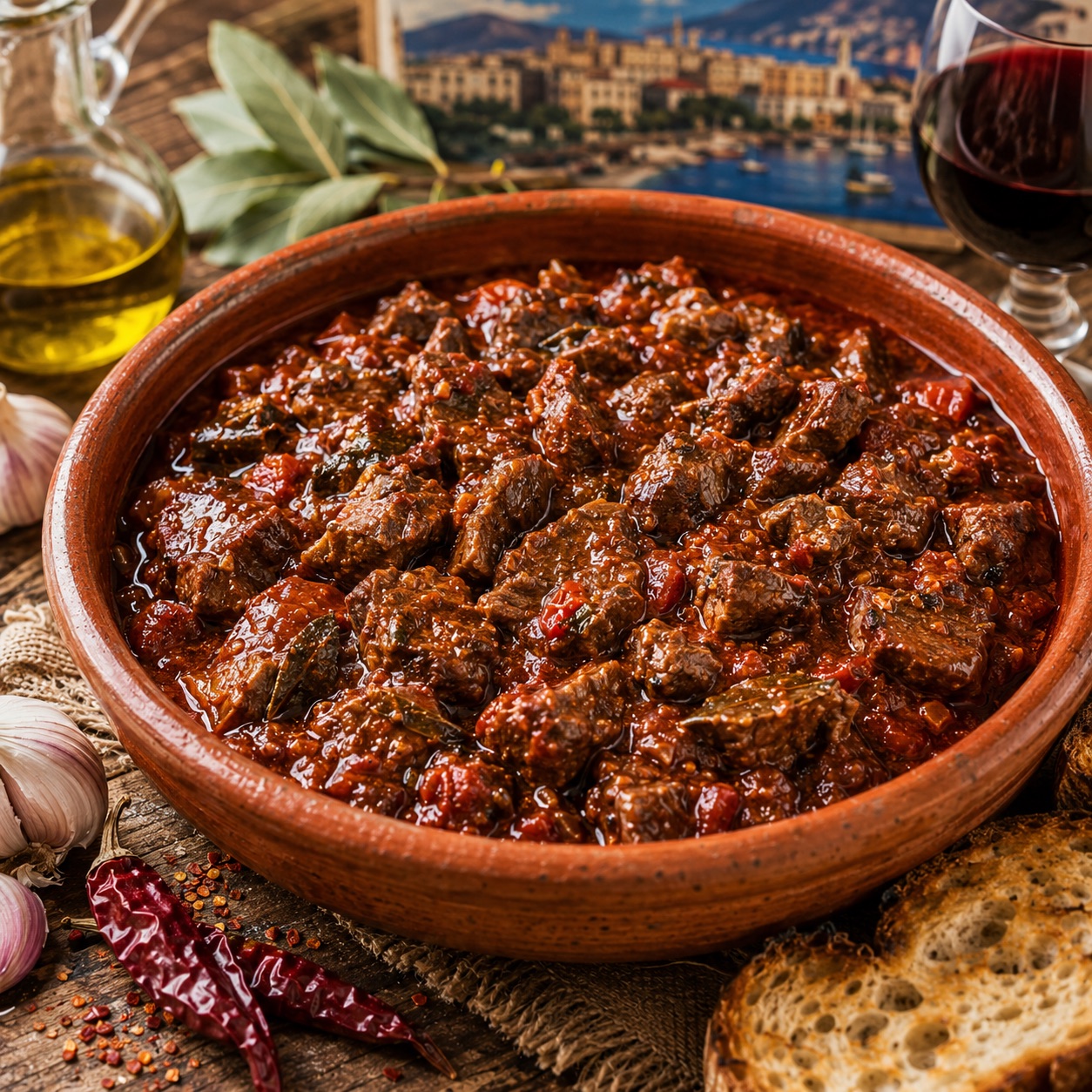
Another one that is — I will say it plainly — gross to me now, and was gross to me then. And another one that absolutely must be here. The zuppa di soffritto, o zuffritto, the zuppa forte: one of the oldest dishes in Naples, born in the working-class neighborhoods from the iron rule of southern poverty — nothing from the pig goes to waste, nothing. My mother and her mother ate it with genuine happiness. I observed other people loving it, plate after plate, and remained, throughout, an observer. The blog requires honesty; the dish requires documentation; both are hereby satisfied.
What it is: pork offal — lung, heart, spleen, trachea — cut small, soaked, dried, and cooked down in lard with bay and rosemary, then drowned in red wine, tomato paste and a violent quantity of chili, and simmered for two hours into something dark, dense and intensely aromatic, with a thin layer of spicy oil glowing on top. Despite its name it is not a cooking base — it is a complete dish, a concentrated offal ragù eaten piping hot on thick toasted bread or tossed with bucatini. A winter dish, a laborer's dish, and for its devotees a dish of almost religious standing.
The economics and chemistry of the zuppa forte
Organ meats were the cheapest protein in the market and among the densest in nutrients — iron, B12, vitamin A — which is why the dish fed the neighborhoods that needed feeding most. The two-hour simmer breaks down the varied connective tissues at their different rates, producing the signature multiplicity of textures, while the chili's capsaicin and the lard's fat carry and amplify the deep flavors. The spice was never decoration: it made challenging cuts not just edible but craved. Born of necessity, kept by love — the entire cucina povera in one terracotta pot.
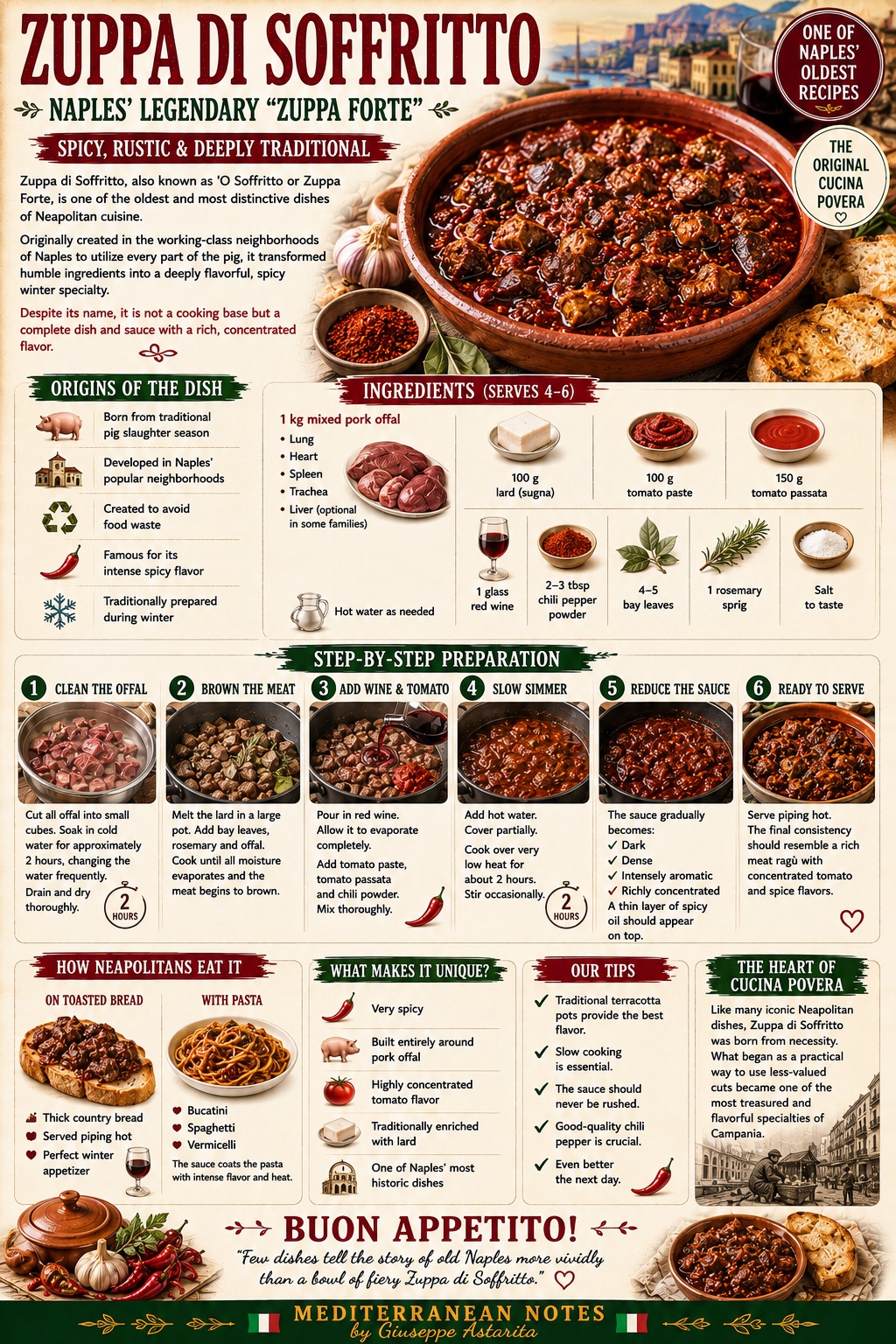
Tap to enlarge — Zuppa di soffritto: the original cucina povera
Recipe — O Zuffritto
Serves 4–6 · About 4 hours 30 including soaking
- 1 kg mixed pork offal lung, heart, spleen, trachea — liver optional in some families
- 100 g lard (sugna)
- 100 g tomato paste
- 150 g tomato passata
- 1 glass red wine
- 2–3 tbsp chili pepper powder good-quality — crucial
- 4–5 bay leaves
- 1 rosemary sprig
- Hot water as needed
- Salt to taste
File it beside the trippa and the street's pere e musso on the shelf of dishes I keep for the record and pass at the table. Few dishes tell the story of old Naples more vividly — and at our family table, the story was told by my mother and grandmother, happily, over full plates, while I ate the pasta.