'O Pere e 'o Musso
The foot and the muzzle — the oldest street food of Naples, served cold with lemon and sea salt. I am not sure I ever dared to try it. It is iconic anyway.
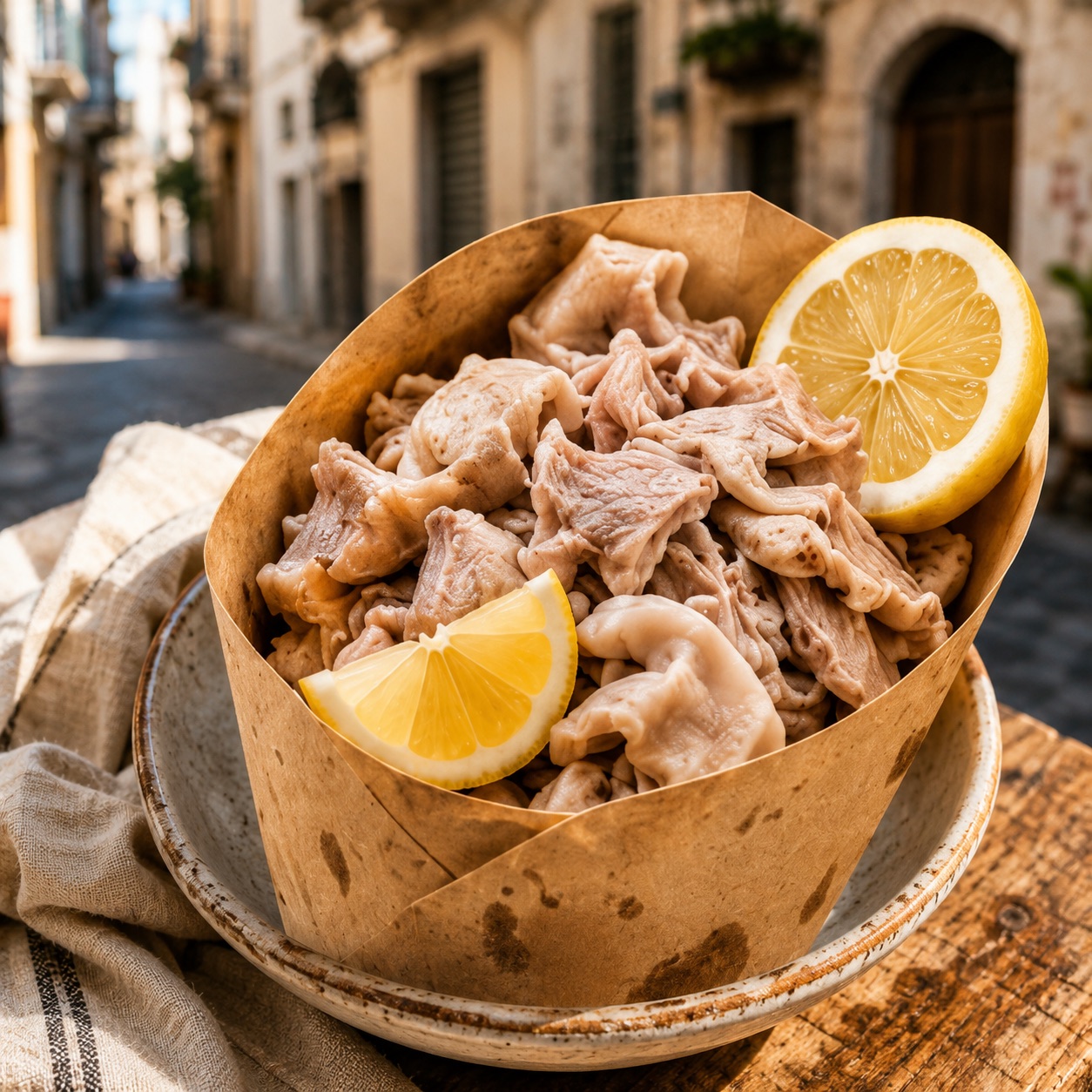
Full disclosure: I am not sure I ever tried it. 'O pere e 'o musso — the foot and the muzzle — sat at the edge of my Naples, in the glass-windowed kiosks with the meat displayed under little running waterfalls of water, glistening, pale, unmistakable. To me it was almost repellent and completely magnetic at once: the most authentic thing on the street, the image you could not look away from, the dish that announced you were in Naples and nowhere else. Some foods you eat. Some you witness. This one, for me, was witnessed — and it belongs in this canon more than almost anything I actually swallowed.
What it is: pig's foot ('o pere) and calf's muzzle ('o musso), cleaned, boiled for hours in great cauldrons until tender and gelatinous, chilled completely — traditionally over ice — then sliced thin and served entirely cold in a paper cone, drowned in fresh lemon juice and coarse sea salt. The texture is the point and the test: firm, cartilaginous, crunchy and gelatinous all at once. The taste, thanks to the lemon and salt, is clean, citrusy, almost light — nothing like what the ingredients suggest. It is one of the oldest street foods in the city, born from the cucina povera rule that nothing of the animal is wasted, sold for generations by vendors called carnacuttari who slice it in front of you with a precision that is itself worth the stop.
Why it works (for those who go further than I did)
Hours of boiling convert the dense collagen of trotter and muzzle into gelatin; chilling sets that gelatin firm, which is what produces the signature texture — the snap-then-melt that devotees prize. The cold service matters chemically too: gelatin's mouthfeel is clean and brisk below room temperature and unctuous above it. The lemon's acidity brightens the mild, faintly sweet meat and cuts any richness; the coarse salt does the rest. High in collagen, protein and minerals, light on everything else — the laborers' food, engineered by tradition.
How it is made, from the infographic
The foot and muzzle are thoroughly cleaned, shaved and trimmed; boiled in large cauldrons for hours until perfectly tender and gelatinous; cooled down completely, often over ice, until firm; sliced into thin strips or bite-sized chunks just before serving; served cold in a cuoppo or on a small plate; and finished — always — with freshly squeezed lemon and coarse sea salt.
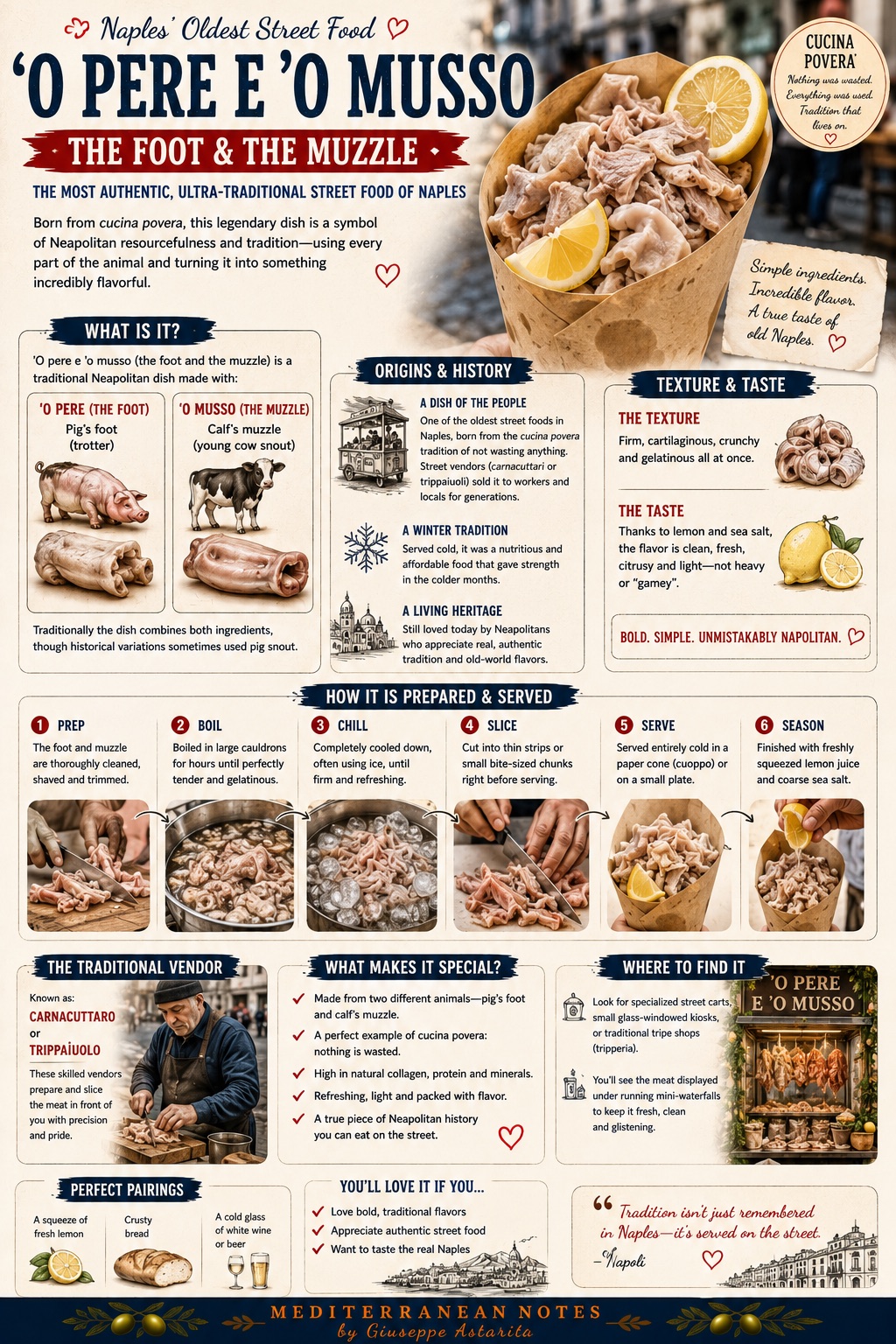
Tap to enlarge — 'O pere e 'o musso: the foot, the muzzle, the vendor tradition
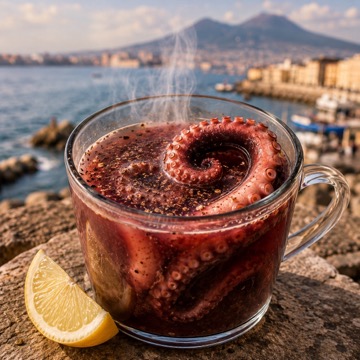
If 'o broro 'e purpo is the drinkable end of the nothing-wasted principle, this is its chewable end — the two oldest items in the street canon, both born at the fish market and the slaughterhouse gate, both still alive because Naples does not let go of things that are true. Whether I ever order a cone remains an open question between me and the city.