Minestra Maritata
The married soup -- meat and greens, slow cooked, a Campanian tradition
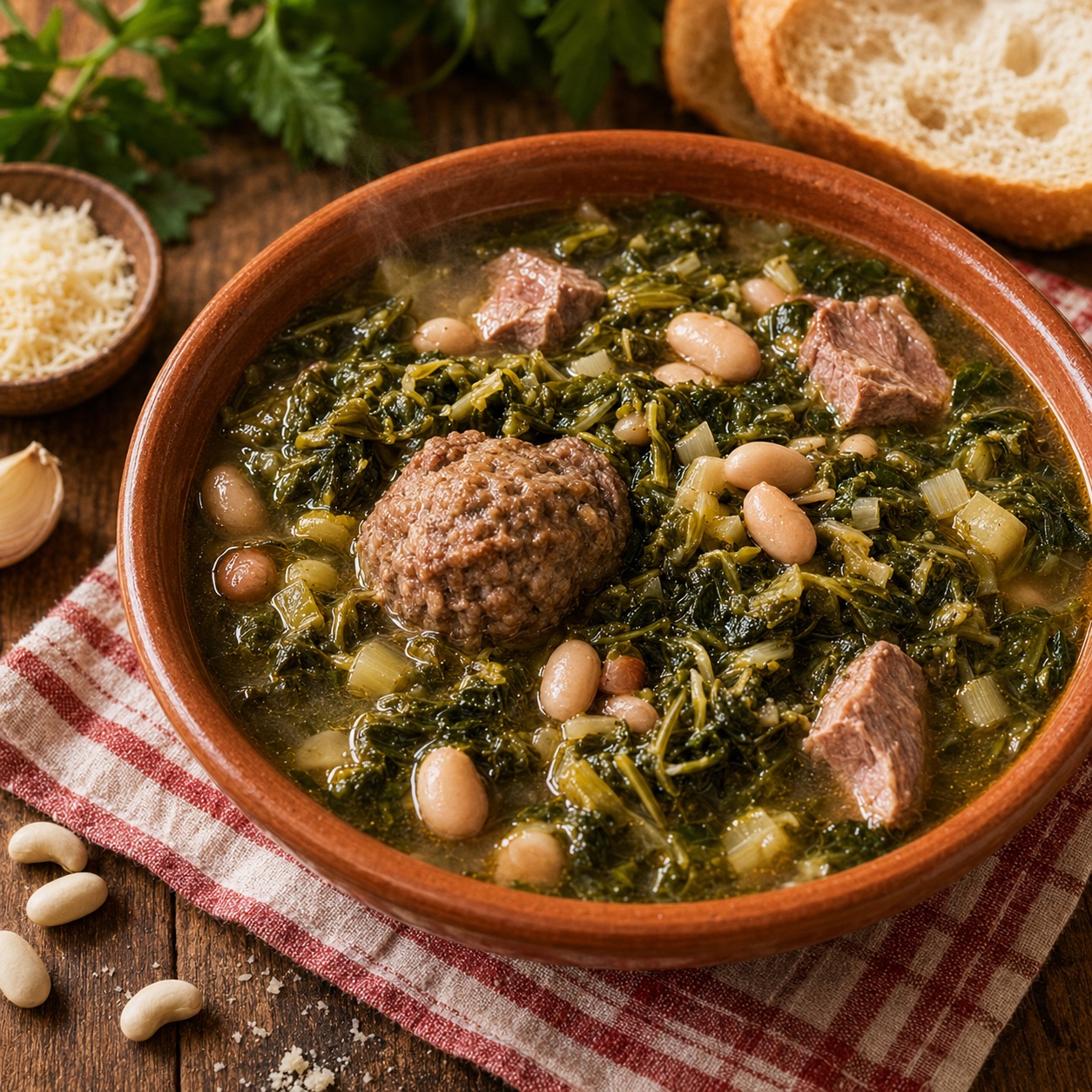
The name means married soup -- maritata from maritare, to marry -- because it brings together two soulmates that the Campanian peasant tradition understood were better together than apart: meat and greens. The meat provides richness, body, and the collagen-rich broth that makes the soup sustaining rather than merely warming. The greens -- escarole, chicory, savoy cabbage, turnip greens in various combinations depending on the season and the family -- provide bitterness, texture, and the vegetable depth that cuts through the richness of the meat. Together they produce something that neither produces alone, which is the marriage the name describes.
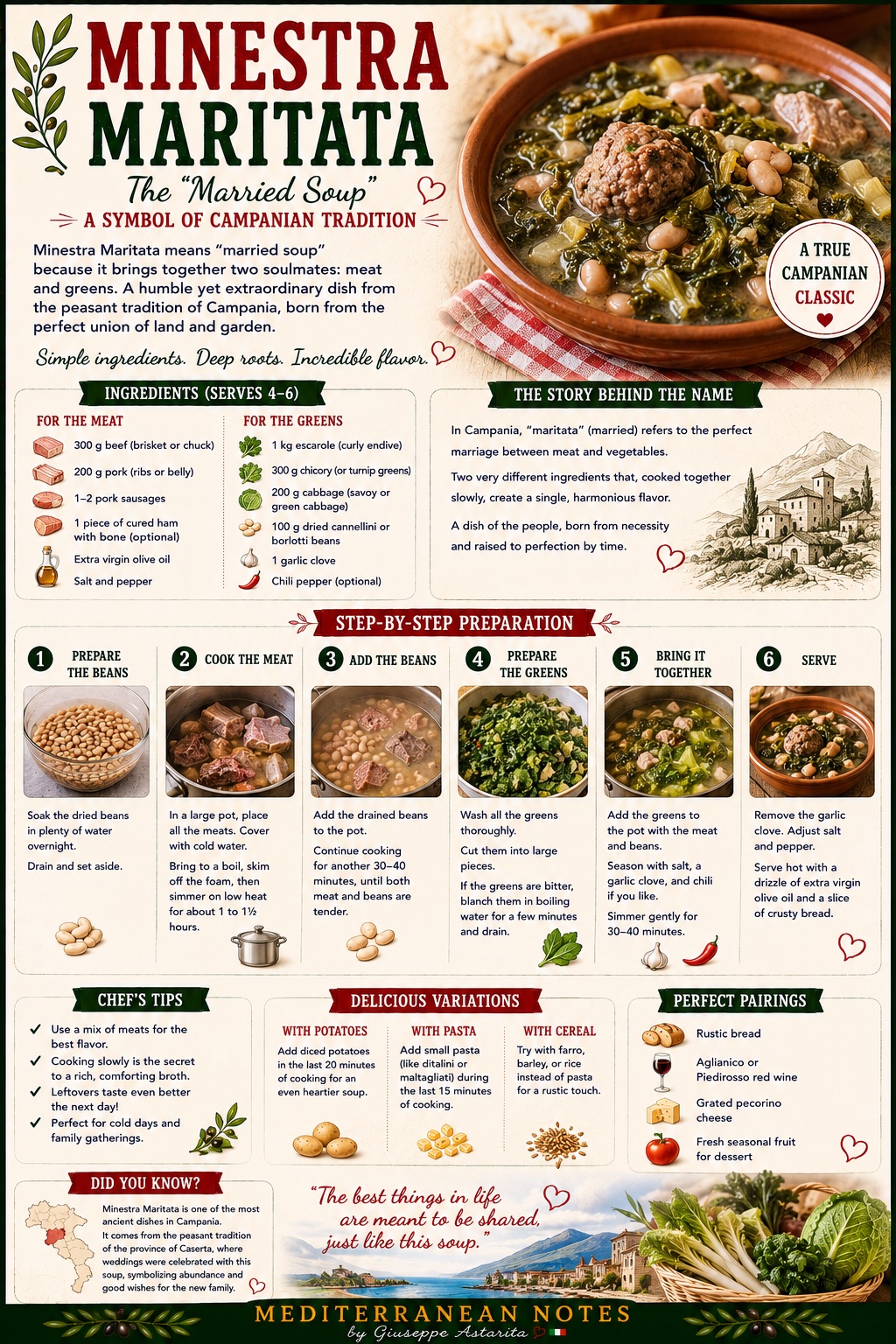
The infographic notes that this is one of the most ancient dishes of Campania, specifically from the peasant tradition of the province of Caserta, where it was served at weddings as a symbol of abundance and good wishes. A wedding soup, literally: enough meat, enough greens, enough beans to feed many people from one pot, cooked slowly until the broth became deep and rich and the greens had absorbed the meat's flavor. This is the same dish that appears in Italian-American cooking as wedding soup, brought by the emigrants from Campania and the surrounding regions and adapted to whatever was available in the new country -- the meatballs added later, the delicate pasta that replaces the rough-cut greens of the original.
When mixed meats -- beef, pork, cured ham -- simmer for 1 to 1.5 hours in water, they release collagen, gelatin, dissolved proteins, minerals, and fat-soluble flavor compounds into the broth. The collagen converts to gelatin and gives the broth its body. When the greens are added in the final 30-40 minutes, two additional processes occur: the bitter compounds from the escarole and chicory (lactucins and sesquiterpene lactones) dissolve partially into the now-flavored broth, distributing their bitterness through the liquid and moderating it by dilution; and the plant cell walls release pectin, which thickens the broth slightly and gives it a more coating texture. The fat from the meat -- particularly from the pork belly and cured ham -- carries aromatic compounds that bond to the surface of the greens during the simmer, so that each leaf of escarole or cabbage tastes of both the vegetable and the broth it cooked in. This mutual flavor transfer is the chemistry behind the marriage the name describes.
The recipe
Buon appetito -- e buon matrimonio.