Susamielli e Raffiuoli
The two elders of the Neapolitan Christmas tray — the medieval S-shaped spice cookie and the white-glazed convent sponge. Over three hundred years of December between them.
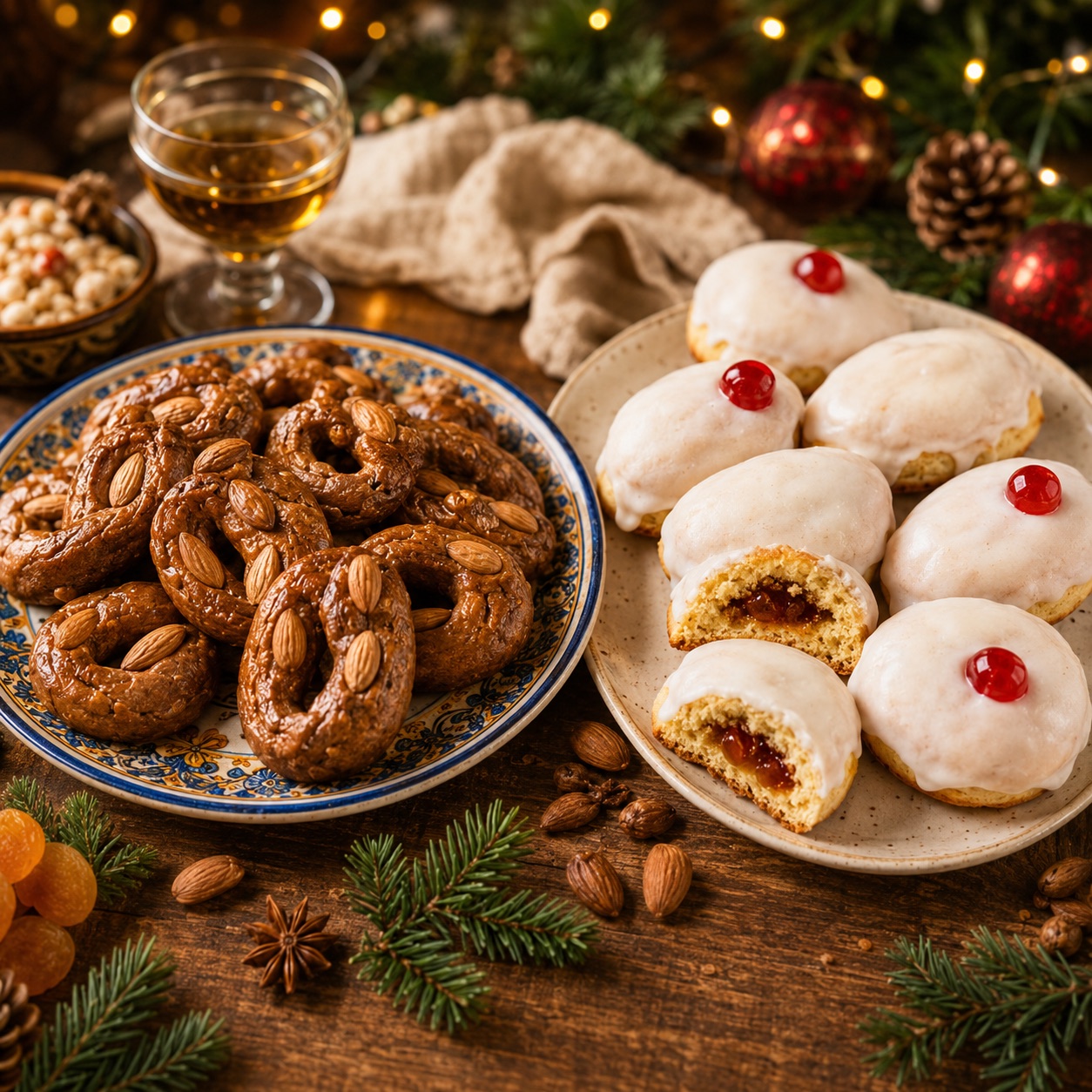
Every Neapolitan Christmas tray tells a story, and these are two of its oldest chapters. Next to the struffoli, the mostaccioli and the roccocò, two shapes always appeared: a dark, hard S studded with almonds, and a soft white-glazed oval with a candied cherry on top. The susamiello and the raffiuolo — over three hundred years of tradition between them, and two completely opposite ideas of what a Christmas sweet should be.
The susamiello is the elder, born in convent kitchens and medieval Naples; the name likely points back to sesame seeds or ancient honey cakes, though modern versions rarely contain sesame at all. What they do contain is the whole spice cabinet of a Neapolitan December: almond flour, honey, candied orange peel, cinnamon, cloves. Always S-shaped, always deep brown, always firm — the kind of cookie that is honestly better a few days after baking, and that demands a glass of dessert wine the way roccocò demands strong teeth.
The raffiuolo is its elegant counterpart: a soft, light sponge of eggs, flour, sugar and lemon zest, shaped into an oval and covered with a brilliant white sugar glaze — sometimes hiding a heart of apricot jam (raffiuolo con marmellata), sometimes dressed by the pastry shops in chocolate. Where the susamiello is rustic and keeps for weeks, the raffiuolo must stay soft and moist, its glaze bright white, and it pairs with coffee rather than wine. Same tray, opposite temperaments — which is, of course, the whole point of a Neapolitan Christmas tray: there has to be something for every relative.
The two sweets are a study in opposite preservation strategies. The susamiello is built like a medieval food technology: honey is hygroscopic and antimicrobial, the dough is low in moisture, and the spices — cinnamaldehyde, eugenol — have genuine antibacterial activity, which is why spiced honey cookies were the sweets that could survive weeks of a pre-refrigeration December. The raffiuolo takes the opposite bet: a high-egg sponge holds moisture in a delicate protein foam, and its sugar glaze acts as a humidity barrier slowing the staling of the crumb beneath. One sweet engineered to last, one engineered to be perishable and perfect — both from kitchens that knew exactly what they were doing, centuries before anyone wrote down why.
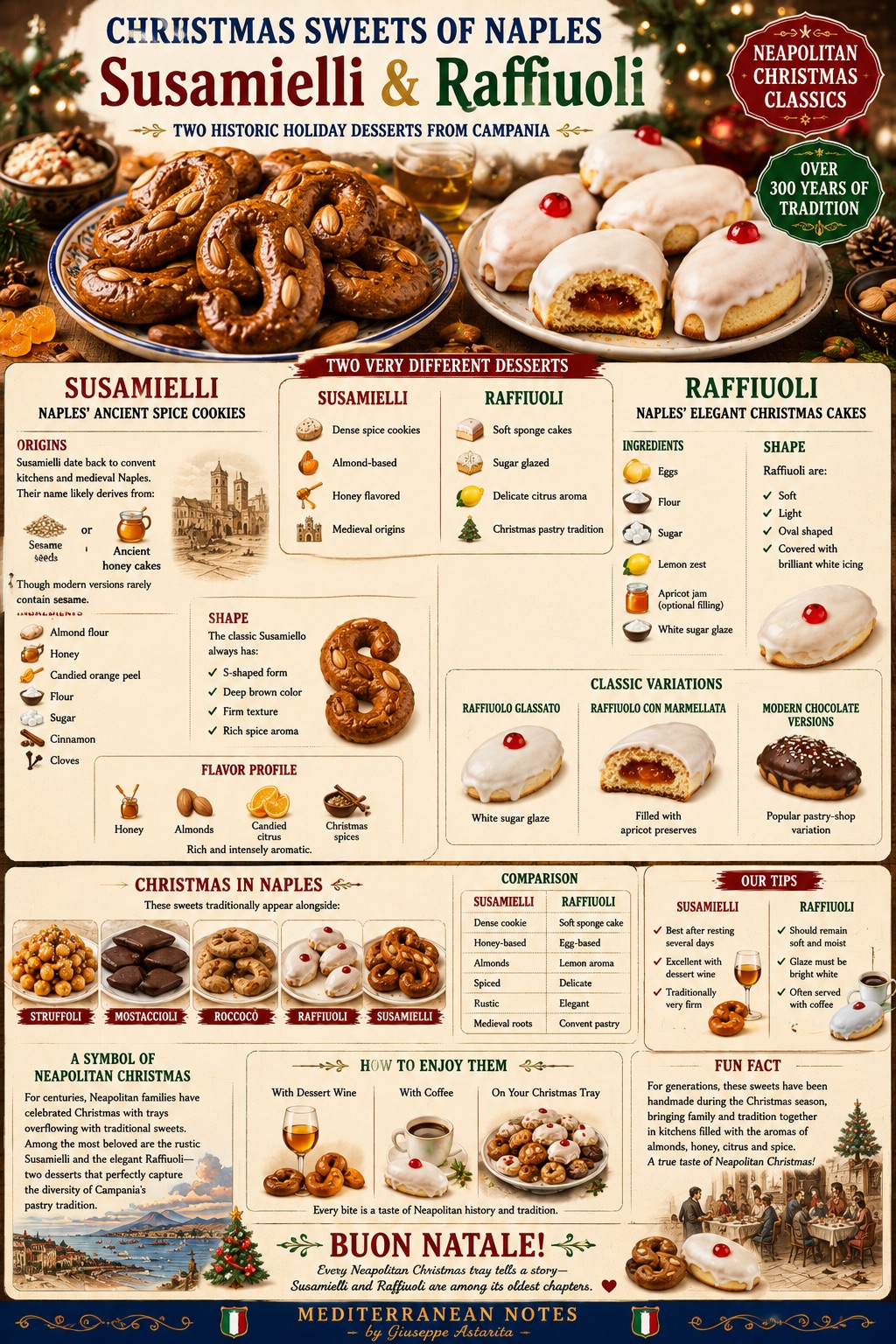
Susamielli & Raffiuoli — two historic Christmas sweets of Campania compared, side by side.
Two Sweets, Side by Side
Two sweets, one tray — how to know and serve them
- Susamielli: almond flour · honey · candied orange peel · flour · sugar · cinnamon · cloves
- Always S-shaped, deep brown, firm, intensely aromatic
- Raffiuoli: eggs · flour · sugar · lemon zest · white sugar glaze
- Soft, light, oval, brilliant white — optional apricot jam filling
- Variations: raffiuolo glassato (plain glaze) · con marmellata (jam heart) · chocolate-coated pastry-shop versions
- Serve susamielli with dessert wine; raffiuoli with coffee