Mostaccioli Napoletani
The Christmas spiced biscuit -- soft, chocolate-coated, perfumed with il pisto
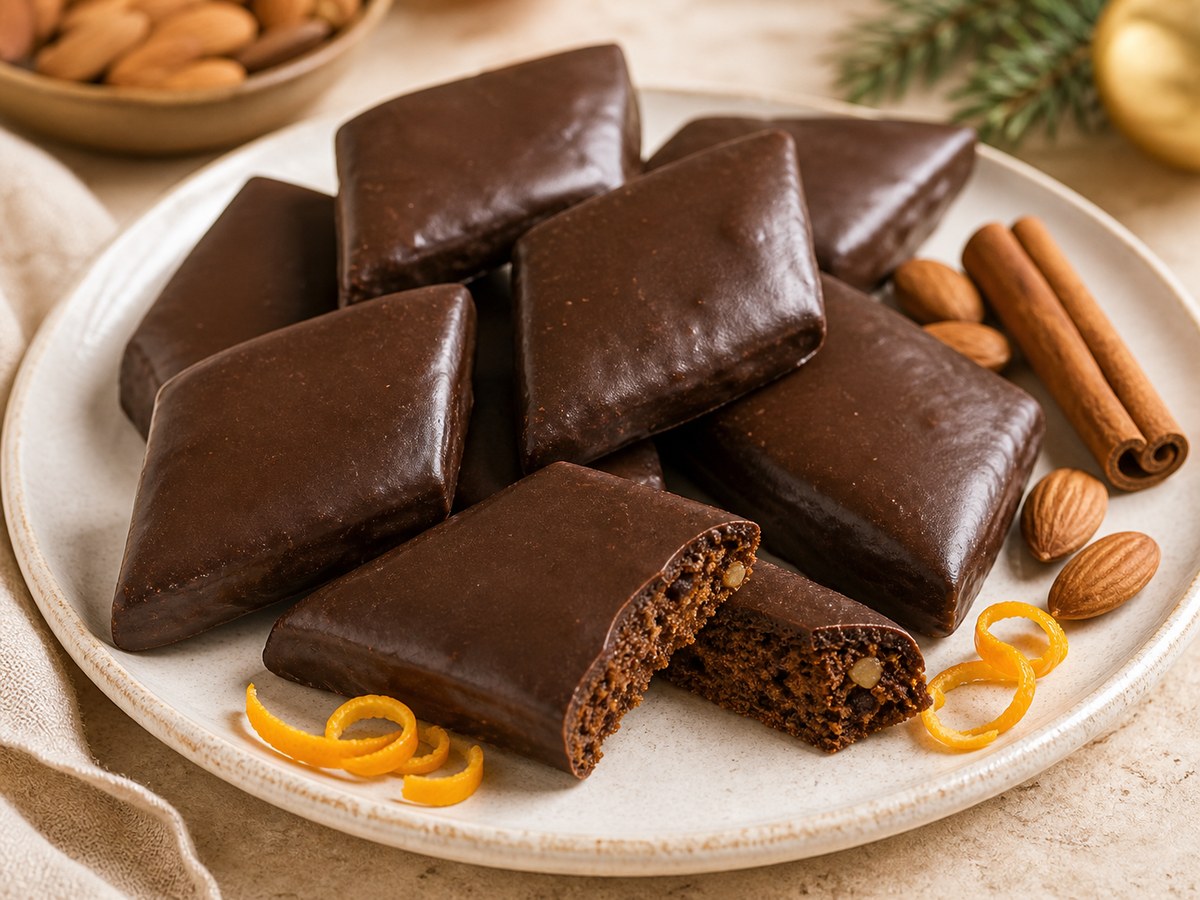
The mostaccioli are one of the most ancient sweets in the Neapolitan Christmas tradition -- soft, spiced diamond-shaped biscuits wrapped entirely in dark chocolate, fragrant with orange zest and a spice mixture called il pisto napoletano that has no precise equivalent in any other regional tradition. The pisto is a blend of cinnamon, cloves, nutmeg, coriander, anise, and black pepper that perfumes the dough from within and makes the whole kitchen smell like Christmas before anything has been baked. The chocolate coating arrives after, when the biscuits have cooled -- they are dipped completely in melted dark chocolate and left to set until the shell is firm and glossy. Inside: soft, slightly yielding, intensely spiced. Outside: bittersweet dark chocolate that snaps when you bite through it.
The mostaccioli are a dolce da regalare -- a sweet made to give, not just to eat. In Campania they appear in the weeks before Christmas in tins and boxes wrapped in paper, taken to relatives and neighbors, left on tables alongside the struffoli and the rococco and the quaresimali. They keep well -- two days after baking they are actually better than the day of, as the pisto aromas distribute more evenly through the dough -- and they travel without damage because the chocolate coating protects them. This is the sweet you make in quantity on a Saturday and give away on Sunday.
The dough is simple and must be made correctly in one respect: the cocoa is in the dough itself, not just in the coating, which gives the mostaccioli their characteristic dark color when cut. The ammoniaca per dolci -- baker's ammonia, ammonium bicarbonate -- is the traditional leavener, producing a lighter, more tender crumb than baking soda alone. It is available at Italian specialty stores; if you cannot source it, baking powder works but the texture is slightly different. The pisto is the irreplaceable element: without it, the mostaccioli are merely chocolate-coated spice biscuits. With it, they are Neapolitan Christmas.
Ammonium bicarbonate (ammoniaca per dolci) releases ammonia gas, carbon dioxide, and water vapor when heated during baking. Unlike baking soda, which requires an acid to activate, ammonium bicarbonate decomposes completely at baking temperatures, leaving no residual chemical taste in the finished product -- which is why it produces a particularly clean, light flavor in spiced biscuits where the spice aromatics should not be competed with. The leavening action is more explosive than baking soda, creating a more open crumb structure. Importantly, ammonium bicarbonate works poorly in thick, moist baked goods -- the ammonia cannot fully escape and leaves an unpleasant off-flavor -- but works excellently in thin, dry biscuits where the gas disperses rapidly during baking.
The chocolate coating is applied to warm (not hot) biscuits for two reasons. First, a warm biscuit absorbs a thin layer of chocolate into the surface before it sets, creating a stronger bond between cookie and coating that resists cracking during handling. Second, the slight residual heat from the biscuit helps maintain the temper of the melted chocolate longer during the dipping process, giving more time to work before the chocolate begins to seize. The overnight setting at room temperature allows the chocolate to crystallize slowly into a stable crystal form (Form V cocoa butter crystals) that produces the characteristic snap and gloss of well-tempered dark chocolate.
The recipe
Makes 15-20 biscuits. Make the pisto fresh if possible. Refrigerate the dough for 30 minutes before rolling. Bake only 10 minutes -- they will seem underdone but will firm as they cool. The chocolate coating goes on when completely cold.
Il pisto napoletano (make in advance)
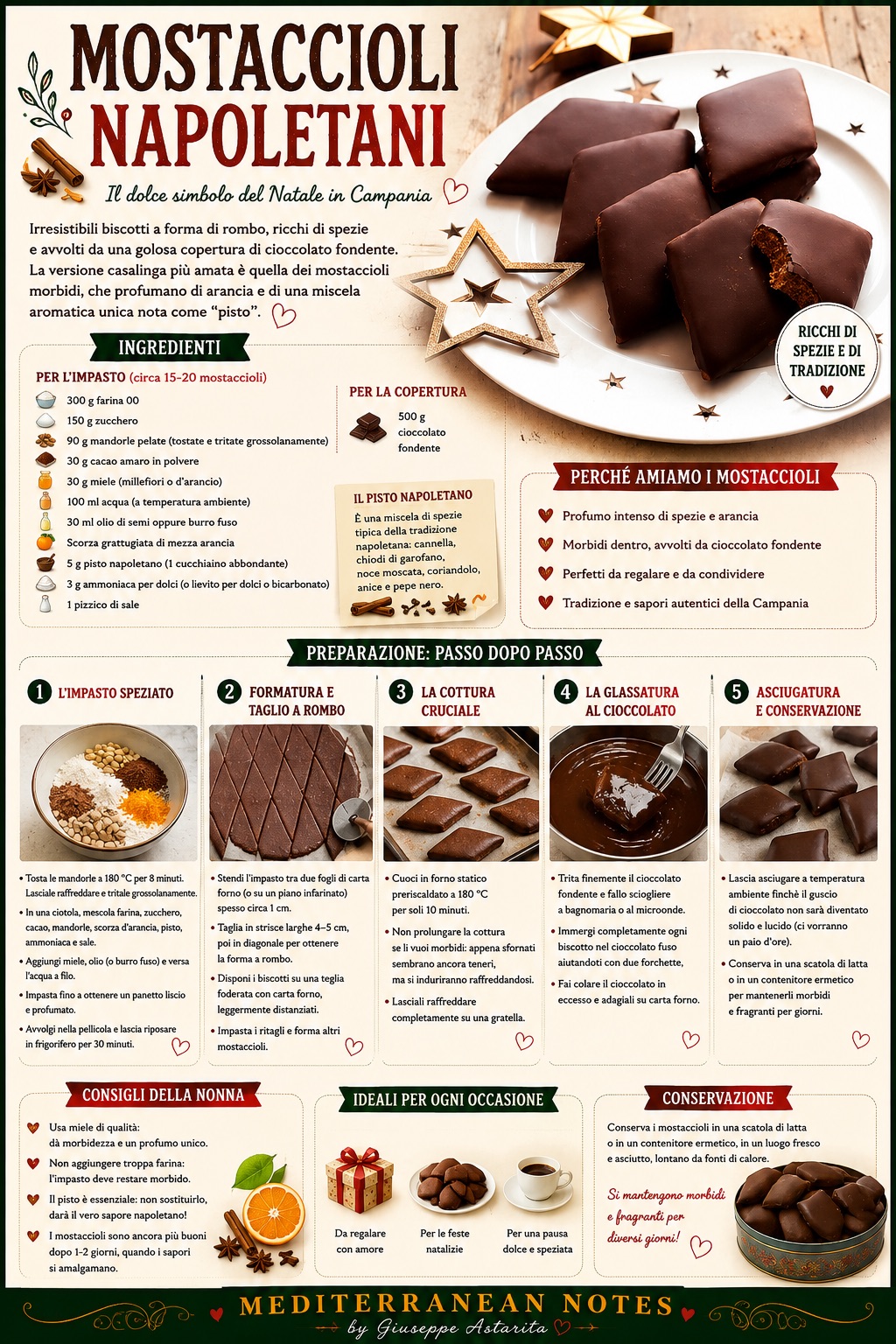
For the dough
For the coating
Even better 1-2 days after making. Store in a tin at room temperature. They keep for up to a week and the pisto flavors deepen and harmonize over time.
Buon Natale -- e buon appetito.