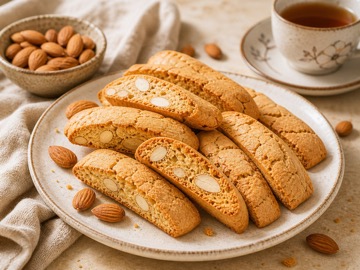
Rococco Napoletani
Almond cookies from the 1700s -- crispy crust, chewy center, a Christmas tradition
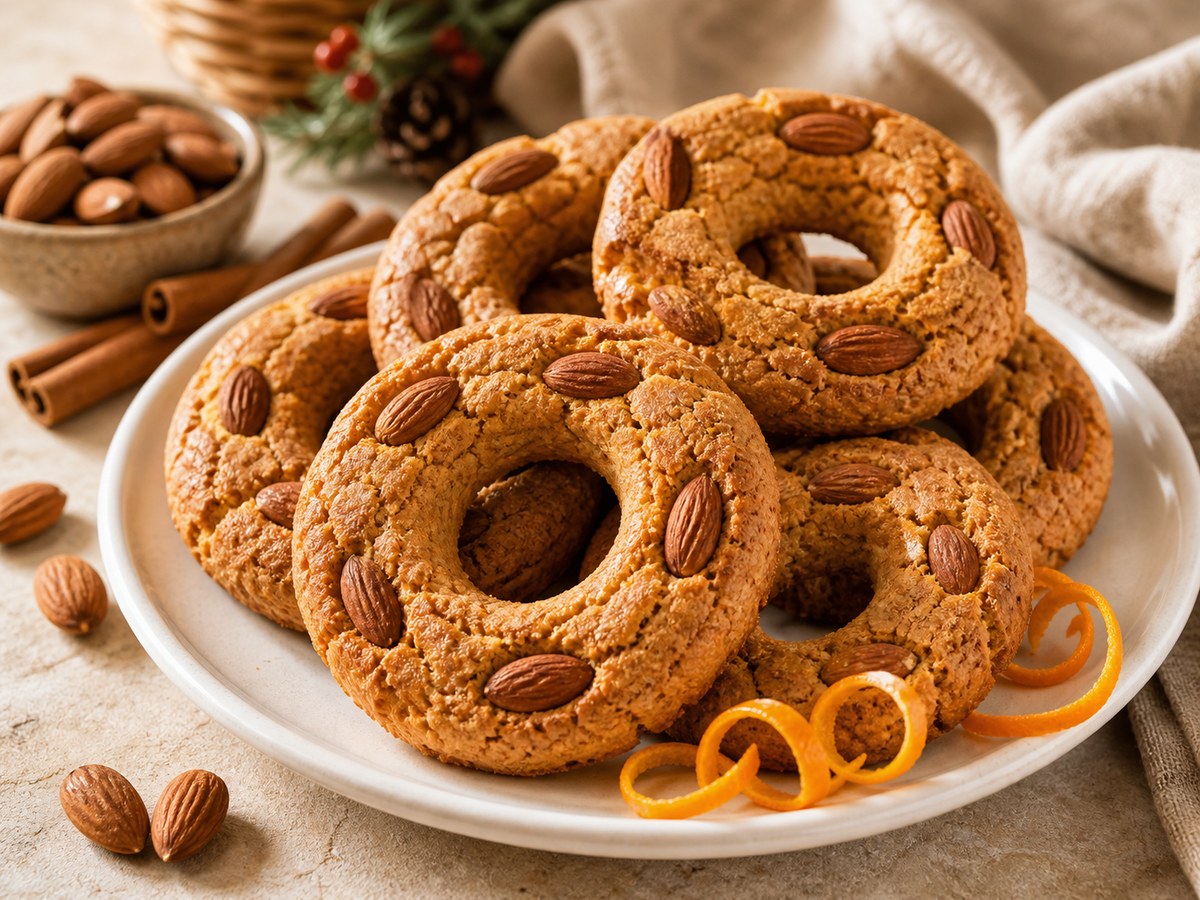
The rococco are among the oldest surviving cookies in the Neapolitan pastry tradition, with documented recipes dating to the eighteenth century in the convent kitchens of Naples. They were made by the cloistered nuns -- the monache di clausura -- who produced pastries as one of the few sources of income permitted to their enclosed communities. The name comes from the shape: in Neapolitan dialect, rococco refers to something rough and craggy, like a small rock -- which is exactly what these cookies look like when they come out of the oven, their surfaces cracked and irregular, pale gold against the darker almond interior.
They are primarily a Christmas cookie in Naples, appearing in the weeks before the holiday in every pasticceria and home kitchen. They are traditionally eaten dipped into sweet wine -- vino cotto, vin santo, or a good Aglianico passito -- or into a strong espresso. The dipping softens their considerable crunch; without it they are hard enough to require some commitment. This hardness is intentional and traditional: a rococco that yields at first bite without being dipped has not been baked correctly.
The technique is essentially a coarse almond macaroon: whole almonds toasted and ground to a rough meal, folded into a stiff meringue of egg whites and sugar, shaped into rough mounds, and baked at a low temperature until the exterior cracks and sets. The cracking is not a defect -- it is the characteristic appearance and the sign that the exterior has set before the interior finished expanding. A smooth rococco has been overmixed or baked at too high a temperature. The cookies are naturally gluten-free, a fact that the eighteenth-century convent cooks did not know in those terms but arrived at practically by using only almonds and egg whites as the structural elements.
The cracked surface is the result of differential drying during baking. The egg white meringue at the surface sets and dries relatively quickly, forming a thin rigid shell. The interior, insulated by this shell, continues to expand as residual moisture vaporizes. This expansion stress cracks the surface, producing the characteristic irregular fissures. A lower baking temperature -- 160C rather than 180C -- gives the interior more time to expand before the surface sets too firmly, producing larger, more pronounced cracks. The long shelf life (up to two weeks in an airtight tin) comes from the very low moisture content after baking and from the tocopherols naturally present in almonds, which act as antioxidants and slow the oxidation of the almond fats that would otherwise cause rancidity.
The recipe
Makes about 30 cookies. Toast the almonds properly; use room-temperature egg whites; do not overmix. Store in an airtight tin -- they improve over the first few days.
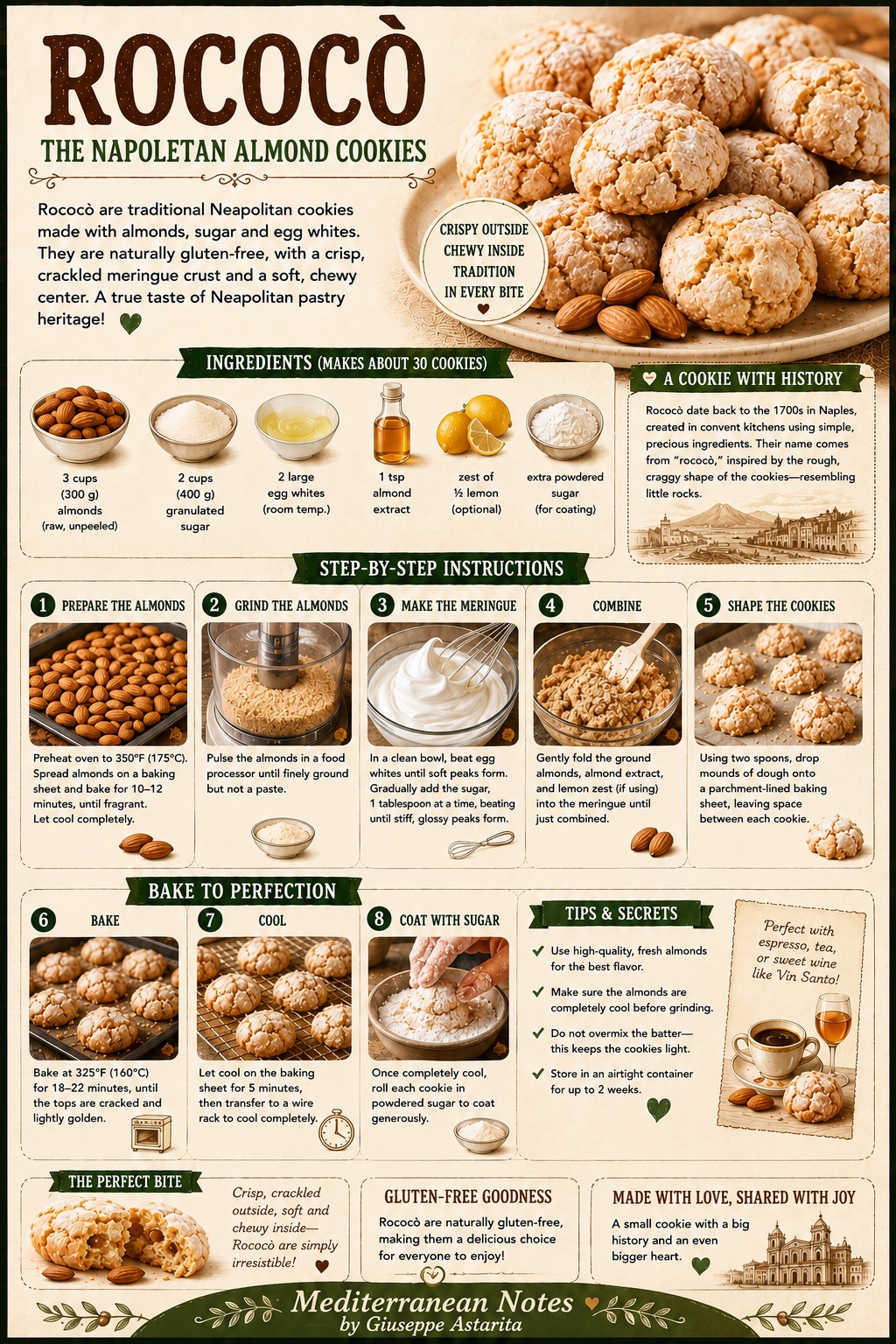
Serve with espresso -- dip the rococco for a few seconds to soften the crust -- or alongside Aglianico passito or vin santo. The combination is one of the traditional pleasures of the Neapolitan Christmas table.
Buon appetito -- e buon Natale.