Spigola con patate al forno
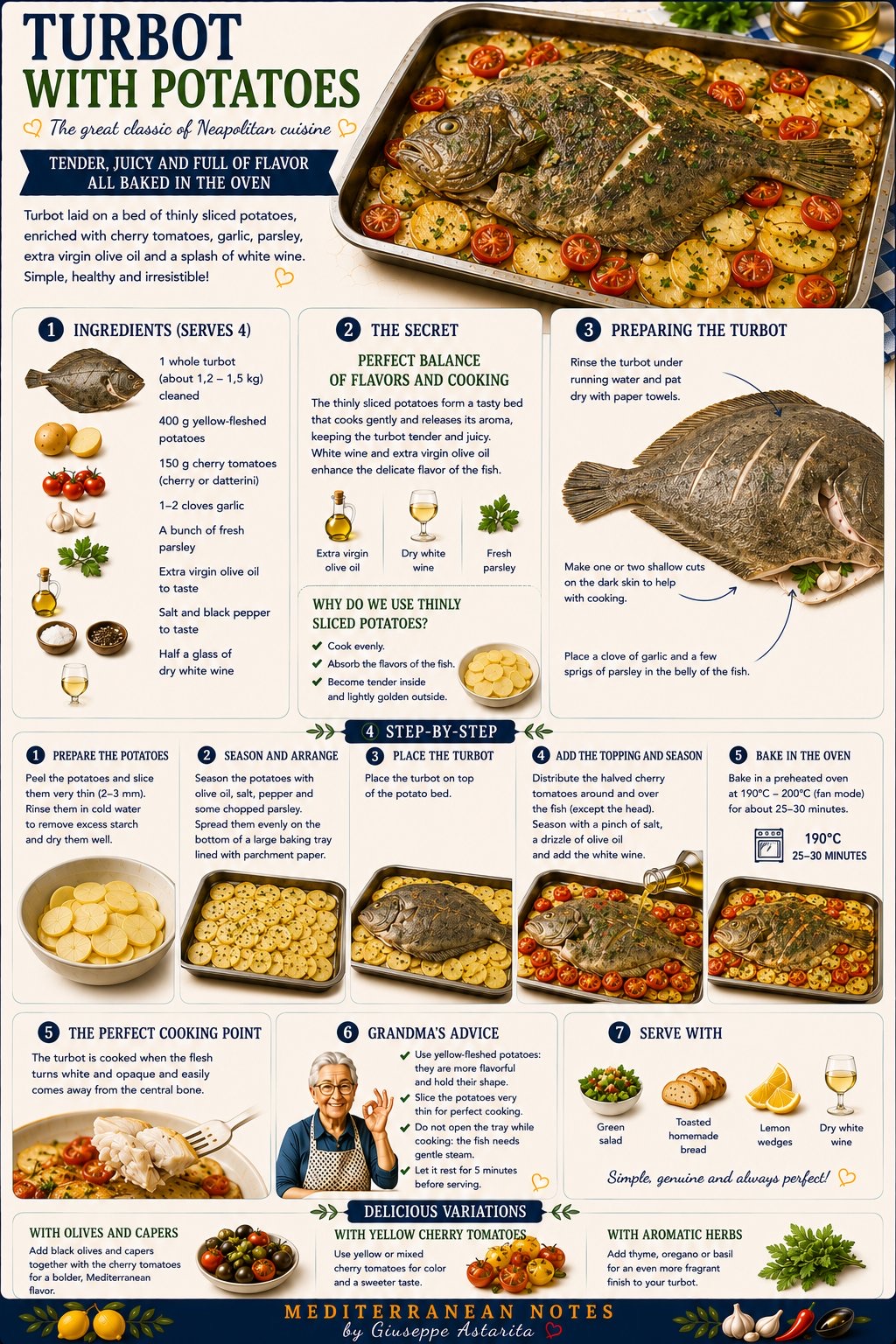
The whole fish laid on a bed of thinly sliced potatoes. Cherry tomatoes around it, a splash of white wine, garlic, parsley, olive oil. Everything goes into the oven at once. While the fish cooks, the potatoes absorb the juices, the wine, and the tomato liquid. They become the best part of the tray.
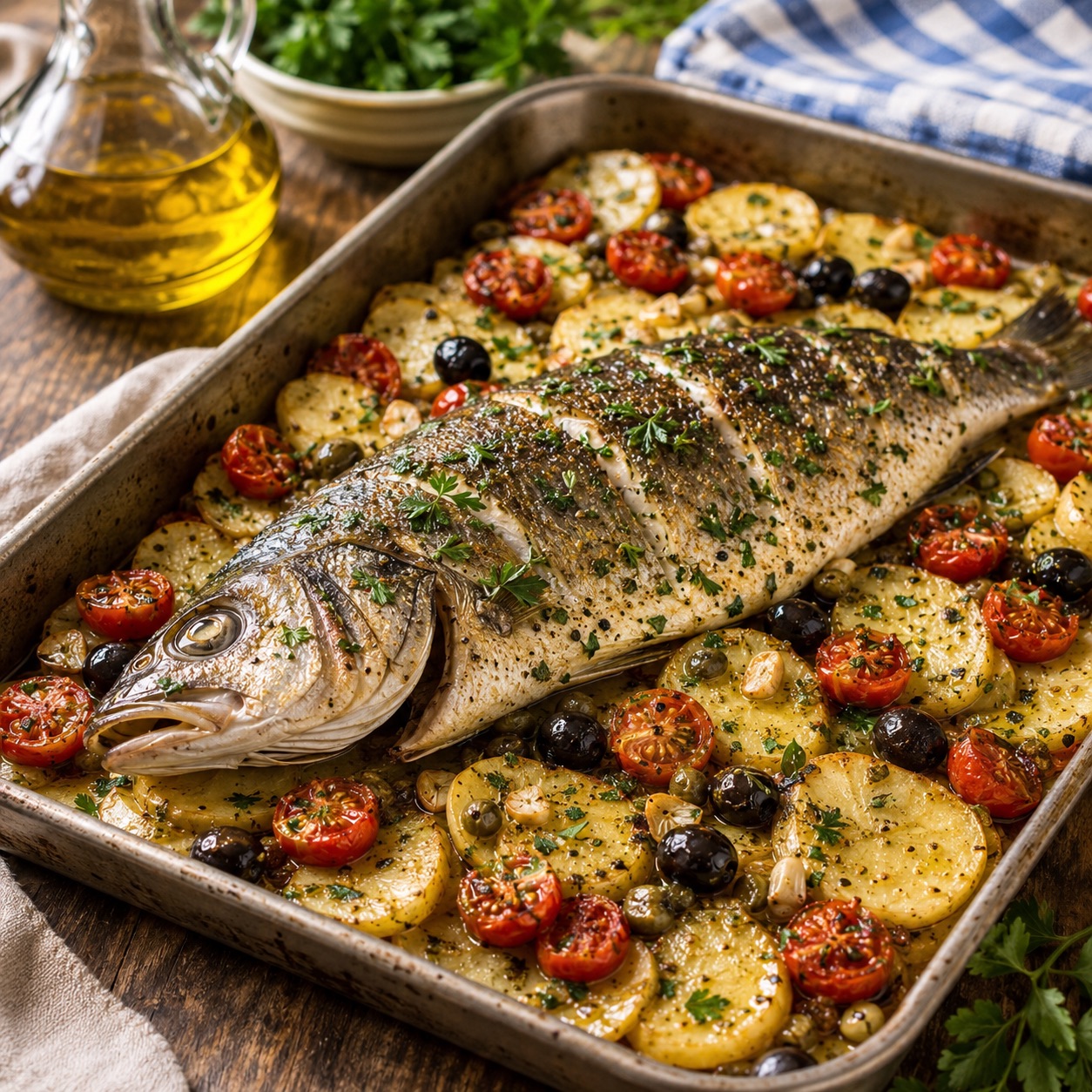
When my mother said oggi ho fatto la spigola, this was often what she meant. Not the guazzetto, not the cartoccio — those were dishes for two or for a quiet evening. The spigola con patate was a statement: a whole fish, centered on a large tray, surrounded by potatoes and tomatoes, carried from the oven to the table in the same vessel it cooked in. It looked like something. The presentation required no plating. The tray was the dish.
The logic of this preparation is the potato bed. The fish is laid on top of the potatoes, which means the fish never touches the tray directly — it sits elevated, letting heat circulate around it while the rendered juices and wine drip down into the potato layer below. The potatoes cook in the fish's drippings. By the time everything is done, the potato slices on the bottom are soft and saturated, the ones near the surface are lightly golden, and the fish above is just cooked through, still moist inside, the skin crisped from the oven heat. Two different textures from one hour in the oven. This is why the preparation works.
The potato must be sliced thin — 2 to 3 mm, ideally with a mandoline. A thick slice does not cook through in the same time as the fish; a thin slice absorbs liquid, softens, and begins to caramelise at the edges. Yellow-fleshed potatoes are the right choice: more flavor, more sugar, they hold their shape through the cooking time without falling apart. My mother rinsed the slices in cold water after cutting to remove excess starch, then dried them carefully before layering them in the oiled tray.
Why the potato bed works — starch absorption and the Maillard crust
Thinly sliced potato is an extraordinarily effective flavour absorber in oven preparations. Raw potato starch granules swell in the presence of liquid as the oven temperature rises, gelatinising and incorporating whatever cooking liquid — wine, olive oil, rendered fish juices, tomato water — is present in the pan. The potato acts almost like a sponge with structure: it absorbs flavour compounds while maintaining enough integrity to be cut and eaten. At the surfaces exposed to direct oven heat, the Maillard reaction produces browning and toasted aromatic compounds from the potato sugars and amino acids. The net result is a graduated texture: the lower slices are soft, almost confit-like; the upper ones are partially caramelised. The fish above benefits from indirect heat during the early cooking phase as the potato layer insulates it from the tray, then from direct radiant heat as the oven temperature completes the cooking. This is why rinsing the slices matters: removing surface starch prevents the slices from sticking together before they absorb cooking liquid.
Recipe — serves 4
Ingredients
Method
Prepare the potatoes. Peel and slice very thin — 2–3 mm, with a mandoline if you have one. Rinse in cold water, drain, and pat dry thoroughly. Season with salt, pepper, and a few slices of garlic. Toss with 2 tbsp olive oil.
The rinse removes surface starch and prevents the slices from gluing together before the cooking liquid separates them.
Build the tray. Line a large baking tray with parchment. Spread the seasoned potato slices evenly across the base — they can overlap slightly. Drizzle with a little more olive oil.
Prepare the fish. Rinse the sea bass under cold water and pat completely dry. Make 2–3 shallow diagonal cuts through the skin on each side — this helps heat penetrate and prevents the skin from buckling. Season inside and out with salt and pepper. Stuff the cavity with a garlic clove and a few parsley sprigs.
Place the fish and arrange the tomatoes. Lay the fish on top of the potato bed. Scatter the halved cherry tomatoes around and over the fish — everywhere except the head. Drizzle everything generously with olive oil. Season the tomatoes with a pinch of salt. Pour the white wine over the entire tray.
Bake. Preheat oven to 190–200°C fan. Bake for 25–30 minutes. The fish is done when the flesh is opaque throughout and flakes easily when pressed at the thickest point behind the head. The skin should be lightly coloured and the potatoes golden at the edges.
Do not open the oven for the first 20 minutes. The steam that builds inside is part of what keeps the fish moist in the first phase of cooking.
Rest and serve. Remove from the oven and leave to rest for 5 minutes before bringing to the table. Scatter fresh chopped parsley over the top. Serve directly from the tray — fish, potatoes, tomatoes, and the pan juices all together. Lemon wedges alongside.
My mother carried it to the table in the tray. That was part of the ritual — the whole fish visible, the potatoes golden at the edges, the smell of white wine and olive oil and fish from the oven arriving before the tray did. She served it with a large spoon and a flat spatula, working the fish off the bone at the table rather than in the kitchen. The bones came away cleanly from a properly cooked fish. The potatoes at the bottom of the tray, the most saturated ones, were always the first to disappear.
La spigola è in tavola — con le patate che sanno di mare.