Spaghetti alle Vongole Fujute
The clams escaped. The flavor stayed. Eduardo De Filippo's 1947 trick that turns parsley stems and cherry tomatoes into the sea.
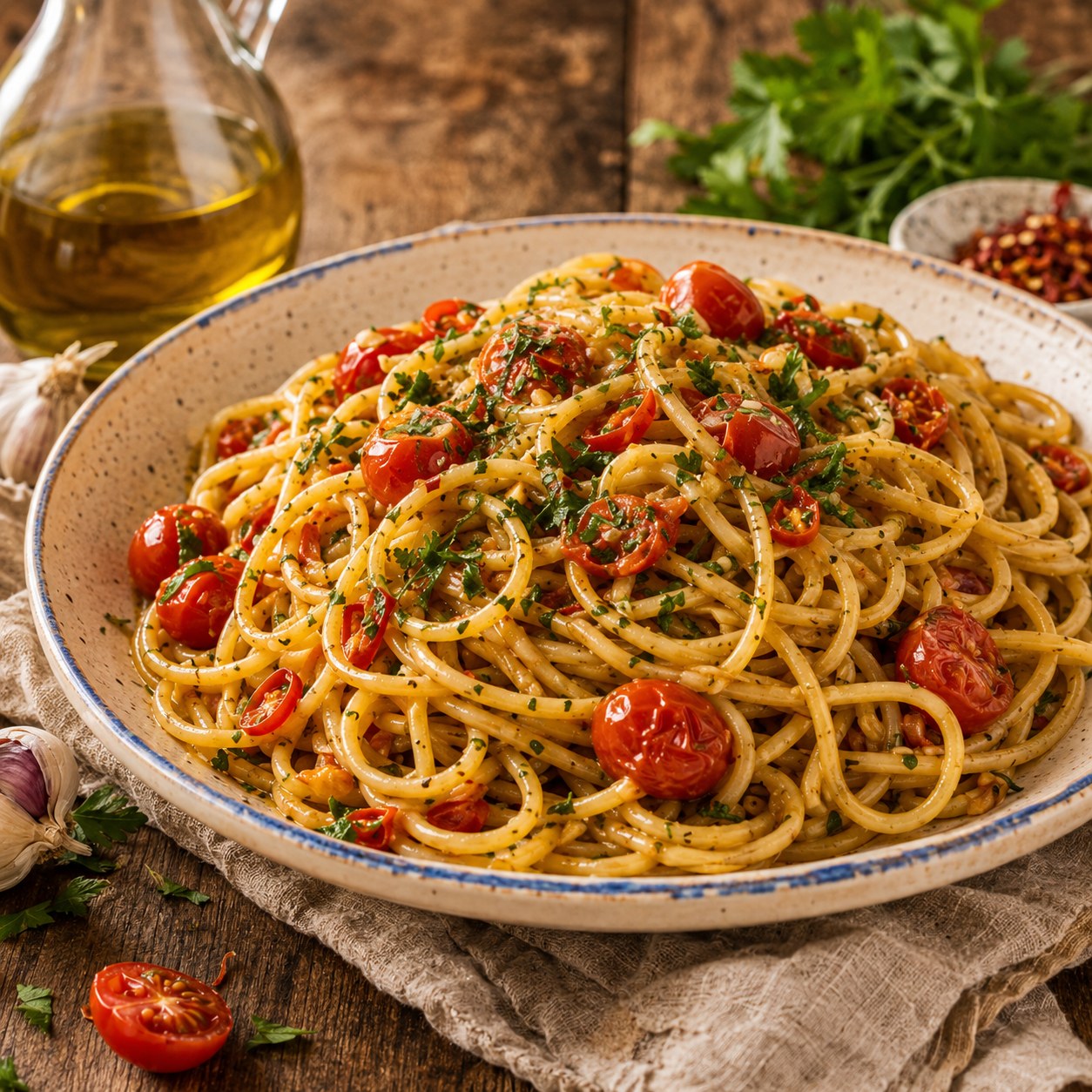
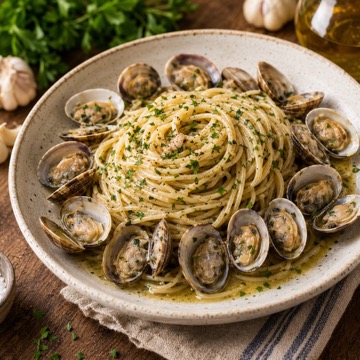
In post-war Naples, when fresh vongole were a luxury most families could not afford, Eduardo De Filippo — playwright, actor, and devoted home cook — sat down and did what Neapolitans have always done when circumstance stands between them and what they want: he made something better from what he had. The year was 1947. The dish he invented was the spaghetti alle vongole fujute — the spaghetti with the escaped clams — and it has been confounding and delighting people ever since.
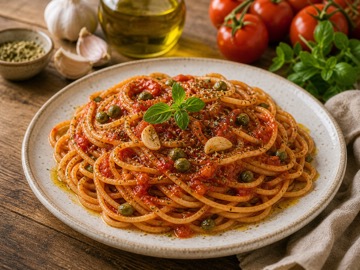
Fujute means "escaped" or "fled" in Neapolitan dialect. The clams are absent. That is the whole joke and the whole point. By frying whole parsley stems in generous olive oil alongside smashed garlic and sliced chili, then blistering sweet cherry tomatoes in that same oil until they begin to collapse, De Filippo discovered that the resulting sauce — bright, slightly sour, fragrant in a specific marine way — could trigger every sensory association the brain holds for a proper vongole sauce. The eyes say tomato and parsley. The nose says the sea.
The key is the parsley stems. Not the leaves — the stems, fried whole in the oil at the beginning. They release chemical compounds, including dimethyl sulfide and specific terpenoids, that share aromatic profiles with the sea and with shellfish. Remove them before serving (they have done their work), add the freshly minced leaves at the very end when the heat is off, and the dish smells like a plate of real vongole. Eduardo even wrote about this in his essays — a man who understood that great cooking is also a kind of theater, and that theater is about what the audience perceives, not only what is actually there.
Living now in the United States, where the specific ingredients of a Neapolitan kitchen are hard to find and sometimes impossible, I have come to understand this dish in a new way. So much of what I cook here is reconstruction from memory — attempting to recreate the exact aroma of something I ate in Caserta or Naples, using whatever is available, trusting that the memory of the flavor is more precise than the availability of the ingredient. Vongole fujute is the most honest expression of that practice. The clams were never really there. The flavor always was.
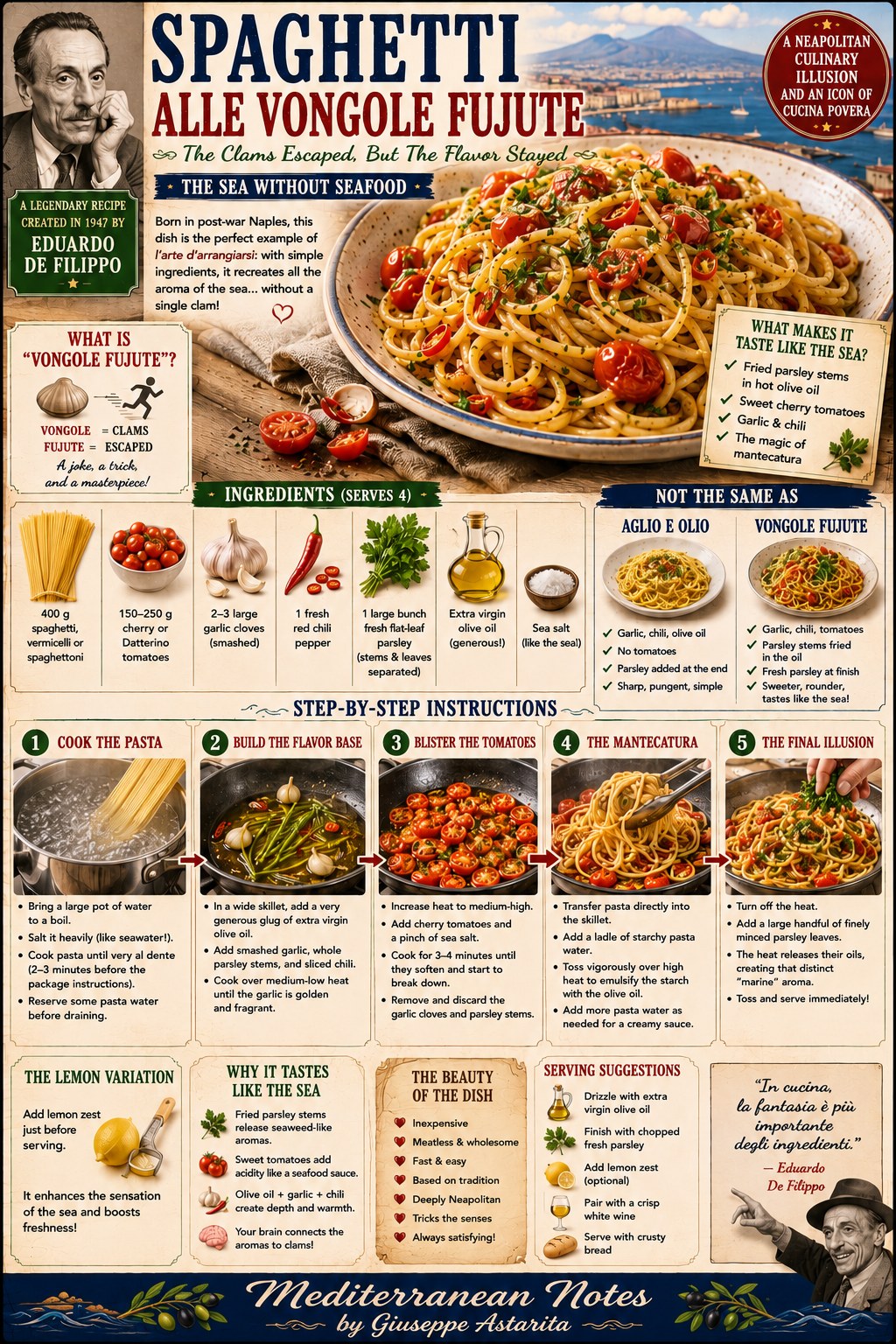
Tap to enlarge — La ricetta delle vongole fujute, passo dopo passo
Recipe — serves 4, 25 minutes
- 400 g spaghetti, vermicelli, or spaghettoni high quality — Gragnano if you can
- 150–250 g cherry or Datterino tomatoes halved
- 2–3 large cloves garlic peeled and smashed
- 1 fresh red chili sliced
- 1 large bunch fresh flat-leaf parsley stems separated, leaves finely minced
- Generous extra-virgin olive oil more than you think
- Sea salt salted very heavily — to mimic seawater
Eduardo De Filippo's contribution to Neapolitan cuisine is not this one dish — it is the philosophy it embodies. He wrote in his theatrical works about l'arte d'arrangiarsi as a form of dignity, not deprivation. You do not have clams; you have parsley, tomatoes, and the knowledge of what makes a vongole sauce taste like the sea. You use what you know. The dish that arrives at the table is honest about what it is — the name tells you the clams escaped — and it is good entirely on its own terms, not as a substitute but as an invention.
I cook this in the United States when I want to be reminded of the sea near Naples. The clams are not available, or the right kind are not available, or I simply want the thing that memory returns to — the specific combination of sweetness and aromatic brine that says vongole to the part of my brain formed in Campania. The stems do their work. The illusion holds.