Sogliola all'alacciata
Cherry tomatoes, Gaeta olives, capers, white wine — sole cooked in the flavors of the Neapolitan Mediterranean pantry. More assertive than the in bianco version, and one of those rare fish dishes that is genuinely better the day after it is made.
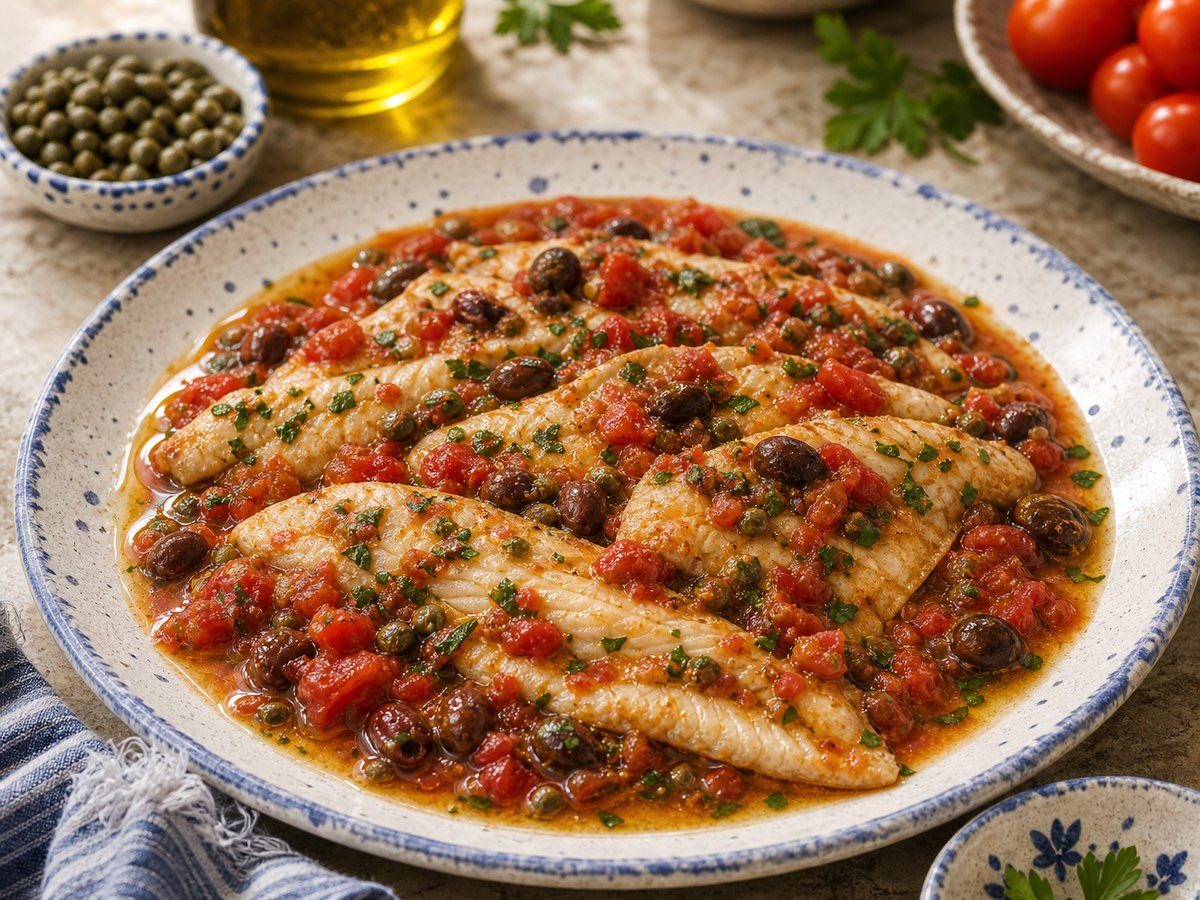
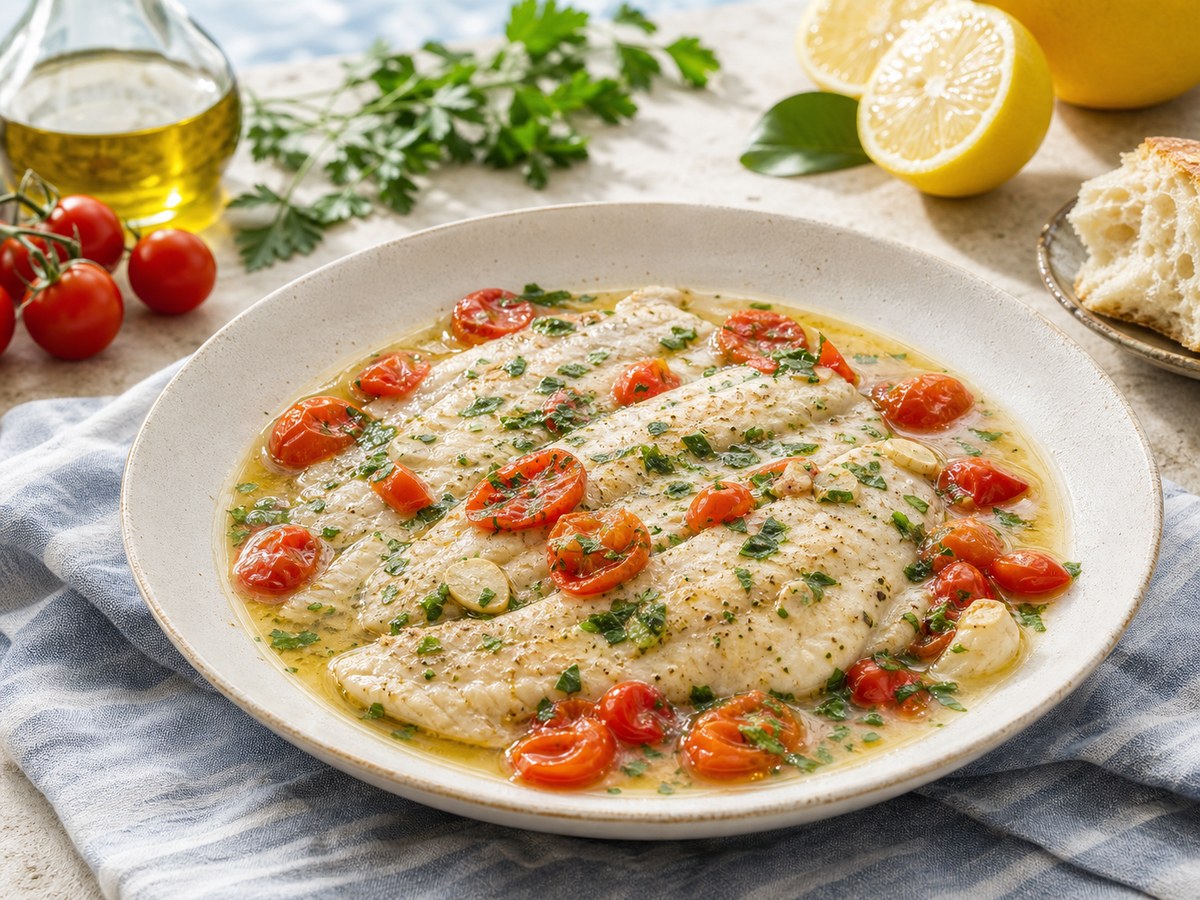
There are two distinct registers for sole in the Neapolitan kitchen. The first is purely clean — the fish in white wine and a little water, finished with lemon and cold olive oil, nothing added that could compete with its flavor. That version we ate most often, weekdays, quickly. The second is this one: the fish surrounded by the full southern pantry, embedded in a sauce of cherry tomatoes, dark Gaeta olives, briny capers, and garlic. The flavor moves in the other direction — outward, assertive, the fish absorbing the sauce rather than expressing itself alone.
Alacciata — sometimes called scaloppine alla mediterranea — was the version my mother reserved for Fridays when the table was fuller, when people were staying for a long lunch rather than eating quickly before returning to work. It requires slightly more effort than the acqua pazza version but not dramatically more, and it produces something with considerably more presence on the table. The sauce is built first, the fish goes in last and cooks briefly in it, and then — if you can wait — you let the whole thing cool and eat it the next day at room temperature, when the flavors have had time to integrate fully.
The waiting is the correct choice, though it requires a form of restraint that is not always available when people are at the table. On days when we made it specifically to eat the next day, it was always better. Cold, with bread to work through the sauce, slightly more concentrated than the night before — that is the best version of this dish. This is a piece of information worth having before you begin.
Why this dish improves overnight — flavour integration in fish and tomato sauces
When fish sits in a tomato-based sauce overnight, several processes continue after cooking ends. The fish proteins denature further under the mild acidity of the tomato (pH ~4.1–4.4), and the glutamate from the tomatoes along with the nucleotides released from the fish tissue continue to interact at the surface of the flesh, building umami depth. The Gaeta olives release phenolic compounds — principally oleuropein and hydroxytyrosol — into the oil-based sauce, which accumulates overnight. These are also the compounds responsible for the distinctive slightly bitter note that makes Gaeta olives differ from the milder Castelvetrano. Capers contribute capric acid and rutin. The net result of overnight resting is a more unified flavor in the sauce and a fish that has absorbed more of its aromatics than it could in the initial cooking window. This is why the dish tastes better the next day — it is chemistry, not imagination.
Recipe — serves 4
Ingredients
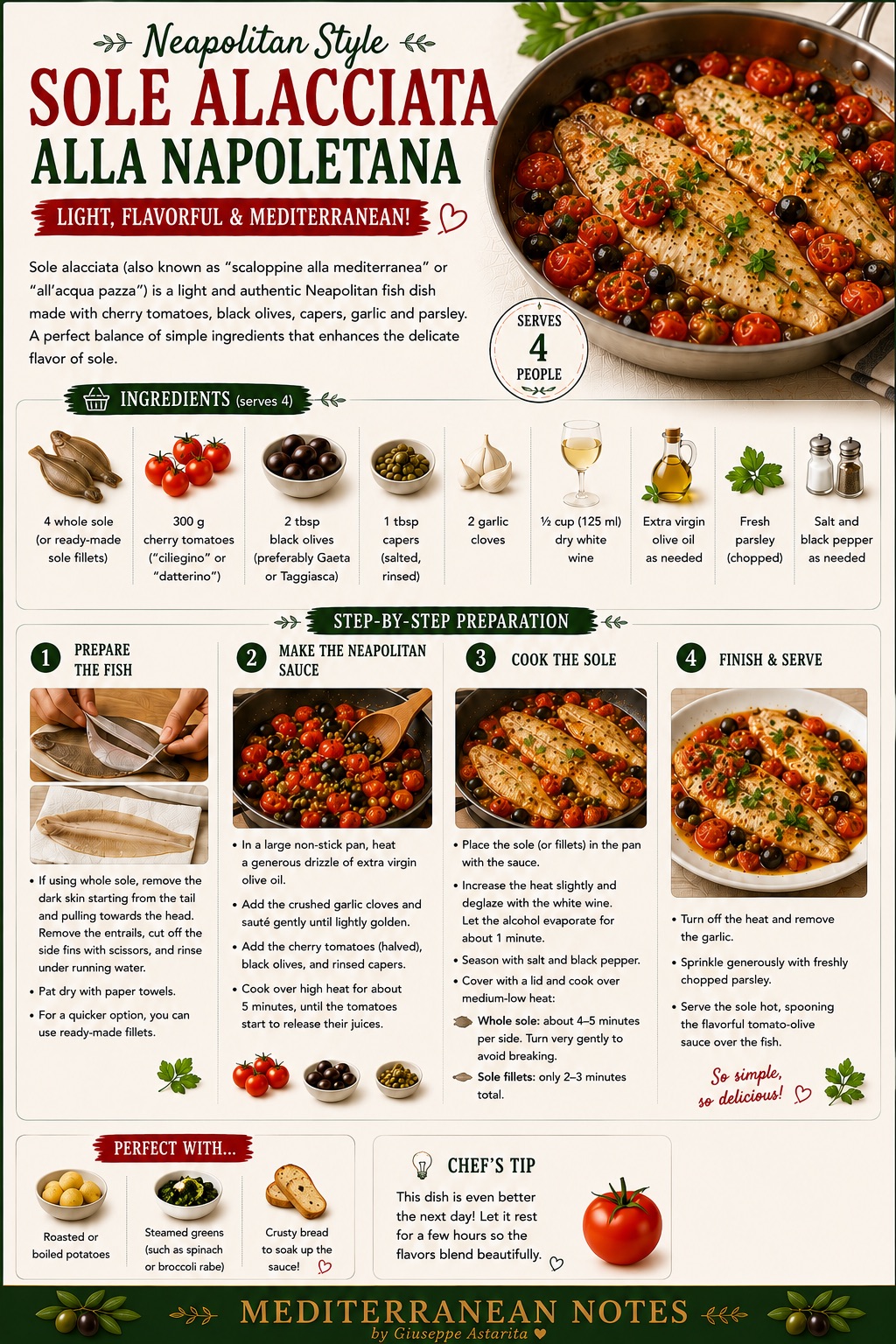
Method
Build the sauce. Heat 3 tbsp olive oil in a wide pan over medium heat. Add the crushed garlic and cook until golden, about 90 seconds. Remove the garlic. Add the cherry tomatoes and cook over high heat for 4–5 minutes, pressing some of them lightly to release their juices. Add the wine and let it evaporate for 1 minute. Add the olives and rinsed capers. Lower the heat and simmer 5 minutes. Taste for salt.
Flour and sear the sole. Pat the fillets dry. Dust lightly in flour on both sides, shaking off the excess. In a separate pan, heat the remaining 2 tbsp olive oil over high heat. Sear the fillets for 90 seconds per side — just enough to form a thin golden crust. Work in batches if necessary; do not crowd the pan.
This step adds flavor that the sauce alone cannot provide. The flour crust creates a barrier that holds the fish together during the final simmer.
Combine and finish. Transfer the seared fillets into the tomato sauce pan. Spoon the sauce over the fish. Simmer together gently for 3–4 minutes — enough for the fish to absorb the sauce but not so long that it breaks apart. The fillets should be just cooked through.
Choose your moment. Scatter the chopped parsley. If eating immediately: serve warm with crusty bread for the sauce. If eating the next day: let it cool completely, cover, refrigerate. Bring to room temperature for 20 minutes before serving. Do not reheat — serve at room temperature, cold from the fridge is too cold.
The next-day version at room temperature, with good bread, is the better version. Plan accordingly.
The other preparations
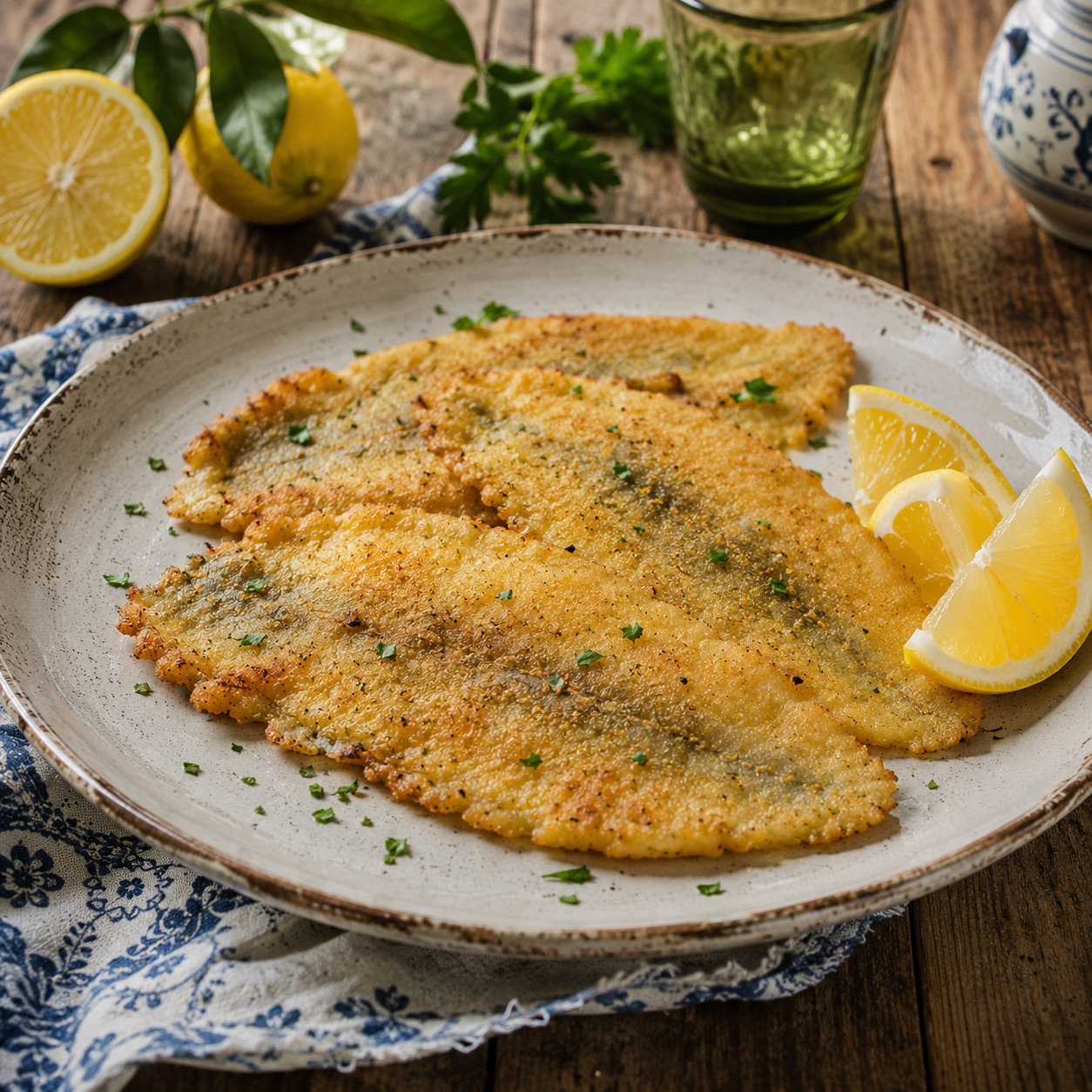
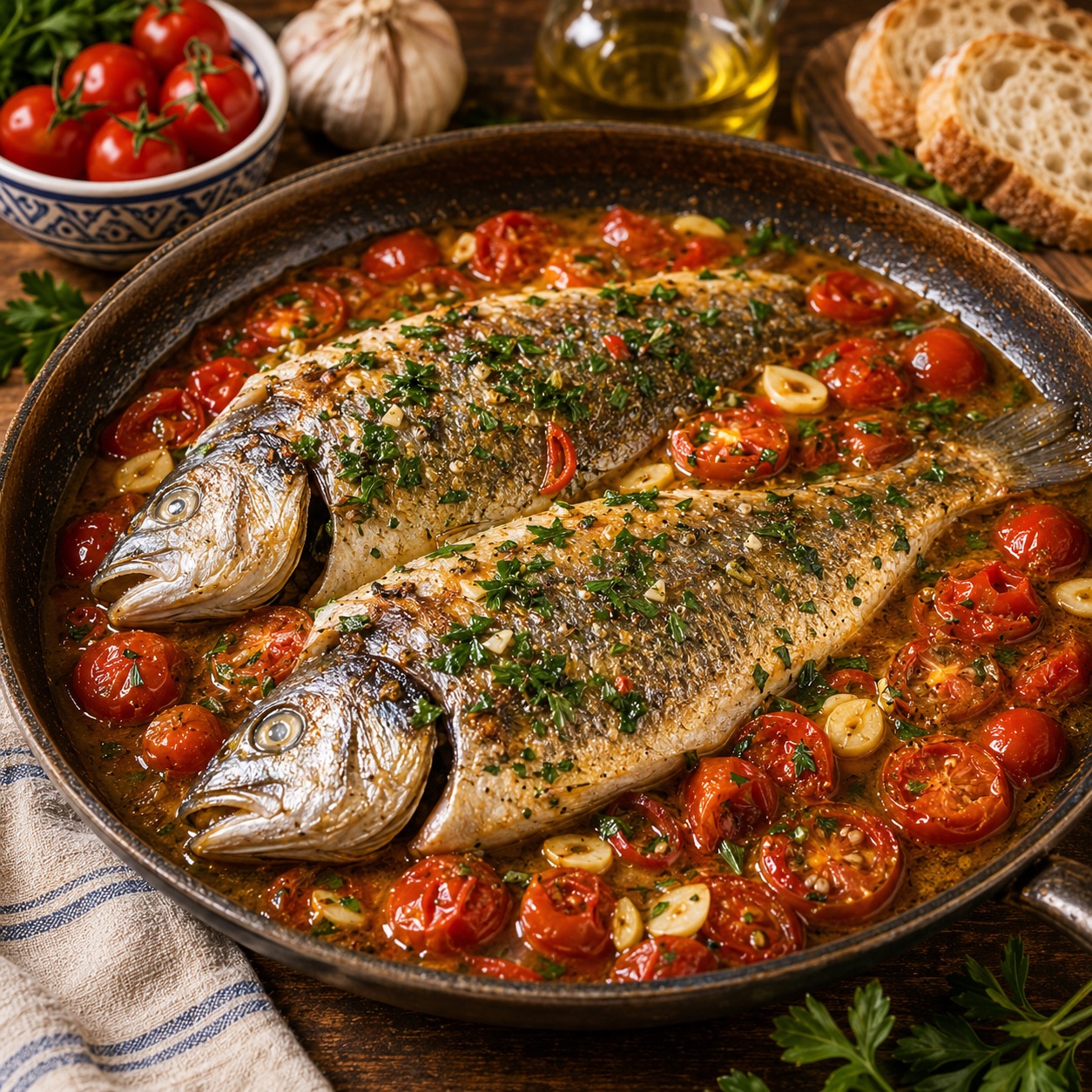
Two other ways my mother cooked sole — the acqua pazza for the clean everyday version that must be eaten immediately, the impanata for the one that pleased everyone without exception.
Domani è ancora meglio — se riesci ad aspettare.