Scamorza alla Griglia
Four ingredients. Ten minutes. Charred grill marks, molten inside, finished with olive oil and oregano. My mother's announcement had a particular tone of satisfaction that this one always earned.
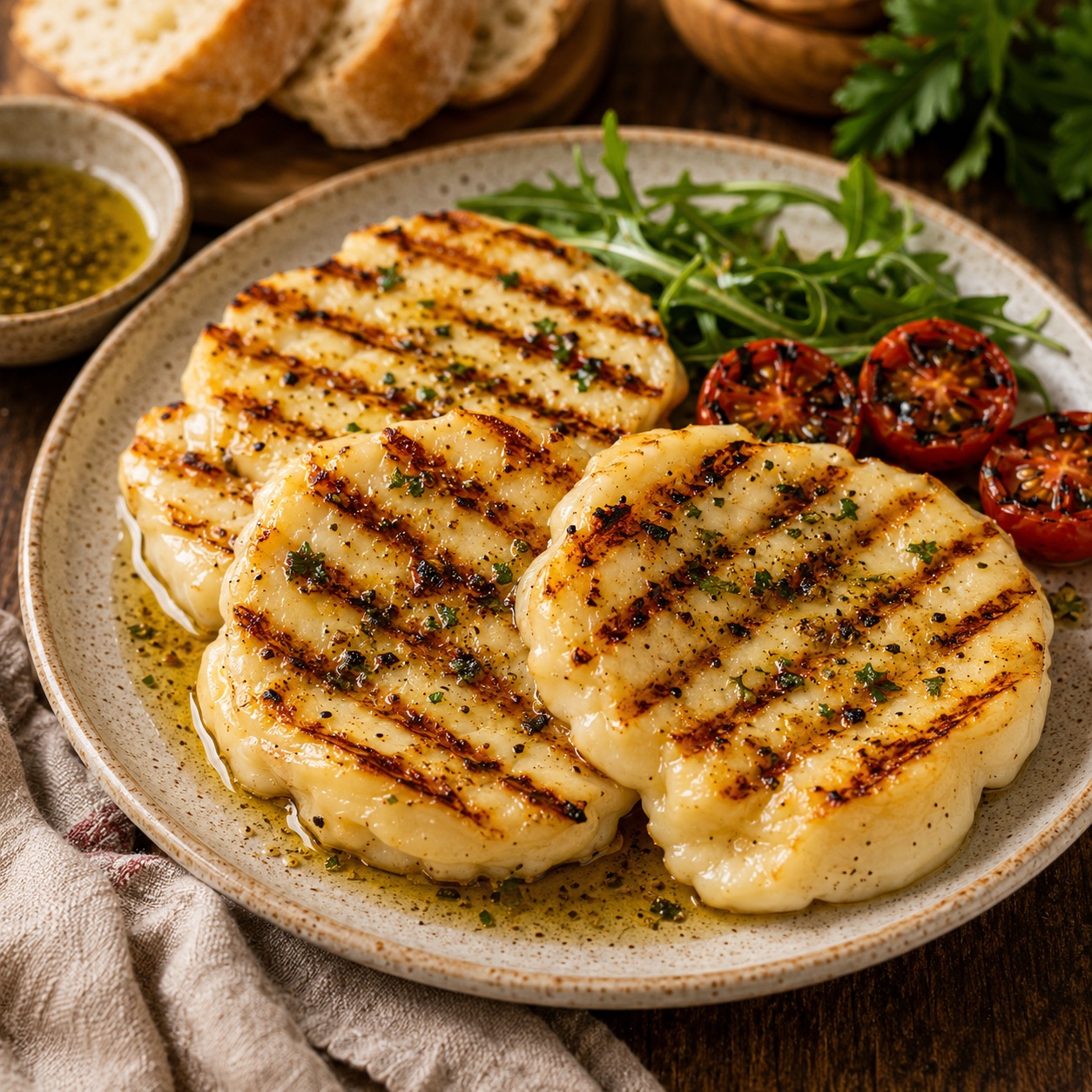
"Ho fatto la scamorza gradinata." The word she used was gradinata — the Casertana pronunciation of grigliata — and it came with a particular satisfaction, the kind reserved for dishes that required almost no effort but reliably pleased everyone at the table. My father was pleased. My father was almost never pleased by cheese, which he considered a minor ingredient at best. But grilled scamorza was different: it was hot, it had grill marks, it came on a plate and not as an afterthought on a bread board, and it behaved more like a secondo than a cheese course. He ate it.
Scamorza is a stretched-paste cheese — pasta filata, like mozzarella and provola — made from cow's milk, formed into a pear or elongated round shape, and tied with twine to hang during drying. Unlike fresh mozzarella, it is firmer and drier, with a milky, slightly tangy flavor that concentrates when heated. The smoked version, scamorza affumicata, goes through natural wood smoke and develops a pale golden rind and a deeper, more complex aroma. Both grill well; the smoked version produces a more interesting result for the same effort.
The reason scamorza grills without falling apart — where fresh mozzarella would melt through the grates and become a puddle — is the lower moisture content and the tighter protein structure of the aged cheese. At grilling temperatures, the casein proteins in scamorza soften and the fat begins to flow, creating the characteristic ooze at the edges, but the overall structure holds long enough to develop grill marks and a distinct crust. Fresh mozzarella at the same temperature simply melts. Scamorza melts on the inside while staying intact on the outside, which is the entire point.
She served it as a secondo on evenings when the rest of the meal was already full — after pasta, before fruit — or as an antipasto alongside other things. At the beach house in summer, the grill pan came out more readily, and scamorza was one of the dishes that appeared without ceremony, sliced thick and put on the hot iron while other things were being prepared. A piece of good bread, a drizzle of olive oil over the hot cheese, a pinch of dried oregano. That was the complete thing.
It also appeared in sandwiches — a slice of grilled scamorza in a piece of pane cafone with roasted peppers or prosciutto, which is one of the better panino combinations available in Campania and a completely different argument from what this post is about. The cheese serves both contexts equally well and does not need to choose.
Why scamorza grills — and mozzarella doesn't
Both scamorza and mozzarella are pasta filata cheeses — their protein structure is formed by stretching acidified curd in hot water, which aligns the casein proteins into parallel strands that give the cheese its characteristic elasticity and melt properties. The difference between them for grilling is moisture content and protein concentration.
Fresh mozzarella contains 52–60% water by weight. Scamorza, being partially dried during production, runs 35–45%. Lower water content means higher protein and fat concentration per unit of weight. When heated, the protein network of scamorza requires more thermal energy to soften to the point of flowing — it reaches the "melting" state more slowly, which gives the surface time to develop a Maillard crust at grill temperatures (around 150–180°C at the contact point) before the interior loses structural integrity.
The Maillard reaction between the milk proteins and residual sugars in the cheese produces the golden-brown grill marks and the flavor compounds — including several that reinforce the slight smokiness of the affumicata. Dried oregano added immediately after grilling, while the surface is still hot and oily, releases its volatile terpenes (carvacrol, thymol) into the cheese's fat, which then carries them to the palate. The sequence of olive oil, then oregano, then cheese — in that order, applied to the hot surface — maximizes the aromatic impact of both.
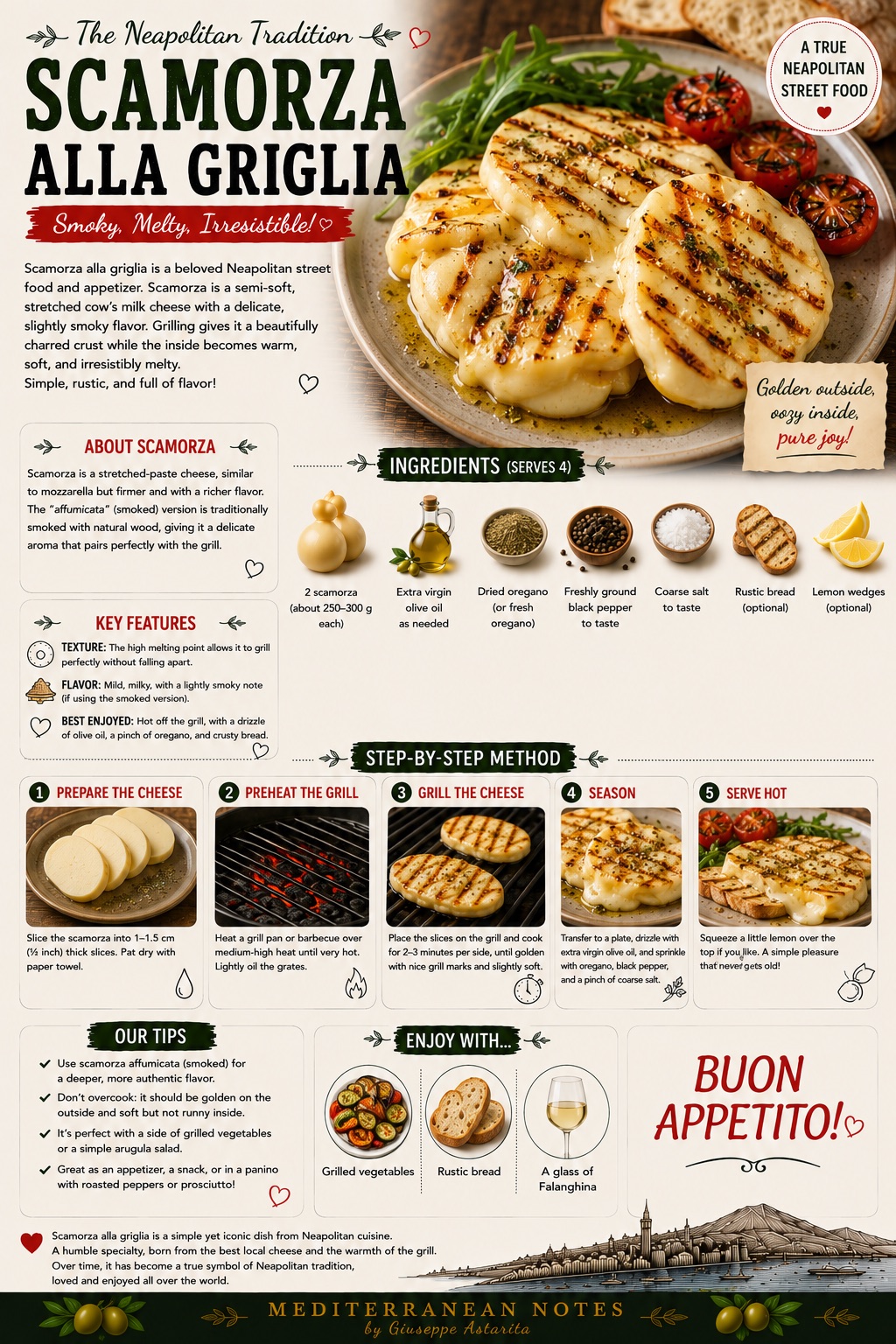
Tap to enlarge — Scamorza alla griglia: method, tips, serve with
Recipe — Scamorza alla Griglia
Serves 4 as an antipasto, 2 as a secondo · Ready in 10 minutes
- 2 scamorza 250–300 g each, affumicata preferred
- Extra virgin olive oil for drizzling after grilling
- Dried oregano or fresh — added hot, immediately after plating
- Freshly ground black pepper
- Coarse salt a small pinch at the end
- Rustic bread for serving — not optional
- Lemon wedges optional — for squeezing at the table
The scamorza alla griglia is the kind of dish that travels well between occasions — antipasto, secondo, panino filling, part of a larger spread of grilled vegetables — without changing what it is. The cheese does not need accompaniment to justify itself, though cherry tomatoes roasted briefly in the same pan while the cheese grills make a complete plate without additional effort. My mother served it both ways depending on what else was on the table.
Anna and Carolina have already established positions on this dish. Anna prefers the plain version with only olive oil and oregano. Carolina prefers it with the tomatoes, which she calls "the red ones." Both positions are reasonable. Both get what they want, which is the correct outcome.