Campanian kitchen · Contorni · Vegetarian · Grill · Make ahead
Funghi arrostiti alla napoletana
Orecchie d'elefante — elephant ears — the Neapolitan name for Pleurotus mushrooms, for the wide flat shape of the caps that curl at the edges on the hot cast iron. Grilled until golden and slightly charred, then layered while still hot with olive oil, garlic, parsley, vinegar, and chili. Left to rest. Better the next day.
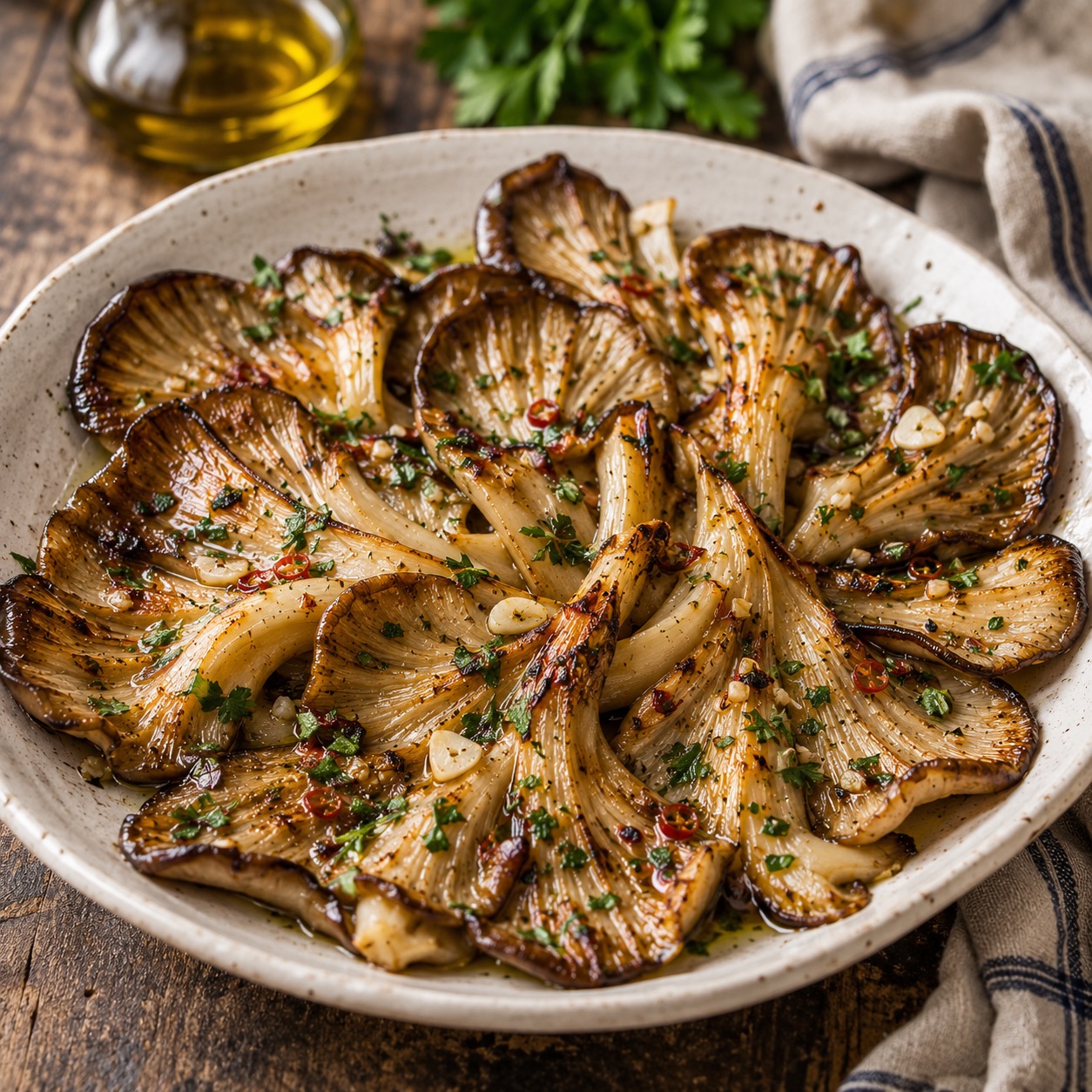
The name matters. My mother did not call them Pleurotus — she called them orecchie d'elefante, and the name describes them exactly: the wide, flat, slightly wavy caps that spread across the grill like a pair of ears, their gills facing up, the white surface darkening as the cast iron does its work. They were a contorno that appeared alongside fish, alongside grilled meats, alongside almost anything, because they are one of the few vegetables that survive the grill with character intact rather than collapsing into softness.
The preparation is in two distinct phases — grill and marinade — and the quality of the finished dish depends on doing them correctly and in sequence. The grill phase is fast and requires high heat: the cast iron must be very hot, the salt sprinkled on the surface before the mushrooms go down prevents sticking and draws out the initial moisture rapidly, and the mushrooms cook for four to five minutes per side without being moved. They want to develop a crust, not steam. The moment they are off the grill, while still hot, is when the marinade goes on: olive oil, very finely chopped garlic, chopped parsley, a spoonful of white wine vinegar, chili if using. The heat of the mushrooms opens their porous surface and drives the marinade in. Cold mushrooms marinated later absorb nothing.
The layering is the final technique. You do not simply toss the mushrooms in the marinade — you build them in a shallow dish in layers, spoonful of marinade between each layer, so every cap is in direct contact with the dressing. Cover and leave for at least thirty minutes. An hour is better. Overnight in the refrigerator is best of all — the mushrooms continue to absorb the olive oil and vinegar as they cool, and by the next day the flavors are integrated in a way that the freshly made version does not achieve. This is one of the very few dishes on this blog that I recommend making the day before.
Why Pleurotus holds up on the grill — and why the hot marinade works
Pleurotus ostreatus (oyster mushroom) has a distinctively firm texture relative to most cultivated mushrooms due to its higher chitin content in the cell walls and its dense, meaty flesh — a result of the mycelium's evolved capacity to grow on woody substrates, requiring structural integrity that button mushrooms raised on compost do not develop. On a very hot cast iron surface, the mushroom's surface moisture evaporates rapidly and the Maillard reaction proceeds between the free amino acids (glutamic acid is particularly abundant in Pleurotus, contributing significant umami) and the reducing sugars, producing the characteristic brown crust and toasted aromatic compounds. The interior remains moist because the dense cell structure insulates against rapid heat penetration. The hot marinade absorption is driven by two mechanisms: the residual heat keeps the mushroom tissue slightly contracted and then expanded as it cools, acting as a mechanical pump that draws the oil-vinegar emulsion into the surface; and the vinegar's acidity partially softens the cell wall material, increasing permeability. The overnight rest allows continued diffusion of the fat-soluble aromatic compounds from the garlic into the mushroom tissue — a slow process that produces the integrated flavor characteristic of the next-day version.
Recipe — serves 4 as a contorno
Ingredients
Method
Clean the mushrooms. Wipe each cap and stem carefully with a damp cloth or paper towel. Remove the tough base where the cluster attaches. Do not wash under water. If any caps are very large — more than 12–15 cm across — halve them. Smaller ones stay whole.
Pleurotus are extremely porous. Any water absorbed during washing stays in the mushroom, turns to steam on the grill, and prevents the crust from forming. The damp cloth is all you need.
Heat the cast iron to very hot. Place the grill pan over high heat for at least 3–4 minutes. It should be smoking slightly. Sprinkle a pinch of coarse salt over the surface — this prevents sticking and helps expel the mushrooms' initial moisture immediately on contact.
Grill without crowding. Place the mushrooms cap-side down on the grill. Press them very gently with a spatula to ensure good contact with the surface. Cook without moving for 4–5 minutes until they are golden and slightly charred at the edges. Turn and cook the other side for 3–4 minutes. Work in batches — a crowded grill pan produces steam, not crust.
Do not move them while the first side cooks. They need uninterrupted contact with the hot surface to develop the crust. Resist the temptation to check underneath.
Make the marinade while the mushrooms grill. In a bowl, whisk together the olive oil, very finely minced garlic, chopped parsley, vinegar if using, a pinch of fine salt, and the sliced chili. The garlic should be minced so fine it almost dissolves into the oil — not chopped in large pieces.
Layer immediately while still hot. As each batch comes off the grill, arrange the mushrooms in a single layer in a shallow dish or tray. Spoon a generous amount of marinade over them immediately — while they are still hot. Add the next batch on top and spoon more marinade. Continue until all the mushrooms are layered with the dressing between each layer.
The heat opens the mushroom surface and drives the marinade in. This is the moment that counts. A cold mushroom marinated later absorbs nothing — it just sits in dressing.
Rest before serving. Cover the dish and leave at room temperature for at least 30 minutes. An hour is better. Overnight in the refrigerator is best — bring to room temperature before serving. They are equally good warm, at room temperature, or cold.
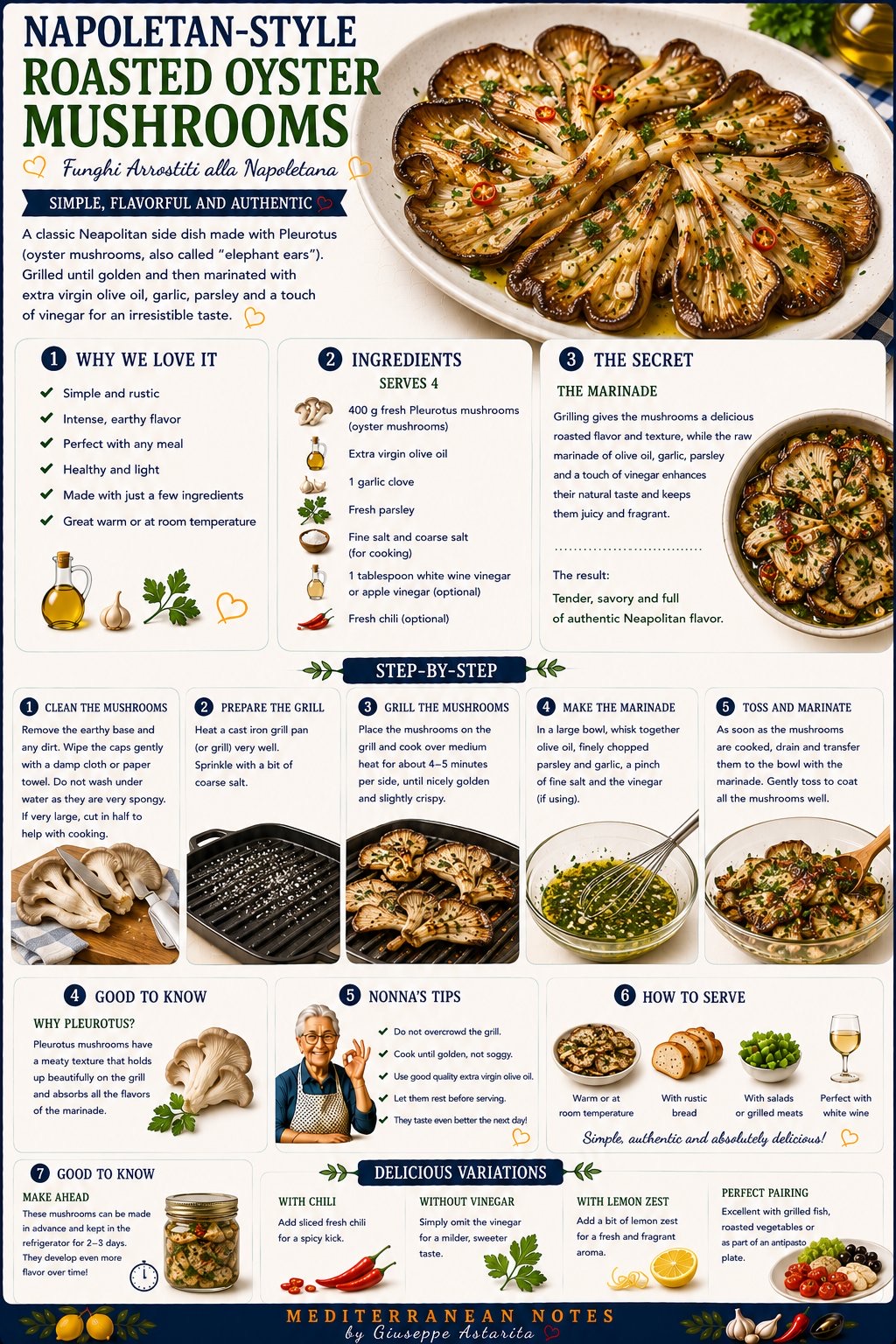
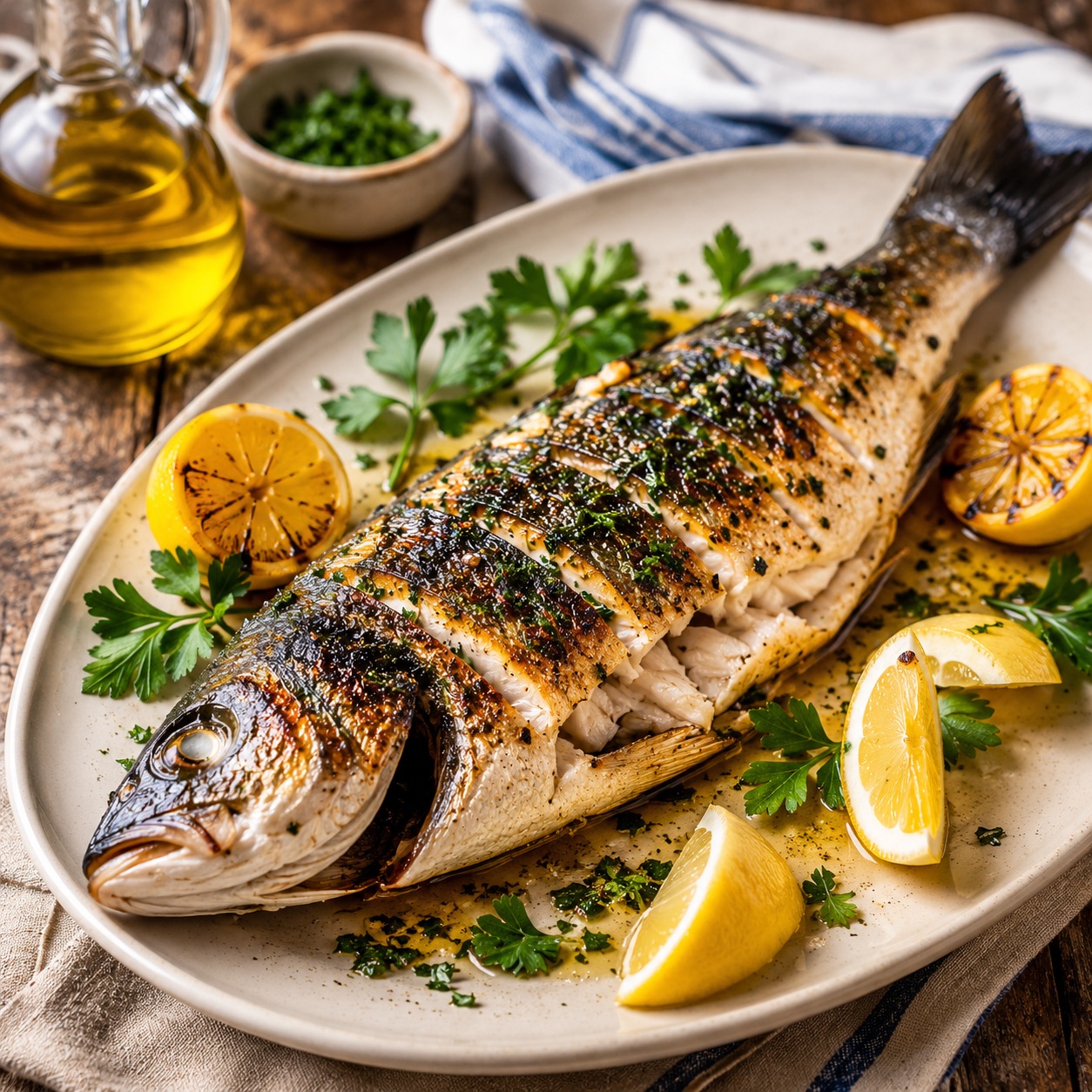
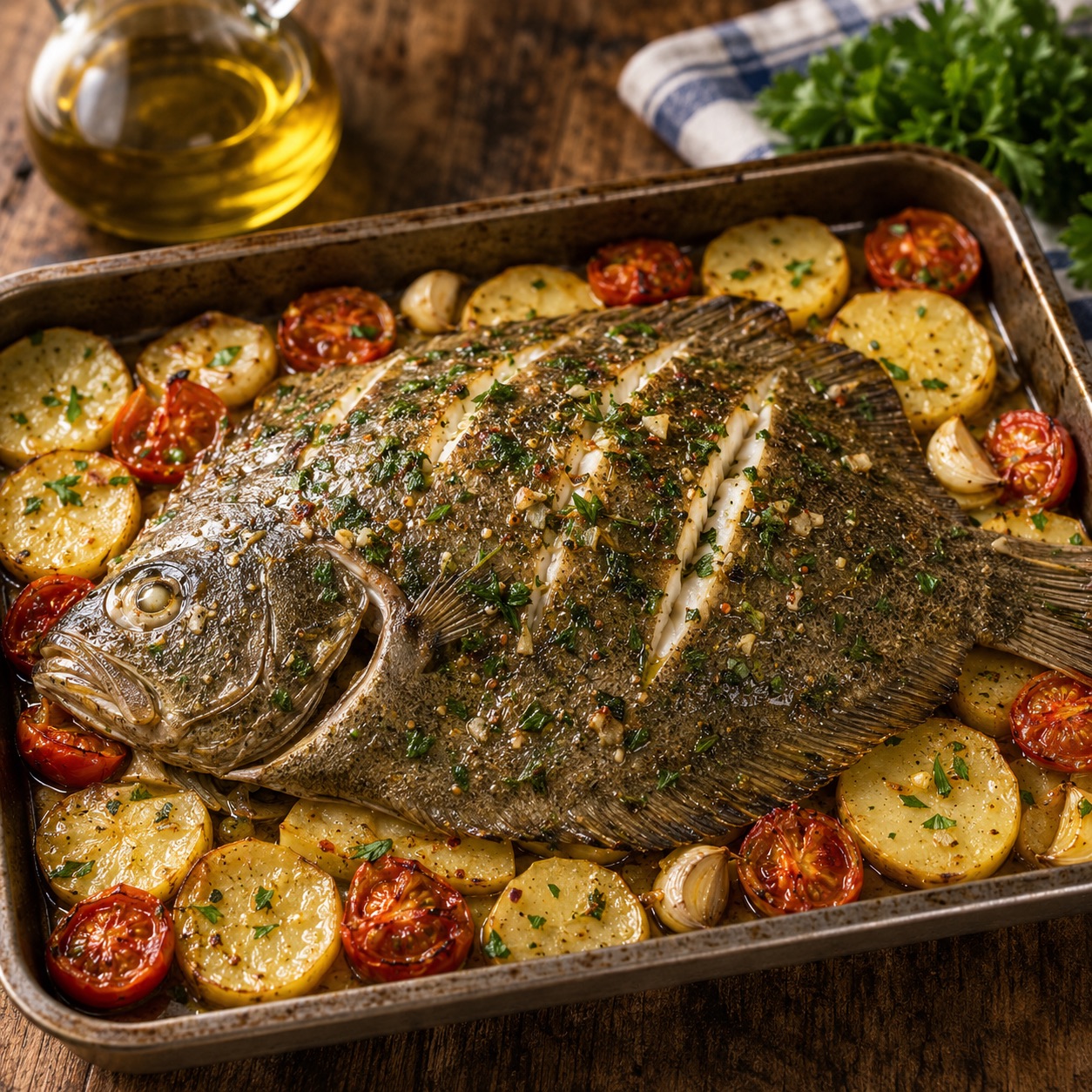
These mushrooms appear on the Neapolitan table as a contorno alongside fish — alongside the spigola al forno, alongside the rombo con patate — but they also appear on their own, at room temperature, as part of an antipasto spread, or simply eaten from the tray while something else finishes cooking. They keep for two to three days in the refrigerator in a sealed container, improving as they sit. My mother made them ahead when the table was going to be large and she needed things that could be prepared without last-minute attention. The olives marinated; the mushrooms marinated; the dinner mostly took care of itself while she watched something else on the stove.
The vinegar is traditional and worth keeping even if you use only a small amount. It sharpens and brightens the olive oil, creates a light emulsion that clings to the mushrooms, and extends the shelf life of the marinade. Without it the dish is still good; with it the dish is distinctly Neapolitan. The variation without vinegar is the milder version — use it when the mushrooms are going alongside a delicate fish and you do not want the acidity competing.
Arrostite, marinate, reposate — e il giorno dopo sono ancora meglio.