Sanguinaccio Dolce
Naples' legendary Carnival chocolate cream — once made with pig's blood (my grandmother ate that version), reinvented after the 1992 ban as a dense, spiced, eggless chocolate cream for dipping chiacchiere.
I still remember my grandmother eating the real one — the sanguinaccio with actual pig's blood, which in her day you simply bought at the store during the winter slaughter season. The blood gave it color, richness, and iron, and nobody thought twice about it. Then, in 1992, Italy banned the sale of pig's blood to the public for food-safety reasons, and one of the oldest Carnival desserts of Naples and Campania quietly reinvented itself. The name stayed — sanguinaccio, from sangue — but the blood was gone.
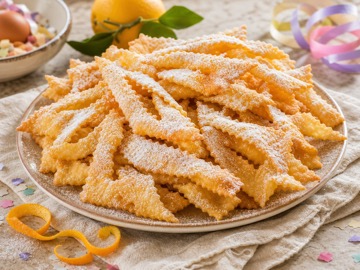
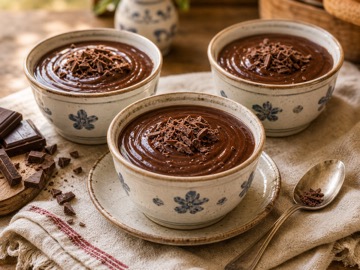
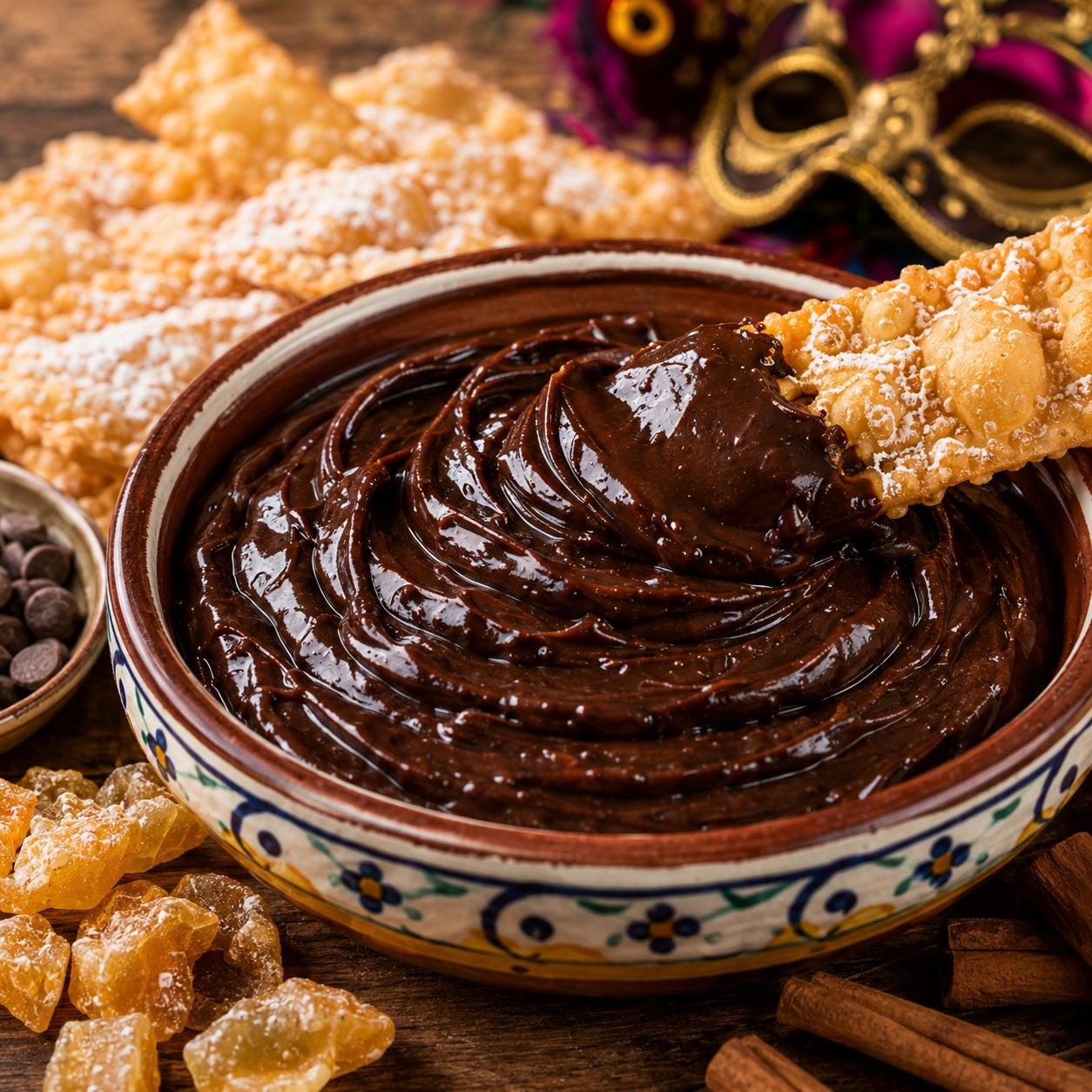
What survived is, honestly, wonderful: a dense, dark, spiced chocolate cream — cocoa and dark chocolate thickened with cornstarch, perfumed with cinnamon and vanilla, often studded with candied citrus or chocolate chips. It exists for exactly one purpose and one season: Carnevale, and the chiacchiere. You do not eat sanguinaccio with a spoon so much as you scarpetta it — dipping the crisp fried ribbons straight into the bowl until both are gone. For many Neapolitan families, no Carnevale is complete without this ritual.
Why starch instead of eggs changes everything
Cornstarch gelatinizes at around 95°C, building a network that sets dense and pudding-like when chilled — denser than any yolk-thickened custard can be without curdling. That structure is what lets a chiacchiera stand upright in the bowl. The doubled chocolate load (cocoa powder plus melted dark chocolate) is possible precisely because there are no delicate yolks to overwhelm; the cinnamon and vanilla are the historical echo of the spices that once masked the blood's metallic edge. The butter at the end is for gloss — the shine of a proper sanguinaccio is part of its identity.
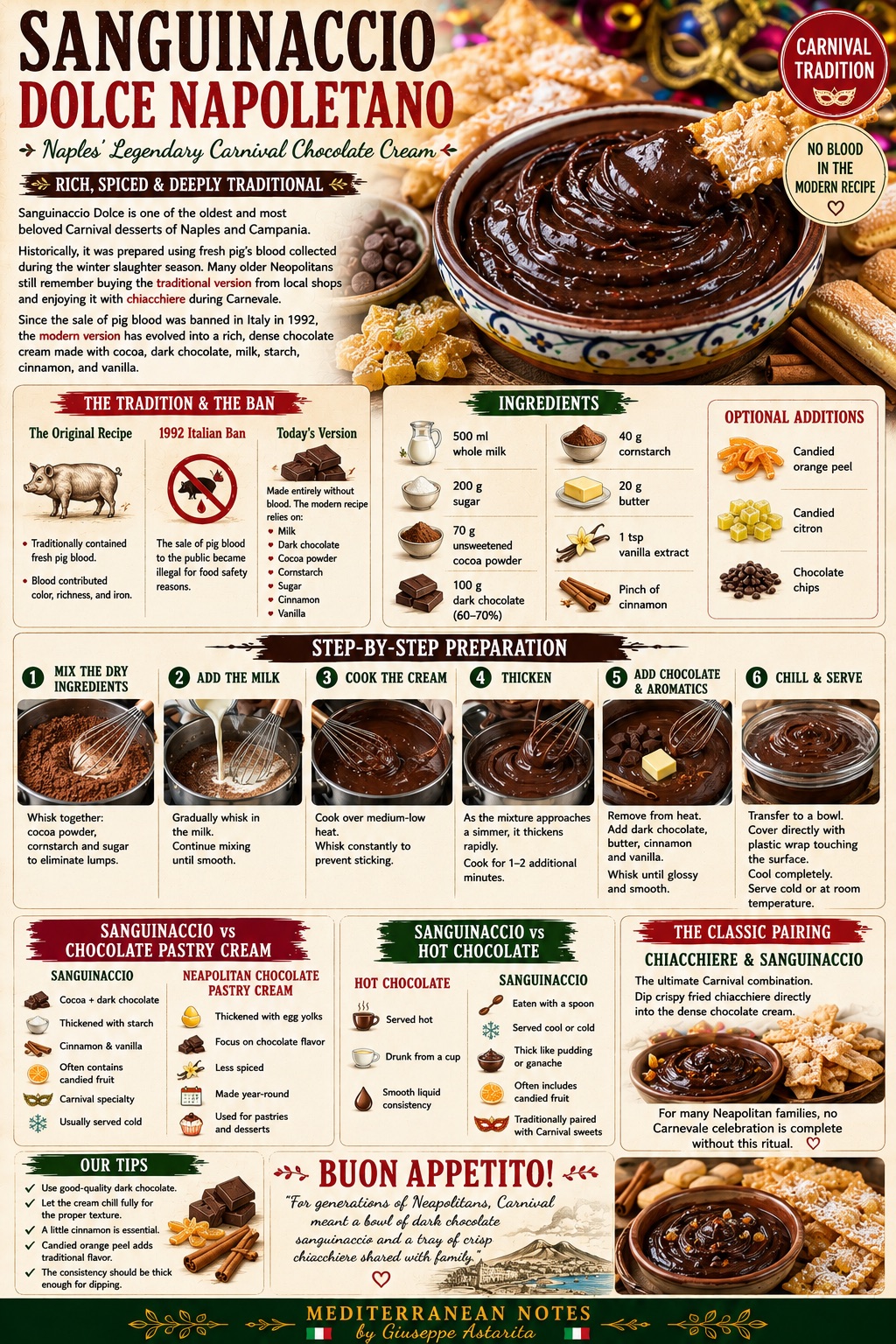
Tap to enlarge — Sanguinaccio: the tradition, the ban, the modern recipe
Recipe — Sanguinaccio Dolce (the modern version)
Makes one generous bowl · 20 minutes + chilling
- 500 ml whole milk
- 200 g sugar
- 70 g unsweetened cocoa powder
- 100 g dark chocolate 60–70%, chopped
- 40 g cornstarch
- 20 g butter for the gloss
- 1 pinch cinnamon
- 1 tsp vanilla extract
- Optional: 50 g chocolate chips or candied orange/citron, diced
In the Carnevale corner of this collection it joins the chiacchiere it was born to accompany, the quaresimali, and the migliaccio. My grandmother's version belongs to history now — but the bowl on the table, and the chiacchiere disappearing into it, are exactly the same.