Crema al cioccolato alla napoletana
A rich chocolate custard built on the Neapolitan pastry cream base — egg yolks, sugar, milk, and 70% dark chocolate stirred in off the heat. Made Sunday morning, chilled for hours, served cold in small cups at the end of the long lunch. The version I preferred.
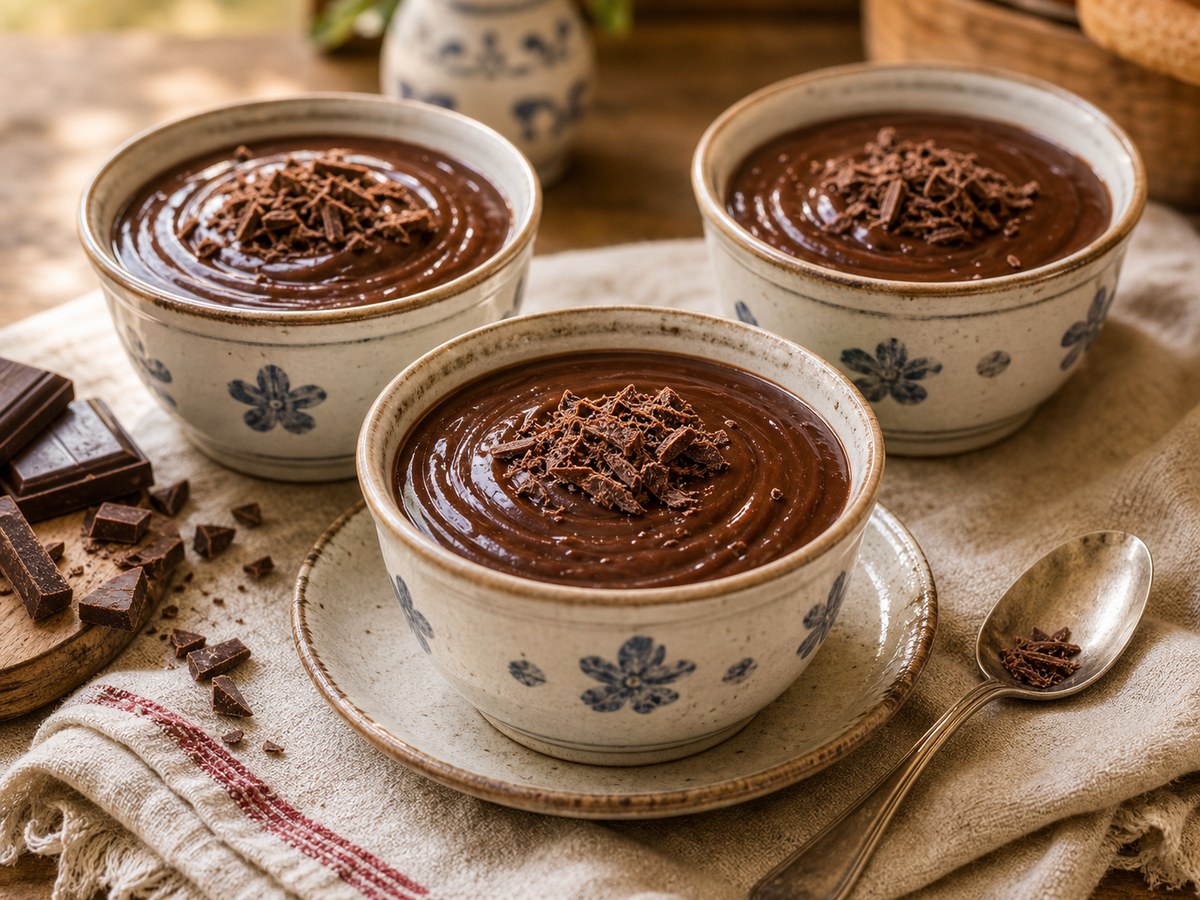
My father's favorite was the lemon. Mine was the chocolate. On Sundays when my mother made both — which she did more often than was necessary, out of something between habit and generosity — the two bowls sat next to each other in the refrigerator and at the end of lunch you had to decide. I never decided for the lemon. The pale yellow one was lovely, fragrant, clean. The dark one had depth, weight, the slight bitterness of good chocolate that the lemon version never had. I found the lemon's cleanliness almost too modest. The chocolate felt like it meant it.
Not to be confused with the sanguinaccio of Carnevale — that one is eggless, starch-thickened, heavily spiced, and appears only in February. This is the Sunday cream: built on egg yolks, mellower, chocolate-forward, made all year. The version I preferred.
The base of both versions is the same: a Neapolitan crema pasticcera, a pastry cream made with egg yolks, sugar, whole milk, and cornstarch. The chocolate version diverges at the end: dark chocolate — minimum 70%, not the sweet kind — is added off the heat while the cream is still very hot, stirred until completely melted and incorporated. A small amount of butter follows, which rounds the texture and produces a glossiness that you can see from across the table. The cream is poured into individual cups, covered with plastic wrap touching the surface to prevent a skin, and refrigerated for at least three hours. It is eaten cold, with a small spoon, in no hurry.
This is not a complicated recipe. The two moments that require care are: not letting the custard boil (scrambled eggs), and not adding the chocolate too late when the cream has already cooled (uneven incorporation). Everything else is patient stirring. If you have made a pastry cream before, you already know most of this recipe.
Why chocolate thickens custard — and what 70% cacao does that milk chocolate cannot
When dark chocolate melts into hot pastry cream, several things happen simultaneously. The cocoa butter in the chocolate adds fat that emulsifies with the milk proteins and egg-yolk lecithin already in the custard, producing a smoother, denser texture than the base cream alone. The cocoa solids — the dry particles suspended in the chocolate — contribute starch and cellulose that increase the viscosity further. This is why the chocolate version sets firmer and holds its shape better than the lemon version at the same temperature. The 70% specification matters: higher cacao content means more cocoa solids and cocoa butter relative to sugar. Lower-percentage chocolate (below 55%) has more sugar and less fat, producing a sweeter but less complex result — the bitterness from theobromine and phenolic compounds in the cocoa solids that give dark chocolate its depth is largely absent. Those same phenolic compounds — primarily epicatechin and procyanidins — are bioactive: they modulate nitric oxide synthesis in endothelial cells and have documented effects on vascular function. This is a dessert that is genuinely doing something in the body, which makes it slightly easier to justify the second cup.
Recipe — serves 6
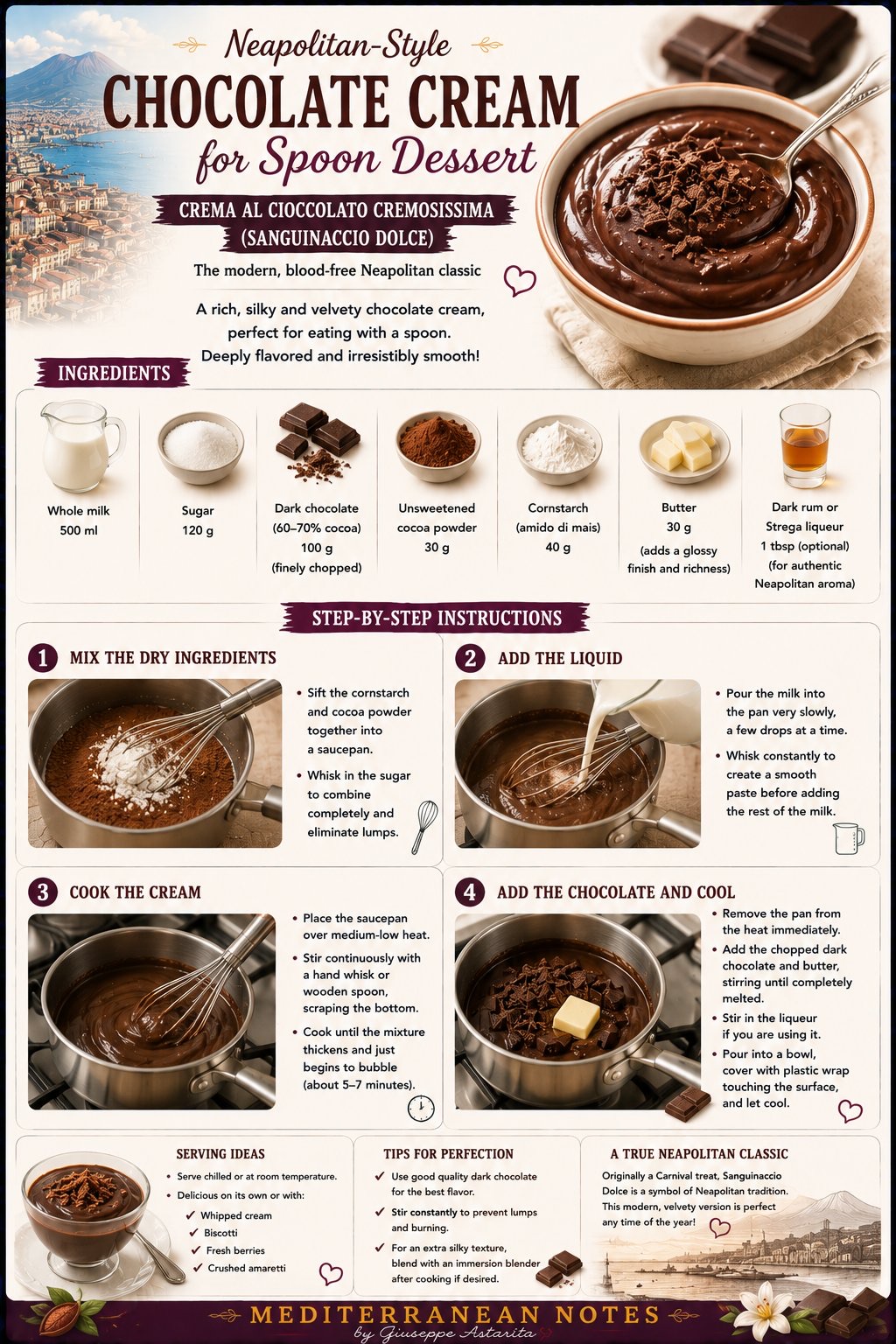
Ingredients
Method
Warm the milk. Heat the milk in a saucepan over medium heat until it just begins to steam — small bubbles at the edge, not a full simmer. Remove from heat.
Whisk the yolk base. In a bowl, whisk the egg yolks with the sugar and pinch of salt until pale and slightly thickened, about 2 minutes. Add the sifted cornstarch and whisk until completely smooth with no lumps.
Temper and combine. Slowly pour the hot milk into the yolk mixture in a thin stream, whisking constantly. This is the tempering step — adding hot milk gradually prevents the eggs from scrambling. Pour the combined mixture back into the saucepan.
Cook the custard. Cook over medium heat, stirring continuously with a wooden spoon or spatula, making sure to scrape the bottom and edges. After 6–8 minutes the cream will thicken noticeably. Do not stop stirring and do not let it boil. When it coats the back of a spoon and holds a line drawn through it, it is ready.
If the cream boils, the eggs begin to scramble and you will have lumpy custard. Medium heat, constant stirring.
Add the chocolate and butter. Remove from heat immediately. Add the finely chopped dark chocolate and stir until completely melted and smooth. Add the cold butter and stir until incorporated. The cream should be glossy and dark.
The cream must be very hot when the chocolate goes in — if it has cooled below 60°C, the chocolate will not melt evenly and you will have chips rather than a smooth cream.
Portion and chill. Pour into individual cups or small bowls. Press plastic wrap directly onto the surface of each one — this prevents a skin forming. Refrigerate for at least 3 hours, or overnight. Serve cold, directly from the refrigerator.
The lemon version
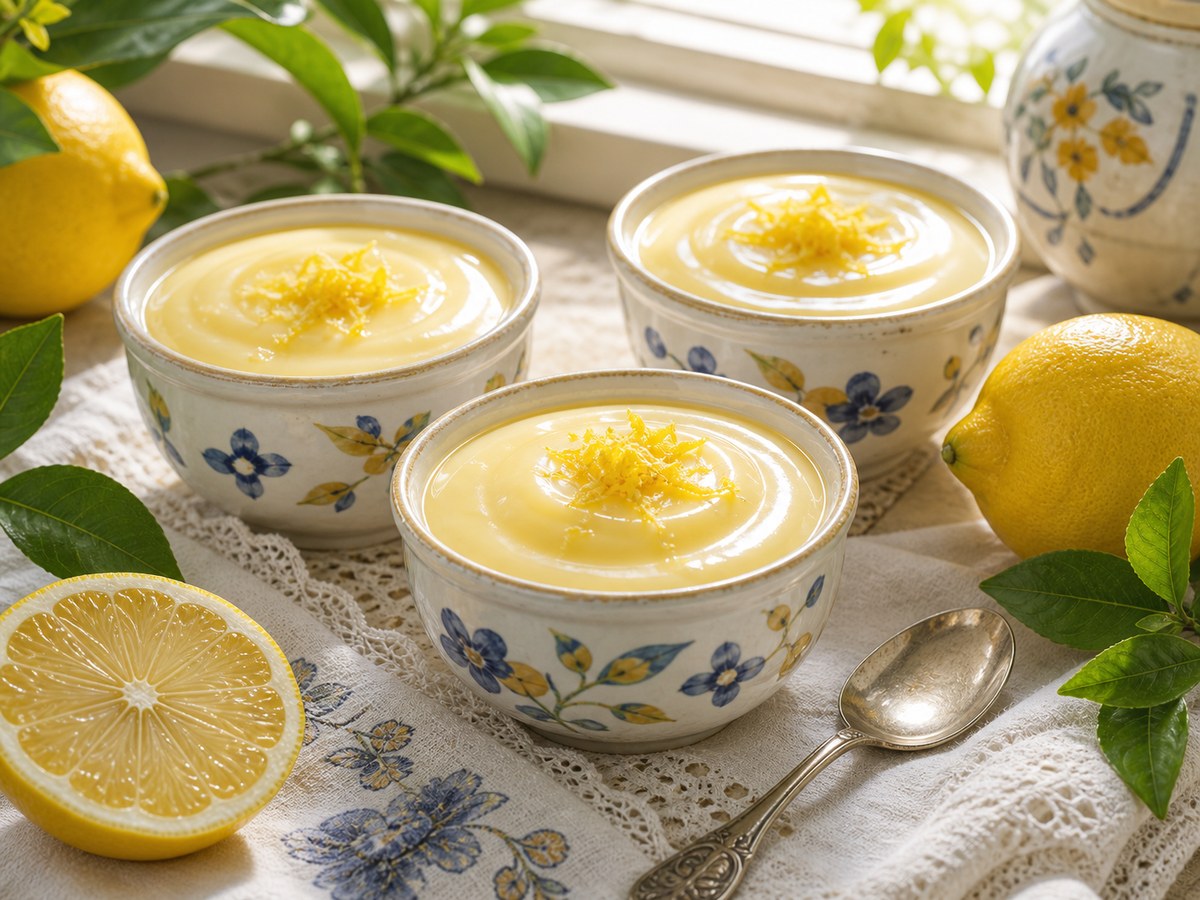
For the pale yellow lemon custard — my father's preference, fragrant with Amalfi lemon and lighter in character — see the companion page.
Fredda, col cucchiaino, senza fretta — è un dolce domenicale.