Chiacchiere Napoletane
The pastry that meant Carnival had arrived
It wasn't Carnival if my mother didn't make chiacchiere. They appeared from breakfast onward — you could eat them at any hour, as a snack, as dessert, as something to grab passing through the kitchen. Every family in the neighborhood made them. The whole town smelled of frying oil for a week.
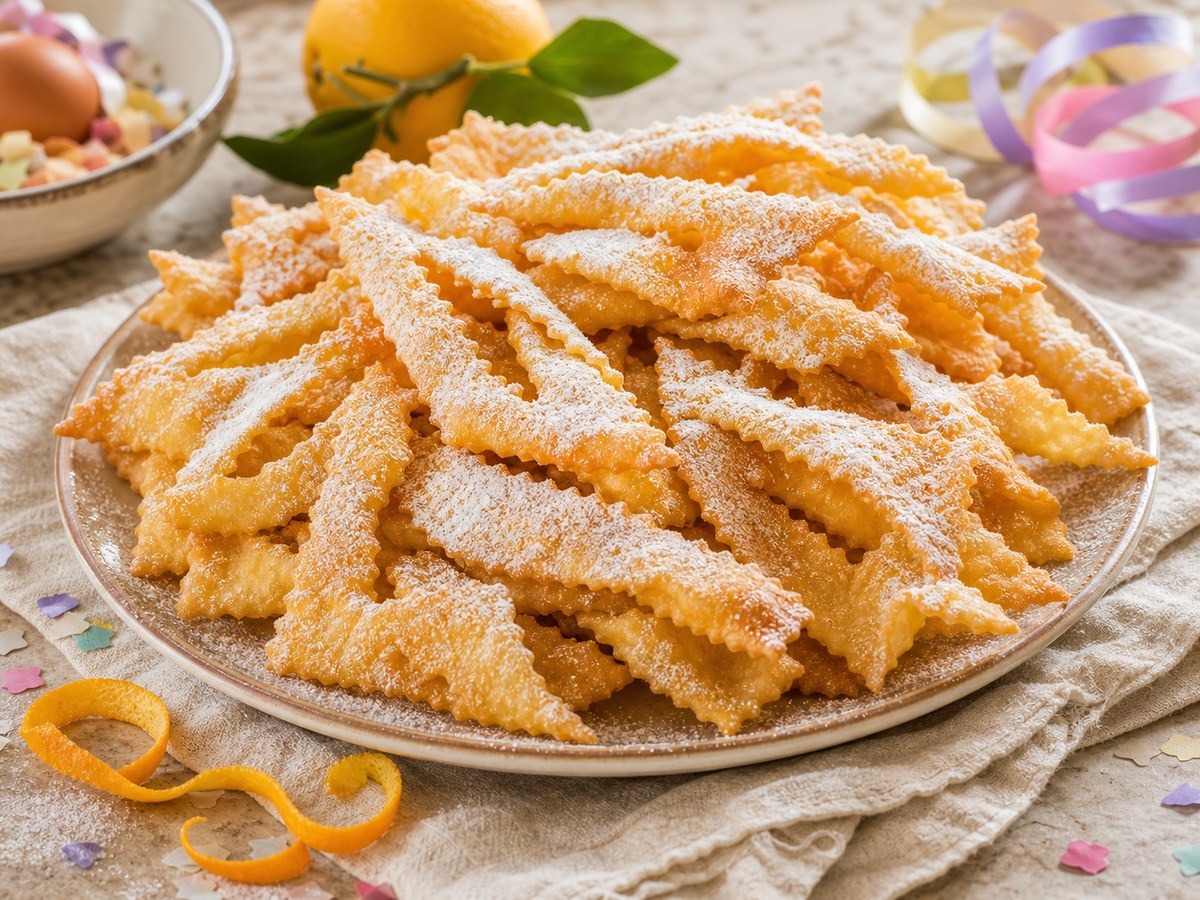
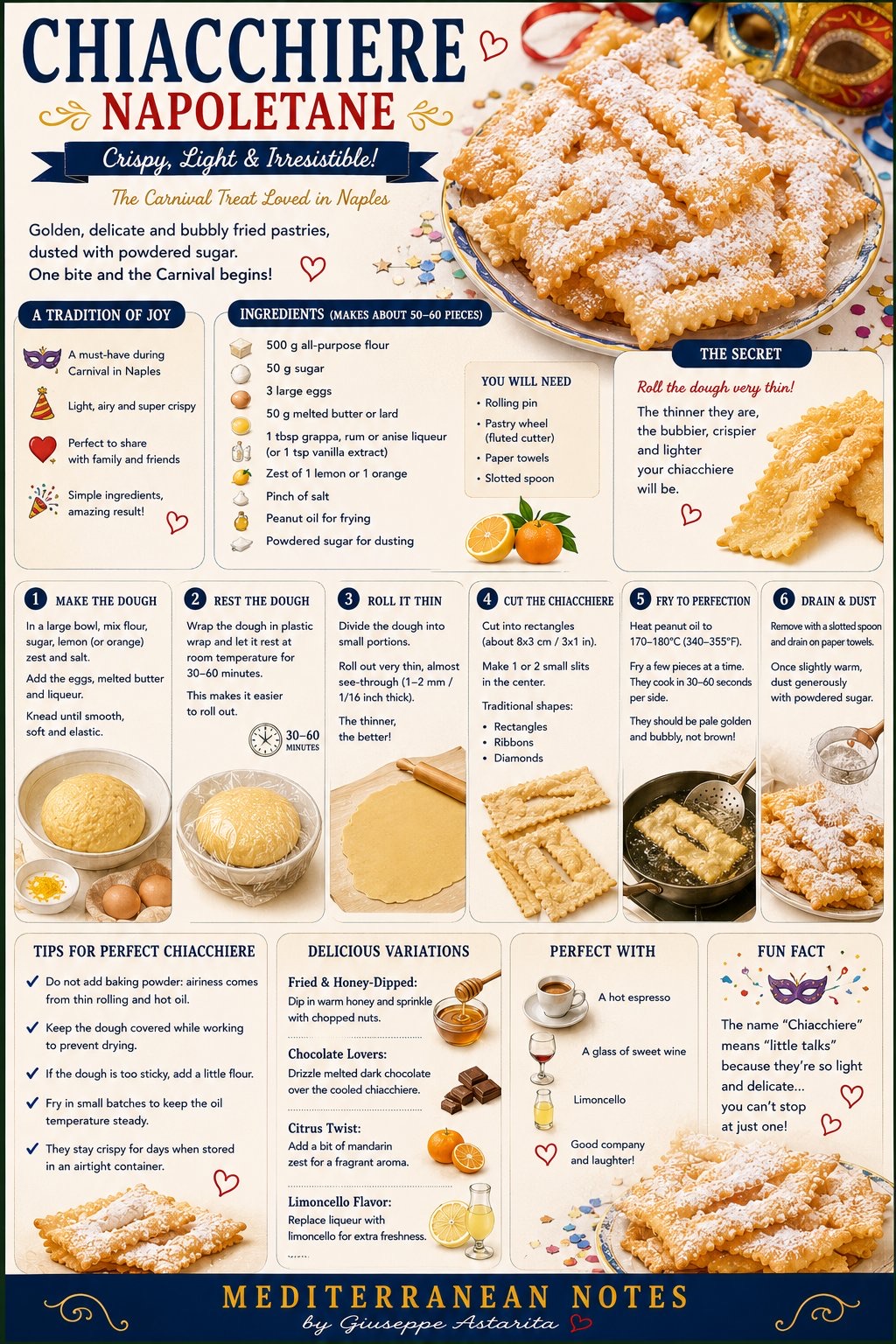
Carnival in Campania is not a single day. It runs from the feast of Sant'Antonio in January through Martedì Grasso — Fat Tuesday — and the food follows the calendar with a logic that is partly liturgical and partly practical. The weeks before Lent are when you eat the things you will not eat for forty days: fried things, sweet things, rich things. Chiacchiere are the purest expression of this. They are essentially nothing — flour, eggs, butter, a little sugar, a splash of grappa or rum — rolled impossibly thin, cut into rectangles or ribbons, dropped into hot oil, and pulled out pale golden and blistered within thirty seconds. Then dusted with powdered sugar and eaten immediately, or left to cool in a pile on the kitchen table for everyone to take at will.
My mother made a large batch each year, starting a day or two into the Carnival season. The dough was not complicated but the rolling was work — she went very thin, almost translucent, which is the difference between chiacchiere that blister and puff properly and ones that come out thick and doughy and miss the point entirely. I remember the rolling pin going back and forth across the kitchen table, the dough getting wider and thinner with each pass, the cut rectangles laid out waiting for the oil. She used lard some years, butter in others. Both work. The lard gave a slightly shorter, crispier result. The butter was more fragrant.
The name means "chatter" — small talk, idle conversation — which is supposedly because the pastries are light and insubstantial, like words spoken just to fill a room. Across Italy they go by other names: frappe in Rome and Lazio, crostoli in the northeast, bugie in Liguria, galani in Venice. In Naples they are chiacchiere, and the word fits: they are social food, food made for passing around, for eating while talking, for finishing without noticing you have finished.
The liquor in the dough is not decoration. Grappa or rum, or in some versions anise liqueur, does two things: it inhibits gluten development slightly, which keeps the dough tender and easy to roll very thin, and it evaporates quickly in the oil, which contributes to the blistering — those hollow air pockets that form on the surface and give a good chiacchiera its characteristic texture. A chiacchiera without blisters has been either underrolled or fried in oil that wasn't hot enough. Both are fixable problems with attention. The oil temperature matters a great deal: at 170–180°C, the pastry puffs and colors in about thirty seconds per side. Below that it absorbs oil and turns soft. Above it browns too fast and loses the pale gold that is correct.
The blistering of chiacchiere during frying is the result of rapid steam formation inside the dough. When a very thin sheet of dough hits oil at 170–180°C, the water and alcohol trapped within the dough vaporize almost instantly, expanding into small pockets before the surrounding starch has time to set. The result is the characteristic bubbly surface — hollow, crisp, light. If the dough is too thick, the steam has further to travel and the surface sets before the pockets can form; you get a flatter, denser result. This is why rolling thin is not optional but structural.
The alcohol — grappa, rum, anise liqueur — plays a secondary role in gluten development. Ethanol is not as effective as water at hydrating gluten proteins, so a dough made with some alcohol will develop less gluten than one made with water alone. Less gluten means a more extensible, less elastic dough that rolls thin without springing back. It also means a more tender result after frying, since a tight gluten network would make the pastry tough. This is the same principle behind the use of alcohol in pie crusts and other pastry traditions where tenderness is the goal.
The powdered sugar on top is not just sweetness — it also absorbs surface oil quickly after frying, which is part of why chiacchiere do not feel greasy when eaten immediately. If you are storing them, add the sugar just before serving; sugar left on overnight draws moisture from the air and softens the crust.
The recipe
Makes about 50–60 pieces, depending on how thin you roll them. Let the dough rest before rolling — it is much easier to work with after thirty minutes. A pasta machine speeds things up considerably; a rolling pin works but requires patience and effort to get the dough thin enough.
Variations
The word chiacchiere means gossip, or idle talk — the kind that fills a room pleasantly without going anywhere important. It is a good name for a food that disappears the same way: easily, without effort, leaving only the powdered sugar on the tablecloth as evidence that it was ever there.
Buon Carnevale — e buone chiacchiere.