Peperoni arrostiti o trifolati: all the warmth of summer in its colors
Red, yellow, orange — roasted until smoky and charred and peeled into silky strips, or sautéed with onion until completely caramelized and tender. Two equally classic versions of the same summer obsession. My father couldn't eat enough of them. Once, in fact, he ate a little too many.
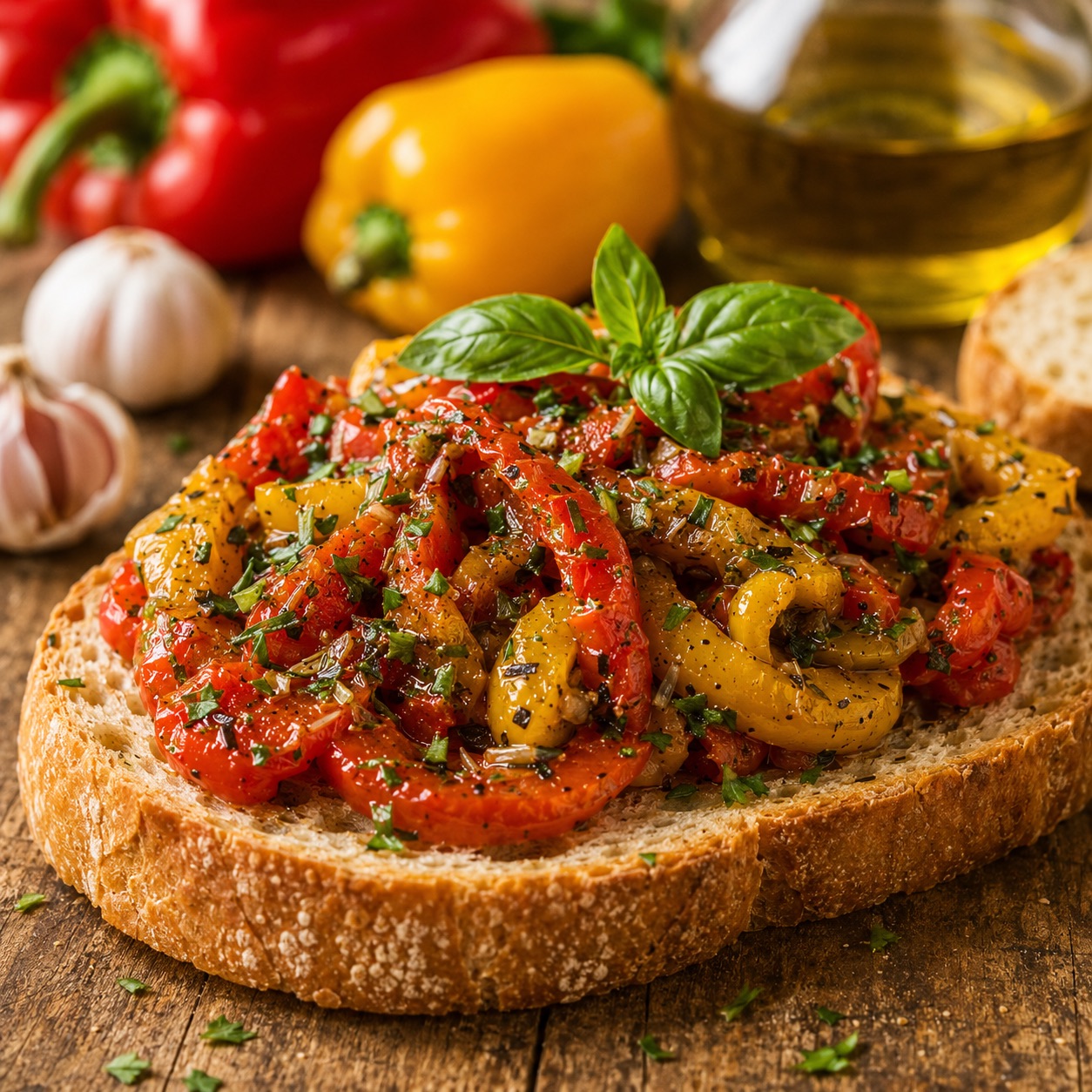
If you arranged the summer dishes of a Campanian kitchen in order of visual impact, the pepper plate would come first. Red and yellow and orange, glistening with olive oil, laid out wide — the most colorful thing on the counter, the one that draws you over before anything else. The smell is deeper and smokier than the green pepper dishes: this is the sweetness that develops in bell peppers when they are cooked long and properly, whether that means the char of the oven or the slow surrender of a sautéed pan.
My father loved bell peppers with an enthusiasm that occasionally became a concern. He could eat them in quantities that impressed the people around him and worried them simultaneously. At least once — the story exists in family memory as a cautionary tale told with affection — he ate enough of them in a single sitting that it resulted in a visit to the emergency room. He was fine. The peppers were also fine. He ate them again the following week.
The important thing to understand about this dish is that there are two equally valid versions, not one main and one alternative. The roasted version — charred whole in the oven or over a flame, steamed in a bag, peeled into silky strips — is smoky and intensely sweet, a more patient preparation that rewards the effort. The sautéed version — sliced raw and cooked slowly in olive oil with onion until completely caramelized and tender — is faster, more sauce-like, and just as good. Both belong on the summer table. Both end up as cold plates on the counter. Both make excellent panini the next day. Both were on our table.
Red vs. green peppers — what ripening does to vitamin C and carotenoid content
Red and yellow bell peppers are nutritionally distinct from green ones — not because they are a different vegetable, but because they are the same vegetable at a later stage of ripeness. Red peppers contain two to three times more vitamin C than green ones (up to 190 mg per 100 g, well above the adult daily requirement), and significantly higher concentrations of carotenoids: beta-carotene (converted to vitamin A), lycopene, zeaxanthin, and capsanthin — the red carotenoid specific to red peppers, with documented antioxidant activity. Yellow peppers have a distinct carotenoid profile dominated by violaxanthin and zeaxanthin. The roasting process, which involves sustained high heat and charring, partially reduces vitamin C (heat-labile) but concentrates the carotenoids and markedly increases lycopene bioavailability through cellular breakdown and the presence of olive oil fat in the final dressing — fat being essential for absorption of all fat-soluble carotenoids. The charring process also produces Maillard reaction compounds responsible for the deep, complex flavor of roasted peppers — this is the same chemistry as coffee roasting and bread crust browning. Anchovy fillets contribute omega-3 fatty acids (EPA and DHA), iodine, and selenium in meaningful amounts for a garnish-quantity ingredient. The olive oil dressing provides oleic acid and the full range of phenolic antioxidants discussed throughout this blog. The combination of fat-soluble carotenoids from the peppers, olive oil as absorption medium, and omega-3 fats from the anchovy makes this a nutritionally well-constructed plate that tastes, for once, exactly as good as it is for you.
The recipe — two methods, same dressing
Ingredients · serves 4
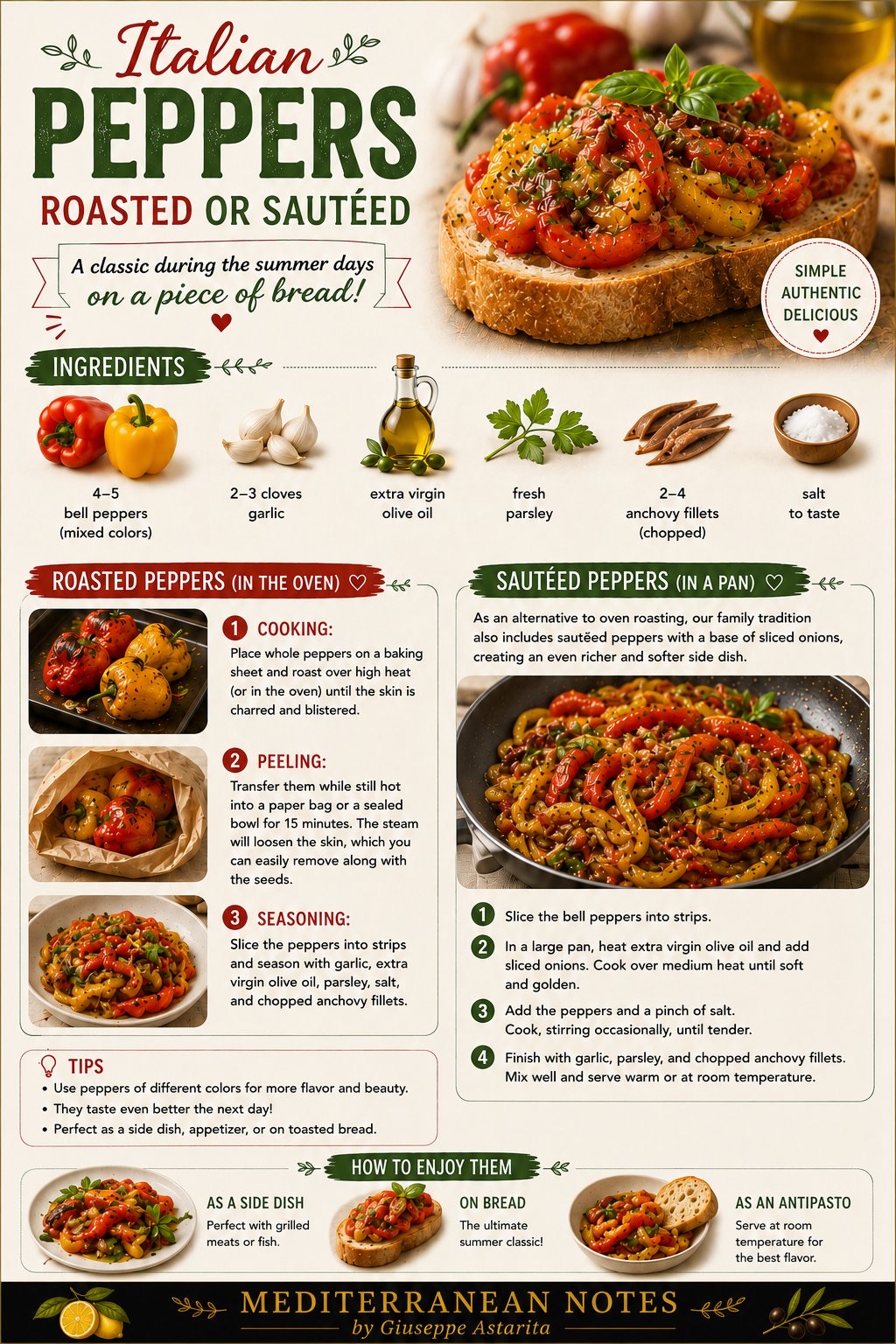
Version one
Roasted in the oven or over flame
Place whole peppers on a baking tray under the broiler at high heat, or directly over a gas flame, turning occasionally until the skin is charred and blistered all over — about 20–25 minutes in the oven. Transfer immediately to a paper bag or a sealed bowl and leave for 15 minutes. The steam loosens the skin. Peel, remove the seeds and stem, and tear into wide strips. Dress while still warm with olive oil, garlic, parsley, and anchovy. Cool completely before serving.
Version two
Sautéed in a pan with onion
Slice the peppers into strips. In a large pan, heat olive oil over medium heat and add sliced onion — cook gently until soft and golden. Add the pepper strips and a pinch of salt. Cook over medium heat, stirring occasionally, until completely tender and slightly caramelized — about 15–20 minutes. Remove from heat. Finish with sliced garlic, chopped parsley, and anchovy fillets. Mix well. Serve warm or at room temperature.
The dressing — for both versions
Whether roasted or sautéed, the peppers are finished the same way: thinly sliced or crushed garlic, chopped anchovy fillets, fresh parsley, and a generous drizzle of extra-virgin olive oil. For the roasted version, add the dressing while the peppers are still warm so the garlic and anchovy melt into the oil. Taste before adding salt — the anchovies carry significant salt and the peppers often need less than expected.
The dish is dramatically better the next day. The garlic and anchovy flavors deepen overnight in the oil. Make it the evening before when possible.
How to eat them
On a plate as a side dish alongside grilled meat or fish, as part of an antipasto table with the zucchine alla scapece and the peperoni alla napoletana, or simply on thick slices of bread with the oil from the plate soaked in. The last option requires no further instruction and is probably the best one.
The panino con i peperoni arrostiti and anchovy: cold strips of roasted pepper, two anchovy fillets, a drizzle of the dressing oil, bread that is good enough to hold all of this without falling apart. This is a summer lunch that requires exactly zero cooking on the day you eat it and that tastes like the kitchen was working all morning. Keep a plate of roasted peppers in the refrigerator from June to September. Bring them back to room temperature before eating — cold from the refrigerator they lose their flavor; an hour on the counter restores it entirely.
Buon appetito — e viva l'estate.