Patate Novelle al Forno
Patanielli — croccanti fuori, morbidissime dentro
In Naples the new potatoes are called patanielli, affectionately, as things worthy of affection are. They are roasted whole with whole onions and rosemary. The secret — and in Naples it is an open secret everyone knows — is the double cooking. First briefly boiled. Then the oven.
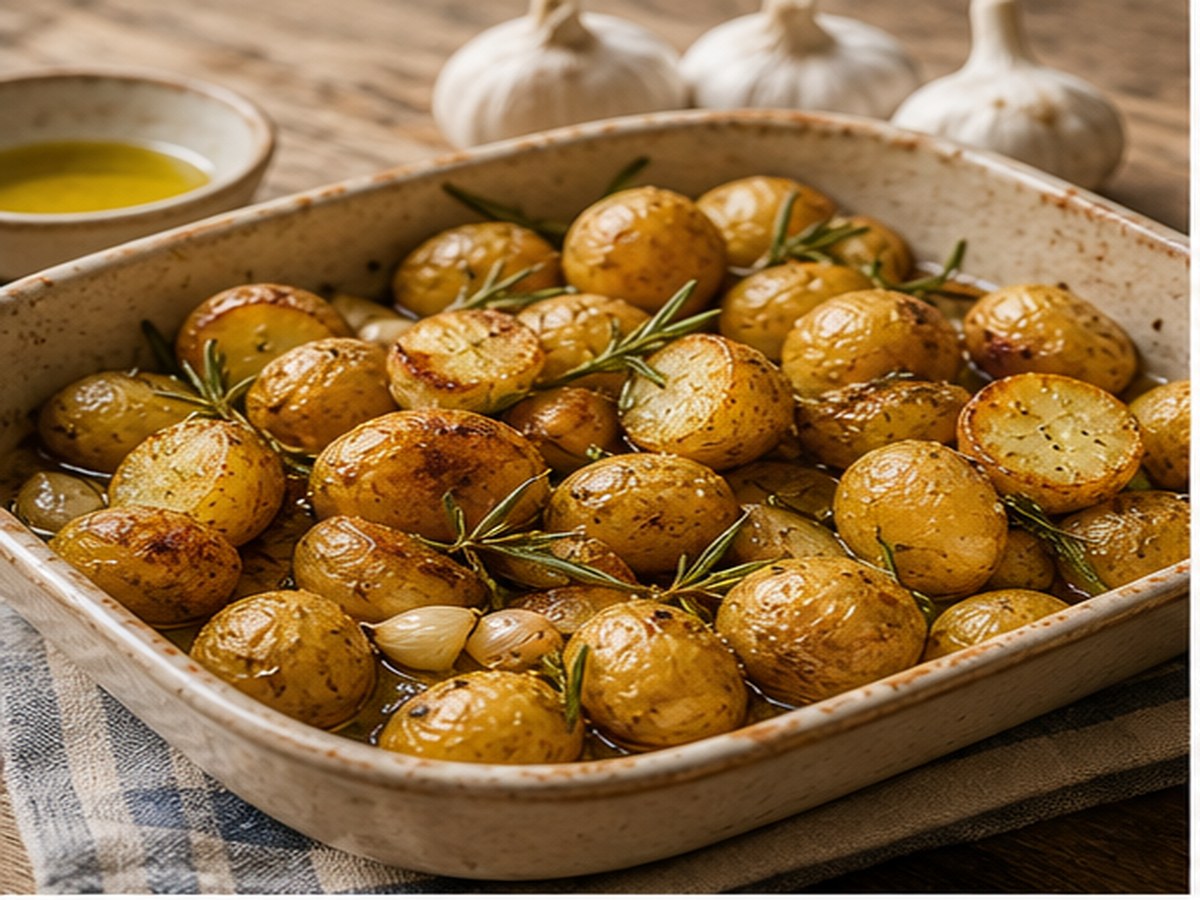
My father loved these alongside roasted meat — a lamb shoulder, a piece of pork, whatever was in the oven on a Sunday. The patate novelle were his chosen side dish in the way that the salad or the vegetables were everyone else's. They appeared in spring when the new potatoes arrived and they disappeared again when the season ended, because he understood that the novelle — the small, freshly harvested potatoes with their thin skin barely set — were a specific thing and not interchangeable with the potatoes available year-round. A new potato is different from a stored potato in the way a new season is different from a stored one: more fragile, more immediate, more of the moment it came from.
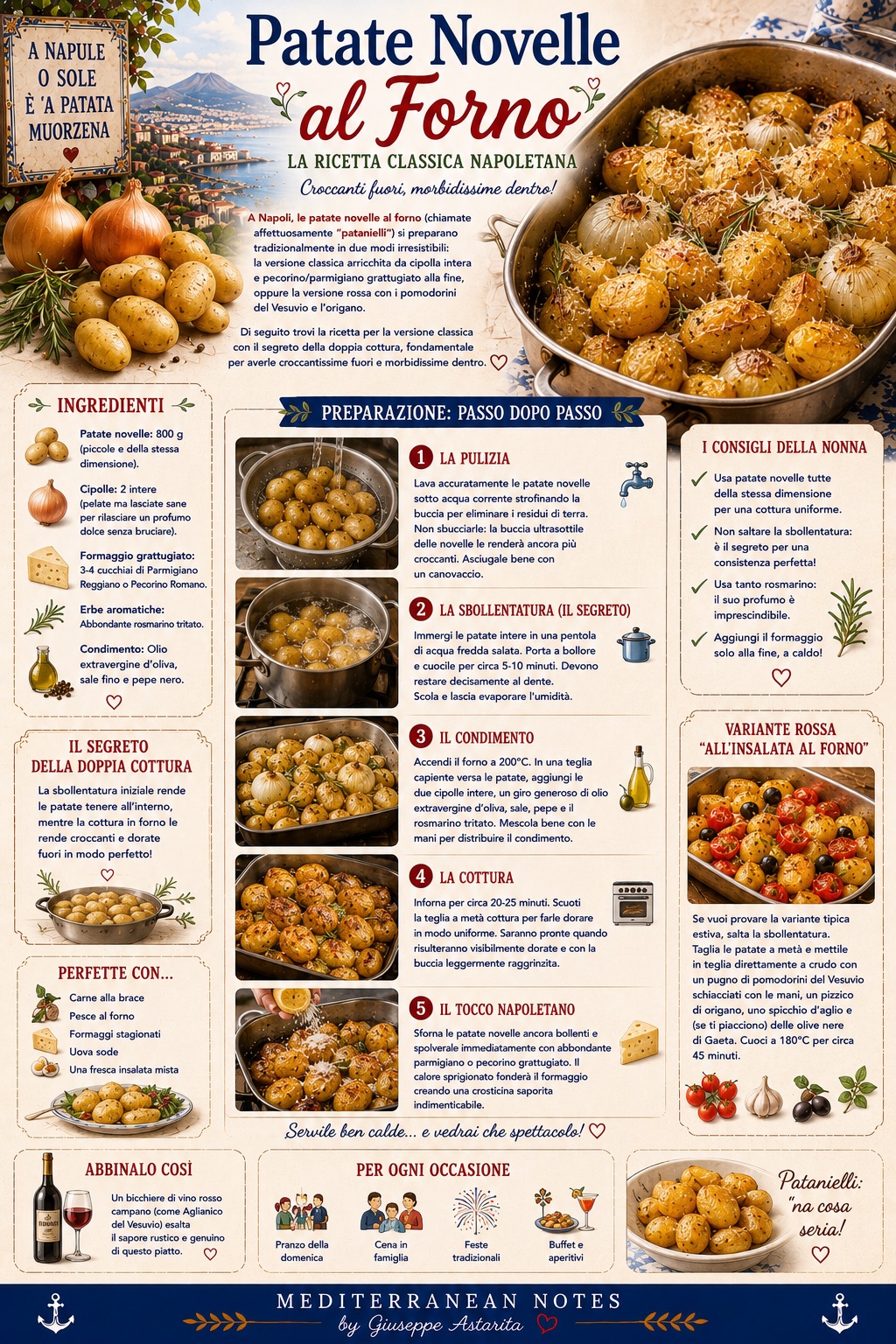
The Neapolitan preparation has a name — patanielli al forno — and a secret that is both widely known and frequently ignored: the sbollentatura. Before the oven, the potatoes go whole and unpeeled into salted cold water, brought to a boil, and cooked for five to ten minutes. They come out decidedly al dente — not cooked through, just set enough that the interior has started to soften. Then they go into the hot oven. This two-stage cooking is what produces the specific result that makes these potatoes different from any other roasted potato: the interior is already cooked to a particular tenderness by the boiling, and the oven then focuses entirely on the surface — drying it, crisping it, developing the golden color and the slightly wrinkled skin that is the visual sign of a pataniella done correctly. Skip the sbollentatura and you get a roasted potato. With it, you get a pataniella.
The whole onion is the other specific element. Two onions, peeled but left intact, roasted in the pan alongside the potatoes. They caramelize slowly in the oven, their layers softening and sweetening, releasing a juice that mixes with the olive oil at the bottom of the pan. The onion is not a background element — it is a co-star, eaten alongside the potatoes or spread on bread, or just eaten on its own with a pinch of salt. The onion that comes out of a pan of patate novelle after forty-five minutes in a 200°C oven is one of the more underrated things in Italian cooking. My father ate them without ceremony and without leaving any on the plate.
The cheese — pecorino Romano or Parmigiano Reggiano, grated abundantly — goes on only at the very end, when the potatoes come out of the oven still fully hot. The heat of the potatoes melts the cheese immediately against their surface, creating a thin savory crust that adheres rather than sitting on top. Adding the cheese before the oven produces a burned, bitter coating; adding it to cooled potatoes produces nothing useful. Only at the end, only hot. This is the third rule of the preparation alongside the sbollentatura and the whole onion.
The sbollentatura — the brief partial boil before roasting — does two things that direct oven-roasting alone cannot. First, it gelatinizes the outermost starch of the potato skin: water penetrates the thin skin of the novella and heats the starch granules just below the surface, causing them to swell and partially gelatinize. When this partially cooked surface then enters a hot dry oven, the surface moisture evaporates rapidly, leaving behind a concentrated layer of gelatinized starch that dehydrates and crisps under the oven heat — producing the croccante exterior that defines the dish. Raw potato placed directly in the oven loses surface moisture more slowly and the starch crisping is less pronounced and less even. Second, the boiling cooks the interior of the potato to the point where the oven needs to do minimal work to finish it — this is why the oven time is short (20–25 minutes) and the interior arrives at the table morbidissima without being overcooked on the outside. The cheese applied to hot potatoes melts immediately because its fat phase is above its melting point (around 55–65°C for aged pecorino); as the proteins denature slightly from the residual heat, they adhere to the potato surface and form the thin savory crust. Applied to cooled potatoes, the cheese stays as a cold powder; applied inside the oven, the proteins would over-denature and the fats would separate, producing a burned and greasy coating rather than the adherent crust.
La ricetta
La variante rossa
For the summer version — skipping the sbollentatura — halve the potatoes and place them cut-side up directly in the roasting pan with a handful of crushed Vesuvian cherry tomatoes, a pinch of oregano, a clove of garlic, and black olives from Gaeta if you have them. Roast at 180°C for about 45 minutes. The tomatoes collapse and their juice mingles with the olive oil to create something between a roasted potato and a light tomato braise. Different from the classic but entirely its own thing.
My father ate the classic version alongside a roasted lamb shoulder or a piece of pork from the oven on Sunday afternoons. He ate the onions too, entirely, without leaving anything. I make these now in Massachusetts in spring when small waxy potatoes appear at the market. They are not quite patate novelle from Campania but they are close enough that the result is recognizable, and the smell of rosemary and olive oil and hot potato coming from the oven is the same smell it was in Caserta in the 1980s. Some things travel better than others.
Buon appetito — e metti il formaggio solo alla fine, a caldo!