Arance con lo Zucchero
The simplest dessert — and one of the best
My father made this as a dessert for the family. Also called arance all'insalata dolce — sweet orange salad. Two oranges, two tablespoons of sugar, ten minutes of patience. Le cose più semplici sono spesso le più buone.
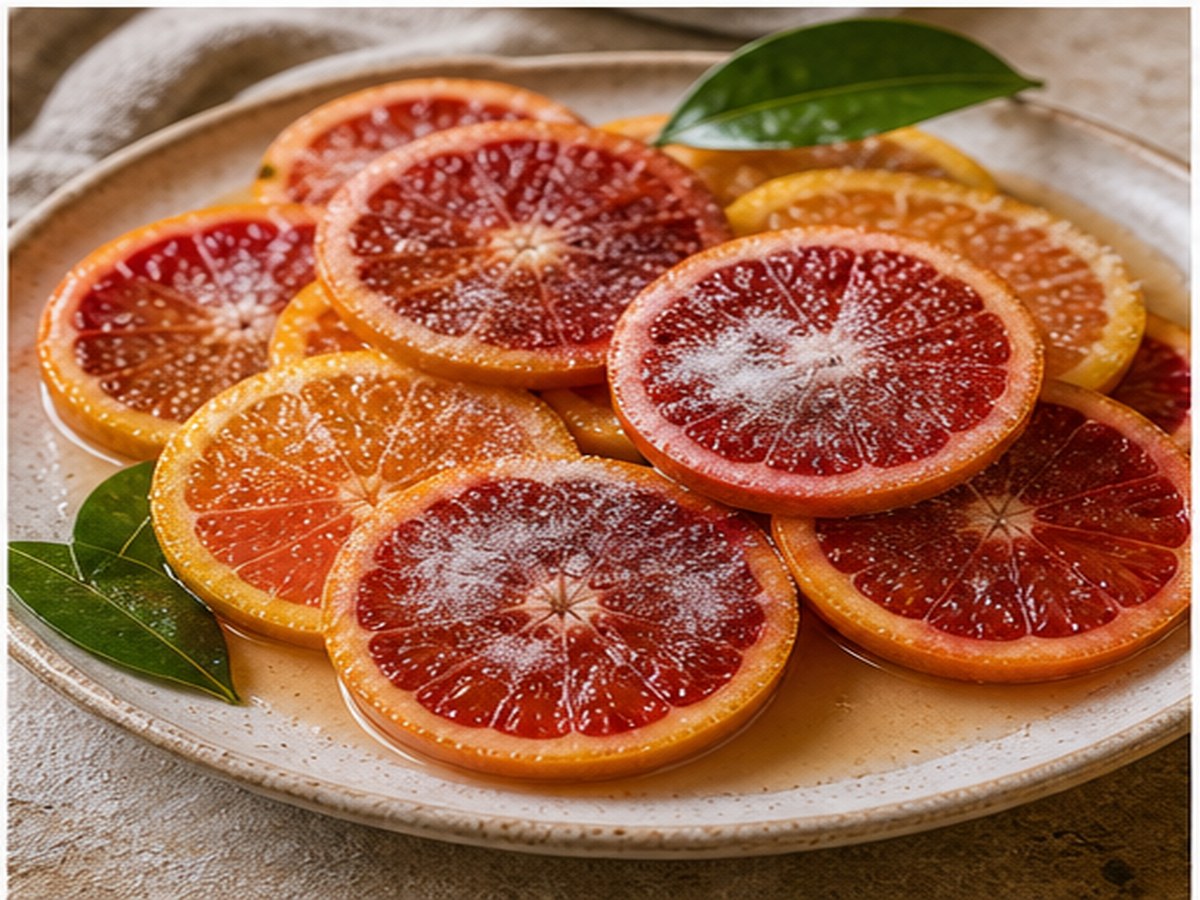
My father had a small repertoire of things he made himself, and most of them involved no cooking at all. The bean salad he assembled cold in summer. The spaghetti aglio e olio. And the arance con lo zucchero — oranges with sugar — which appeared at the end of certain meals as a dessert, always prepared by him, always on the same large plate he used for this purpose, always cold from the refrigerator. It was not a performance. He sliced the oranges, dusted them with sugar, put the plate in the refrigerator for ten or fifteen minutes, and brought it to the table. The sugar had dissolved by then into the orange juice, making a thin light syrup that pooled at the bottom of the plate. You ate the slices with a fork and got some syrup with each bite, and it was refreshing and sweet and exactly the right amount of dessert after a substantial meal.
The technique has a name in Neapolitan cooking — arance all'insalata dolce, sweet orange salad — which places it in the tradition of treating fruit with the same attention as a vegetable preparation: seasoned, rested, served in its own dressing. The dressing here is just the orange's own juice mobilized by the sugar, which is the simplest possible version of the idea. In Naples this is eaten as a dessert, as an afternoon snack, and sometimes as a light side dish at summer meals alongside cold fish. My father ate it as dessert and so did we.
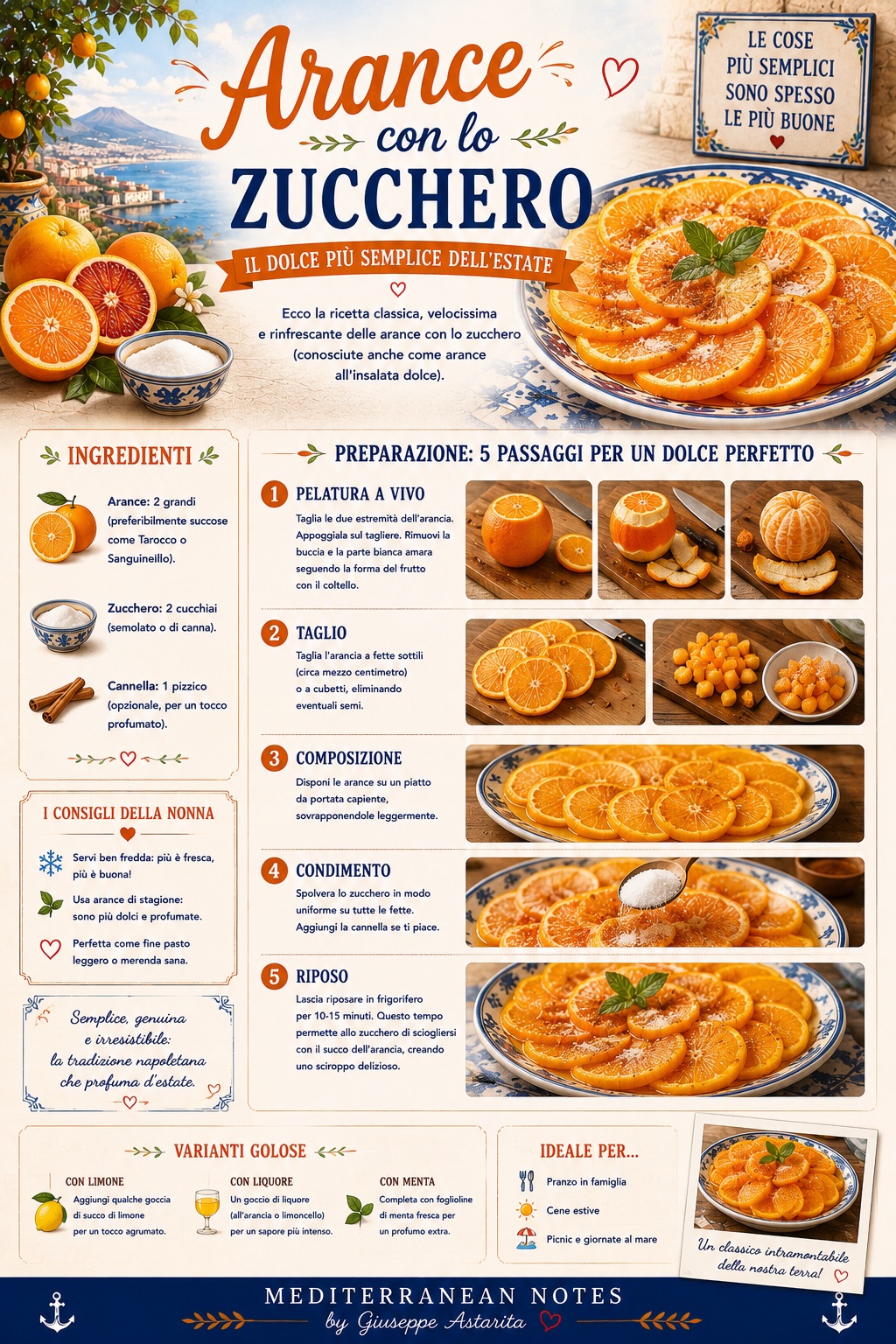
The orange matters. The infographic specifies Tarocco or Sanguinello — both Sicilian blood orange varieties with a sweetness and a juice content that makes them particularly suited to this preparation. The Tarocco is considered the finest Italian orange by flavor, with a complex sweetness that no navel orange quite reaches. In winter in Massachusetts I buy blood oranges when they are available and they are close enough. In summer, when blood oranges are not in season, a ripe navel or a Valencia works, though the result is a little less complex. The key is always the same: ripe, juicy, sweet oranges. An underripe orange gives you a sour plate of fruit in thin syrup, which is a different and lesser thing.
The pelatura a vivo — peeling to the live flesh — is the technique that makes this dish rather than the orange version of a less considered thing. You cut both ends off the orange, stand it upright on the board, and remove the peel and the white pith together by following the curve of the fruit with a sharp knife, working from top to bottom in strips. The result is an orange with no white membrane on the outside, fully exposed, ready to release maximum juice when sliced. The pith is bitter and its presence in the dish would undercut the sweetness of the preparation. My father did this automatically, by muscle memory, without thinking of it as technique. He had been doing it that way his whole life.
When sugar is dusted onto the cut surface of an orange slice, it draws moisture out of the fruit cells by osmosis — water moves from the region of lower solute concentration (inside the orange cells) to the region of higher solute concentration (the dry sugar on the surface). As water leaves the cells, it carries dissolved sugars and citric acid from the fruit with it, dissolving the surface sugar and creating the thin syrup that pools on the plate. This is the same mechanism that produces syrup when you macerate strawberries with sugar or make a quick fruit compote without heat. The 10–15 minute rest in the refrigerator is the time required for this process to happen fully — at cold temperatures the rate of osmosis is slightly slower than at room temperature, but the cold temperature is desirable because it keeps the orange slices firm and the syrup light rather than watery. Blood orange varieties like Tarocco and Sanguinello are particularly suited to this preparation because they contain higher concentrations of anthocyanin pigments (the compounds responsible for the red color) alongside the usual citric acid and ascorbic acid, which gives the syrup a slightly more complex flavor than the syrup produced by navel oranges. The cinnamon, if added, contributes a small amount of cinnamaldehyde to the syrup — a compound with genuine antimicrobial and flavoring properties that also happens to work well with citrus.
La ricetta
Varianti
My daughters eat this. Anna treats it as something between a dessert and a snack and has strong opinions about the orange variety. Carolina eats the syrup from the bottom of the plate with a spoon, which is correct — that is the best part and should not be left behind. My father would approve of both approaches.
Buon appetito — e non lasciare il succo nel piatto.