Vino e Percoche
The Neapolitan sangria — peaches in wine, nothing more
In Naples this is not a cocktail and not a dessert. It is a pitcher at the table, a summer thing, served at lunch alongside fish or meat, white wine or red depending on what you are eating. My father loved it. È nu' piacere tutto nostro — a pleasure that is entirely ours.
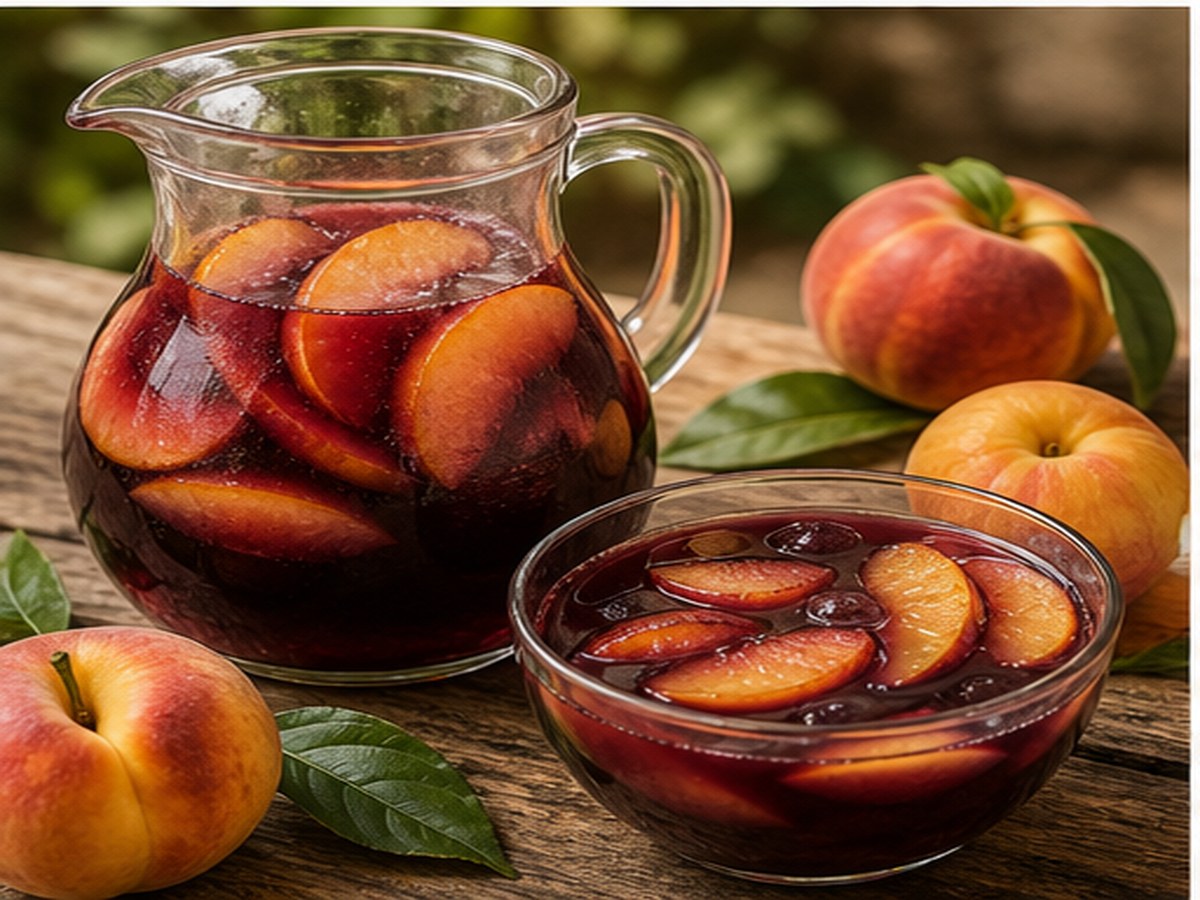
The percoca is a specific peach. Not the soft, juicy, fragrant peach that you eat standing over the sink in August. The percoca — or percoche in the plural, sometimes spelled percoca — is firm, yellow, clingstone, less juicy than a typical peach but with a particular quality of flesh that makes it suited for exactly this preparation: it absorbs wine without falling apart, holds its shape through an hour of maceration, and releases into the wine a sweetness and a fragrance that transforms the glass. It is called the Neapolitan sangria by people explaining it to those who have not had it, which is an adequate description but not quite right, because the sangria is a project and the vino e percoche is simply a pitcher of wine with fruit in it and nothing else required.
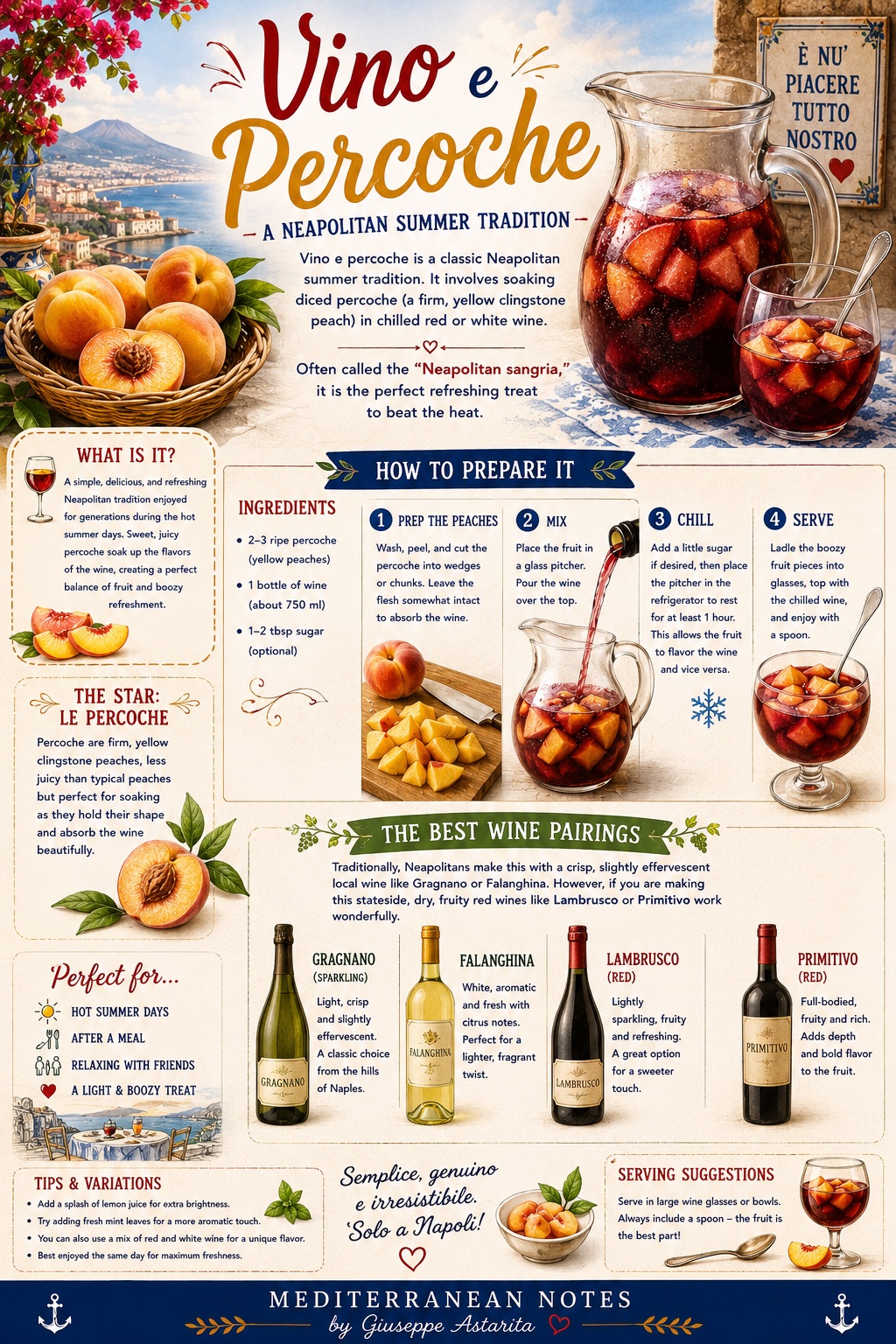
My father loved this. It was one of his things — something he would make or order without deliberation when the season was right and the percoche were available. In Naples you find it at restaurants in summer, the pitcher arriving at the table with the first course, the fruit already macerating in the chilled wine, a spoon alongside for fishing out the pieces at the end. Red wine or white depending on the establishment and the meal: with fish, often a white like Falanghina, the citrus notes of the wine working with the sweetness of the peach in a way that is light and refreshing; with meat, a Gragnano — the naturally slightly sparkling red from the hills of Naples, which is one of the great summer wines of Campania and which most people outside the region have never tried. Either is correct. The tradition accepts both.
The percoche are specific to Campania and to a few other areas of the south, and they are not easy to find outside Italy. This is the honest limitation of the recipe for those of us living elsewhere. In Massachusetts I have made it with firm yellow peaches — not the same but closer than the soft varieties — and the result is good enough to be worth making. The percoca's specific quality is the density of its flesh, which resists the wine long enough for the exchange to happen properly. A soft peach becomes something sad and waterlogged within twenty minutes. A firm peach, given an hour in the refrigerator, gives and takes in equal measure and comes out as something better than either the fruit or the wine was alone.
The preparation requires almost nothing. You wash and peel the percoche, cut them into wedges or chunks, place them in a glass pitcher, pour the wine over them, add a spoon of sugar if you want — the percoche are sweet enough that the sugar is truly optional — and put the pitcher in the refrigerator for at least an hour. The minimum is an hour. Less than that and the exchange has not happened; the fruit is still fruit in wine rather than the combined thing it becomes. Served in large wine glasses or bowls, always with a spoon, always cold, always the same day you make it — the freshness is the point and a day-old version has lost most of what made it worth making.
Maceration is the extraction of soluble compounds from a solid into a liquid through passive diffusion. When percoche sit in wine, two processes happen simultaneously: the ethanol and water in the wine diffuse into the fruit cells, carrying with them the wine's aromatic compounds — primarily esters, terpenes, and phenolic acids that give the wine its flavor — while the fruit releases its own soluble sugars, organic acids (mainly malic and citric), and volatile aromatic compounds (primarily esters like ethyl acetate and aldehyde derivatives that give ripe peaches their characteristic smell) into the wine. The result after one hour is that both the fruit and the wine have changed: the wine is sweeter, fruitier, and slightly less alcoholic in character; the fruit is firmer in flavor, wine-scented, and partially colored from the wine's pigments. The percoca's high pectin content and dense cell structure slow the rate of moisture loss from the fruit cells, which is why it holds its shape while absorbing wine for an hour where a soft peach would collapse. The clingstone quality — the flesh adhering tightly to the pit — also indicates denser, less hydrated flesh, which behaves better under maceration. The sugar, if added, dissolves into the wine and slightly raises osmotic pressure, which modestly slows water movement out of the fruit and makes the final syrup slightly more viscous and pleasant.
La ricetta
Il vino giusto
My father did not overthink the wine. He used whatever was on the table, red or white, and the result was always good because the percoche were the right percoche and they were given enough time. That is the whole recipe. Everything else is commentary.
Buon appetito — e non dimenticare il cucchiaio.