Pasta con Zucchine,
Cipolle e Pomodorini
The summer pasta she made all season long — light, fragrant, and almost sweet
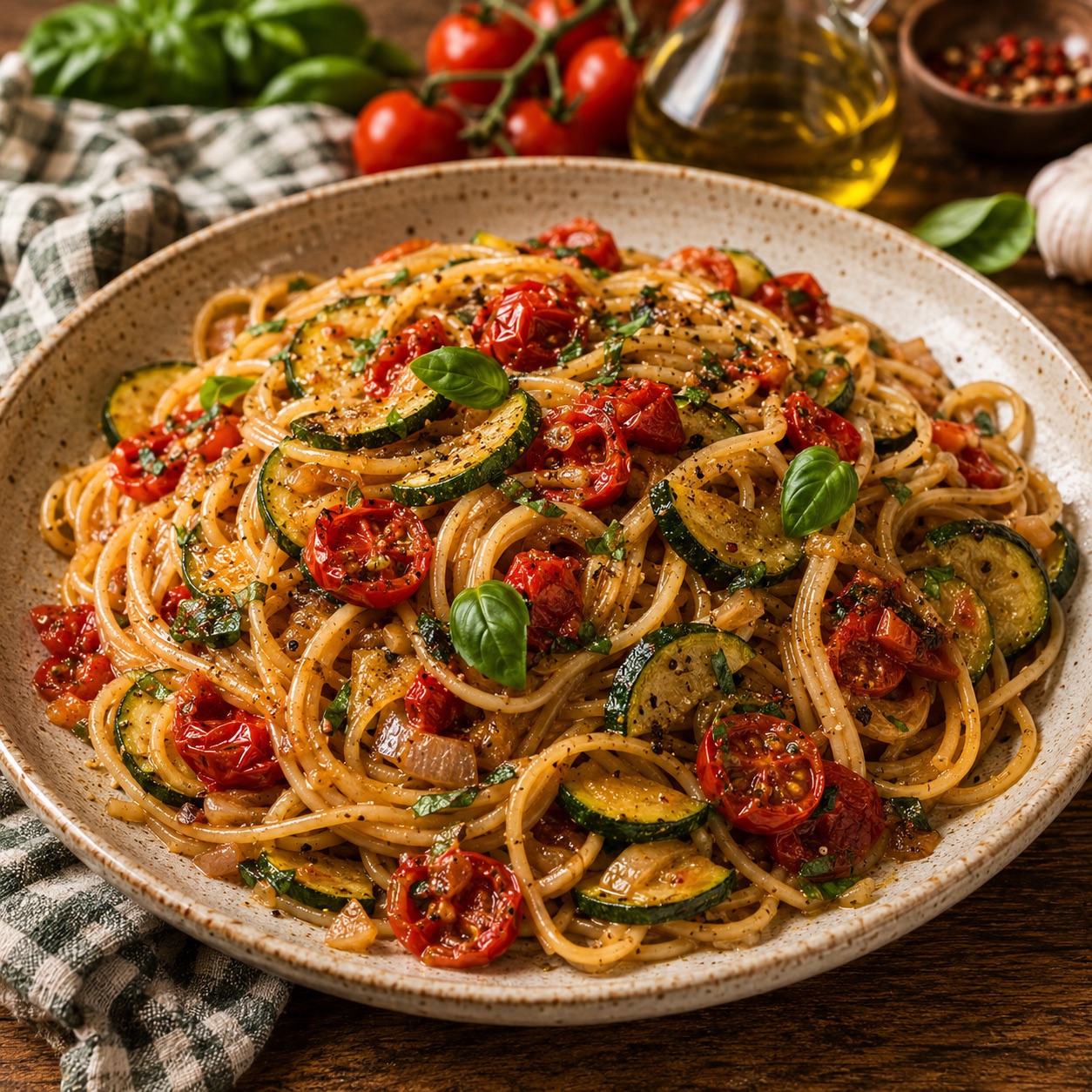
Sweet slow-cooked onion, tender zucchini, cherry tomatoes that give up their juice into the pan, and a great deal of basil torn in at the end. My mother made this constantly through the summer in Caserta, and there was always enough sauce in the bottom of the dish to finish with bread.
This is one of the dishes I associate most directly with summer in Caserta — not a special-occasion pasta, not something that required planning, but a thing my mother made over and over through the warm months because the ingredients were there and cheap and good. Zucchine were at their peak, the cherry tomatoes were sweet, there was always an onion and always olive oil and always basil growing somewhere. She put them together the way she put many things together: without a recipe, by feel, the same way every time because her hands already knew the sequence.
What I remember most about it is the sweetness. Not sugar-sweet — vegetable-sweet, the kind that comes from cooking an onion slowly until it surrenders, and from zucchini caramelizing slightly at the edges, and from cherry tomatoes reduced just enough to concentrate. The three sweetnesses layered on each other and the basil cut through them at the end with its sharp green smell. It was delicious in a way that seemed almost too simple to explain, and as a child I did not try to explain it. I just ate it, often, and asked for more.
And there was always sauce. This is a detail that matters to me, because my mother made this dish wetter than most people make it — not soupy, but with a real pool of olive oil and tomato juice and starchy pasta water gathered at the bottom of the plate. The reason was simple: la scarpetta. When the pasta was gone there had to be enough left to drag a piece of bread through, and there always was. A pasta con zucchine that leaves you nothing for the bread has, in my family's view, failed at one of its jobs.
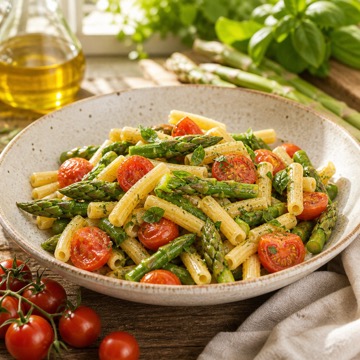
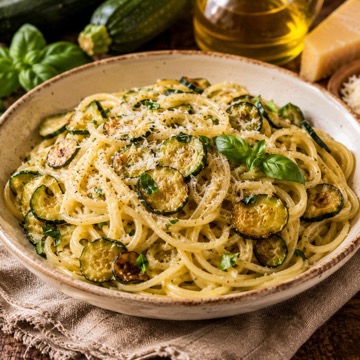
It belongs to the same family as the other quick summer primi — the asparagus version of late spring, the fried-zucchini Nerano of the Amalfi Coast — but it is lighter than Nerano and humbler than any of them. It is what you make on a hot evening when you walked through the market in the afternoon, came home with zucchine and pomodorini, and wanted something on the table in the time it takes to boil the water. We finished it with Pecorino, grated over the top, which sharpens the sweetness and ties the whole thing together.
The sweetness at the heart of this dish is built first, in the onion. Raw onions are sharp and pungent because of organosulfur compounds and volatile acids; cooked slowly over low heat, these break down progressively while the onion's stored inulin — a long-chain carbohydrate with little taste — is converted into fructose and glucose, sugars the tongue reads directly as sweetness. Ten to twelve minutes of patient cooking is what separates an onion that disappears into mellow background sweetness from one that stays raw and aggressive. This is the single step most worth not rushing.
The zucchini works on the opposite principle: high heat, short time. Zucchini is roughly ninety-five percent water held in delicate cell walls, and if cooked too long or too gently it collapses into a watery mush. Cooked hot and relatively fast, the surface caramelizes — Maillard and sugar-browning reactions on the cut faces — while the interior stays firm and retains its structure. The goal is golden edges and a little bite remaining, not a uniform softness. Salting the zucchini lightly at the start draws out a little surface moisture and helps it brown rather than steam.
The brief cooking of the cherry tomatoes releases their lycopene — the red carotenoid that gentle heat makes more bioavailable, not less, by loosening it from the cell structures where it is bound in raw fruit — while their juice, combined with olive oil and a splash of starchy pasta water, emulsifies into the light glossy sauce that coats every strand. That same sauce, deliberately left a little abundant, is what waits at the bottom of the plate for the bread.
The recipe
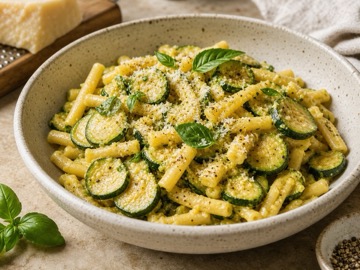
For four. Penne rigate, mezze maniche, or spaghetti all work — the ridged short shapes catch the vegetables, spaghetti carries the sauce. Use zucchine that are firm and not too large; small-to-medium ones have fewer seeds and more flavor. The cherry or datterino tomatoes should be ripe and sweet — this is a dish that lives on the quality of summer vegetables, so buy them at their best. And keep the sauce a little loose: you want some left for the bread.
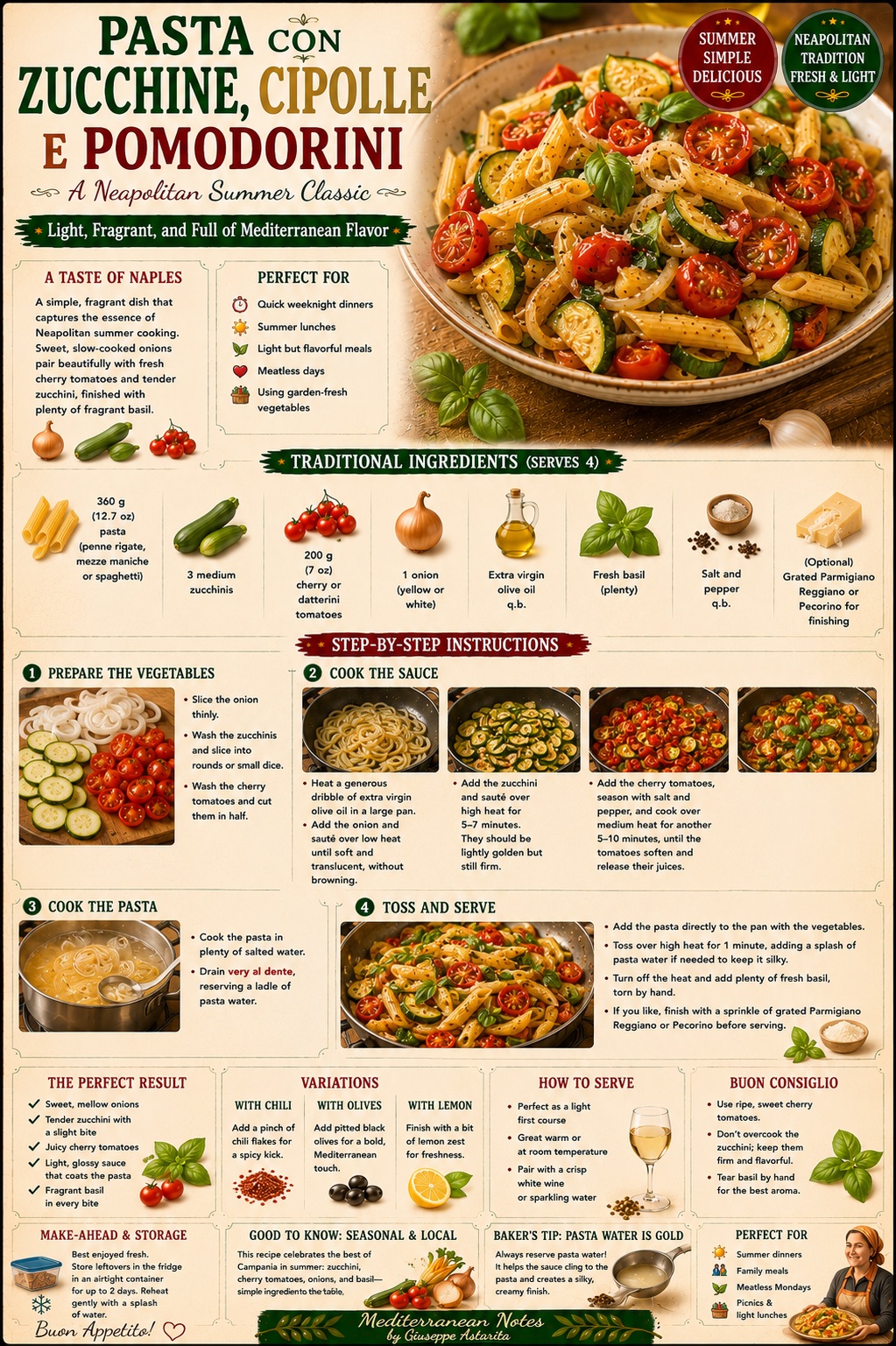
Variations
Best enjoyed fresh, and genuinely good warm or at room temperature on a hot day. Leftovers keep in the fridge for up to two days; reheat gently with a splash of water. But the truth is there were rarely leftovers — between the four of us and the bread for the scarpetta, the pan came back to the kitchen empty.
Buon appetito — e viva l'estate.