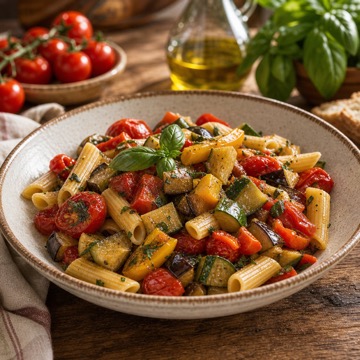
Pasta con Asparagi,
Cipolle e Pomodorini
The dish she made when spring was almost gone and summer had not quite arrived
My mother cooked by season without making a principle of it. She just bought what was good at the market and came home and made something. In April and May, when the asparagus was right and the first small tomatoes were starting to appear, this pasta was one of the answers.
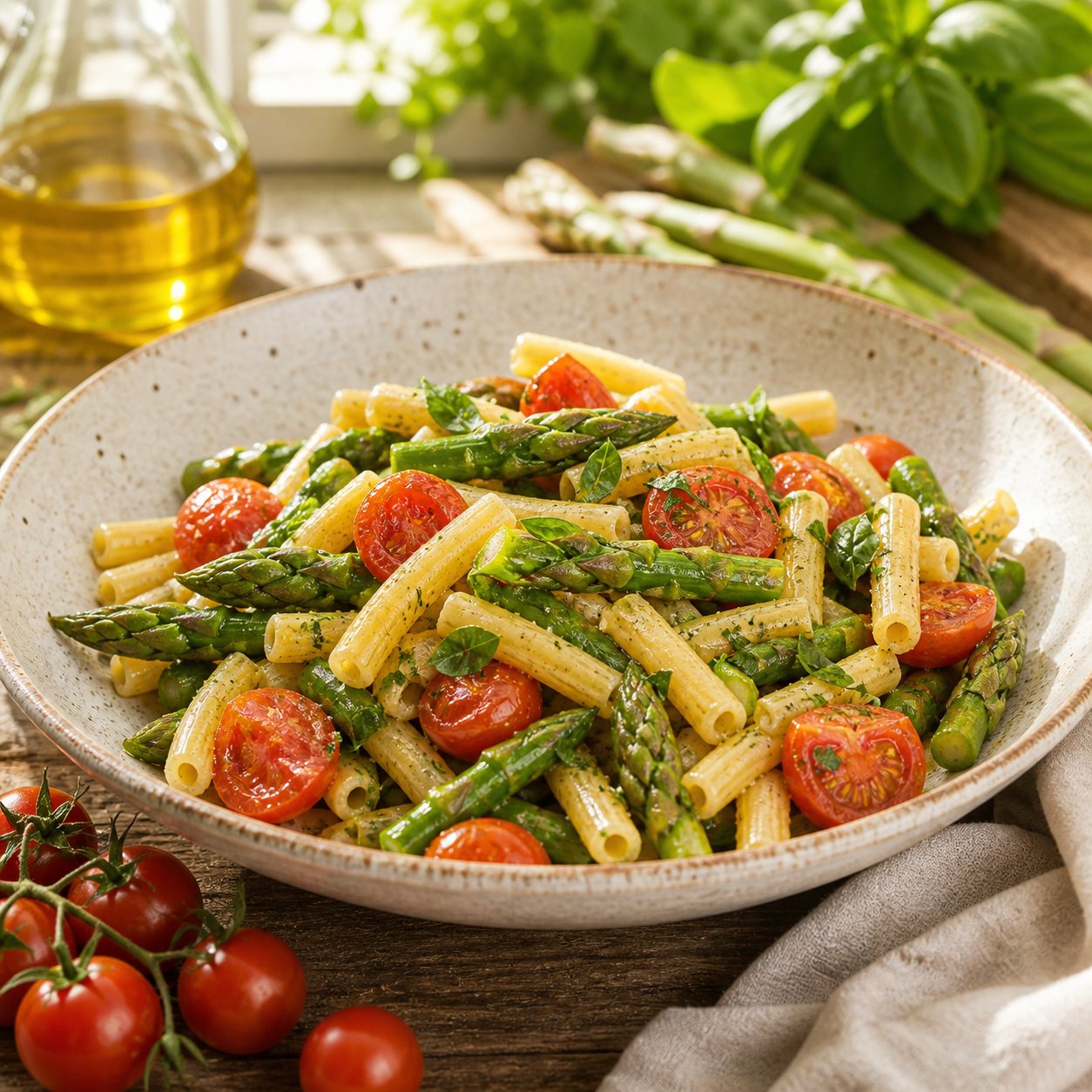
There is a window of a few weeks in late spring — April into May, sometimes a few days into June — when asparagus and cherry tomatoes overlap at the market. The asparagus is at the end of its season: the spears are still firm and green and tight at the tip, but you know they will not be there much longer. The cherry tomatoes are at the beginning of theirs: small, a little acidic still, not yet the sweet concentrated things they become in August heat. The two together produce a dish that is neither fully spring nor fully summer, which is exactly what it should be at that time of year.
My mother did not plan this combination deliberately, as far as I could tell. She planned dinner the way most people in Campania planned dinner in those years: by going to the market, seeing what was good, and working from there. The asparagus was good, the pomodorini were just arriving, there was a red onion in the pantry and olive oil always. The pasta shape that day was penne or fusilli — something with ridges or curves that would catch the vegetables and the sauce rather than letting them slide off. Spaghetti works too, but the short shapes fit the spirit of the dish better.
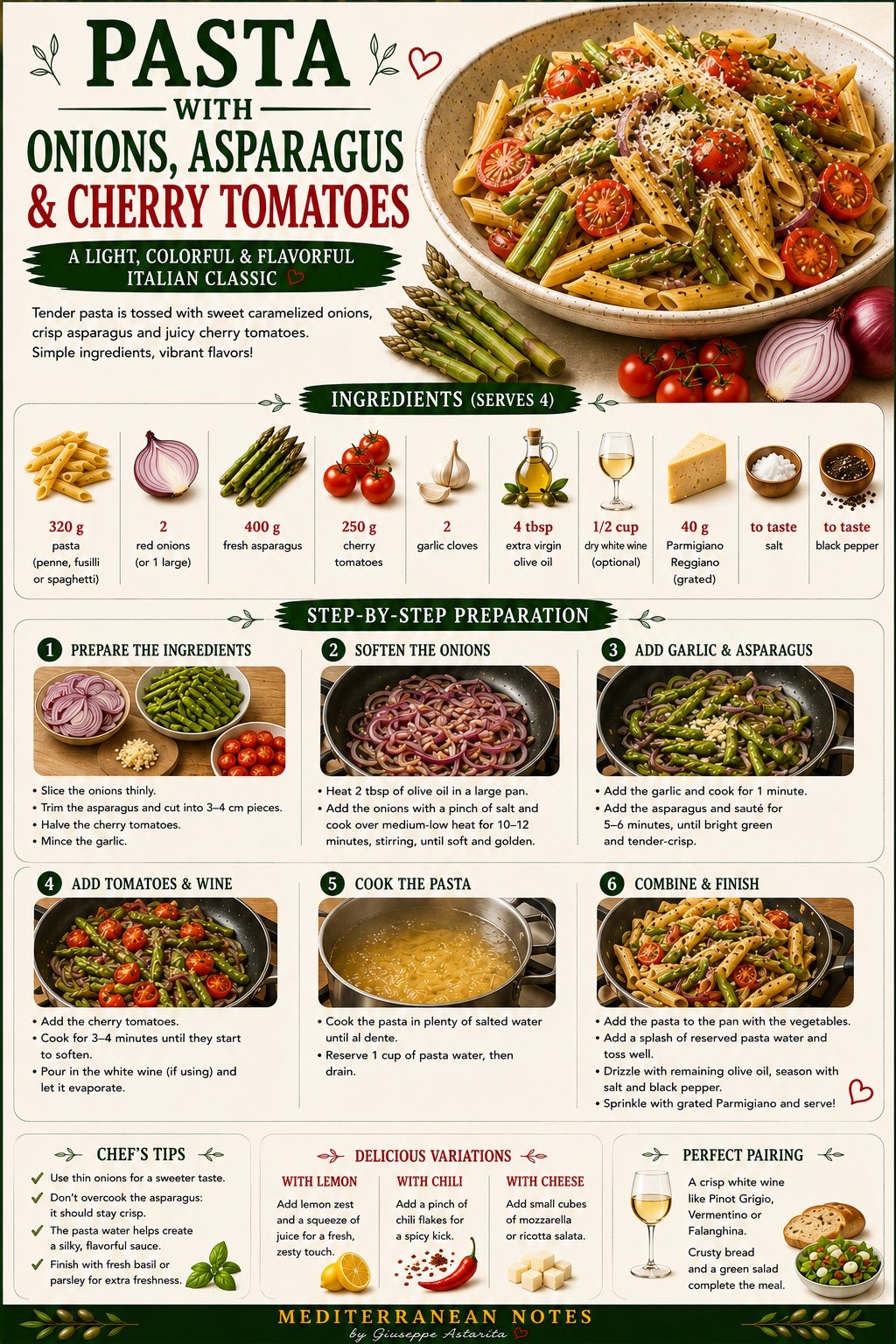
What she produced was not a recipe in any strict sense — it was a response to what was available. The onion went in first, sliced thin and cooked slowly in olive oil until it lost its sharpness and turned sweet and soft. Then the asparagus, cut into short pieces and sautéed until bright green and tender-crisp but not limp. Then the tomatoes, halved, in for just a few minutes — long enough to soften slightly and give up some juice into the pan, not long enough to become sauce. The pasta came off the stove just short of done and finished in the pan with everything, the starchy water doing its usual work of pulling the oil and vegetable juices into something coherent. Parmigiano at the end, not always but usually.
The dish is light in a way that the heavier winter pastas — the Genovese, the ragù — are not, and this was part of its appeal in the warm weeks when nobody wanted something long-cooked and dense. It comes together in the time it takes to cook the pasta. The asparagus and the tomato do most of the work. The onion, cooked slowly enough, adds a sweetness that holds everything together without announcing itself. You could put this on the table thirty minutes after walking in the door with the vegetables, and it would taste like you had been paying attention to the season, which you had.
The bright green color of asparagus during cooking comes from chlorophyll, the pigment responsible for photosynthesis in plant cells. When asparagus is heated, the cell walls soften and initially the green intensifies — volatile acids trapped in the cells escape as steam, and the chlorophyll becomes more visible. Prolonged heat, however, converts chlorophyll into pheophytin, a dull olive-green compound, which is what overcooked asparagus looks and tastes like. Keeping the heat medium-high and the cooking time short — 5 to 6 minutes, tender-crisp — preserves the chlorophyll and the flavor compounds that make fresh asparagus taste like itself rather than like something that used to be asparagus.
The long cooking of the red onion is the opposite strategy: here you want slow heat and time. Raw onions contain organosulfur compounds — the molecules that cause tearing when you cut them — along with sharp, pungent volatile acids. Cooking over low to medium heat breaks these down progressively, while simultaneously converting the onion's inulin (a stored carbohydrate) into fructose through enzymatic and thermal processes. The result after 10 to 12 minutes is a softer, sweeter onion that contributes background depth without any of the raw sharpness. This sweetness is what prevents the dish from tasting sour when the acidic cherry tomatoes go in — the onion and tomato balance each other without either one dominating.
The brief cooking of the cherry tomatoes — just until they soften and release some juice — preserves most of their lycopene in its natural matrix while concentrating the flavor slightly. Lycopene, the red carotenoid pigment in tomatoes, is actually more bioavailable after gentle cooking because heat softens the cell walls and releases it from the protein-carotenoid complexes where it is bound in raw fruit. A few minutes in the pan is enough.
The recipe
For four. Penne or fusilli work best — the ridges catch the vegetables. Spaghetti is also good if that is what you have. Use asparagus that is genuinely in season: the thin, firm spears of late spring, not the thick woody ones that appear year-round in supermarkets and taste of very little. The cherry tomatoes should be small and just ripe — slightly firm, not soft. This is a dish that depends on the quality of two or three ingredients, so the ingredients matter.
Variations
The asparagus season in Campania — April through May, occasionally into early June — is strict in a way that does not leave much room for planning too far ahead. When it is there, you use it. When it is gone, you wait until next year. This dish is one of the reasons the wait feels worth it.
Buon appetito — e viva gli asparagi di stagione.