Pasta, Fagioli e Cozze
Beans from the land, mussels from the bay, one creamy pot — Naples’ great land-and-sea pasta. A staple of the city, if only an occasional guest at our table.
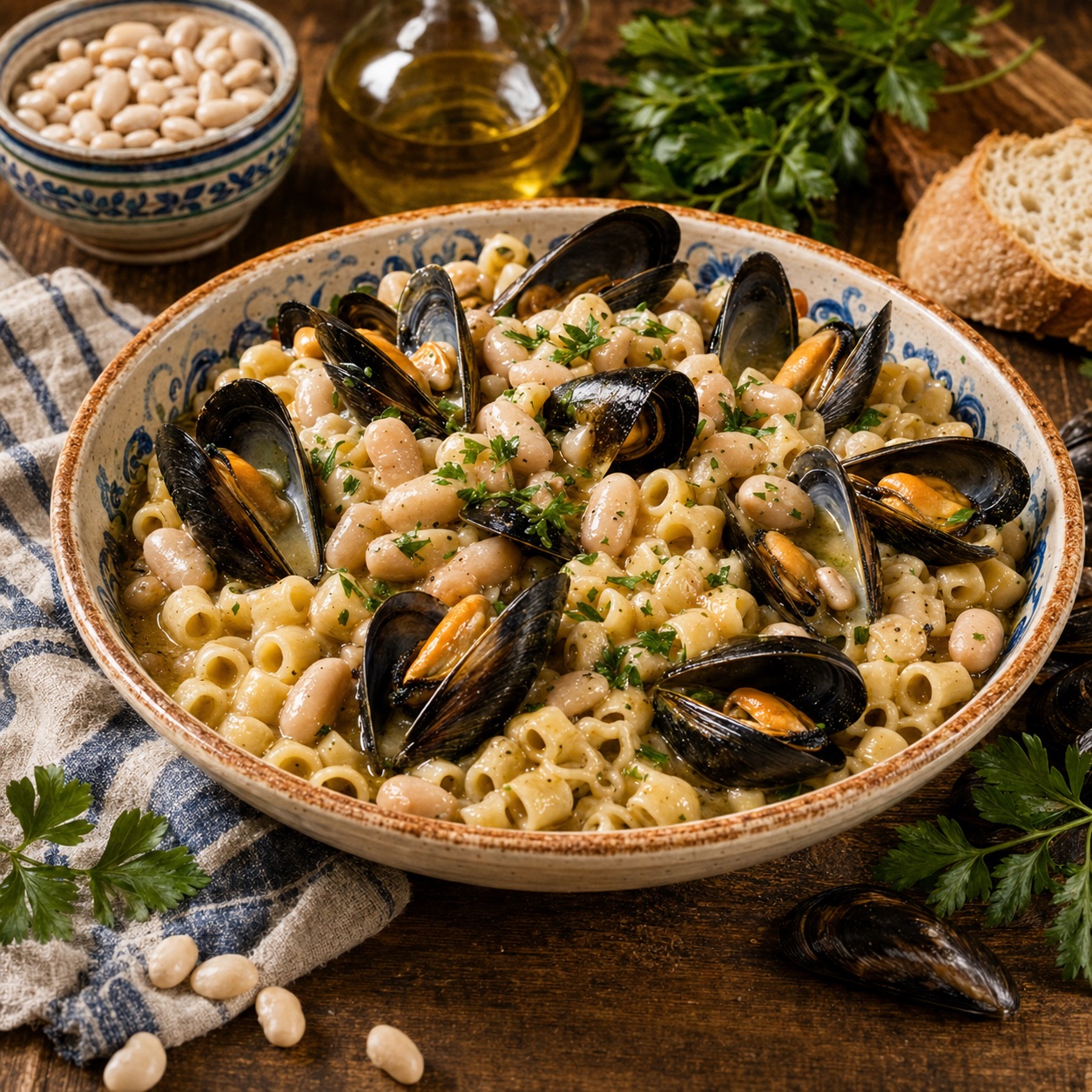
Pasta, fagioli e cozze is one of the most distinctive dishes of Naples — the city’s great marriage of land and sea, beans from the countryside and mussels from the bay in one creamy bowl. And here is my honest disclosure: it was not a staple of our house. We ate it sometimes, and I remember it well, but mussels in general appeared rarely at our table — my mother filed them under potentially not healthy, the same cautious instinct I’ve written about before with seafood, and no amount of evidence to the contrary was going to reorganize that filing system. So while half of Naples was adding mussels to their beans, we mostly just enjoyed our pasta e fagioli on its own — which, to be fair, needs no help.
But the dish deserves its post, because when it’s made well it explains itself in one spoonful. Beans and mussels sound like an unlikely committee; in the pot they are a natural alliance. The sweetness of cannellini blends with the briny intensity of the mussels, and the secret binding them is the mussel liquor — the liquid the shells release as they open. Every authentic version is built on it. You reserve every drop, and you feed it gradually into the bean cream as the pasta cooks, the way you’d feed broth into a risotto.
The traditional pasta is pasta mista — the mixed shapes born from the broken leftovers at the bottom of the pasta drawer, sold now as a format in its own right. Half the beans are blended to make the cream, half left whole for texture; the pasta cooks directly in the pot, drinking the bean cream and the mussel broth together; and the mussels return at the very end, with raw olive oil, parsley and black pepper. One pot, cucina povera logic, extraordinary depth.
About my mother’s filing system: mussels are actually among the most nutritionally efficient seafood — rich in B12, iron, zinc, selenium and omega-3s, farmed with almost no environmental cost. The “potentially not healthy” reputation wasn’t invented from nothing, though: mussels are filter feeders, and in the Naples of past decades, shellfish from uncertain waters were a genuine vehicle for trouble — the city’s cholera outbreak of 1973 was traced to exactly that. Modern depuration and controlled farming solved the problem; the folk memory outlived the risk by half a century. The dish itself is a nutritionist’s diagram: legume protein and fiber, mollusc micronutrients, slow carbohydrates — land and sea balancing each other on the plate as neatly as in the name.
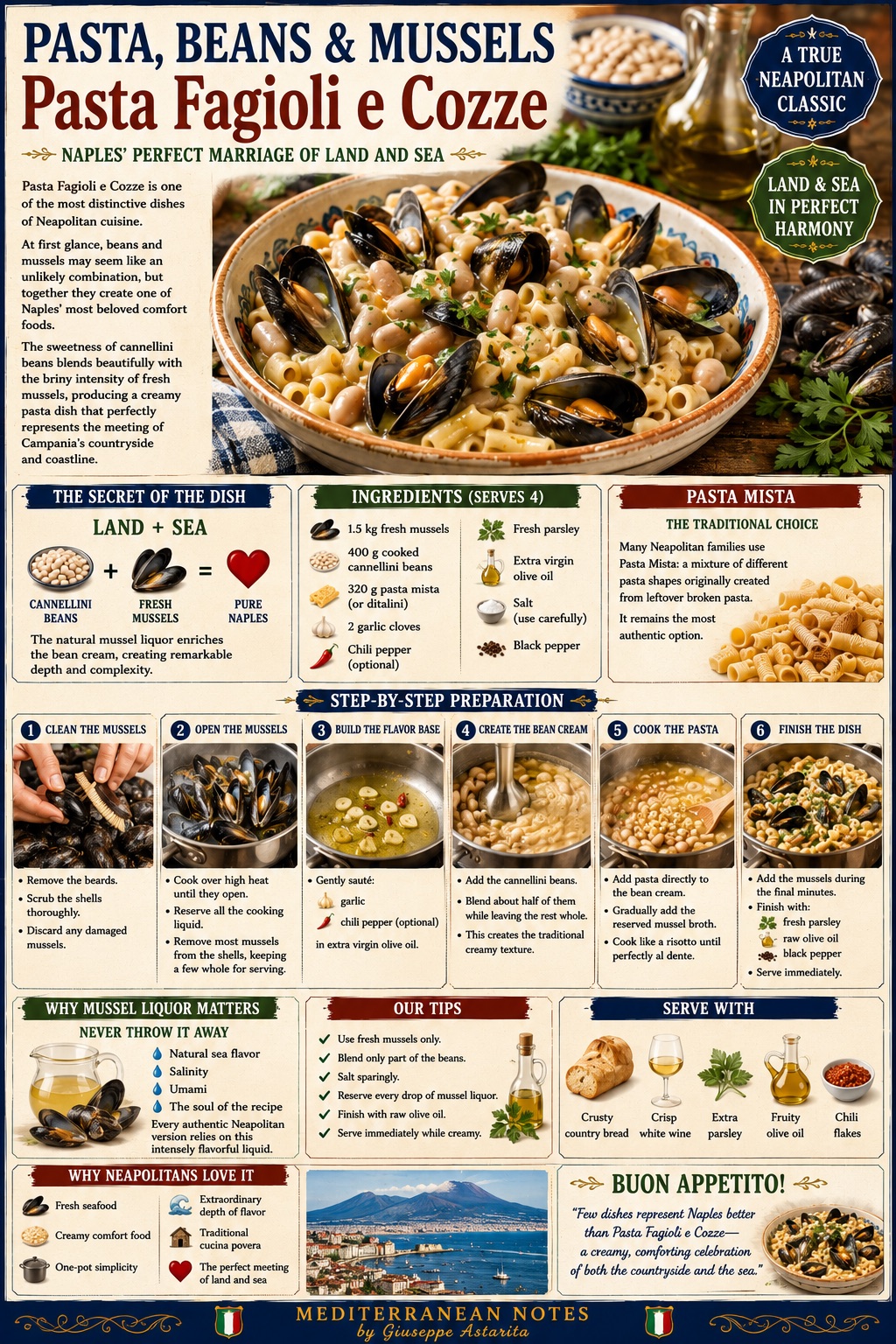
Pasta, Fagioli e Cozze — the bean cream, the mussel liquor, and the risotto method, step by step.
The Recipe
Serves 4 · one pot, plus the mussel pan
- 1.5 kg fresh mussels
- 400 g cooked cannellini beans
- 320 g pasta mista (or ditalini)
- 2 garlic cloves
- Chili pepper (optional)
- Extra virgin olive oil
- Fresh parsley
- Salt (carefully — the mussel liquor is salty) and black pepper