Pasta con Carne e Cipolle
What the Fridge Provides
Not a ragù — too quick for that. Ground beef, onion softened in white wine, pasta, Parmesan. The dish you make when you find ground beef in the refrigerator and want something satisfying in twenty minutes. It tastes like it was thought about even when it wasn't. Simple, honest, and full of flavor.
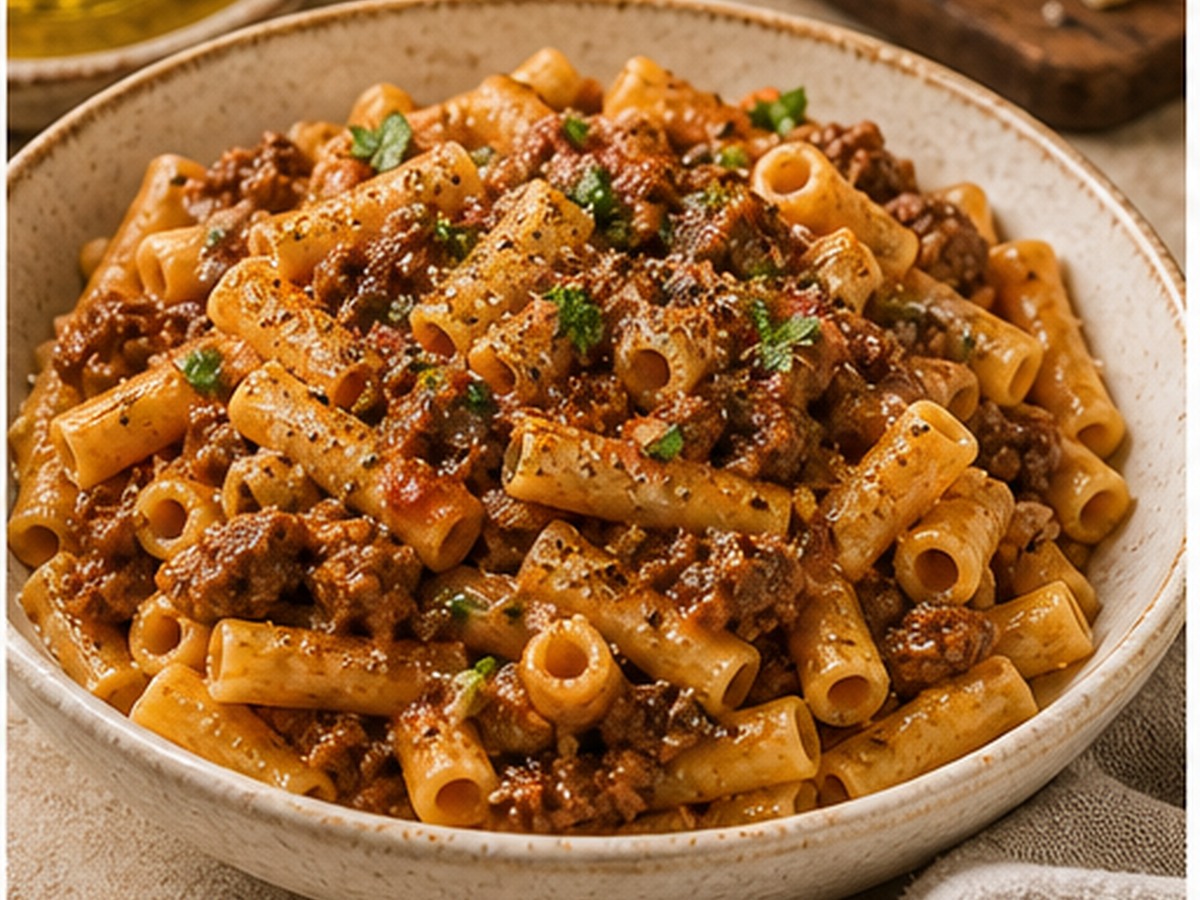
This pasta is not in the collection as a cherished childhood memory — it is here as a dish that works, made in the present, with whatever the refrigerator offers on a weeknight. The logic is the same as the Genovese napoletana, compressed: meat and onion cooked together in wine, served on pasta, finished with cheese. Where the Genovese requires four hours and the patience appropriate to a Sunday preparation, this requires twenty minutes and the patience appropriate to a weeknight when someone is hungry. The result is not the same — it cannot be. But it has the same foundational rightness: onion sweetened in wine makes meat make sense.
The key is the browning. Ground beef spread in a wide pan over real heat, left alone for two minutes before being broken up — this is the step that produces the Maillard crust on the meat surface that carries most of the flavor. Ground beef that is stirred immediately and cooked over insufficient heat produces grey, steamed meat sitting in pale liquid. Ground beef given two minutes of contact with a hot surface before being disturbed turns brown and flavorful and produces the fond on the pan bottom that the wine will lift. The patience to leave it alone at the beginning is most of the technique.
The recipe — serves 2–3
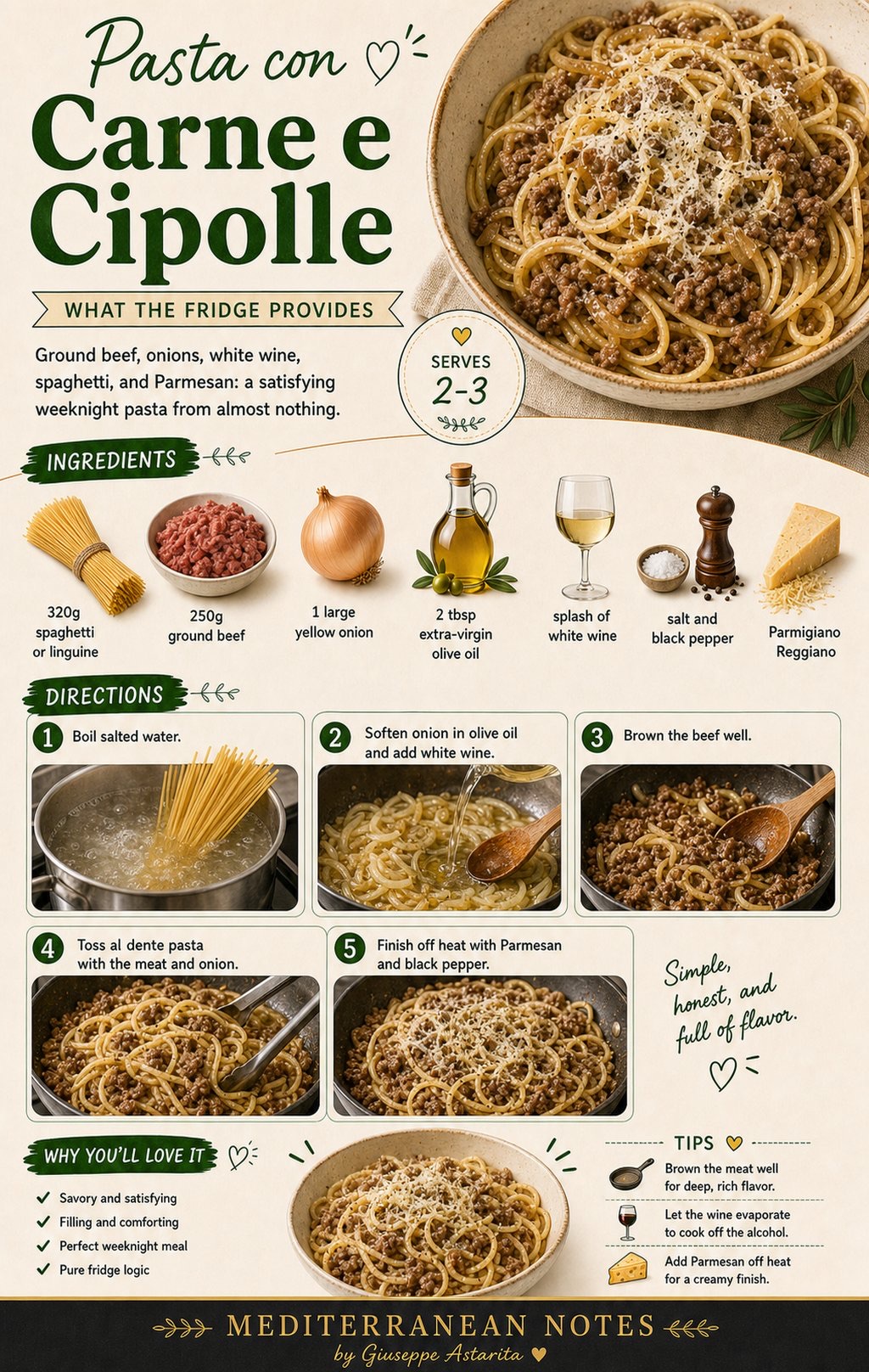
The Maillard reaction that occurs when ground beef contacts a hot dry surface at 140–165°C produces several hundred aromatic compounds — pyrazines, furans, sulfur-containing volatiles — that are responsible for the characteristic flavor of browned meat. These compounds are not present in the raw beef and cannot be produced by gentle steaming or by cooking in excess moisture. This is why the technique of adding ground beef to a pan and leaving it undisturbed for two minutes before breaking it up produces a noticeably more flavorful result than stirring it immediately: the undisturbed beef maintains surface contact with the hot pan long enough for the Maillard reaction to proceed, while stirred beef cools the pan with its released moisture and stews rather than sears.
Ground beef contributes complete protein with a full amino acid profile, heme iron (the most bioavailable form of dietary iron, absorbed at 15–35% compared to 2–20% for non-heme iron from plant sources), zinc, and B vitamins including B12, which is absent from plant foods entirely. The onion's fructooligosaccharides — prebiotic fiber — remain partially intact even after cooking and support gut microbiome diversity. White wine's organic acids (tartaric, malic) contribute acidity that brightens the overall flavor and helps tenderize the meat proteins slightly during cooking. The pasta water starch that emulsifies the sauce in step four is the same mechanism as the risotto mantecatura — dissolved starch binding fat and liquid into a unified coating for the pasta.
This is a weeknight dish and it should be treated as one — assembled quickly, eaten hot, with a salad alongside and no further ceremony. It is not the Sunday ragù and it does not pretend to be. It is the dish that the Genovese logic makes possible on a Tuesday when there is no time for the Sunday version. The onion in wine, the browned meat, the pasta water, the Parmesan off heat. Four steps. Twenty minutes. Simple, honest, full of flavor.
Buon appetito — semplice e onesta.