Frittate e uova · Campanian Home Cooking
Frittata di Patate Napoletana
The frittata that fed a family with almost nothing — potatoes, eggs, Pecorino, and patience at the stove.
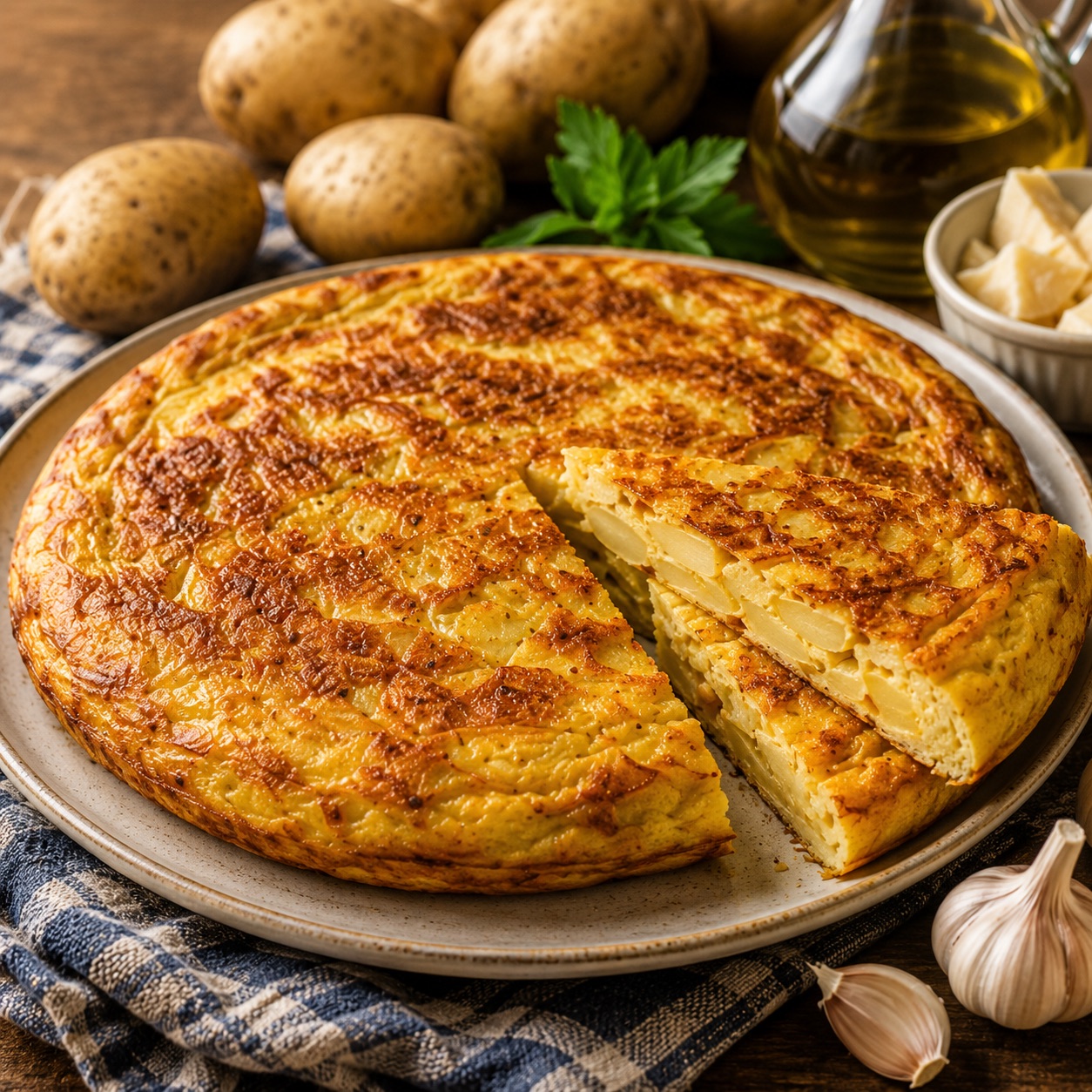
My mother made frittata the way other people make pasta — often, without announcement, as though it were not a decision at all but simply what happened when it was time to eat. Dinner, most evenings, arrived this way. There was something on the stove from earlier, or there were eggs, and the two would meet in a pan. The frittata di patate was the most reliable of these: potatoes that had been boiled for something else, or raw potatoes cut into small cubes and fried until deeply golden, then the eggs beaten with Pecorino and black pepper and poured in. A few minutes on each side. Done.
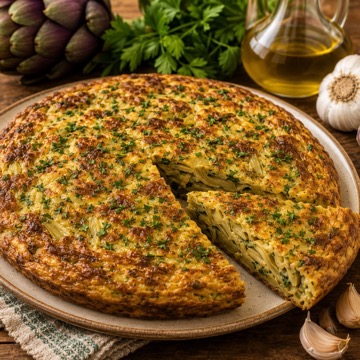
The result was nothing like the Spanish tortilla, though from the outside they may look similar. The Neapolitan version is thinner, firmer, and fully cooked through. The potatoes are cut into small cubes or sticks and fried until genuinely crispy before the egg mixture goes in — not softened, not merely warmed, but properly golden and starting to form a crust at the edges. The egg mixture contains generous Pecorino Romano, which gives the frittata a savory depth you don't find in the Spanish version. And the exterior must become arruscata — browned, slightly crunchy, with a distinct crust that is part of the point.
This is cucina povera in the most direct sense: a dish designed to make something filling and satisfying from almost nothing. Potatoes, the cheapest of vegetables. Eggs, kept in every household. Cheese, in Campania, never absent from the kitchen. My mother made it for dinner, and whatever was left appeared the next day inside bread, cold, taken to school or eaten standing at the counter. Neither version was worse than the other.
The flip is the skill. You cook the frittata on one side until the bottom is set and the edges are dry enough to pull away from the pan cleanly. Then you put a plate over the pan, invert, and slide it back in. If the oil is right and the bottom is ready, it comes away cleanly. If you go too soon, it sticks. My mother never measured when it was ready — she tilted the pan slightly and watched how the frittata moved. That was the signal.
They look similar from a distance, but the technique, texture, and philosophy diverge completely. The Spanish tortilla confit the potatoes — thinly sliced, submerged in olive oil, cooked low and slow until soft and creamy. The result is thick, juicy, left slightly runny in the centre. The Neapolitan version fries the cubed potatoes until crispy, produces a thin and firm frittata, fully cooked through, with a browned crust on both sides.
The Maillard reaction is at work in both cases, but to different ends. In the Neapolitan version, the potatoes are fried at high enough heat to trigger surface browning — sugars and amino acids combining into hundreds of flavour compounds that become part of the texture of the dish. In the Spanish version, low-temperature confit keeps the potato surface pale and soft. The Pecorino Romano in the Neapolitan mix adds additional glutamates and salt, intensifying the savory character further.
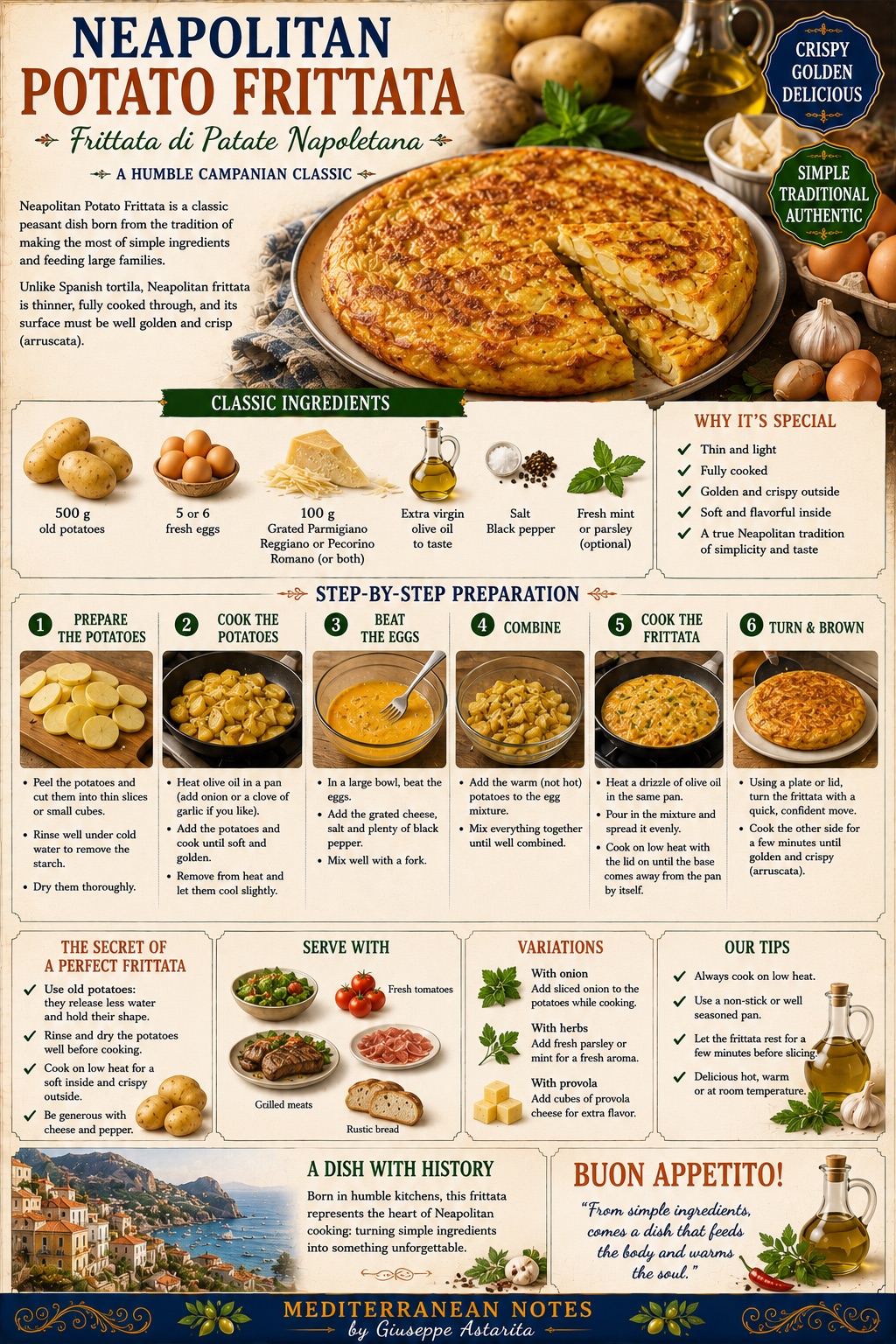
Tap to enlarge — Frittata di patate: ingredienti, metodo, consigli
Recipe — Frittata di Patate Napoletana
Serves 3–4 · Ready in 30 minutes
- 500 g old potatoes peeled, cut into small cubes or thin sticks
- 5–6 medium eggs
- 100 g Pecorino Romano finely grated (or Parmigiano Reggiano)
- Extra virgin olive oil generous amount for frying
- Salt and black pepper to taste
- Fresh mint a few leaves, optional
The frittata in our house was never a special dish. It was simply what happened on evenings when dinner needed to come together quickly, from what was already there. The potatoes gave it substance. The eggs gave it cohesion. The Pecorino gave it the savory depth that made it satisfying. And the leftover wedge in bread the next morning made it, somehow, better than the night before.