Frittate e uova · Spring · Campanian Home Cooking
Frittata di Carciofi alla Napoletana
Violet artichokes from Campania, braised until tender with garlic and parsley, then folded into eggs and Pecorino. A spring dinner that needs nothing else.
In spring, my mother cleaned artichokes the way other people do laundry — routinely, patiently, standing at the counter with a bowl of water and lemon beside her. The artichokes went in immediately after cleaning to stop them from going dark. She worked quickly. I carciofi fanno bene, she would say. Contengono tanto ferro. Artichokes have lots of iron. She said it every time, as though the mineral content were part of the recipe itself.
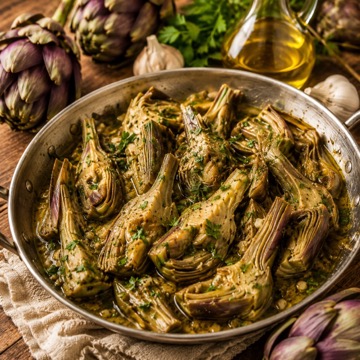
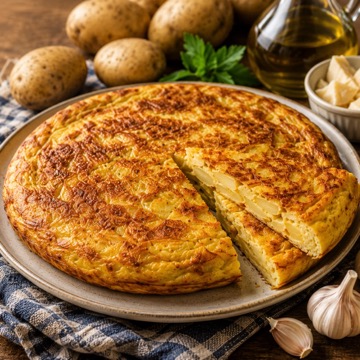
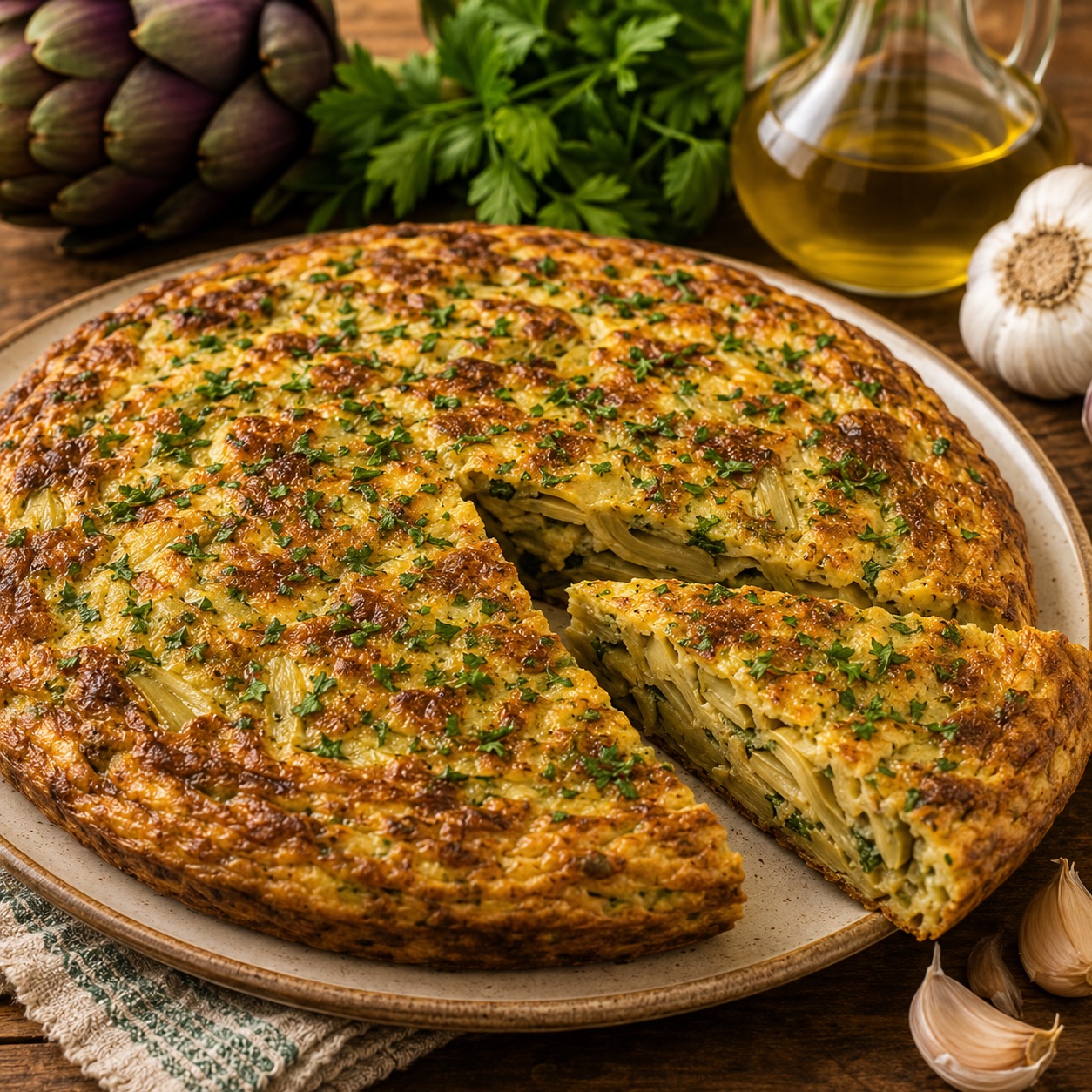
The artichoke frittata was one of the things those cleaned artichokes became. Not always — sometimes they went into pasta, sometimes they were braised on their own with wine and parsley, sometimes sliced raw into a salad. But the frittata was the spring secondo that appeared most reliably. The artichokes were sliced and cooked slowly in olive oil with garlic, allowed to become tender and faintly caramelized at the edges. Then the eggs went in, beaten with Pecorino Romano and black pepper, and the whole thing was cooked slowly until the bottom set, then flipped.
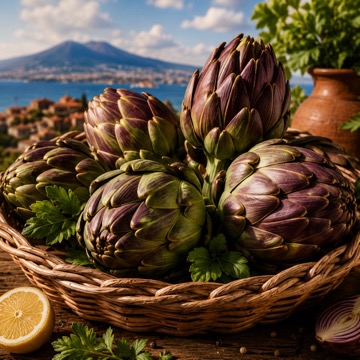
The variety mattered. In Campania, the artichoke of choice is the Carciofo Violetto di Schito — grown between Pompei and Castellammare di Stabia in volcanic soil that gives it a tenderness and mineral depth you don't find in the globe artichokes sold most elsewhere. No spines, finer leaves, soft interior that cooks quickly and holds together when sliced. My mother knew this without naming it; she simply knew which artichokes she wanted and which she didn't.
This is a spring dish. You make it in March, April, early May — while the Carciofo di Schito is in season and the spring onions are still tender. Later in the year you could make a different frittata, but not this one. The season is part of what it tastes like.
Artichokes contain polyphenol oxidase, an enzyme that reacts with oxygen when the cell walls are cut, producing dark-coloured quinones — the same enzymatic browning you see in a cut apple or peeled potato. Acidulated water (with lemon juice) works in two ways: the acid lowers the pH, which deactivates the enzyme; and submersion in water excludes oxygen, removing the other reactant the enzyme needs. Either alone would help; together they are very effective.
The iron content my mother always cited is real. Artichokes contain about 1.3 mg of iron per 100 g — among the highest for vegetables, comparable to spinach. They also contain cynarin, a compound unique to artichokes that stimulates bile production and supports fat digestion. This is partly why a small glass of white wine alongside, or a bitter digestivo after, has such a long tradition with artichoke dishes — the liver is already primed to work harder. The Carciofo Violetto di Schito, grown in volcanic soil rich in potassium, calcium and magnesium, has a particularly high mineral content by Italian standards.
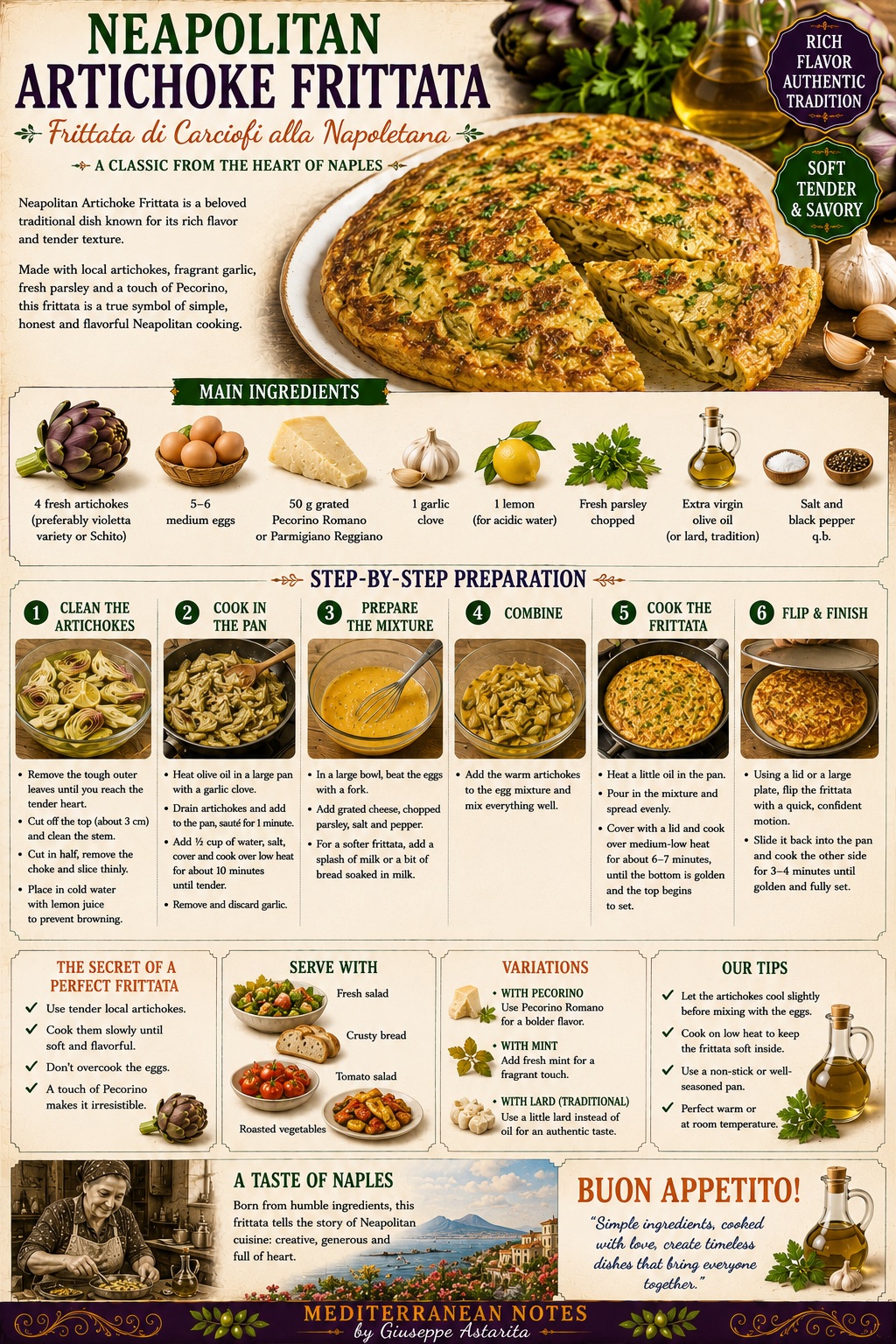
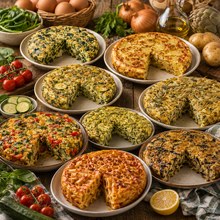
Tap to enlarge — Frittata di carciofi: ingredienti, metodo, consigli
Recipe — Frittata di Carciofi alla Napoletana
Serves 3–4 · Ready in 40 minutes
- 4 fresh artichokes Carciofo Violetto di Schito if available, or any tender variety
- 1 lemon for acidulated water
- 5–6 medium eggs
- 50 g Pecorino Romano or Parmigiano Reggiano, finely grated
- 1 garlic clove finely sliced
- Fresh parsley a generous handful, finely chopped
- Extra virgin olive oil
- Salt and black pepper to taste
The artichoke season in Campania is short — roughly February to May, with the peak in March and April. During those weeks, carciofi stufati, frittate, pasta con carciofi, and raw artichoke salads appear on the table in rotation. My mother cleaned them all, standing at the counter with her bowl of lemon water. I carciofi contengono tanto ferro, she would say. She was right.