Frittate e uova · Summer · Campanian Home Cooking
Frittata all'Ortolana
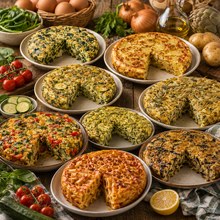
The greengrocer's frittata — whatever summer brought to the market, sautéed and folded into eggs and Pecorino. Nothing wasted, nothing missing.
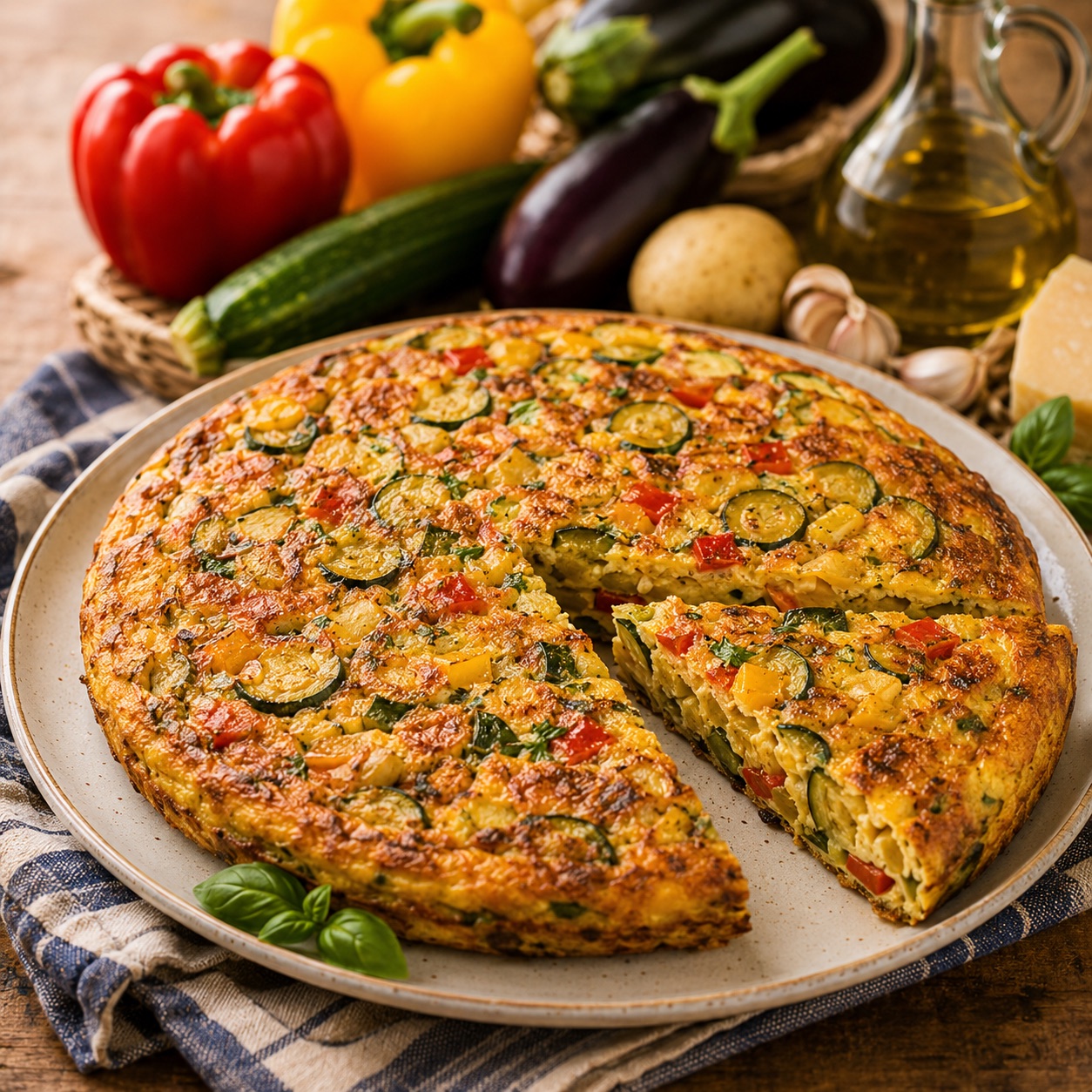
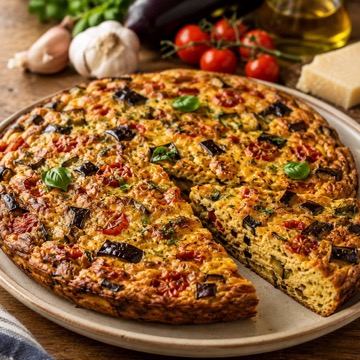
The name tells you the philosophy: ortolano means greengrocer, or market gardener — the person who sold vegetables from a stall or pushed a cart through the neighbourhood. The frittata d'o parulano was whatever that person had to sell in season. Not one vegetable carefully chosen, but all of them together: zucchini, eggplant, peppers, potatoes, spring onion, whatever was plentiful and cheap. Each cooked separately first, to preserve its character, then combined into a single pan with eggs and Pecorino and cooked until golden on both sides.
This is a summer frittata. In the heat of July and August in Campania, the market stalls overflow with all of these at once — the striped Neapolitan zucchini, small eggplants from the garden, sweet red and yellow peppers, potatoes from the volcanic soil of the Vesuvian plains. The frittata all'ortolana was the dish that made the most of all of them in a single pan. It was also a dinner that took some patience — not because any single step was difficult, but because cooking each vegetable separately, before combining, required standing at the stove in stages.
My mother made it in the evening, on summer nights when the kitchen was already hot from the day. It appeared on the table warm, cut into wedges, with bread and nothing else. It was as satisfying cold the next day as it was hot the night before. Often more so.
Sautéing in olive oil does several things simultaneously. The Maillard reaction — which requires temperatures above 140°C, only reached when surface water has evaporated — converts sugars and amino acids at the surface of each vegetable into hundreds of new flavour compounds. This is the difference between a raw courgette and one that has been fried until golden at the edges: chemically, they are different foods.
Eggplant is particularly interesting. It contains nasunin, a polyphenol in its purple skin that is a powerful antioxidant, and chlorogenic acid in the flesh. Both become more bioavailable after heating. More practically, eggplant also contains solanine in small amounts when raw — cooking deactivates this. Peppers, meanwhile, are rich in carotenoids (red and yellow pigments) and vitamin C; the fat in the olive oil aids absorption of the fat-soluble carotenoids, while some vitamin C is lost to heat. Cooking is always a series of trade-offs — in this frittata, the flavour and bioavailability gains outweigh the minor vitamin losses.
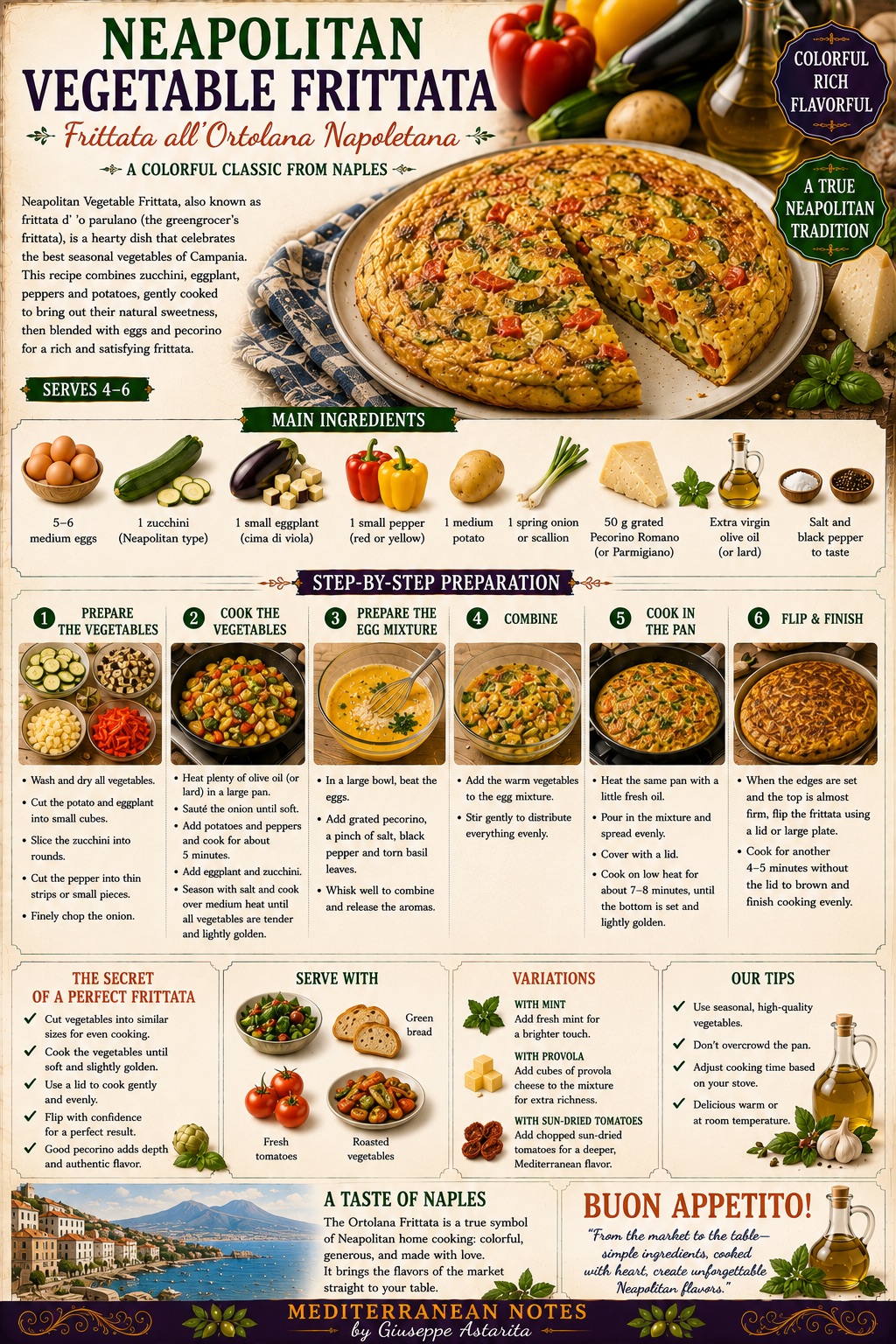
Tap to enlarge — Frittata all'ortolana: ingredienti, metodo, consigli
Recipe — Frittata all'Ortolana
Serves 4–6 · Ready in 50 minutes
- 5–6 medium eggs
- 1 Neapolitan zucchini or regular, thinly sliced
- 1 small eggplant cut into small cubes
- 1 medium pepper red or yellow, cut into strips
- 1 medium potato peeled, cut into small cubes
- 1 spring onion finely sliced
- 50 g Pecorino Romano or Parmigiano, finely grated
- Extra virgin olive oil generous, for sautéing
- Salt and black pepper to taste
- Fresh basil a few leaves, torn
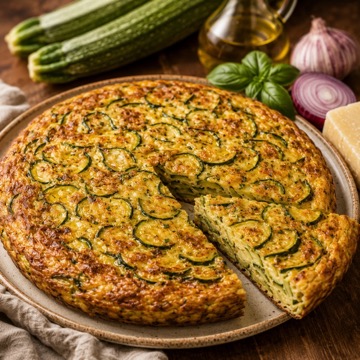
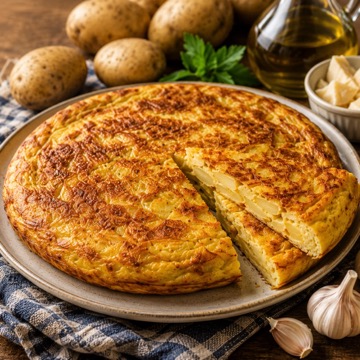
The frittata all'ortolana belongs to summer, when all these vegetables are in season simultaneously and the market stalls are stacked with them. You can vary the selection — frittata di zucchine and frittata di melanzane are the same logic taken in a single direction. But when you have all of them at once, the ortolana is the one that makes the most sense. Nothing goes to waste. Everything is better together.