CoursesBasicsFirst CoursesSecond CoursesSides & VegetablesSoupsSaucesEggs & FrittatePizza & BreadBreakfastSnacksStreet FoodDesserts
DietVegetarianVegan
SeasonSpringSummerAutumnWinter
MainSeafoodMeatEggs
MoreCulture & TraditionsGlossaryAbout

Crema al Limone alla Napoletana
A Spoonful of the Amalfi Coast

Another of my father's favorites that my mother used to make on Sundays — to eat with the spoon. Velvety, bright, and irresistibly fragrant: a classic Neapolitan lemon cream that combines a rich pastry cream with a silky lemon custard, creating one of the most beloved flavors of southern Italy. Sometimes she made the chocolate version too. I appreciated that one more.

Crema Al Limone

The crema al cucchiaio — the spoon dessert, eaten from a cup or glass with no plate required — is one of the most domestic forms of the Neapolitan pastry tradition. It does not require a pastry case or a tart shell or any baking at all: it is made entirely on the stove, cooled, spooned into individual cups or glasses, and served cold. This makes it the ideal Sunday homemade dessert for a kitchen that has already produced a full midday meal — the crema can be made in the morning, refrigerated, and ready at the end of lunch without any last-minute work.

The Neapolitan lemon cream described here is a combination of two preparations — a lemon custard and a pastry cream — beaten together once both are cool. This is the technique used in many famous Campanian desserts: the delizia al limone, the lemon version of the zuppetta, the filling of certain sfogliatelle frolla variations. The pastry cream provides body and sweetness; the lemon custard provides acidity and the bright citrus character that is the whole point. Together they produce something that is simultaneously rich and fresh — the signature Neapolitan combination.
The lemons of Sorrento or Amalfi — fragrant, with thick peels rich in essential oils — are the correct lemon for this preparation. They are available at specialty Italian shops in the United States and the difference from a standard supermarket lemon is significant enough to be worth seeking. The essential oil content of the zest is what gives the cream its fragrance; a thin-skinned lemon from a supermarket has a fraction of the oil and produces a correspondingly milder result. Along the Amalfi and Sorrento coast, lemons are more than a fruit — they are sunshine preserved in flavor.
My father's version · The classic
Crema al Limone
The lemon custard and pastry cream combined: bright, citrusy, slightly tangy against the sweet pastry cream base. Pale yellow, silky, spooned from a glass. My father's Sunday preference — the acidity of the lemon suited a palate that liked things clean and direct. Garnished with lemon zest and served very cold.
My preference · The chocolate version
Crema al Cioccolato
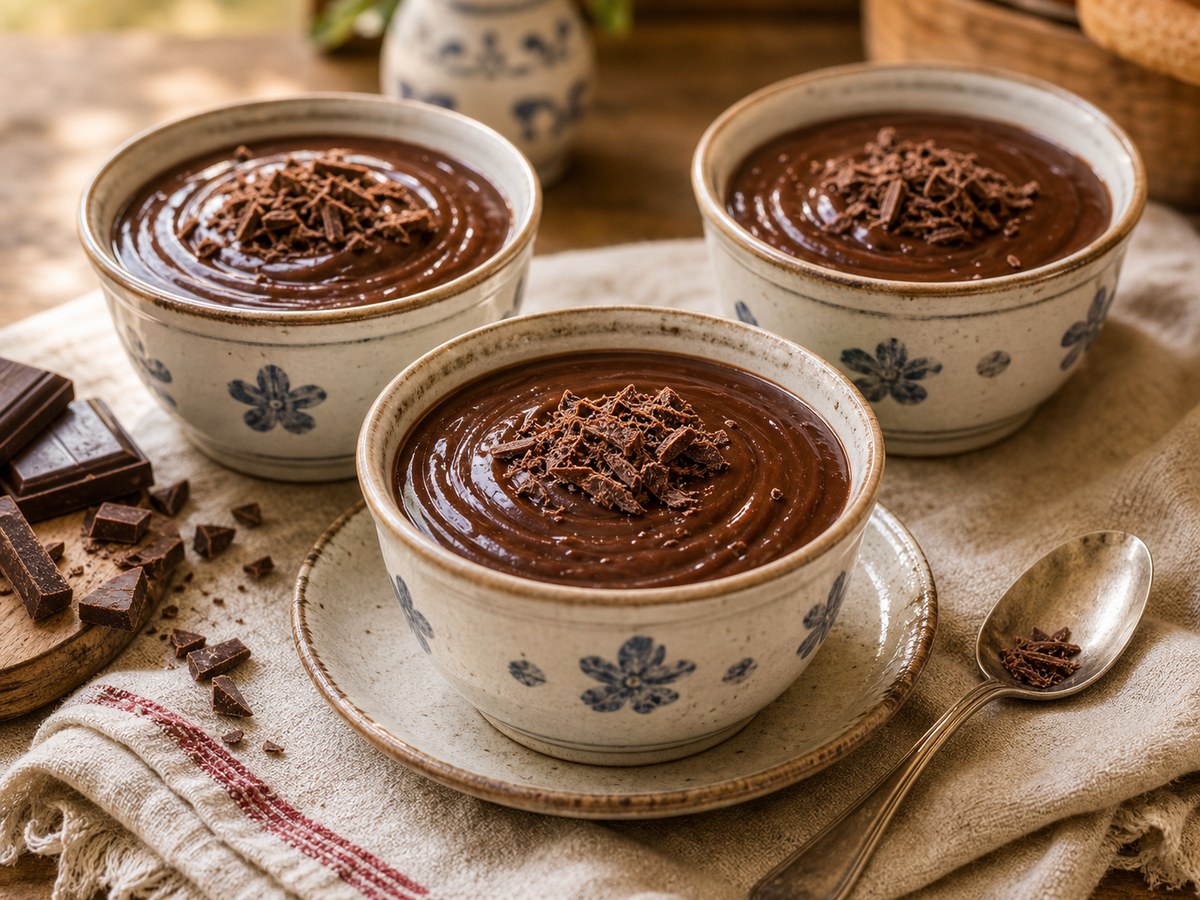
The same pastry cream base but made with cocoa powder and dark chocolate instead of lemon — rich, dark, intensely chocolatey. Served in the same cups and spoons, alongside the lemon version on the same Sunday table. I appreciated this one more. Some preferences establish themselves early and stay.

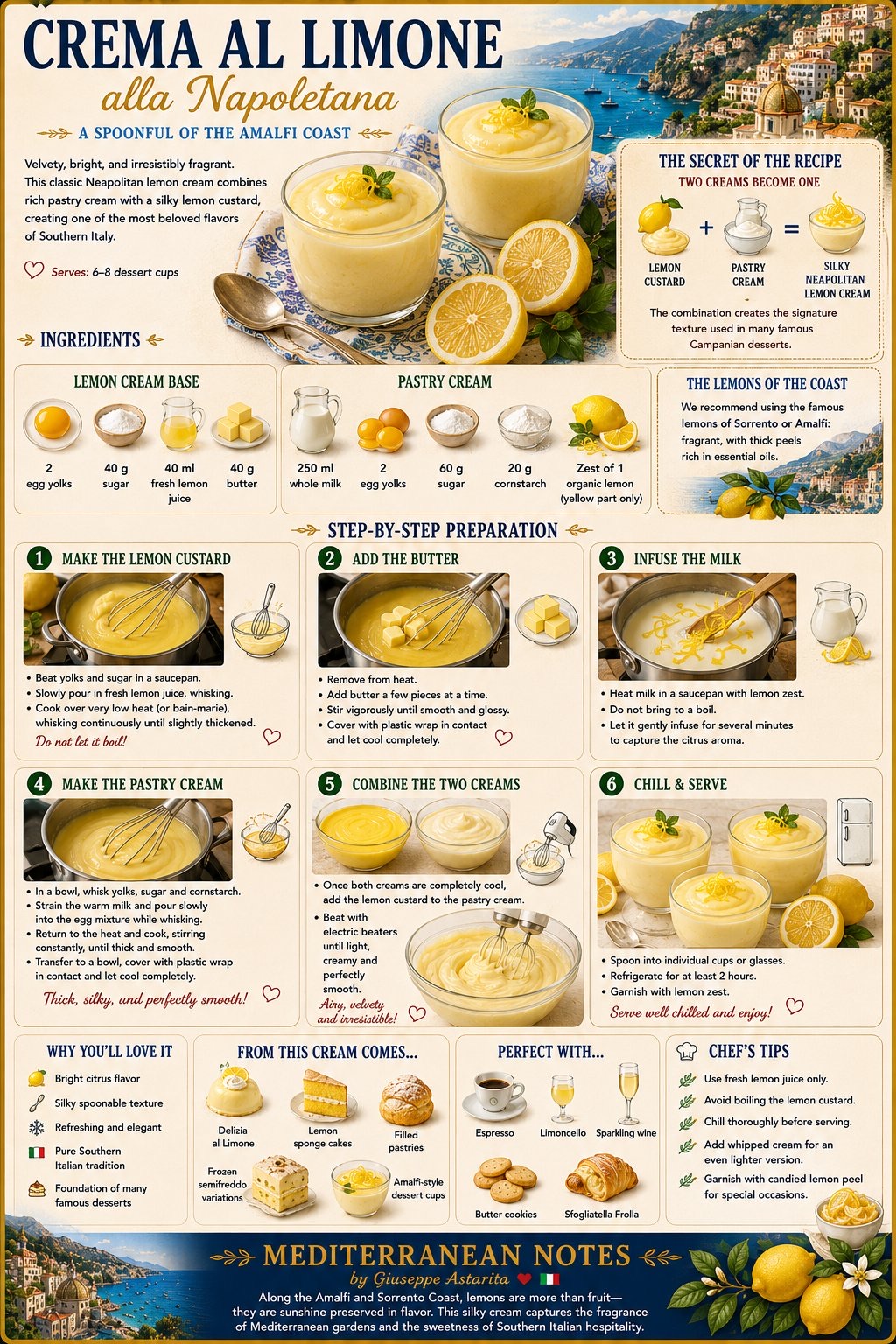
Crema al Limone alla Napoletana — step by step infographic
Crema al limone alla napoletana — un cucchiaio della costiera amalfitana. Click to enlarge.

Choose a version

Both use the same pastry cream base. The difference is what goes in at the end: lemon custard or dark chocolate. On Sundays my mother often made both — one for my father, one for me.

Sunday · Father's choice
Crema al limone
Pale yellow, fragrant with Amalfi lemon. Clean and direct — the classic version.
Current version
Sunday · My choice
Crema al cioccolato
Rich dark chocolate custard — deep, slightly bitter, served cold. The version I preferred.
Read recipe →

Fredda, col cucchiaino, senza fretta — è domenica.

More from Dolci, formaggi e vini
Profiteroles alla napoletana
Choux puffs in chocolate cream.
La pasticceria napoletana
The Sunday tray — sfogliatelle, babà, and more.
I formaggi di Campania
Provolone del Monaco, caciotta, and local cheeses.