Cocktail di Gamberetti
Immancabile — the dish that meant the feast had begun
At Christmas Eve dinner and at New Year's Eve, it was always there without fail. The small shrimp in their pink sauce, served in cocktail glasses on a bed of lettuce, arriving at the table before anything else. I remember the state of excitement. I remember the pink sauce made with ingredients that had strange, exotic names I did not understand as a child growing up in Caserta in the 1980s.
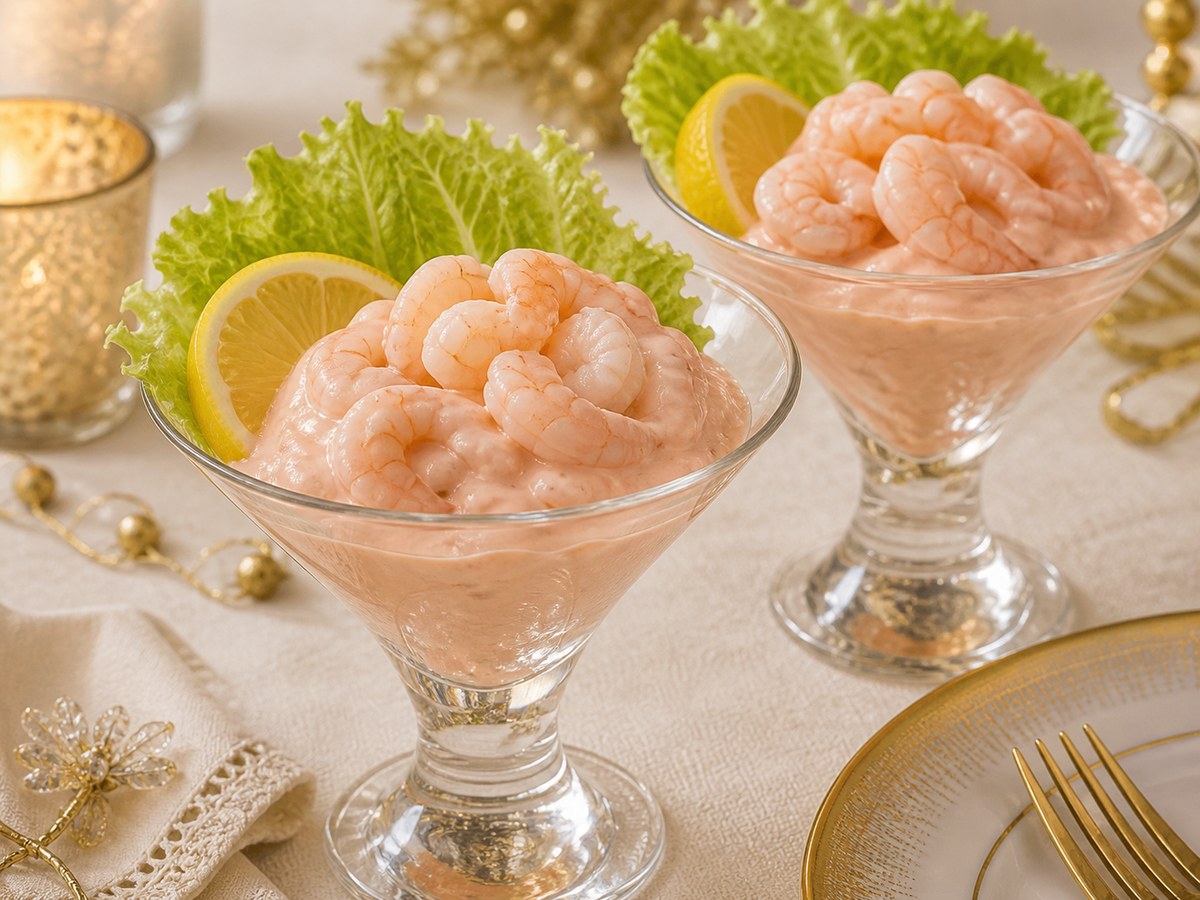
The word I am looking for is immancabile — unavoidable, invariably present, the thing that was always there without anyone deciding each time that it would be. The cocktail di gamberetti was immancabile at the Christmas Eve dinner in our house and at New Year's Eve, the first thing to arrive at the table in its cocktail glass, the signal that the serious eating had begun. In Naples and across Campania, the Christmas Eve meal is structured around fish and seafood — the Feast of the Seven Fishes or some version of it, a tradition that has been observed for so long that its origin is no longer anyone's specific decision but simply the way things are done. The shrimp cocktail was the antipasto for this meal, and it appeared with the kind of inevitability that only rituals achieve.
What I remember most clearly is the sauce. The sauce had a color — that specific pale pink, not red, not orange, but the precise shade that comes from mayonnaise and ketchup in the right proportion — and it had a smell that was unlike anything else in our kitchen at any other time of year. Because it contained things that were not part of ordinary weekly cooking. Worcestershire sauce was one of them: a British condiment of fermented anchovy and tamarind and vinegar and spices whose name I could not pronounce and whose bottle, when I found it in the pantry, seemed to have come from another world entirely. Cognac was another: a French brandy that appeared specifically for this preparation and perhaps for one or two other things, and which smelled nothing like the food I knew. The combination of these foreign-named, exotic-smelling ingredients with the Italian mayonnaise and ketchup and the small cold shrimp produced something that tasted sophisticated in a way that was specific to the festive table and to that sauce.
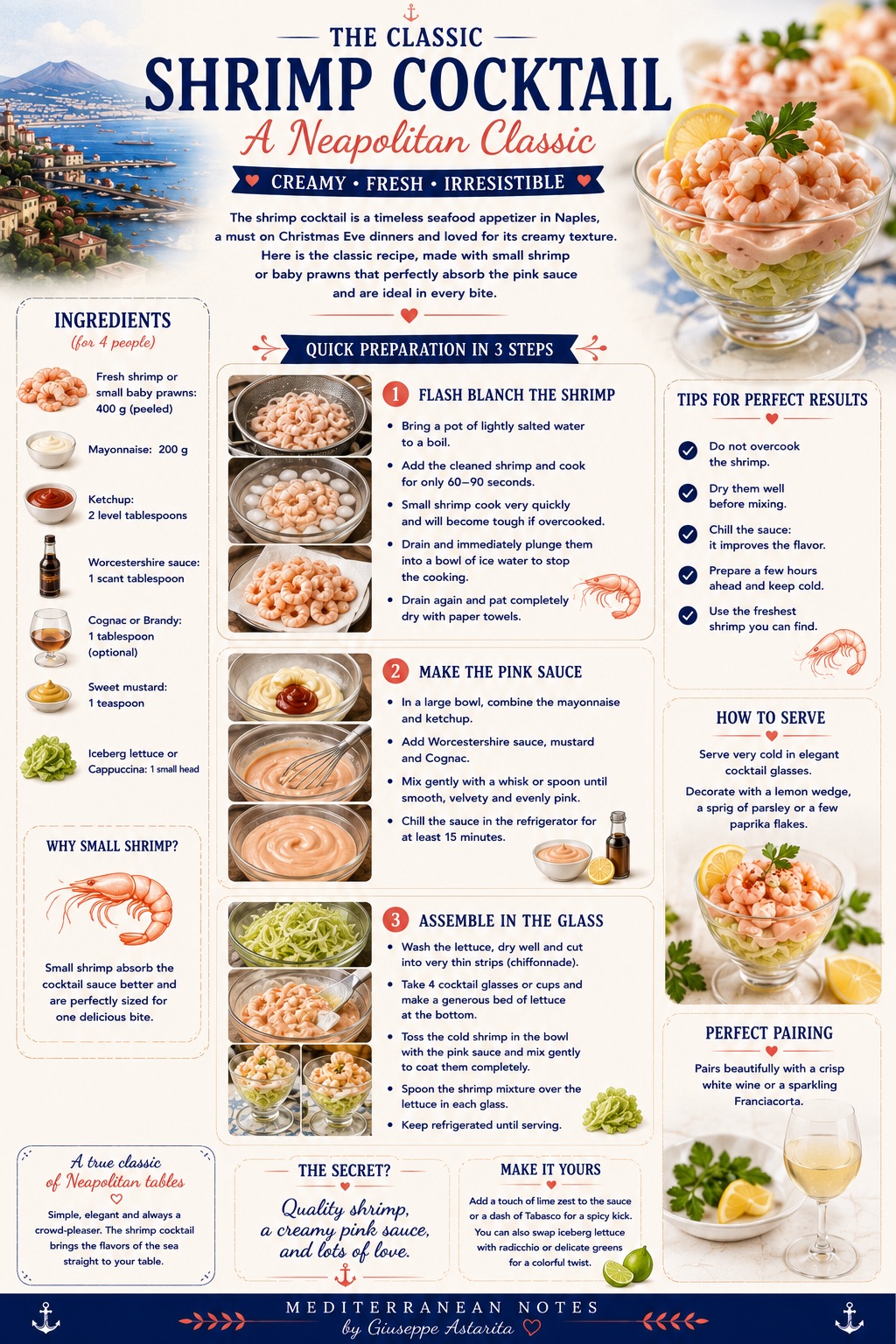
The shrimp themselves were small. This is specified in the infographic and it is the correct specification: small shrimp or baby prawns absorb the sauce in a way that large shrimp do not, and they are the right size for eating in a single bite from the cocktail glass, which is how the dish is meant to be eaten. Flash-blanched for sixty to ninety seconds in salted water — no more, because overcooked shrimp become rubbery within seconds past the correct point — then shocked in ice water to stop the cooking, then dried completely before being mixed with the sauce. The drying is important and frequently skipped: wet shrimp dilute the sauce, which loses its velvety consistency and becomes watery. The infographic says it plainly: dry them well. This is correct.
The sauce was chilled for at least fifteen minutes before assembly, which also mattered. A warm mayonnaise-based sauce and cold shrimp produce a discordant temperature result and the sauce does not cling properly. Cold sauce on cold shrimp, assembled in the cold glass on the cold lettuce chiffonnade, then kept in the refrigerator until the moment of serving — this is the complete temperature logic of a dish that is entirely about the contrast between cold and creamy and fresh. The cocktail glass itself was part of the occasion. In the 1980s in Caserta, serving something in a cocktail glass meant it was a festive thing, a special-occasion thing, elevated above the ordinary by its presentation alone regardless of what it contained.
Worcestershire sauce is a fermented liquid condiment developed in England in the 1830s, made from a base of malt vinegar and tamarind extract with fermented anchovies, molasses, onion, garlic, and a blend of spices. The fermentation of the anchovy produces free amino acids — primarily glutamate — that give Worcestershire its characteristic umami depth, which is why a small quantity of it transforms a mayonnaise-ketchup base from sweet-and-fatty into something more complex and savory. The tamarind provides both acidity and a distinctive fruity-sour note. Combined with ketchup (which itself contains glutamate from the cooked tomato and vinegar acidity) and mustard (glucosinolate-derived pungency), the Worcestershire creates a pink sauce whose flavor depth far exceeds what its simple appearance suggests. The Cognac — a grape brandy from the Cognac region of France, aged in oak — contributes ethanol (which carries volatile aromatic compounds across the palate), esters from the oak aging (vanilla, dried fruit notes), and a residual sweetness that rounds the acidity of the ketchup and vinegar. The small quantity used (one tablespoon for four portions) is not enough to make the sauce alcoholic in any meaningful sense but is enough to add its aromatic signature to the background of the sauce. This is why the sauce tastes different from a simple mayonnaise-and-ketchup mixture even to someone who cannot identify either of the exotic-named additions — they are present as aroma and depth rather than as identifiable flavors.
La ricetta
The pink sauce
I make this for Christmas Eve in Massachusetts. My daughters eat it with the same attention that Christmas Eve food deserves — it is the first course of the most important dinner of the year, and they understand this even if they cannot articulate it yet. The Worcestershire sauce is in my pantry now and its name no longer sounds exotic. But I remember when it did, and the memory of that strangeness is part of what I am serving when I put the cocktail glass on the table.
Buon Natale — e buon appetito, con la salsa rosa.