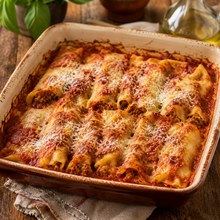
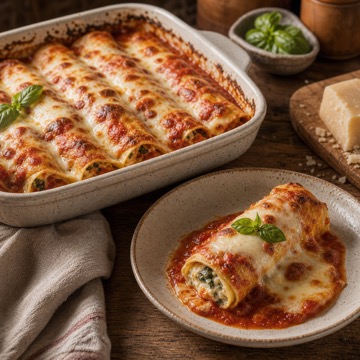
Cannelloni di Ricotta e Spinaci
The vegetarian Sunday cannelloni — pasta rolled around creamy ricotta, spinach, and smoked provola, baked in a slow-simmered tomato sauce until the top browns. The meatless twin of the classic cannelloni napoletani: same construction, lighter filling.
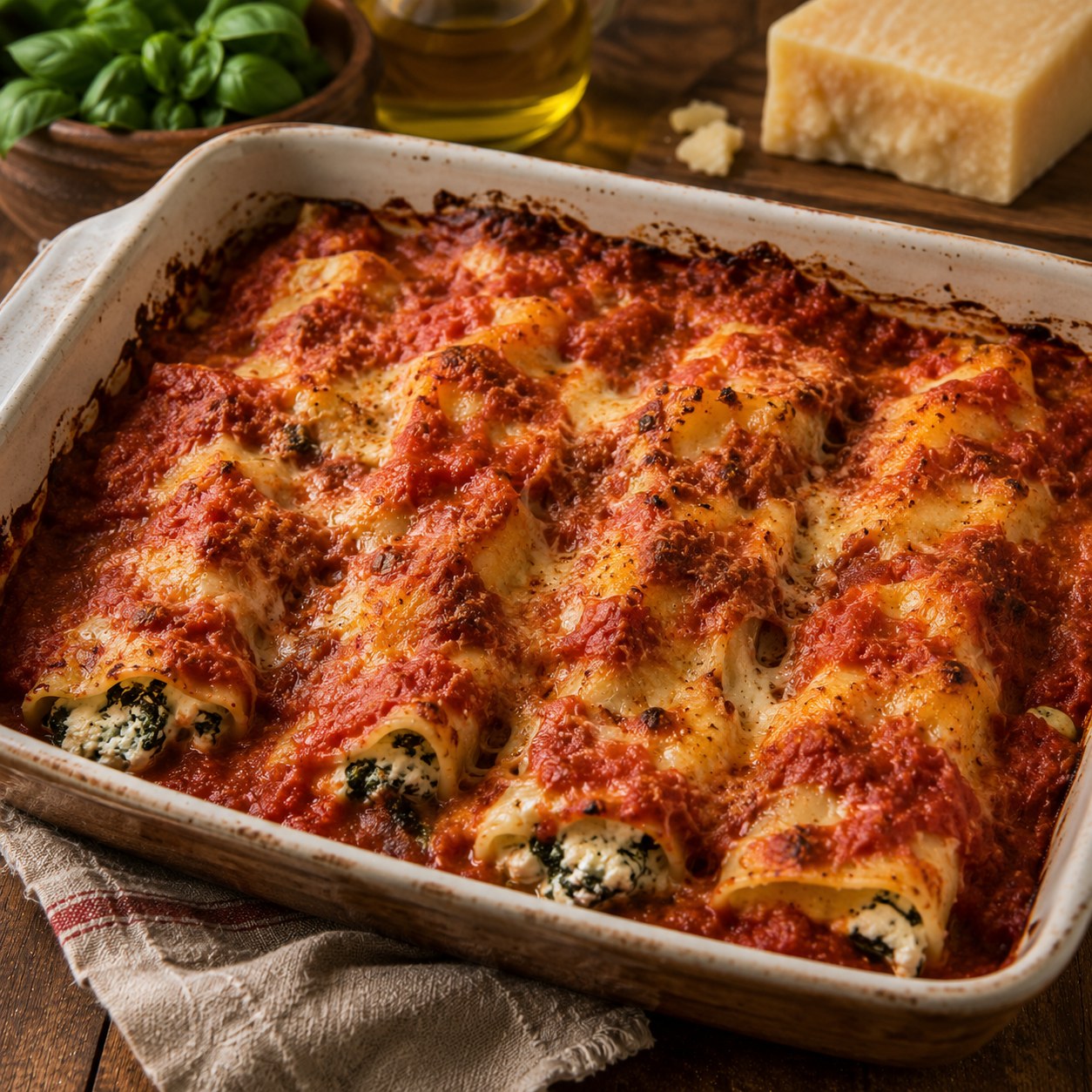
When there was no ragù — or no time to make one, or simply a wish for something lighter — the cannelloni in our house were filled with ricotta and spinach instead of meat. They were no less a Sunday dish for it. If anything they were the version that felt most like the season: made when the greens were good, brighter and softer than the meat cannelloni, the filling the colour of the spinach run through it.
The construction is identical to the meat version. You make the tomato sauce, you make the filling, you roll the pasta around it, you line the tubes up in the dish, you cover them in sauce and cheese, and the oven does the rest. Only the filling changes: ricotta worked smooth with cooked, well-squeezed spinach, an egg to bind, plenty of grated parmigiano, and — the Neapolitan touch — diced smoked provola folded through, which melts into pockets and gives the soft filling a savoury, smoky depth that ricotta alone does not have.
This is also the version closest to the crespelle: ricotta-and-spinach is the classic crespelle filling too, and if you have made those, these cannelloni are the same idea wrapped in pasta instead of a crêpe. In our house they belonged to the same Sundays, and which one appeared depended on what my mother felt like rolling.
The single thing that decides whether these come out well is the moisture of the filling. Spinach holds an astonishing amount of water, and ricotta can be wet too. If either goes in undrained, the filling loosens as it bakes, the cannelloni slump, and the sauce turns watery. Squeeze the spinach hard — harder than feels reasonable — and drain the ricotta if it needs it. The filling should be soft enough to pipe but firm enough to hold a shape.
Why does squeezing the spinach matter so much?
Spinach is roughly 90% water, most of it held in the leaf structure and released the moment it is cooked. Inside a sealed cannellone in a hot oven, that water has nowhere to go: it dilutes the ricotta, thins the binding, and turns to steam that puffs and then collapses the filling. Squeezing the cooked spinach removes the bulk of that water before it can sabotage the texture.
The egg and the parmigiano then do the binding. As the cannelloni bake, the egg proteins coagulate around 65–70°C and set the filling into a sliceable mass; the parmigiano, low in moisture, adds salt and firms the mixture rather than loosening it. This is why ricotta filling needs an egg where a meat ragù filling can sometimes do without — the ragù brings its own structure, the ricotta needs help.
On top, the same baking chemistry as any baked pasta: Maillard browning of the cheese and sauce above ~140°C builds the roasted crust, the pasta finishes cooking by absorbing sauce, and a 10-minute rest lets the set filling hold its shape on the plate.
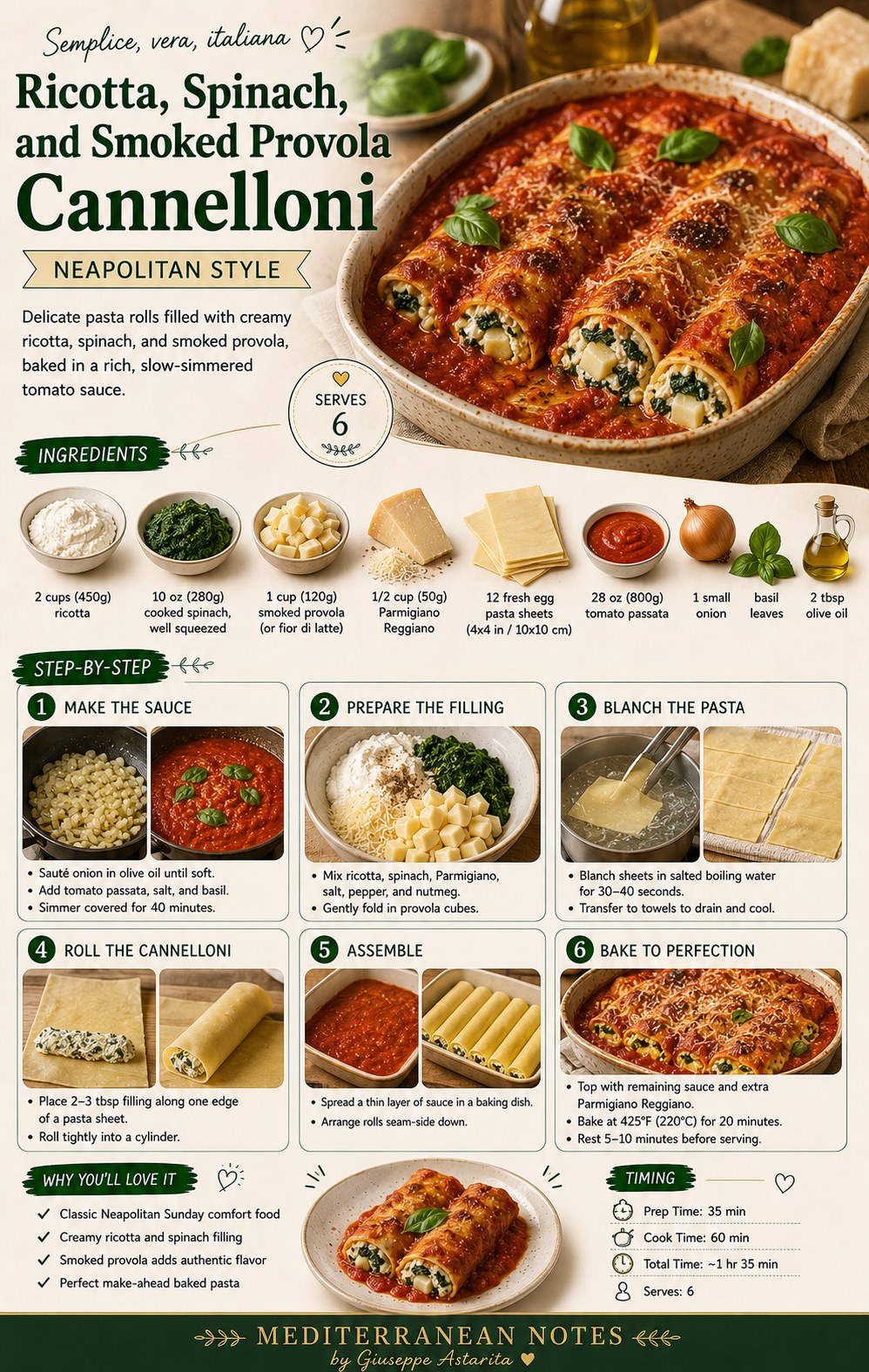
Tap to enlarge — Cannelloni di ricotta e spinaci: ingredienti, metodo, consigli
Recipe — Cannelloni di Ricotta e Spinaci
Serves 6 · About 1 hour, plus baking
- 12 fresh egg pasta sheets or dried cannelloni tubes
- 450 g ricotta drained if wet
- 280 g spinach cooked and squeezed very dry
- 120 g smoked provola diced — the Neapolitan touch
- 1 egg to bind the filling
- 50 g Parmigiano Reggiano grated, plus more for the top
- 800 g tomato passata rustic
- 1 small onion, basil, extra virgin olive oil for the sauce
- Salt and black pepper to taste
This is the meatless half of the cannelloni tradition, and in our house it carried equal weight at the Sunday table. If you want the meat version, the cannelloni napoletani use the same construction with a ricotta-and-ragù filling; and the crespelle take this exact ricotta-and-spinach filling and wrap it in a crêpe instead of pasta. Three versions of one idea — all of them Sunday.