Cannelloni Napoletani
Pasta sheets rolled around a soft ricotta-and-ragù filling, lined up in a baking dish, blanketed in tomato sauce and melted fior di latte, baked until the edges catch and the top goes golden. The Sunday baked pasta I loved most growing up — a first cousin of the crespelle, only built on pasta instead of crêpes.
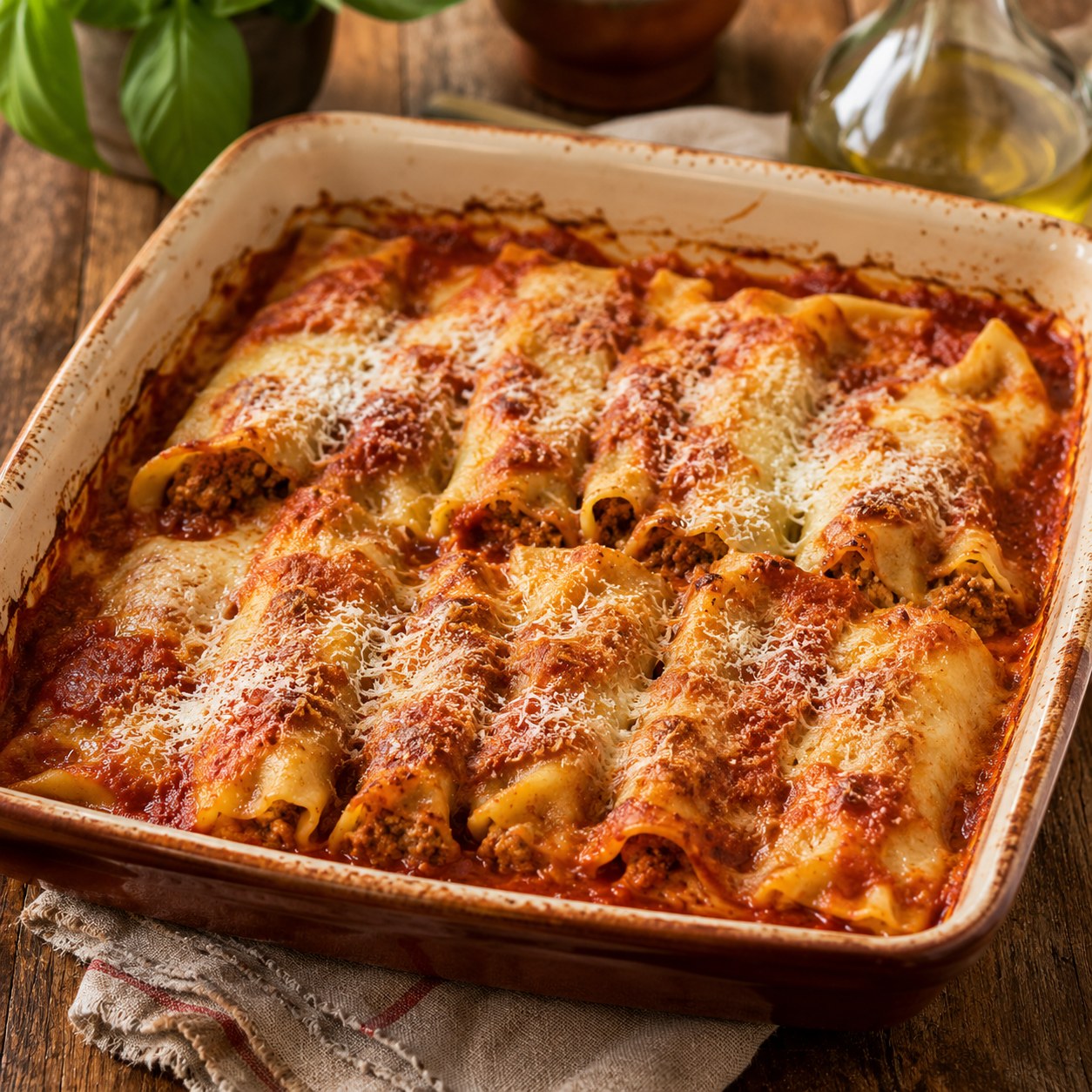
Cannelloni were a Sunday dish in our house, and a holiday dish — the kind of thing that took the better part of a morning and fed everyone at the table with leftovers promised for Monday. My mother made the ragù first, slow and early, because the filling depends on it. Then the pasta sheets, the ricotta worked smooth with an egg and a fistful of grated parmigiano, the rolling, the lining-up in the dish, the sauce, the cheese. By the time it went into the oven the kitchen already smelled like the meal, and the baking only deepened it.
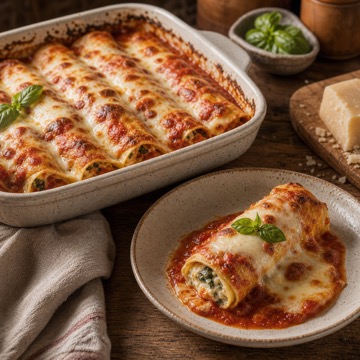
She also made cannelloni for me on my birthday, sometimes because she knew how much I loved them. Those were the days when the dish felt especially generous: not always one filling, but two made at the same time. One baking dish might hold the meat cannelloni, another the ricotta-and-spinach version, the two containers going into the oven together so everyone at the table could choose. That, more than any strict recipe, is how I remember cannelloni — abundance, choice, and the feeling that the meal had been made specifically for the person being celebrated.
What I loved — what I still love — is that the cannelloni are built, not cooked in a pan. Each tube is its own small parcel: pasta around filling, filling holding the ragù and the ricotta together, the whole thing softening in the sauce as it bakes until the line between pasta and filling almost disappears. The top catches and browns, the edges of the pasta go slightly crisp where they meet the dish, and underneath it stays soft and molten. It is the architecture of lasagna, rebuilt one roll at a time.
They are very close to crespelle — the Neapolitan crêpes filled and baked the same way. The difference is only the wrapper: crespelle use a thin egg batter cooked into a pancake, cannelloni use a sheet of pasta. The filling, the sauce, the cheese, the baking are the same idea. In our house both appeared, and which one you got depended on what my mother felt like making and how much time she had. The crespelle are a little more delicate; the cannelloni are a little more substantial. Both are Sunday food.
The filling is where the variations live. The classic Neapolitan version is meat: a ground beef and pork ragù worked into ricotta with egg and parmigiano, so the filling is rich but light, bound but not heavy. But the same construction takes a ricotta-and-spinach filling (the vegetarian Sunday version), or mushrooms, or zucchini — the infographic below lays out the alternatives. What stays constant is the method: a soft filling, a generous tomato sauce, fior di latte and parmigiano, and a hot oven.
Why do baked cannelloni taste deeper than the same filling eaten unbaked?
Because baking does three things at once. The exposed top undergoes Maillard browning — the proteins and sugars of the cheese and sauce react above ~140°C to create the roasted, savoury crust that the soft interior lacks. At the same time the pasta finishes cooking by absorbing liquid from the sauce around it (gelatinizing its starch), which is why a generous, slightly loose sauce matters: the tube hydrates from the outside in.
Meanwhile the fior di latte melts and its casein network loosens, releasing fat that carries flavour and binds the layers; the parmigiano on top, lower in moisture, browns rather than melts, adding the salty-nutty note. And resting the dish 10–15 minutes after baking lets the filling set so each cannellone holds its shape when you serve it, instead of sliding apart.
The result is a dish that is more than its assembled parts: a browned, fused top; a soft, sauce-saturated middle; and edges that crisp where pasta meets hot ceramic. None of that exists before the oven.
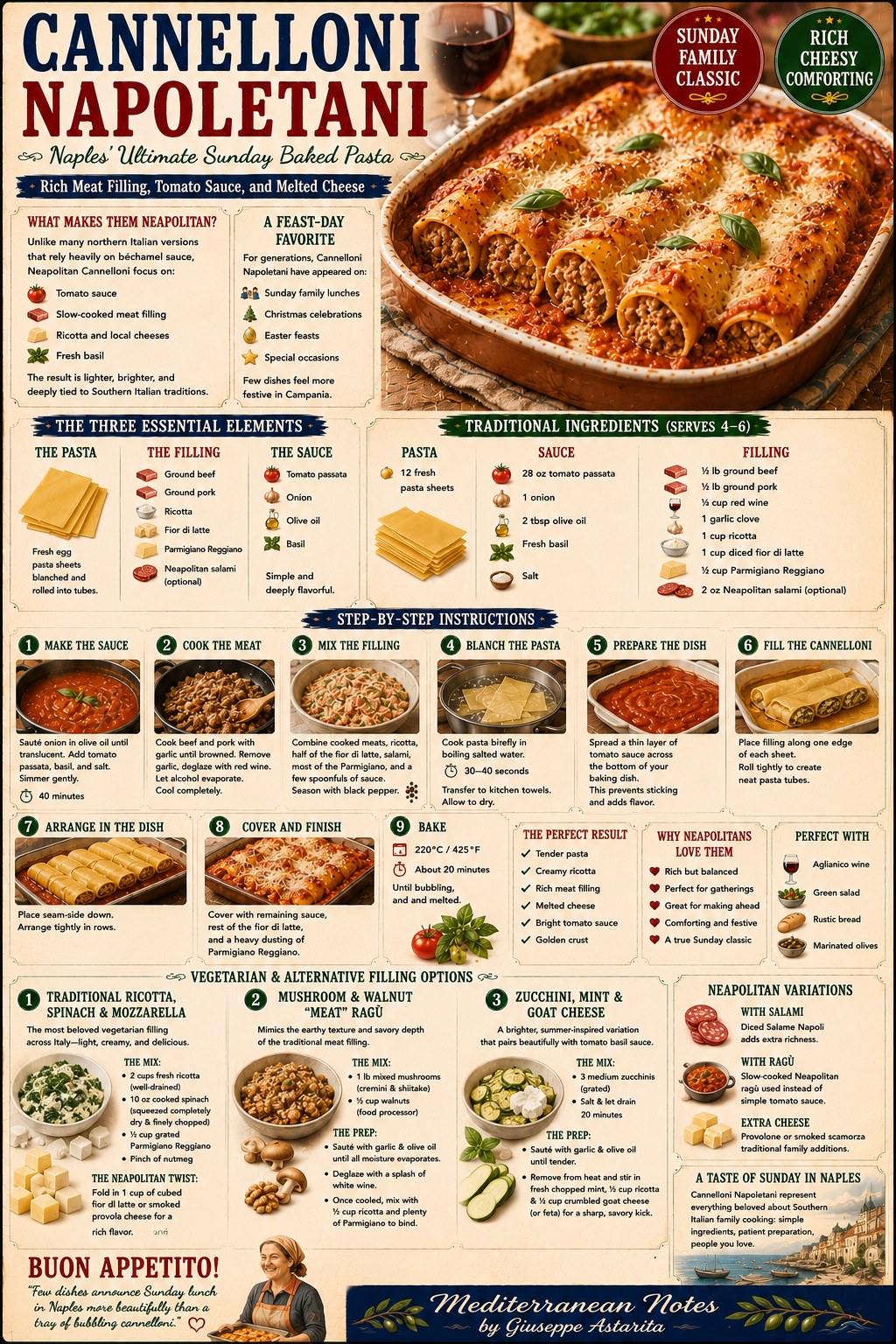
Tap to enlarge — Cannelloni Napoletani: the three elements, step by step, and the filling variations
Recipe — Cannelloni Napoletani
Serves 4–6 · About 1 hour active, plus the ragù
- 12 fresh egg pasta sheets or dried cannelloni tubes
- 300 g ground beef + pork mixed, for the ragù filling
- 250 g ricotta drained, for the filling
- 1 egg to bind the filling
- 5 tbsp grated Parmigiano Reggiano plus more for the top
- 700 g tomato passata rustic
- 1 onion finely chopped, for the sauce
- 200 g fior di latte well-drained, diced
- Extra virgin olive oil, basil, salt, pepper to taste
If you have made the crespelle, the cannelloni will feel familiar — same filling, same sauce, same cheese, same oven, only a sheet of pasta in place of the crêpe. And if you have made lasagna napoletana, you already understand the logic: a baked pasta is an assembled thing, and the oven is what turns the assembly into a dish. In our house, all three belonged to Sunday.