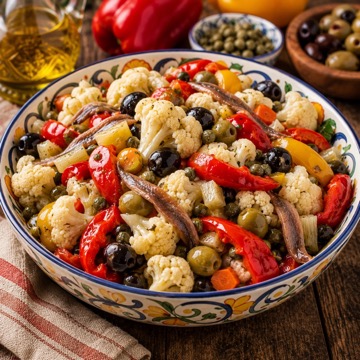
Braciole di Maiale con Papaccelle
Pork chops with Campanian pickled peppers — a trattoria lunch near Piazza Municipio
My father took me to eat this in Naples when I was a child — a trattoria near Piazza Municipio, a weekday lunch, the kind of place where the menu was written on a chalkboard and nobody needed to look at it for long. He ordered the braciole con papaccelle. He told me they soaked the pork in milk first. The chop came to the table with the papaccelle's sweet-sour sauce around it and bread already on the table. I have been thinking about that pork chop ever since.
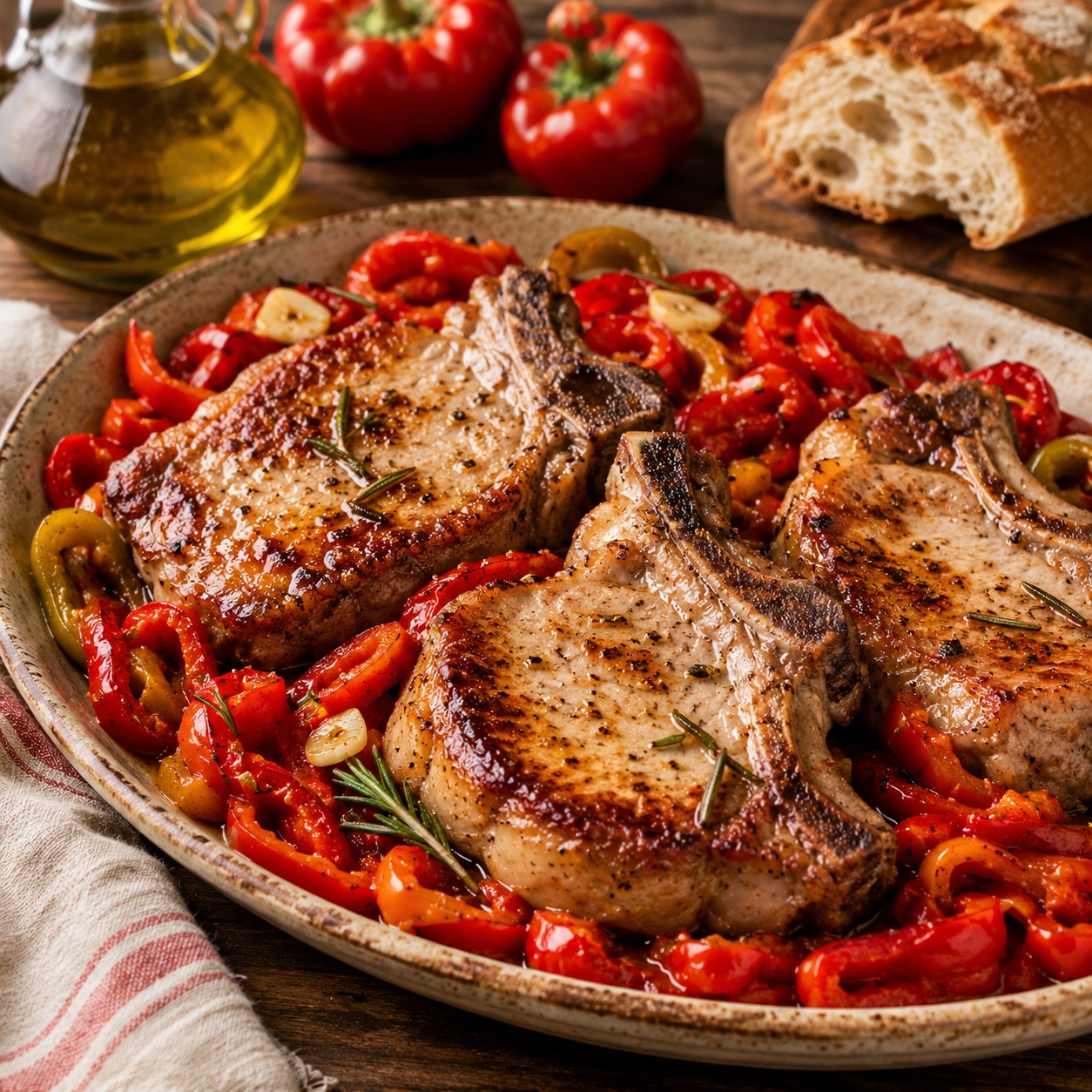
The braciola di maiale — the bone-in pork chop, specifically from the rib end of the loin — is one of the most satisfying cuts of meat in the Neapolitan kitchen when it is treated correctly. The rib end has more intramuscular fat than the center loin, which means it can withstand the browning and the covered simmer without drying out. It is a generous cut, bone-in, about two and a half centimeters thick, and it needs high heat at the beginning to develop a proper crust and the fond that will become the base of the sauce with the papaccelle.
The milk soak is the step my father mentioned at that lunch. It is an old technique — used across southern Italy and in many other meat-cooking traditions — in which the pork is submerged in cold whole milk for thirty minutes to a few hours before cooking. My father said the trattoria did it to make the meat more tender. He was right, though the science behind it is slightly different from what most people assume. The milk does not simply tenderize through acid, as a wine or vinegar marinade would. It works differently, and the result is a pork chop that is genuinely softer throughout and milder in flavor — less of the slight sharpness that pork can have, more of the clean, clean taste of the meat itself.
The papaccelle are the other half of the dish. Their sweet-sour character, preserved in red wine vinegar, is the exact counterweight the richness of the pork needs — the vinegar's acidity cuts through the fat, the sweetness of the pepper flesh matches the slight sweetness of well-browned pork. The combination is one of the most specifically Neapolitan flavour pairings in the secondo repertoire.
The dish is better the next day, like most braises and slow-cooked things: the papaccelle continue to release their flavor into the pan juices overnight, the pork has had time to rest in the sauce, and everything is more unified and rounded than it was fresh from the pan. If you are making it for a lunch, make it the evening before and reheat it gently. The bread remains mandatory at all times.
The tenderizing effect of soaking pork in milk is not primarily due to acid — whole milk is actually slightly alkaline, with a pH of around 6.5 to 6.8. The mechanism is different: the lactic acid and calcium in milk interact with the myosin proteins in the muscle fibers, causing them to partially denature and relax before the meat is exposed to the high heat of the sear. Calcium ions from the dissolved calcium salts in milk also activate native proteases — enzymes naturally present in the meat — which begin to break down some of the peptide bonds in the muscle proteins, producing a slight pre-tenderizing effect. The overall result is a pork chop that has softer muscle fibers when it reaches the pan and that therefore produces a more tender result after browning and simmering than an unsoaped chop of the same thickness would. The milk also draws out some of the myoglobin — the protein responsible for the slightly metallic, iron-forward flavor that pork can carry — leaving a milder, cleaner-tasting meat. This is why traditional Italian recipes for liver, rabbit, and certain cuts of pork specifically call for a milk soak: not primarily for tenderness but for flavor refinement.
The papaccelle's acetic acid interacts differently with the pork during the covered simmer: it breaks down collagen in the connective tissue at the bone and the fat margins, converting it to gelatin, which thickens the pan juices into the glossy, body-rich sauce that surrounds the chop when served. This is why the sauce from a properly made braciole con papaccelle coats a piece of bread so well and why the scarpetta at the end is not optional.
The recipe
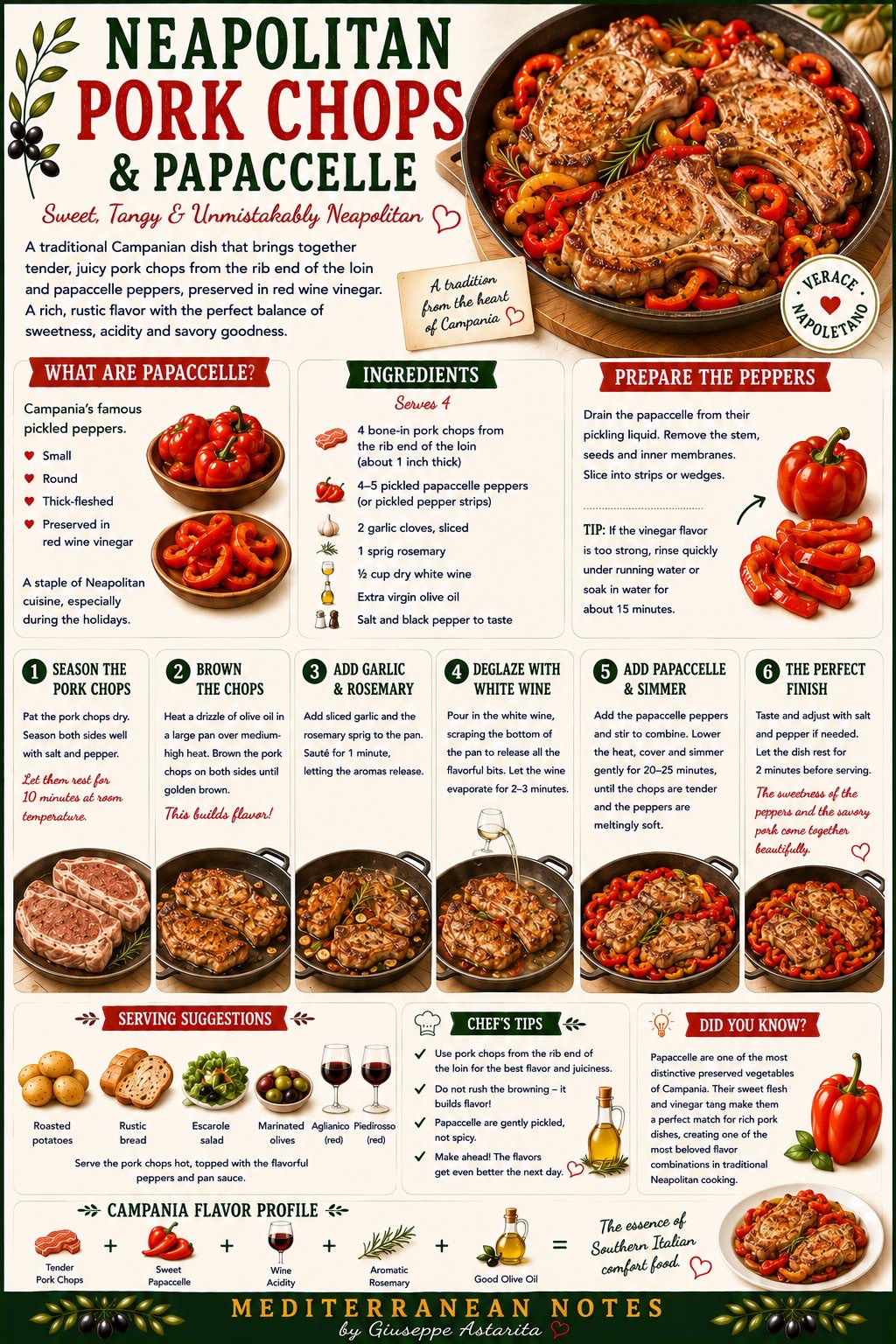
Serves 4. Use bone-in pork chops from the rib end of the loin, about 2.5 cm thick — thinner chops dry out during the simmer. Begin the milk soak at least 30 minutes before cooking, ideally 2 hours. Pat completely dry before searing.
Buon appetito — e grazie, papà, per quel pranzo a Napoli.