Zeppoline di Patate
My mother made them for San Giuseppe on March 19th, for the beach house in summer, for parties, and sometimes just for breakfast. She finished them with a grating of lemon zest, which nobody else did, and which made all the difference.
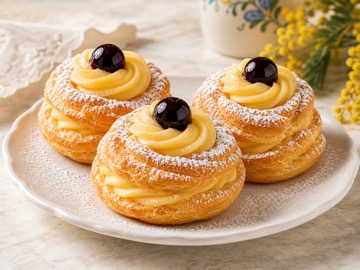
March 19th in Italy is the Feast of San Giuseppe — Saint Joseph's Day — and in Naples and Campania it has always been, above all, a day for fried dough. The professional version, the zeppola di San Giuseppe, is an elaborate pastry: choux dough, piped into a ring, fried or baked, filled with custard, finished with an amarena cherry and a dusting of powdered sugar. Pastry shops make them for weeks. People line up. It is one of the great regional pastries, and it deserves all of it.
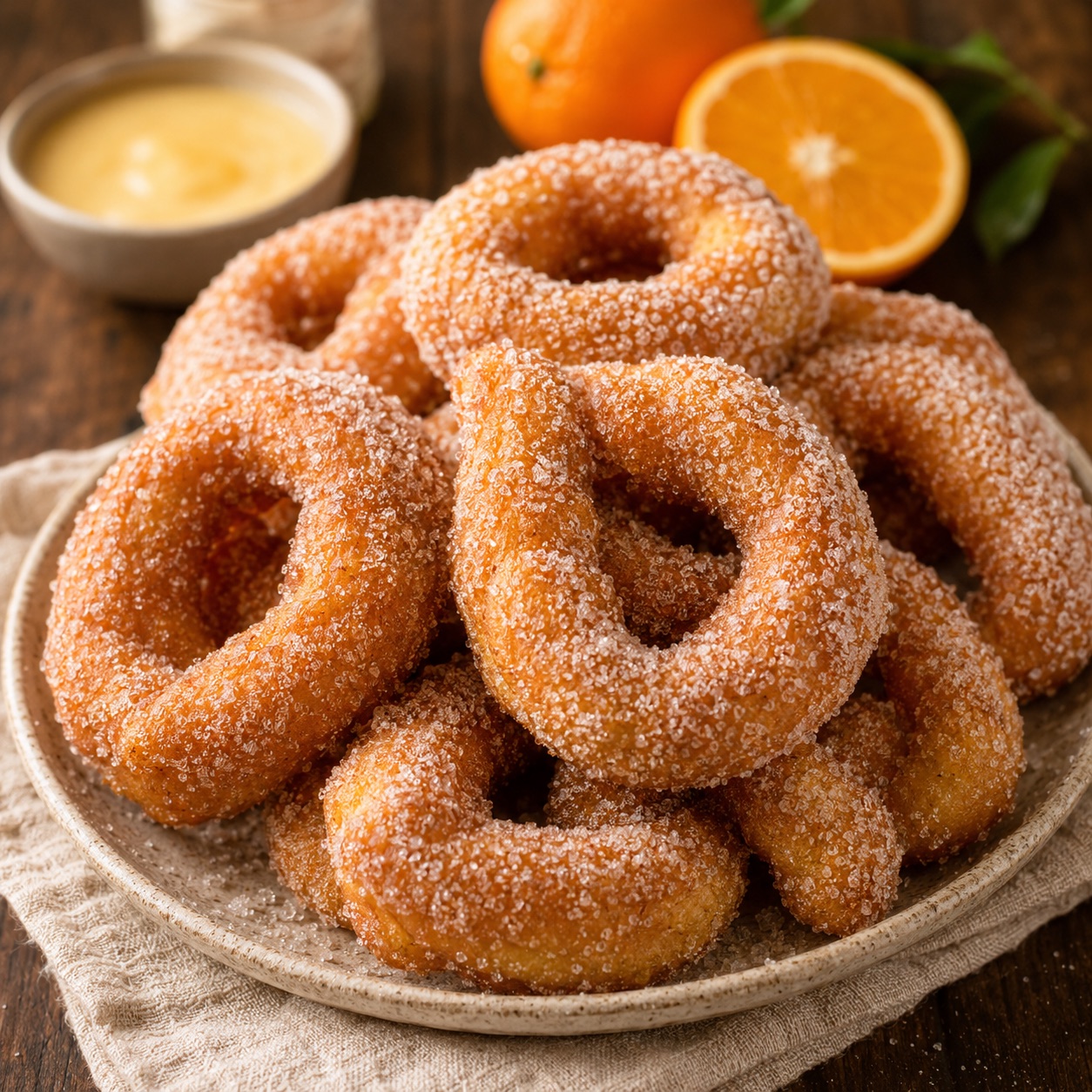
But my mother also made zeppoline di patate, and on March 19th she would send them to school with me in a container when she had not made the actual zeppole — which was most years, because the real zeppole required time and planning, and the potato version required neither. What arrived at school was a container of small, slightly irregular fried balls, sugar-coated, with a faint citrus smell that came from the lemon zest she grated over them at the end. They disappeared quickly. Nobody asked what they were. They were soft, sweet, and warm enough from the container that the sugar had slightly absorbed into the crust.
The potato is not optional in this recipe, and it is not a shortcut. The boiled, riced potato goes directly into the dough alongside flour, egg, sugar, yeast, and citrus zest, and it changes the texture of the fried result completely. Without it, you get a bready fritter. With it, you get something that stays tender inside for hours after frying — soft and giving, not cakey — because the starch from the potato holds moisture in a way that flour alone cannot. The same principle appears in the graffe napoletane, the larger ring-shaped Neapolitan donuts that are the grander cousin of these small rounds.
The beach house version appeared in summer, at Baia Domizia or Castel Volturno, when a batch of zeppoline was the right solution for an evening when everyone was home and the day had been long and simple food was what the moment required. Beach house kitchens in Campania have always been improvised things — gas burners, a few pots, whatever you brought — but frying worked fine on a portable burner, and the smell of hot oil and sugar was not unwelcome in an open kitchen with the windows facing the sea. She would fry them in batches, drain them briefly, toss them in a plate of sugar, and that was it. They were eaten standing in the kitchen as they came out, because sitting down and waiting for a full plate to be ready was not the beach house mode.
She made them for parties too, as part of a larger spread of fried things — not always, but often enough that I associate them with the particular kitchen energy of a party in preparation: oil heating, conversations overlapping, someone always trying to eat something before it was ready. And occasionally, without any occasion at all, she made them on a weekend morning as a kind of breakfast, which was the version I liked best — a few zeppoline with a caffè, still hot from the oil, the sugar slightly gritty in the mouth.
Why potato changes fried dough
Potato starch — amylose and amylopectin — behaves differently from wheat starch under heat. When boiled, the starch granules absorb water and swell, then remain hydrated even after the dough is formed and fried. This retained water creates steam during frying, which contributes to the airy interior, and also delays moisture loss during cooling — which is why potato-based fried dough stays softer longer than plain flour dough.
The Maillard reaction and surface caramelization during frying create the golden crust and flavor compounds in the outer shell. Because the potato dough has a slightly lower gluten network than pure flour dough (gluten forms only from wheat protein, and potato dilutes this), the crust is thinner and more delicate, and the interior stays pillowy rather than bready.
The lemon zest contributes limonene and other aromatic compounds (terpenes) that are fat-soluble — they migrate into the oil on the surface of the hot dough and intensify on contact with the sugar coating. This is why zest added immediately after frying, while the surface is still hot and slightly oily, produces a more pronounced citrus note than zest incorporated into the dough itself.
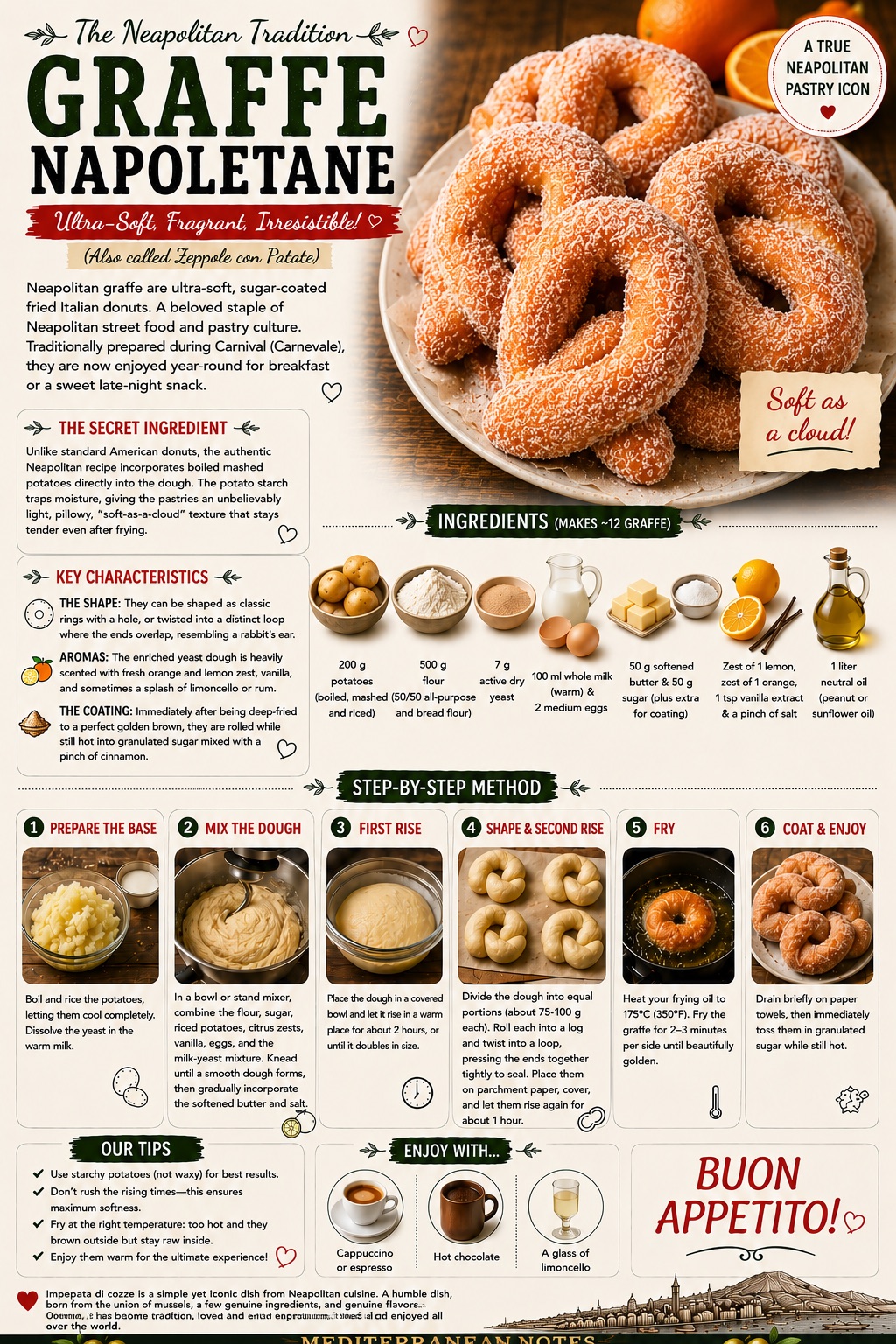
Tap to enlarge — The potato dough method: same principle as the zeppoline, larger form
Recipe — Zeppoline di Patate
Makes about 20–25 small zeppoline · Active time 30 min + 1.5 hr rise
- 200 g starchy potatoes boiled with skin, then peeled and riced
- 250 g all-purpose flour or 50/50 with bread flour
- 7 g active dry yeast dissolved in 50 ml warm milk or water
- 1 egg
- 30 g sugar plus extra for coating
- Zest of 1 lemon in the dough and/or grated on top after frying
- Zest of ½ orange optional but good
- A pinch of salt
- 1 tsp vanilla extract
- 1 liter neutral oil for frying — sunflower oil
I have been making these for Anna and Carolina since Anna was old enough to eat fried things, which in our house is early. The March 19th occasion is not as vivid for them as it was for me — we are in Massachusetts, not Caserta, and San Giuseppe is not a school holiday here — but the zeppoline themselves need no occasion to justify. They work as breakfast. They work on a weekend afternoon when someone wants something sweet and fried and the ingredients are already in the house.
I do not always add the lemon zest at the end, and each time I skip it I immediately regret it. It is not a large detail. It is the detail that makes them what they were at home and not just fried potato dough with sugar. Nobody else made them quite that way. Now I do.