Torta Polacca
Aversa's brioche cake
A tall, soft brioche filled with crema pasticcera and sour cherries in syrup — from Aversa, a town in the province of Caserta. Good enough to have reportedly been a favorite of a former President of the Republic.
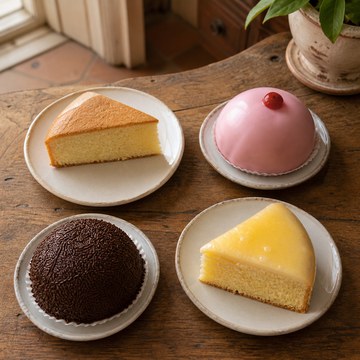
A necessary correction before anything else: despite sitting alongside pan di spagna cakes on every Campanian pastry tray, the torta polacca is not one of them. It's built on an enriched brioche dough — eggs, butter, yeast, a slow rise — closer in construction to babà than to anything on the sponge-cake guide. It belongs here for the same reason cassata sits nearby on this blog despite being Sicilian: it shares a table with these cakes constantly, and the two families are easy to confuse from outside the region.
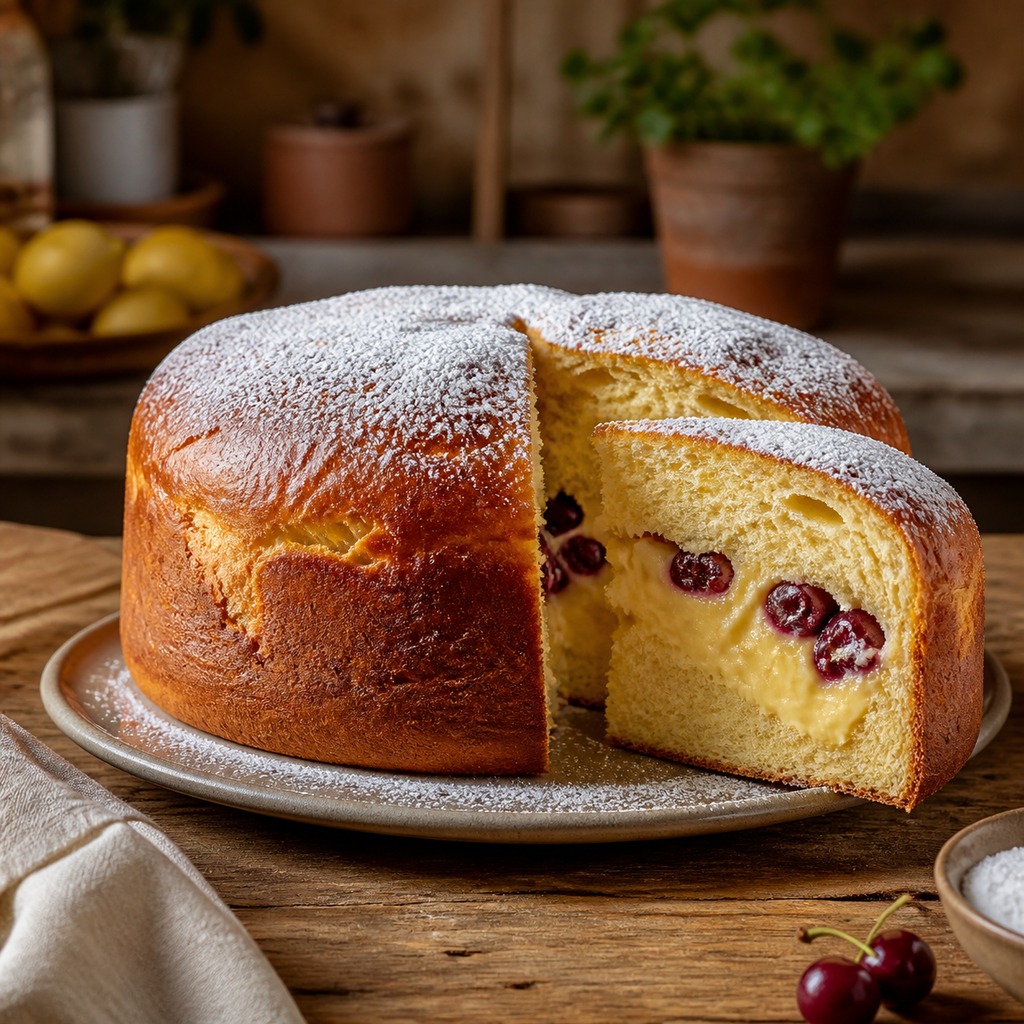
The polacca is from Aversa, in the province of Caserta — close to home. It's a tall, split brioche, cut and filled generously with crema pasticcera and sour cherries in syrup, then closed and dusted with powdered sugar. The name means "Polish," and the origin story is murky and probably apocryphal, but the cake itself is unambiguously Casertano, and it's beloved enough locally that it's said to have been a favorite of Giovanni Leone, the former President of the Republic, who was from Naples himself.
Brioche, not sponge — the one cake on this list that doesn't actually belong to the pan di spagna family, included because it shares the same table and the same confusion.
The recipe
For one large cake, serving 8–10. The dough needs a long rise — start it the night before.
Torta Polacca — the Aversa brioche cake with pastry cream and sour cherries. Click to enlarge.
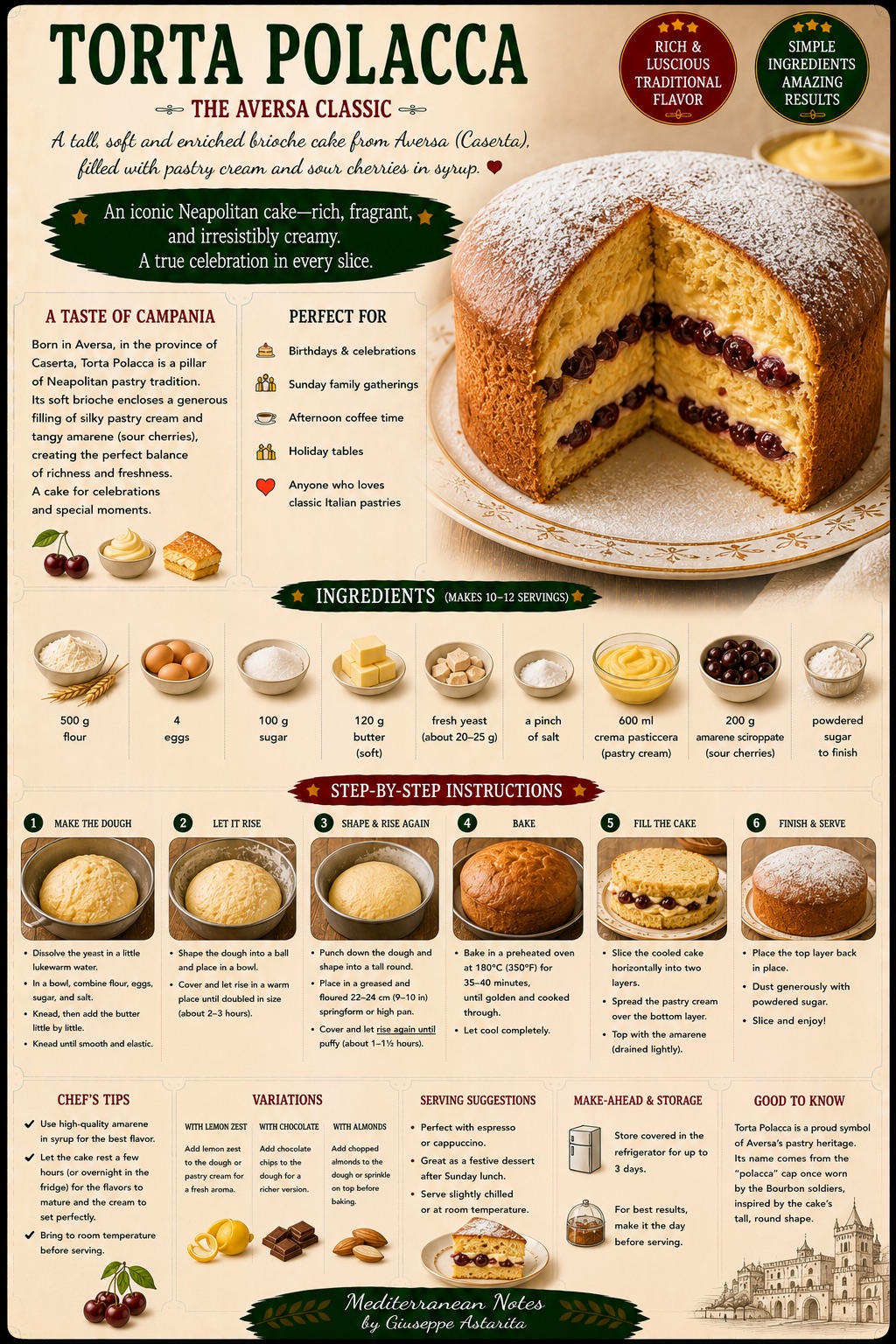
500 gFlour 00, or Manitoba for a stronger rise
4 eggsWhole eggs
100 gSugar
120 g, softenedButter
10 gFresh yeast (or 3 g dry yeast)
A pinchSalt
600 mlCrema pasticcera, chilled
200 gAmarene sciroppate (sour cherries), drained
To finishPowdered sugar
1
Dissolve the yeast in a spoonful of the eggs. Combine with the flour, remaining eggs, sugar, and salt in a stand mixer, and knead until smooth and elastic, about 10 minutes.
2
Add the softened butter a little at a time, kneading until fully absorbed and the dough is glossy and stretchy. Cover and let rise until doubled, 2–3 hours at room temperature, or overnight in the fridge.
3
Shape into a round loaf in a buttered springform or round cake pan. Let rise again until nearly doubled, about 1 hour.
4
Bake at 180°C (350°F) for 30–35 minutes, until deep golden and a skewer comes out clean. Cool completely.
5
Slice the cooled brioche horizontally into two or three layers. Spread each layer generously with crema pasticcera and scatter with sour cherries, then reassemble.
Dust heavily with powdered sugar just before serving. Best the same day, but keeps well covered for a day or two.
Related
Babà Napoletano
The other enriched brioche dough on this blog, soaked in rum instead of filled. See
the full recipe.
Pan di Spagna nella Tradizione Napoletana
The actual sponge-cake family — this one's cousin by table, not by dough. See
the full guide.
Buon appetito.