Torta Mimosa
The yellow sponge cake
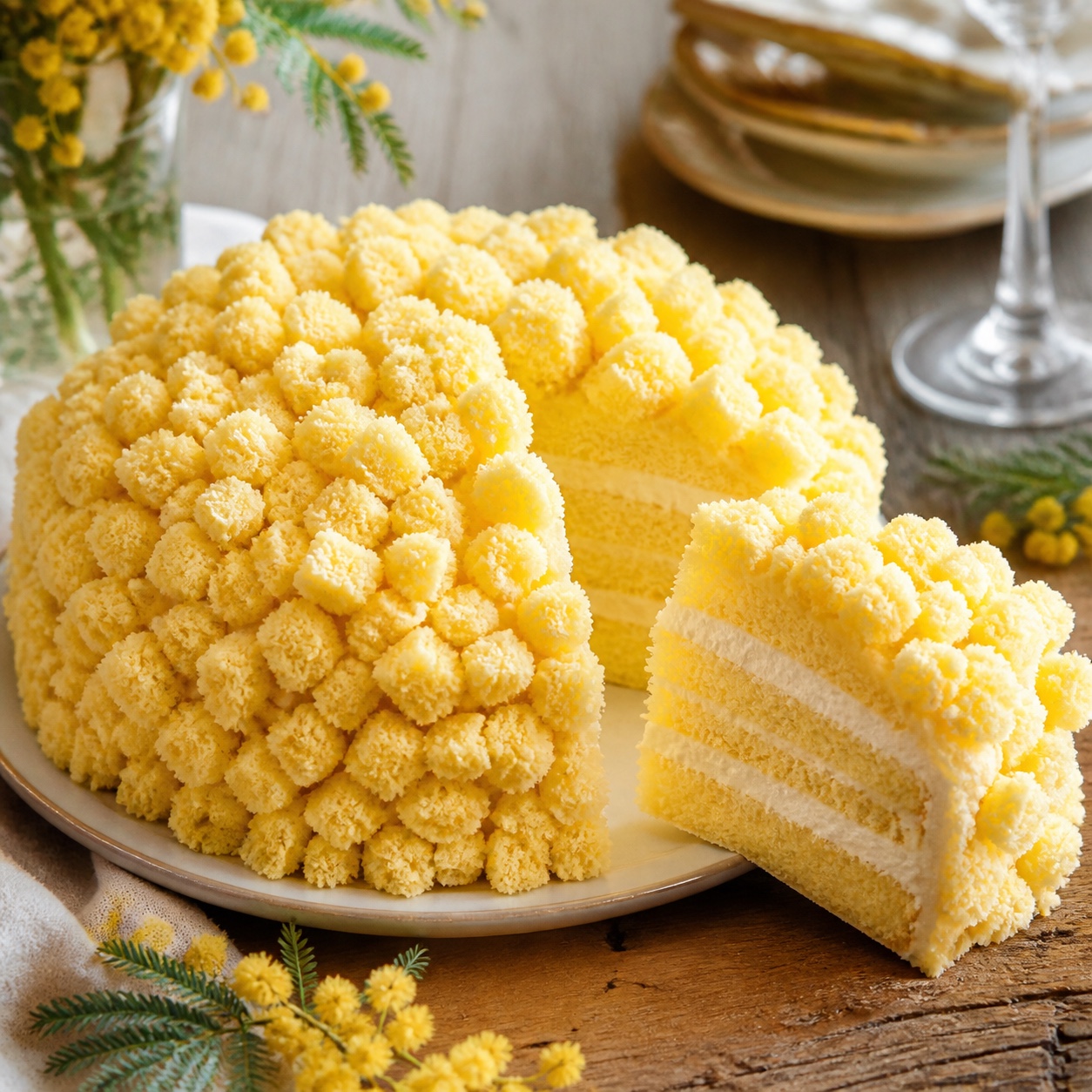
A cake made almost entirely of its own sponge — filled pan di spagna, covered on every surface in loose crumbled pan di spagna, built to look like a branch of mimosa in bloom. Not from here originally, but it shows up every March regardless.
Honesty about origin first: the torta mimosa's invention is genuinely disputed between Lazio and Liguria, and nobody credible claims it started in Campania. It doesn't belong on this guide because Naples invented it — it belongs because Neapolitan pasticcerie adopted it thoroughly enough, decades ago, that it's now a fixed feature of the vassoio della domenica every spring, especially around March 8th, Festa della Donna. Borrowed, not native, and worth saying so plainly.
What makes it unmistakable is that pan di spagna is used twice, two different ways. One batch is sliced into layers and filled the ordinary way, with crema diplomatica — pastry cream and whipped cream folded together, the same base as the chantilly in scazzetta del cardinale. A second batch, baked separately or cut from the trim, is crumbled into small, irregular, deep-yellow pieces and pressed over every visible surface of the finished cake, so the whole thing looks like a cluster of mimosa blossoms rather than a cake at all.
Not a Neapolitan invention — but adopted so completely that it now belongs to the Sunday tray as firmly as anything born here.
The recipe
For one 20–22 cm cake, serving 8–10.
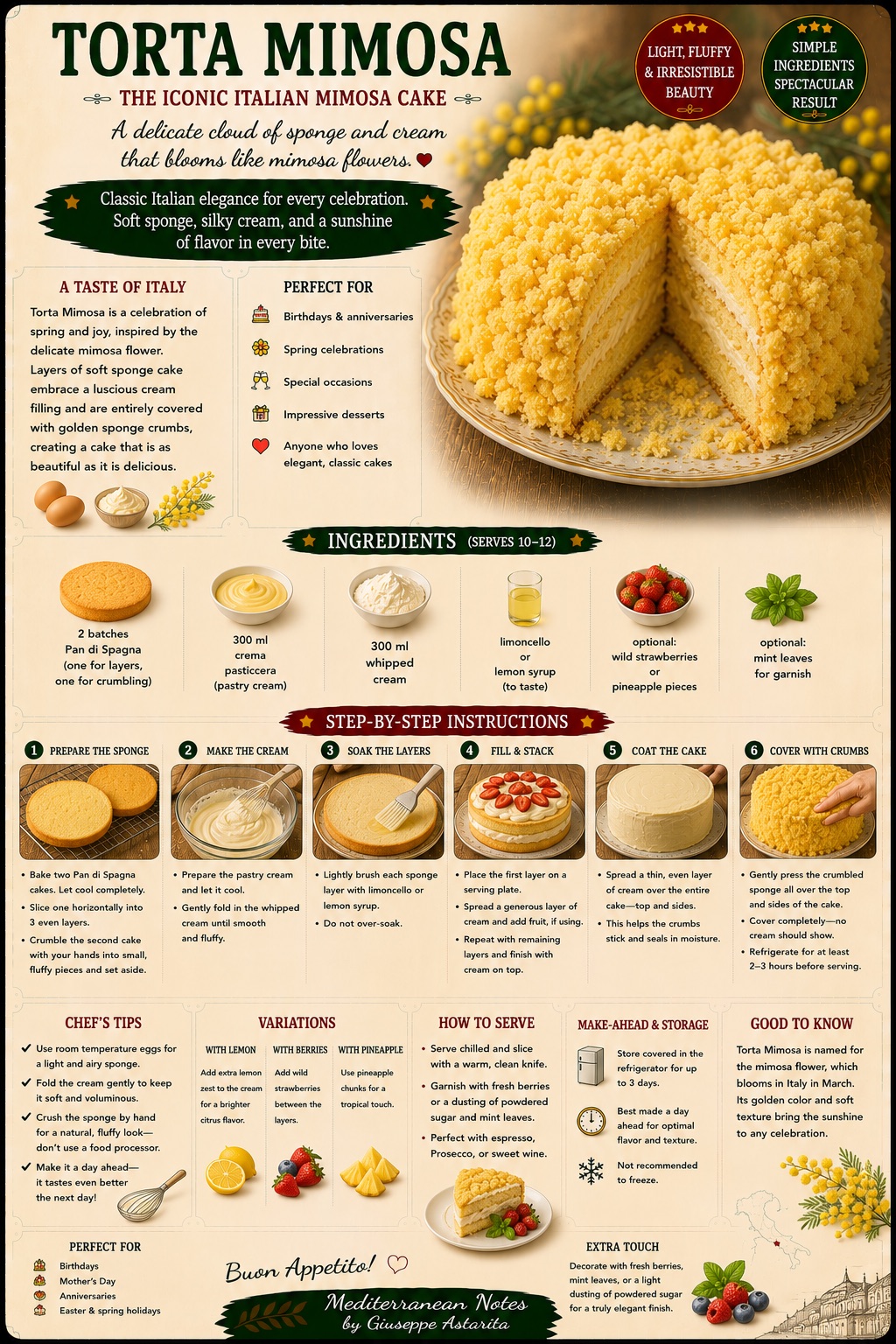
Torta Mimosa — sponge cake covered in its own crumb. Click to enlarge.
2 batchesPan di spagna — one for layers, one for crumbling
300 mlCrema pasticcera, chilled
300 mlFresh cream, whipped
80 mlLimoncello, or a light lemon syrup
OptionalFragoline di bosco or diced pineapple in syrup
1
Fold the whipped cream gently into the chilled crema pasticcera to make the crema diplomatica. Fold in the fruit here, if using.
2
Slice one batch of pan di spagna into two or three layers. Brush each with limoncello or lemon syrup, then fill and stack with the crema diplomatica, leaving enough cream to coat the outside.
3
Coat the entire outside of the assembled cake — top and sides — with a thin layer of the remaining crema diplomatica, smoothing it as evenly as you can. This is what the crumb needs to stick to.
4
Crumble the second batch of pan di spagna into small, irregular pieces by hand — not too fine, and not uniform; the texture is meant to look organic.
5
Press the crumbled sponge over the entire cake, top and sides, working in handfuls and pressing gently so it adheres. Cover every visible trace of the cream underneath.
Chill at least 2 hours before serving so the whole structure sets and slices cleanly.
Related
Scazzetta del Cardinale
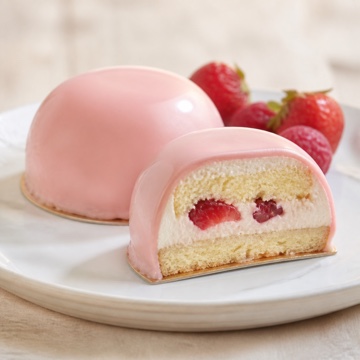
The same crema diplomatica base, domed and glazed instead of crumb-covered. See
the full recipe.
Pan di Spagna
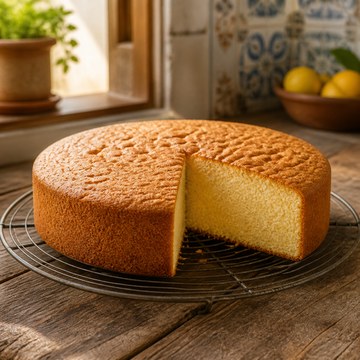
The sponge used twice over in this cake. See
the full recipe.
Buon appetito.