Pan di Spagna
The Italian sponge cake base
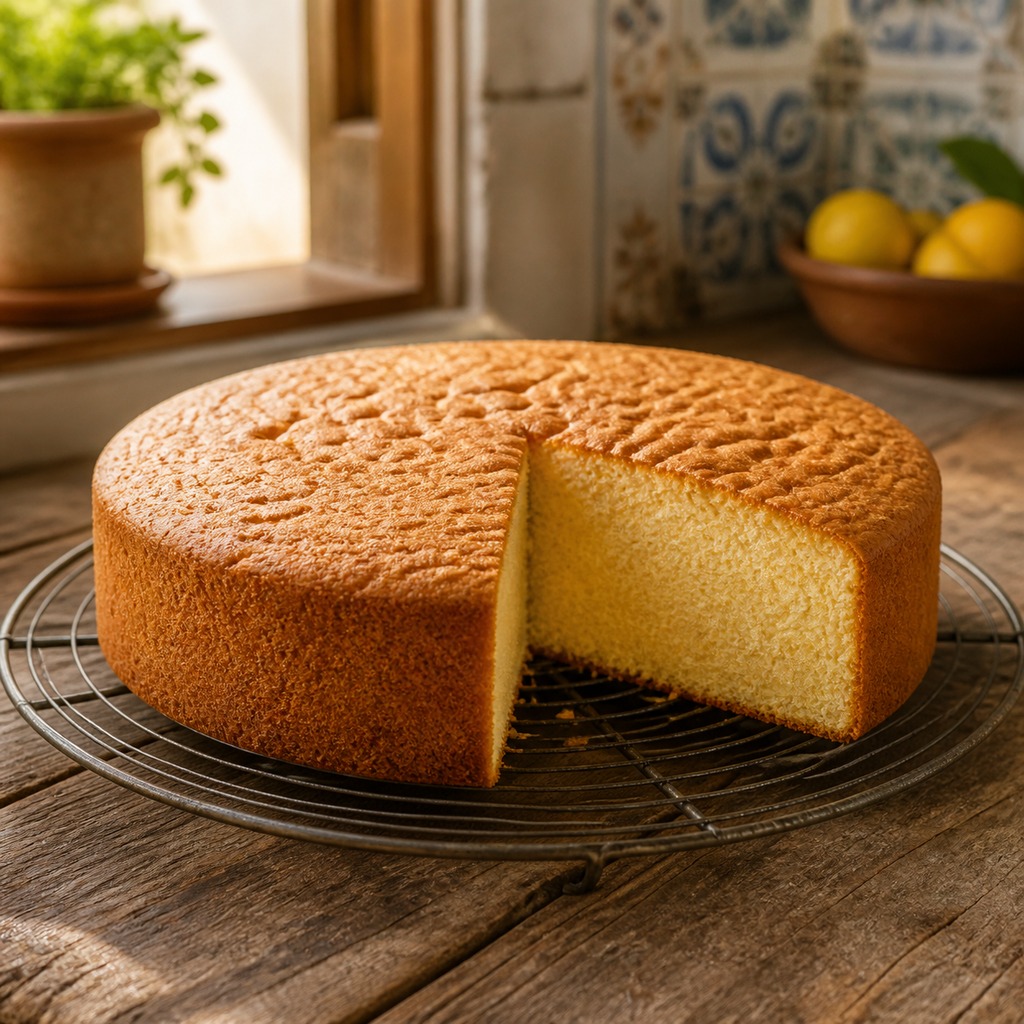
Eggs and sugar whipped until they triple in volume, flour folded in gently, baked with nothing else — no butter, no baking powder. It rises on air alone, and it is the invisible foundation under most of the elaborate cakes in a Neapolitan pasticceria window.
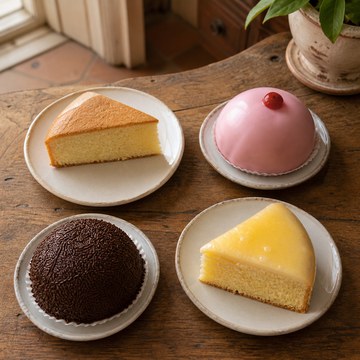
Naples is famous the world over for sfogliatella and babà — but walk into any pasticceria on a Sunday morning and most of what fills the tray is built on this instead: plain, dry, almost bland on its own, and entirely dependent on what soaks into it and what's layered around it. Zuppetta napoletana, delizia al limone, scazzetta del cardinale, teste di moro, cassatina, torta mimosa — different shapes, different fillings, same base underneath. See the full guide to Neapolitan pan di spagna cakes for all of them side by side.
The name means "Spanish bread," though nobody agrees on why, and it isn't Spanish at all — it's the Italian branch of what the French call génoise: whole eggs (or separated) whipped with sugar until pale and thick enough to hold a ribbon, then flour folded in with a light hand so the air doesn't collapse. No chemical leavening does any of the lifting. The eggs do all of it.
Beating eggs and sugar together for several minutes works air bubbles into the liquid egg proteins, which then partially unfold and form a stabilizing network around each bubble — essentially the same mechanism as a meringue, but built on whole eggs rather than whites alone. Folded gently into flour and baked, those trapped air pockets expand with heat and set the structure before they can escape. Overmix the batter after adding flour, or fold too roughly, and the bubbles collapse before the oven ever gets to them — which is why a pan di spagna recipe insists on folding, never stirring, and why it never contains baking powder: there's nothing chemical to fall back on if the foam fails.
The recipe
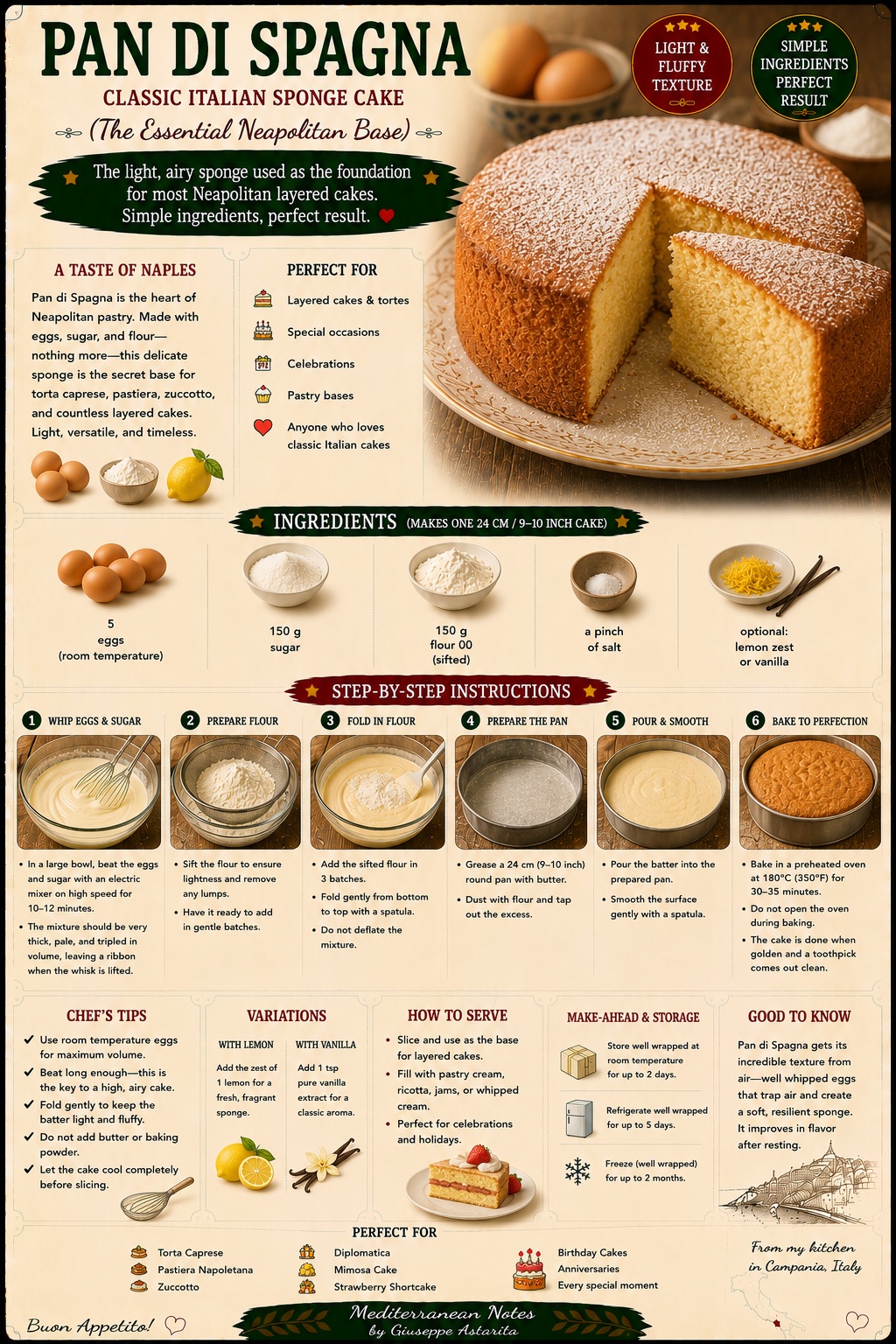
For one 24 cm round, enough to split into 2–3 layers for any of the cakes above.
Related
Buon appetito.