Spaghetti ru Puveriello
The poor man's pasta — tomato, garlic, chili, and golden toasted breadcrumbs
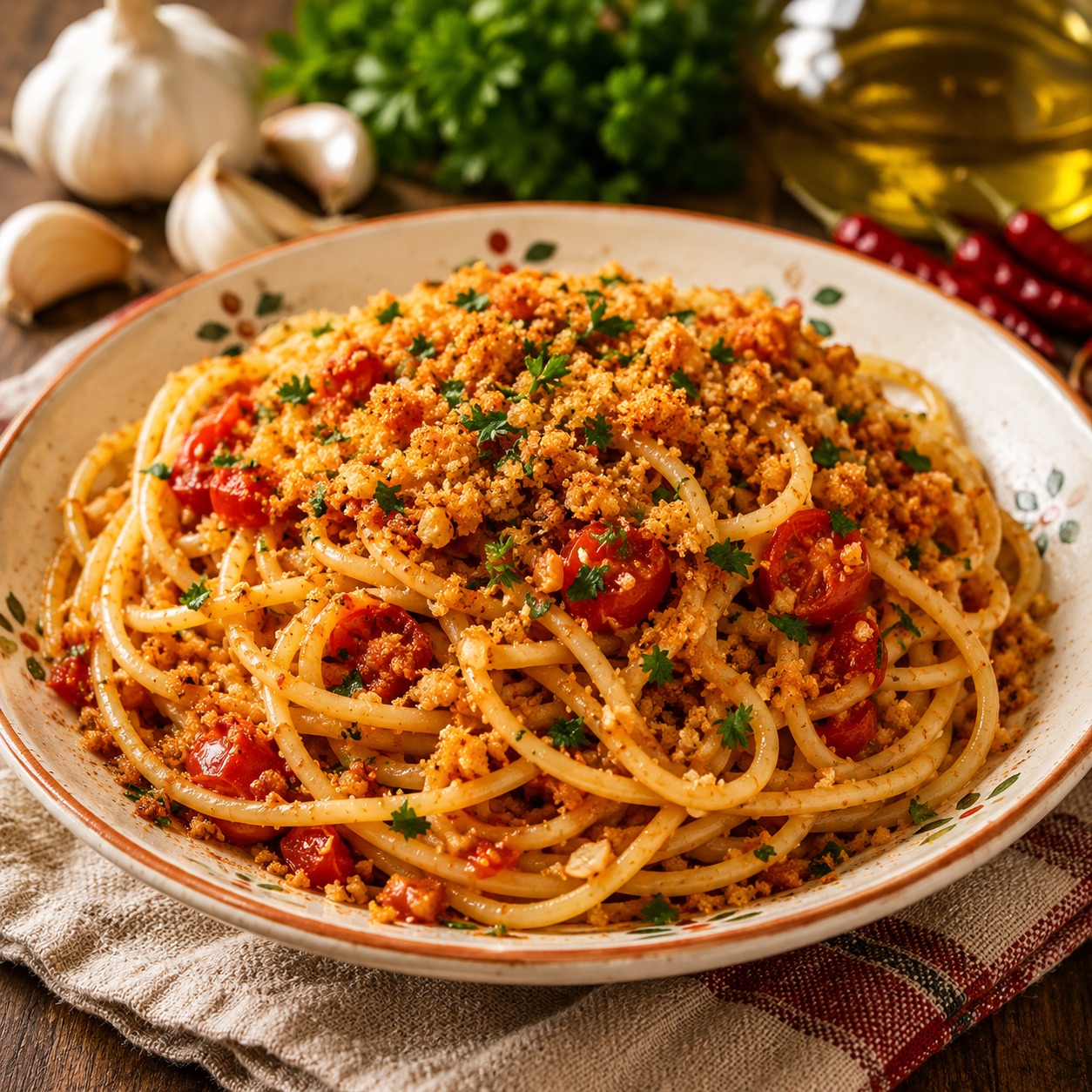
Ru puveriello means, in Neapolitan dialect, of the poor man — this is the poor man's spaghetti, the dish you made when there was almost nothing in the house: some tomatoes or a can of peeled tomatoes, garlic, olive oil, a dried chili, and stale bread to make crumbs. It is the Neapolitan application of the principle that stale bread is not waste but an ingredient — the same principle that produced pane cotto, panzanella, and every other bread-extending preparation of the cucina povera tradition. The breadcrumbs are toasted slowly in olive oil until golden and fragrant, then scattered over the pasta at the end. They absorb the sauce and provide a crunch that is categorically different from anything cheese produces. This is not a cheaper substitute for Parmigiano. It is a different ingredient doing a different job, and the dish is better with breadcrumbs than it would be with cheese.
The tomato sauce is cooked until properly concentrated — 15 to 20 minutes over medium heat until it thickens and the olive oil and tomato emulsify into something dense and fragrant. A watery sauce produces a soggy pasta and soggy breadcrumbs, and the dish loses its whole point. The breadcrumbs are toasted separately and added only at the last moment, some stirred through the pasta and some scattered on top so they retain their crunch against the sauce. The anchovy variation — two or three fillets melted into the olive oil before the garlic — is worth knowing: they disappear into the sauce and provide a savory depth without any fish flavor, exactly the principle behind the anchovy in puttanesca and in the cavolfiore salad. The olive and caper variation moves the dish toward the puttanesca family while retaining the breadcrumb finish that makes it itself.
The flavor of toasted breadcrumbs comes from the same Maillard reaction that produces the crust of pane cafone and the sear of the pork ribs: amino acids and sugars in the stale bread react at high temperature to produce hundreds of aromatic compounds with nutty, toasted, caramelized character. The longer and slower the toasting, the more complete the Maillard products and the deeper the flavor. In the context of a pasta dish, toasted breadcrumbs also perform a textural function that cheese does not: they absorb excess moisture from the sauce at the moment of contact, creating a brief window in which each crumb is crisp against the wet pasta before it softens. Tossing some breadcrumbs through the pasta and some on top ensures that some are fully integrated into the sauce while others retain their crunch for the first few bites — the correct distribution. Anchovies melt into the olive oil because their proteins denature rapidly in the hot fat, releasing glutamate and other amino acids into the cooking medium; this is the umami function of the anchovy.
The recipe
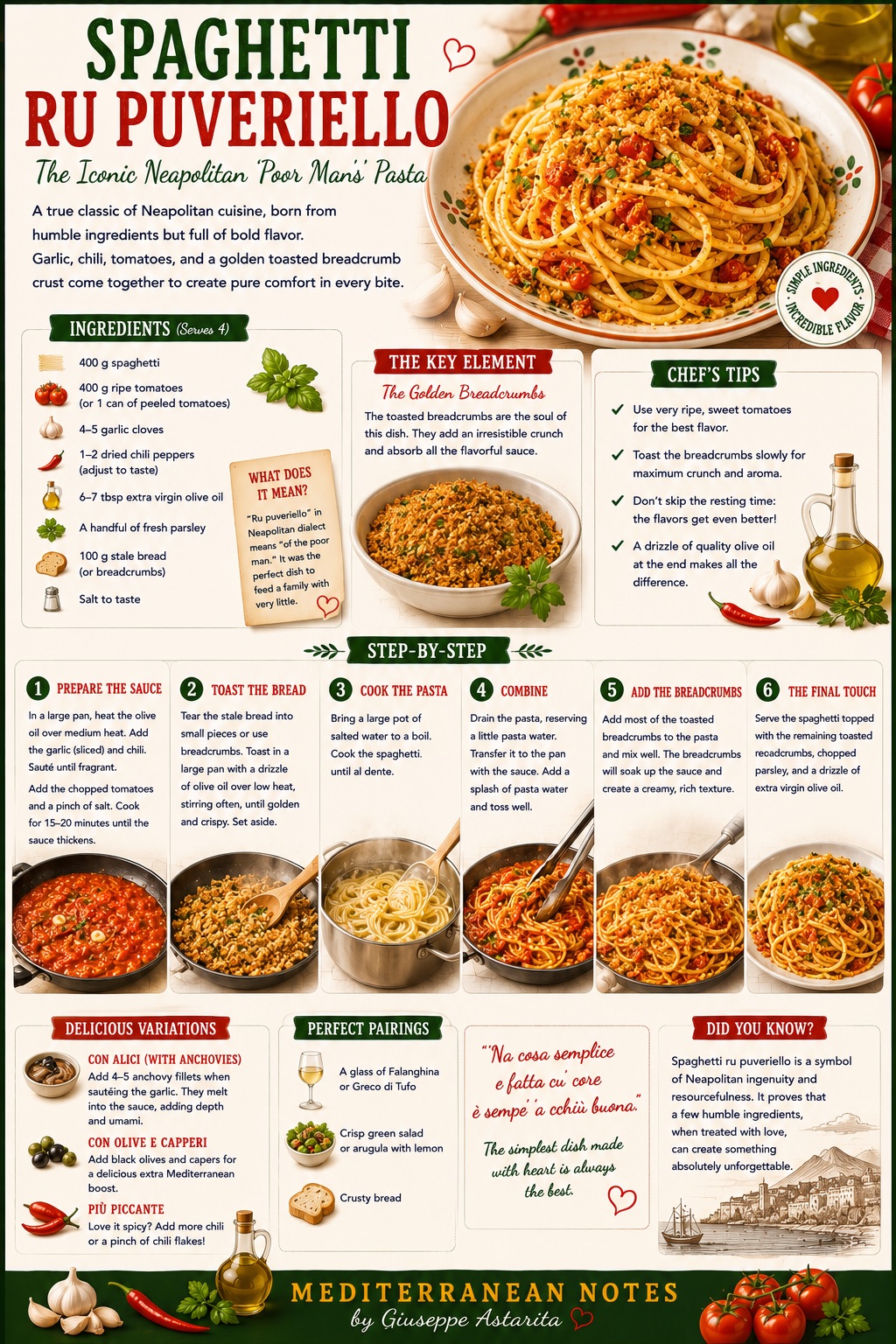
Variations: Con alici — add 4–5 anchovy fillets with the garlic, let them melt. Con olive e capperi — add black olives and capers with the tomatoes. Più piccante — more chili or a pinch of chili flakes at the end.
Buon appetito — e viva ru puveriello.