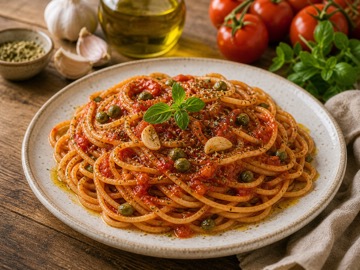
Spaghetti con la Salsa Pizzaiola
With Pizzaiola Meat Sauce — Two dishes in one
The pizzaiola sauce already appears in this collection as a meat dish — carne alla pizzaiola — and that post tells the full story of the preparation. This one is its companion: the same sauce, used first to dress the spaghetti as a first course, then served alongside the meat as the second. A favorite of my family and my father in particular. I can still smell the oregano on it.
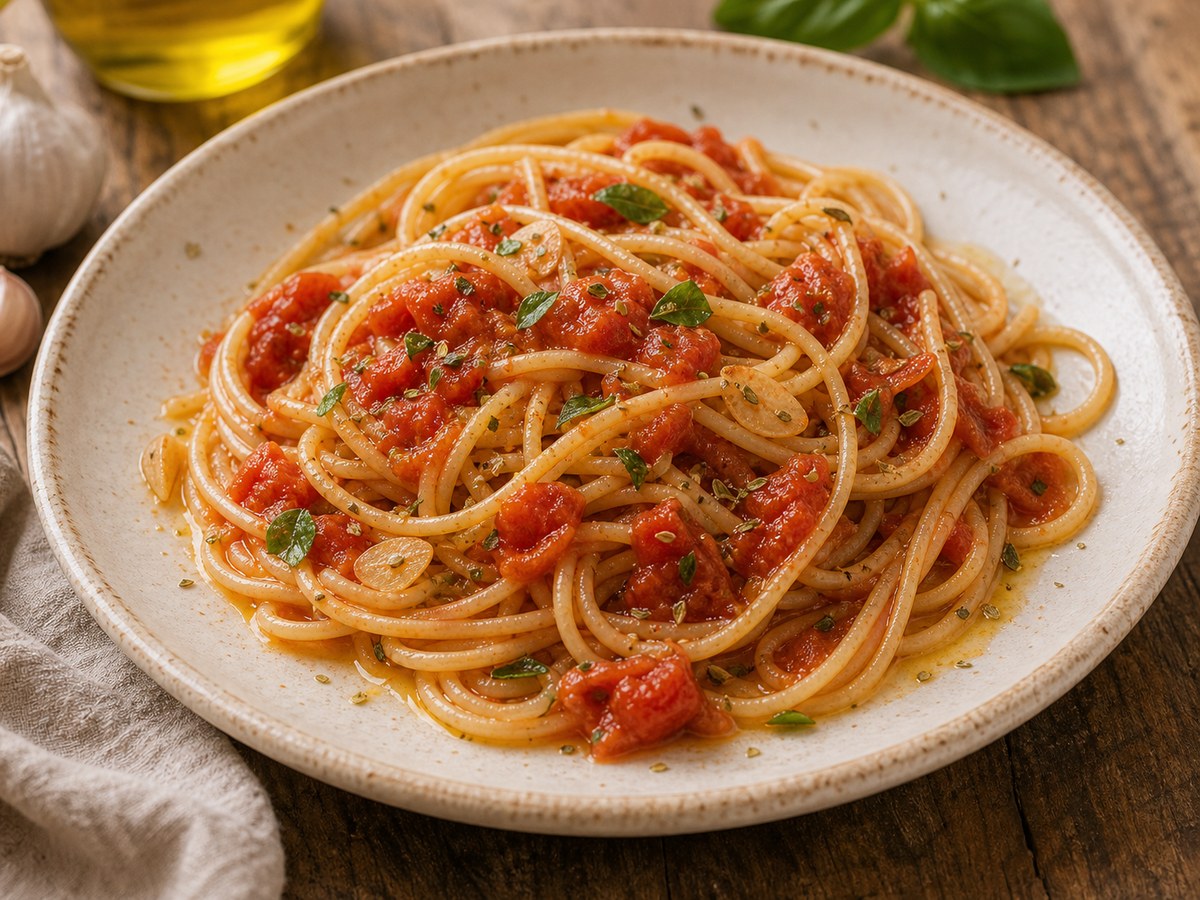
The pizzaiola was one of those dishes where the oregano announced itself before the plate arrived at the table. Not the scent of oregano as a background note — as the dominant smell in the kitchen, assertive and Mediterranean, the dried herb releasing its volatile oils into the hot tomato sauce as the meat simmered. That smell is the dish, as much as the taste is the dish. My father was particularly fond of this preparation, and it appeared regularly in the weekday rotation: a quick second course with a built-in first course, because the sauce that came off the meat was abundant and concentrated enough to dress the pasta that preceded it. Two dishes, one sauce, one pan, one kitchen smell that still travels across thirty years and an ocean.
The two-courses-from-one-pot logic is a recurring principle in the Campanian kitchen — it appears in the ragù napoletano (pasta first, then the meat that cooked in the sauce as the secondo), in certain soups where the broth serves the pasta and the ingredients serve as the plate, and here in the pizzaiola. It is not a trick or a shortcut — it is a structure that makes a complete meal from a single preparation, which is exactly the logic of a kitchen that produces real food without waste and without elaborate planning. You make the pizzaiola. The sauce dresses the pasta. The meat follows. That is the whole meal, cooked in one pan.
First course · Primo piatto
Spaghetti con la pizzaiola
The tomato and oregano sauce — concentrated by the simmering of the meat — is lifted from the pan while the meat rests, tossed with al dente spaghetti, finished with a splash of pasta water. Rich, slightly meaty from the juices of the beef, intensely oregano-forward. Dress the pasta generously; this sauce was made for it.
Second course · Secondo piatto
Carne alla pizzaiola
The beef slices, simmered in the tomato and oregano until tender, served with the remaining sauce spooned over. Accompanied by the bread for the scarpetta through the sauce remaining on the plate. See the
carne alla pizzaiola post for the full preparation and context.
The recipe — serves 4 (first and second course)
Ingredients — the full preparation
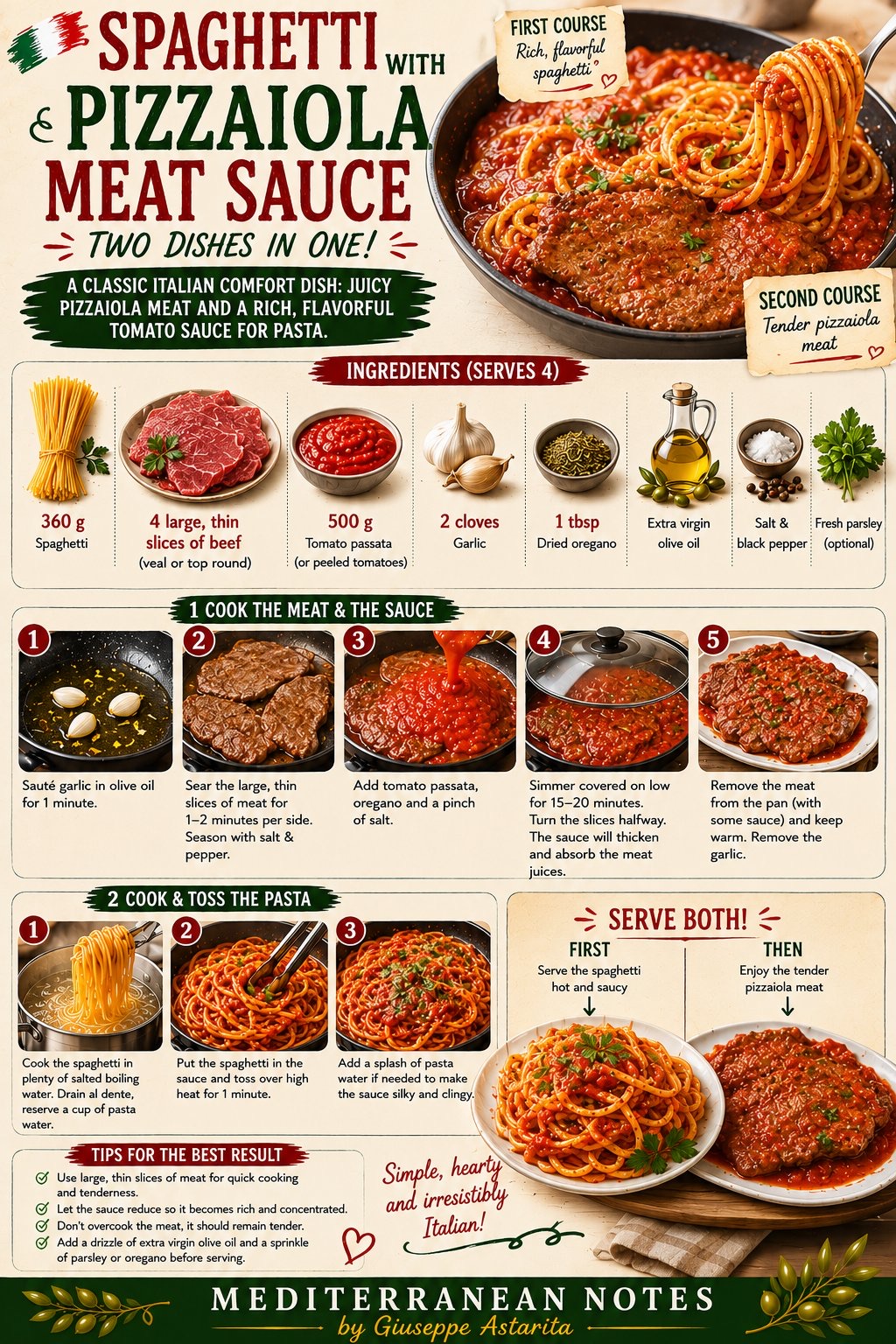
Spaghetti con la pizzaiola — due piatti in uno. Simple, hearty, irresistibly Italian. Click to enlarge.
360 gSpaghetti
4 slicesBeef or veal — thin slices, about 150 g each
500 gTomato passata or hand-crushed peeled tomatoes
2 cloves, crushedGarlic
1 tbsp — generousDried oregano — this is the soul of the dish
3 tbsp + finishing drizzleExtra-virgin olive oil
to tasteSalt and black pepper
optionalFresh parsley to finish the pasta
1
Sauté the garlic in olive oil over low heat for 1 minute until fragrant but not colored. Season the meat with salt and pepper and brown the slices 1–2 minutes per side over medium-high heat. Don't crowd the pan — color is flavor.
2
Add the tomato, the oregano, and a pinch of salt. Stir to combine, cover, and simmer over low heat for 15–20 minutes, turning the meat halfway. The sauce should thicken and become rich and concentrated. The oregano will perfume the kitchen completely — this is correct and expected.
The oregano goes in with the tomato from the beginning, not at the end. It needs the cooking time to release its oils fully into the sauce. Oregano added at the last moment is aromatic but not integrated.
3
Remove the meat from the pan with a ladle of sauce and set aside, covered, to keep warm. Leave the remaining sauce in the pan.
4
Cook the spaghetti in well-salted boiling water until very al dente — 2 minutes less than the package time. Reserve a full cup of pasta water. Drain and add directly to the pan with the pizzaiola sauce over high heat. Toss for 1 minute, adding splashes of pasta water to make the sauce silky and clingy. Serve the pasta immediately as the first course.
5
After the pasta: serve the meat slices with the reserved sauce spooned over. Bread alongside for the scarpetta through the remaining sauce on the plate. This is the second course from the same pan, the same sauce, the same kitchen smell that started thirty minutes ago.
The oregano is not a seasoning here — it is the identity of the dish. The pizzaiola is named for its resemblance to a pizza topping: tomato, garlic, oregano. It is the oregano that makes the tomato sauce taste like a pizzeria rather than a sugo. Use good dried oregano, and use more of it than feels right. The smell when it hits the hot tomato is the smell of this preparation, the smell my father associated with a good dinner, the smell I still associate with this dish across thirty years and an ocean.
For the full story of the pizzaiola and the meat preparation, see the carne alla pizzaiola post. This post is its companion — the same preparation seen from the pasta side of the meal. Together they are a complete Sunday lunch or a generous weekday dinner. Simple, hearty, and specifically itself: the oregano tells you exactly what you are eating before the first bite.
Sento ancora l'origano nell'aria —
I can still smell it.