Simmenthal
My father's summer lunch — the canned beef that defined a generation
Canned beef in vegetable gelatin, dressed with oil and lemon, or with tomatoes and oregano. No cooking. Ready in two minutes. My father kept it next to the tuna he could not eat — and tried for years to convince me it was just as good.
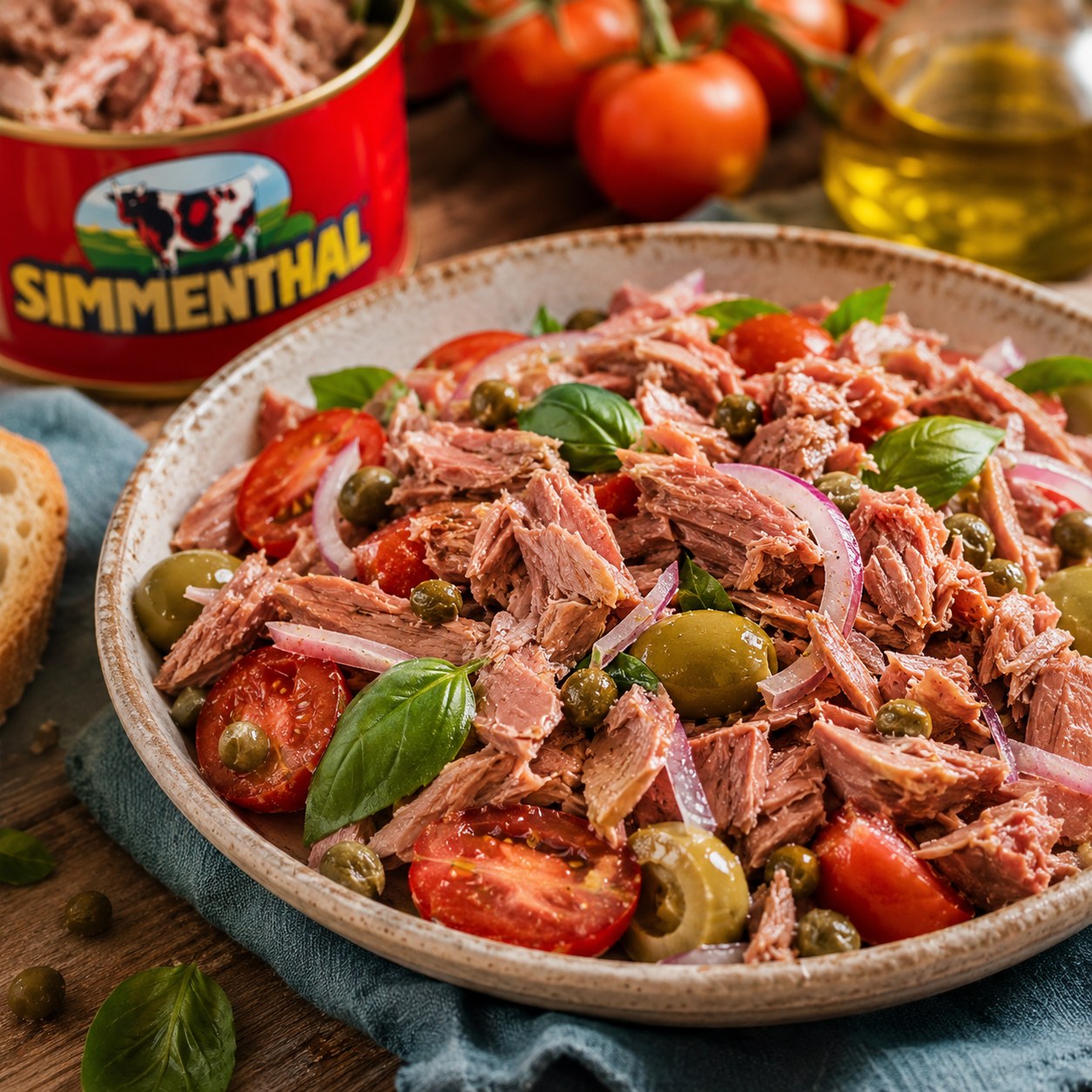
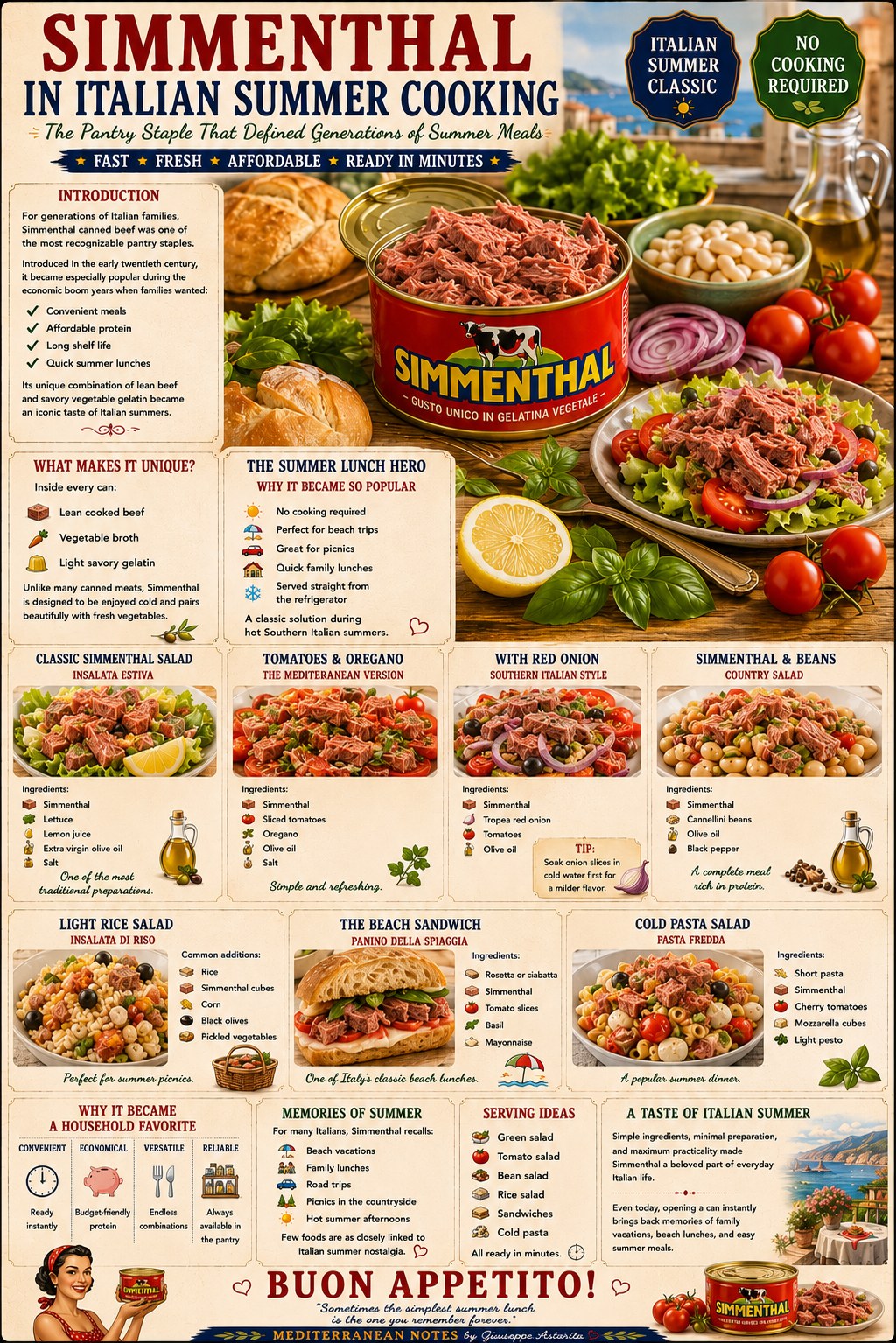
My father could not eat tuna. I never learned exactly why — an intolerance, a preference he had developed early and kept, something his stomach had decided years before I came along. Whatever the reason, while the rest of us had the tuna in the cabinet, he had something else: cans of Simmenthal. Lean cooked beef in vegetable gelatin, in the distinctive red tin. They sat on the same shelf, next to each other, serving the same purpose: quick summer meals, no stove, something ready when it was too hot to cook.
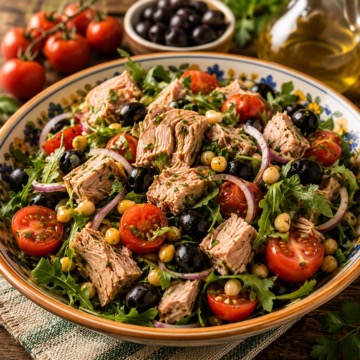
He used the Simmenthal the way I used the tuna. In salads, with tomatoes and oregano. Dressed with olive oil and lemon juice, the same way you would dress anything in a Neapolitan kitchen. Sometimes with red onion — cipolla di Tropea, sliced thin and soaked in cold water first to take the edge off. Sometimes with cannellini beans, the same combination that works with tuna, the fat protein-rich legumes absorbing whatever you dress them with. The gelatin in the tin, which dissolved in the fridge and reformed around the meat, he did not mind. He liked the texture, the slight savory quality it gave to cold preparations.
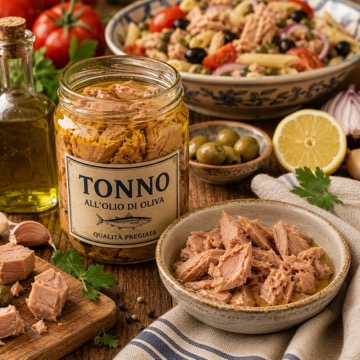
He tried to convert me. More than a few times we ate it together, and I had to admit it was not bad — the beef was lean and mild, and dressed properly it was a reasonable summer lunch. But I always went back to the tuna. My father accepted this with the patience he applied to most of my food preferences. He kept eating his Simmenthal; I kept eating my tonno in scatola. We had the same lunch at the same table and ate different things. This felt entirely normal.
Simmenthal was introduced to Italy in the early twentieth century and became especially popular during the postwar economic boom — exactly the years when Italian families were discovering the convenience of preserved foods and looking for affordable, reliable proteins for summer. It had a long shelf life, required nothing beyond a can opener, and was mild enough to go with almost anything. For a generation that remembered real scarcity, something that kept indefinitely in the pantry and was ready in two minutes carried genuine value. It was not a luxury — it was a practical solution that became, over decades, a nostalgic one.
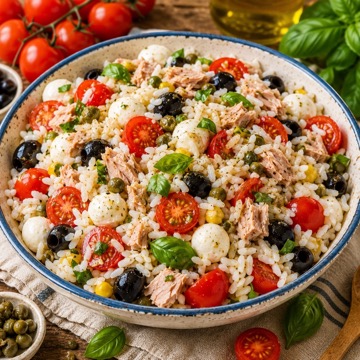
The classic preparations are simple because simplicity is the point. A summer salad of Simmenthal with lettuce, olive oil, and lemon — nothing else. With sliced ripe tomatoes and dried oregano, the combination that works with almost every mild protein. In a cold rice salad with corn, olives, and pickled vegetables. In a sandwich — a rosetta or a ciabatta, Simmenthal with tomato and basil, mayonnaise if you like it. These are not recipes so much as instructions for assembling something cold from what is available, which is what Italian summer cooking has always been.