Sartù di Riso
The Neapolitan rice timballo — the Sunday showpiece
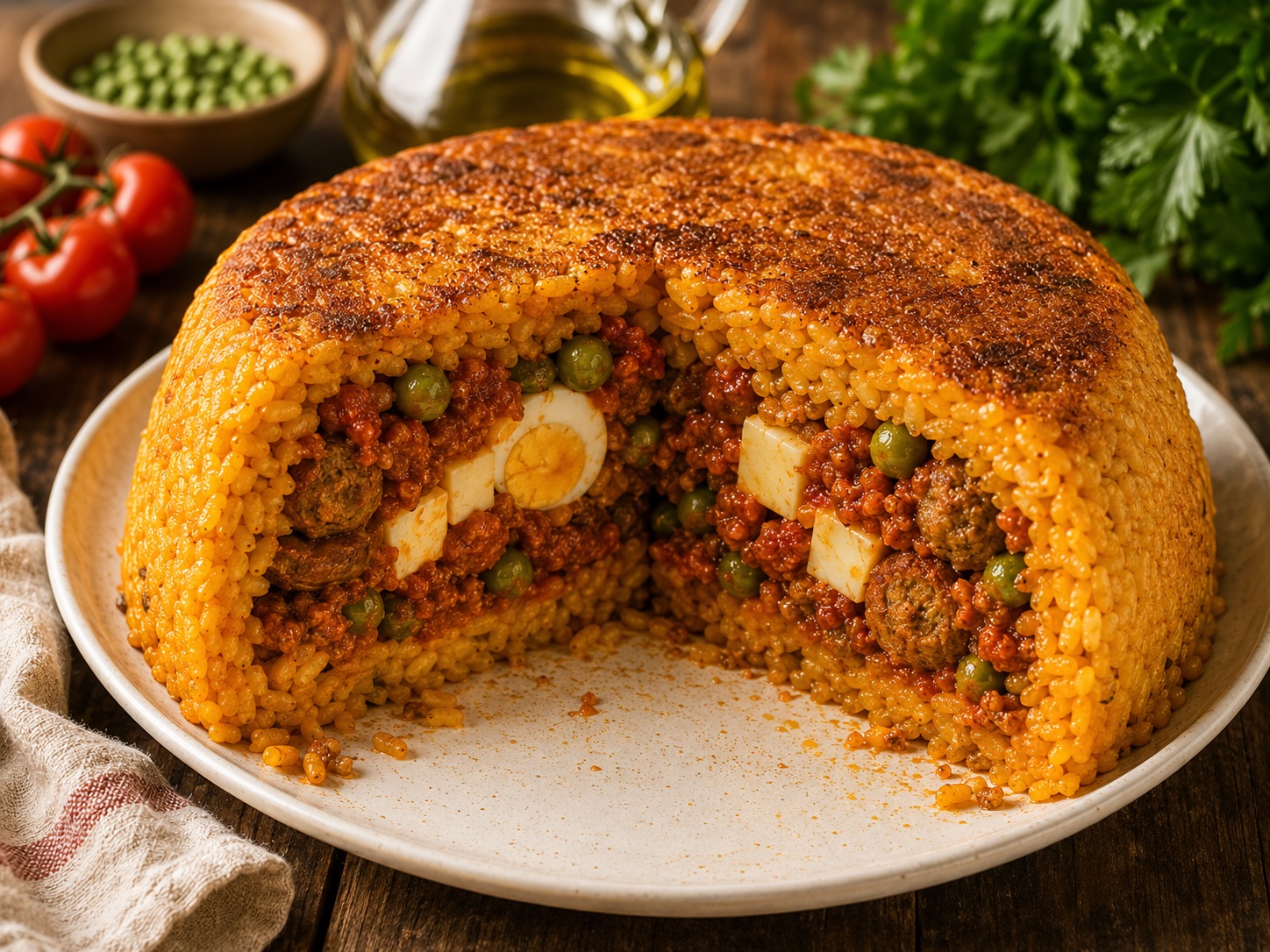
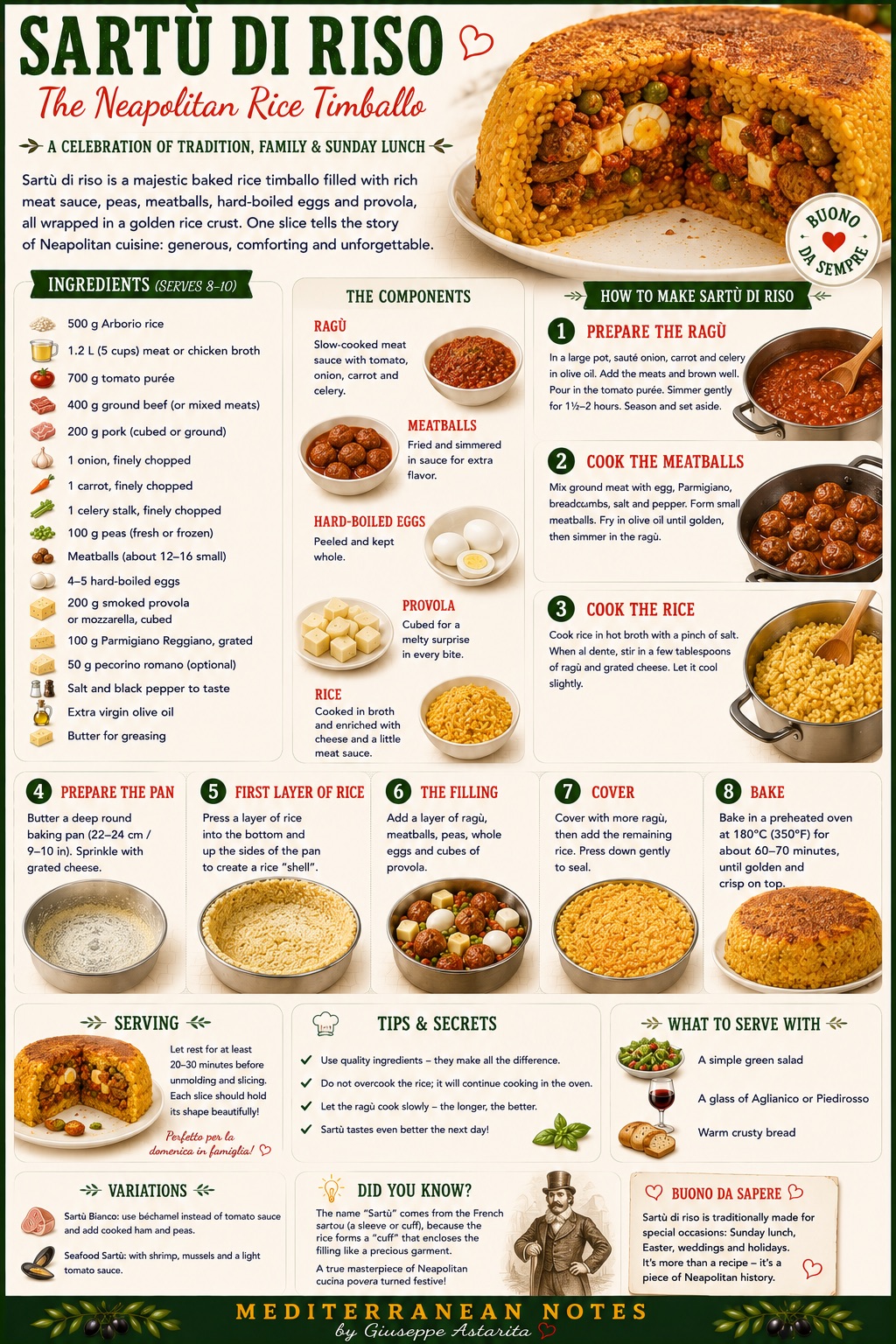
The sartù di riso is the most theatrical dish in the Neapolitan repertoire — a dome of golden rice, baked until crisp on the outside, that reveals when sliced a filling of ragù, small fried meatballs, peas, whole hard-boiled eggs, and cubes of smoked provola. It is the dish made for Sunday lunch when the occasion is important enough to justify the effort, which is significant: the ragù must be cooked first, the meatballs fried separately, the rice cooked in broth and enriched with cheese, the pan buttered and lined, the layers assembled in the correct order. From start to finish it is a production. The result justifies it.
The name sartù comes from the French surtout — above all, the centerpiece — because the dish was meant to dominate the table. It was introduced to Naples by French monsù cooks (the Neapolitan corruption of monsieur) who served the Bourbon court in the eighteenth century, and it was adapted by Neapolitan home cooks over the following generations into something that remained elaborate but became entirely their own. The ragù at its center is the same long-cooked tomato and meat sauce that appears on Sunday pasta. The meatballs are the same small fried ones that go into the lasagna napoletana. The sartù is, in some sense, the Sunday table compressed into a single dish and presented as a monument.
When the cooked rice enriched with ragù and cheese is pressed against the buttered, breadcrumb-lined walls of the pan and baked at 180°C for 60–70 minutes, two processes produce the golden crust. First, the surface moisture evaporates and the outer layer of rice dries progressively. Second, the sugars on the rice surface — glucose from starch breakdown during cooking — participate in Maillard reactions with the amino acids present, producing the characteristic golden color and the slightly crisp, caramelized flavor of the crust. The butter and breadcrumbs on the pan surface accelerate this process by providing fat to conduct heat evenly and sugars from the breadcrumbs to join the Maillard reaction. The interior, insulated from direct heat by the rice crust, stays moist and the filling remains soft. The 20-minute rest allows the outer crust to firm through cooling before the structural pressure of unmolding is applied.
The recipe — an overview
Serves 8–10. This is a multi-component dish best made over two days: ragù and meatballs on day one, assembly and baking on day two. The ragù recipe is at ragù napoletano.
Buon appetito — e buona domenica.