Pinoli di Campania
Little treasures beneath the pines — a childhood memory and a culinary tradition
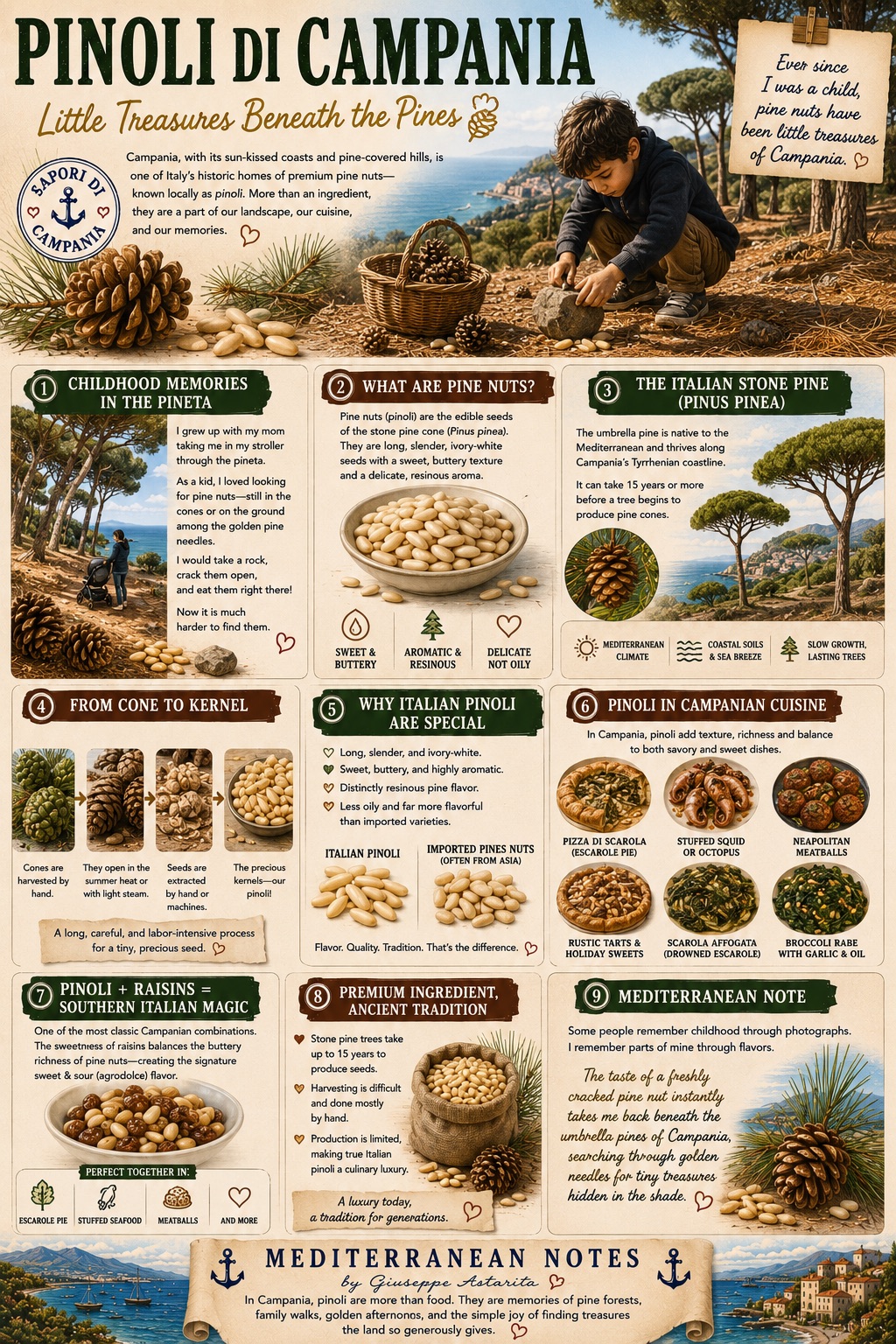
Some people remember childhood through photographs. I remember parts of mine through flavors. The taste of a freshly cracked pine nut instantly takes me back beneath the umbrella pines of Campania, searching through golden needles for tiny treasures hidden in the shade. My mother pushing the stroller through the pineta. A rock, a cone, a pine nut. Sweet, buttery, resinous. A tiny taste of the Mediterranean itself.
I grew up with my mother taking me in the stroller through the pineta — the coastal pine forests that line parts of the Campanian shore and the inland parks. One of those walks was in the Pineta Vecchia of the Royal Palace park in Caserta, just to the right of the main entrance: towering maritime pines planted in the eighteenth century, thirty meters tall, with the distinctive umbrella crowns of the Italian stone pine arching overhead and a carpet of dry golden needles below that muffled footsteps and smelled of resin and sun. The air in there was cooler than outside. The light came through the canopy in long angled shafts. It was a specific and beautiful place.
As I got older and was no longer in the stroller, those walks became a different kind of adventure. I loved searching the ground beneath the trees for pine cones, and in the cones or scattered among the needles, occasionally, for pine nuts still in their small shells. When I found them I would pick up a rock and crack the shell open carefully — too hard and the nut inside broke; the right force was something you learned by feel — and eat the pine nut on the spot. Sweet, slightly buttery, with a resinous note that was the exact flavor of the forest around you. Not the pine nut from a bag at a supermarket. Something else, something directly from the tree and the place.
Now it is much harder to find them this way. The old pine forests have changed, harvesting practices are different, and Italian pine nuts — pinoli — have become expensive and difficult to source in their genuine form. What you find in most supermarkets are imported pine nuts from Asia, larger and less flavorful, without the sweet buttery aromatic character that comes from the Italian stone pine grown in Mediterranean conditions. When you find the real Italian pinoli — from Campania or from the Tyrrhenian coast more broadly — the difference is immediately and completely evident. The flavor is richer, more complex, less oily, more fragrant. The memory is immediate.
The Italian stone pine and Campania's pinoli
The Italian stone pine — Pinus pinea — is one of the most recognizable trees of the Mediterranean landscape: the umbrella-shaped silhouette, the high branching crown, the long straight trunk. It thrives along the Tyrrhenian coastline, where the warm dry Mediterranean climate, coastal soils, and sea breeze create the conditions for slow, steady growth. The umbrella pine is not a fast tree. It can take fifteen years or more before a stone pine begins to produce cones in significant quantity. The cones themselves mature over three years. The production process — harvesting the heavy cones by hand, allowing them to open in the summer heat or with gentle steam, extracting the kernels mechanically or by hand — is labor-intensive at every stage. This is why authentic Italian pinoli are expensive and treated as a culinary luxury, even in the regions where they grow.
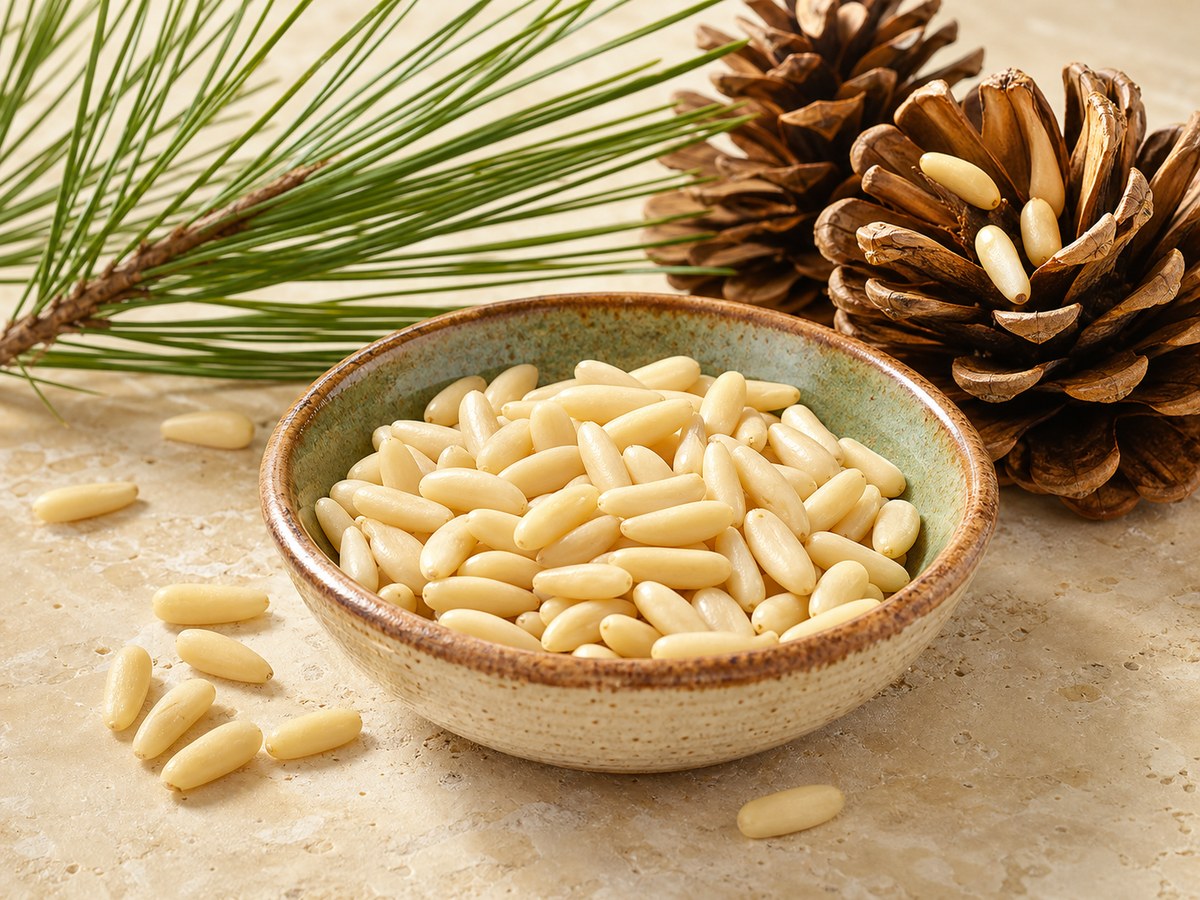
Authentic Campanian pinoli are long, slender, and ivory-white — distinctly different in shape from the shorter, fatter Asian pine nuts that dominate the supermarket supply. Their flavor is sweet and buttery with a highly aromatic, slightly resinous character that is the taste of the pine forest concentrated in a tiny seed. They are less oily than imported varieties and significantly more flavorful. If you are using them in cooking, the quantity required is smaller and the result is more pronounced. If you are eating them fresh, as I did as a child with a rock in the pineta, there is simply no comparison.
The aromatic character of Italian stone pine nuts comes primarily from their content of terpene compounds — specifically alpha-pinene, beta-pinene, and limonene — which are the same volatile aromatic compounds that give pine resin and pine forests their characteristic smell. These terpenes are present in the seed's fat matrix and are released when the pine nut is chewed or heated, producing the distinctive resinous note that distinguishes Italian pinoli from Asian varieties. Italian stone pine nuts contain approximately 48-51% fat, primarily oleic acid (monounsaturated) and linoleic acid (polyunsaturated), with a higher proportion of protein (14-16%) than Asian pine nuts. The fat content is lower than in Asian varieties, which is why Italian pinoli feel less oily on the palate despite being denser in flavor. The combination of lower oil content and higher terpene concentration produces the characteristic clean, aromatic, buttery flavor that cannot be replicated by a pine nut grown under different conditions.
Pinoli in the Campanian kitchen
In Campania the pine nut is almost always paired with raisins — the pinoli e uva passa combination that appears throughout the savory and sweet preparations of the southern Italian kitchen. The sweetness of the raisins balances the buttery richness of the pine nuts, and together they produce the agrodolce note that is the signature flavor profile of so many Campanian dishes. This is not the pine nut of the Genoese pesto, used in quantity as an emulsifying fat. It is the pine nut as accent and contrast, used in small quantities to add texture, richness, and a sweet-resinous note.
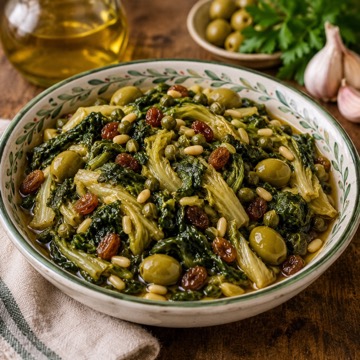
- Scarola all'agro — pine nuts and raisins braised with escarole, olives, capers and vinegar. The classic Neapolitan agrodolce combination.
- Pizza di scarole — the escarole filling contains pine nuts and raisins alongside the olives and anchovies.
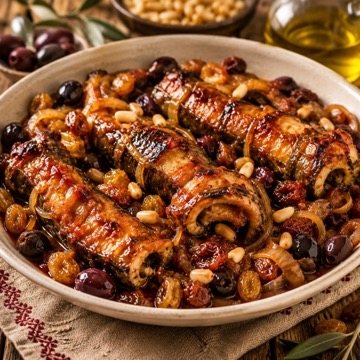
- Capitone arrostito — pine nuts in the agrodolce sauce with raisins, olives, and tomato. The Christmas Eve eel.
- Totani ripieni — some families add pine nuts and raisins to the stuffed squid filling.
- Polpette napoletane — Neapolitan meatballs with pine nuts and raisins in the mixture, the sweet-savory contrast in every bite.
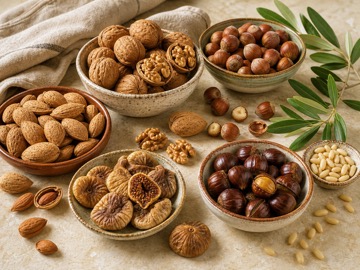
- Trofie al pesto di Napoli — the southern pesto uses almonds or walnuts rather than pine nuts, but pine nuts appear in variations.
- Holiday sweets — rustic pine nut tarts, pastries, and artisanal cookies of the Campanian pastry tradition.
The pine nut with raisins in a savory dish is one of the flavor combinations that most immediately says southern Italy to anyone who knows the cuisine. It is ancient — the combination of sweet and salty, of nut and fruit, in savory preparations has its roots in Arabic and Norman influences that entered southern Italian cooking in the medieval period and became so thoroughly integrated that it is now simply part of the tradition, unquestioned and unattributed. When I taste the scarola all'agro with its pine nuts and raisins, or the agrodolce sauce of the capitone, I taste something that has been in this kitchen for seven or eight centuries and that still makes complete sense.
Dalle pigne alle pentole —
i pinoli di Campania, piccoli tesori che portano con sé la memoria del bosco.