Penne all'Arrabbiata
Rich & Creamy — The Quick Comfort Meal
Almost synonymous with "let's make something quick." When there is nothing elaborate planned and something satisfying is needed in twenty minutes, the answer is penne all'arrabbiata. Spicy, bold, finished with pecorino that makes the sauce creamy and velvety. I didn't like the spice when I was a child. Now it's never spicy enough. Comfort food, 100%.
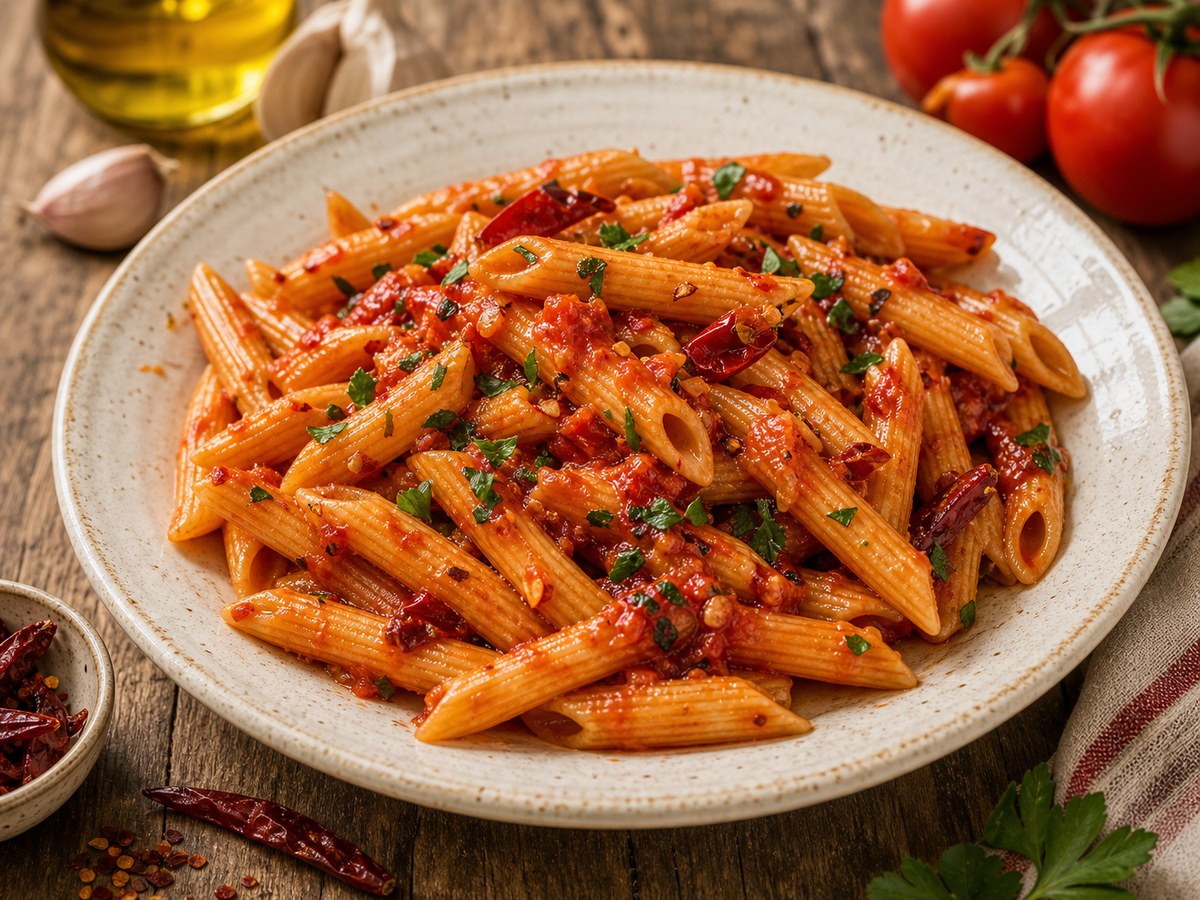
There is a specific category of Italian dishes that functions as a decision rather than a recipe — a phrase you say rather than a plan you make. Facciamo le penne all'arrabbiata — let's make penne all'arrabbiata — is one of them. It means: it is late, or we are tired, or we did not plan ahead, or we simply want something that works without effort. It is not a fallback or a consolation — it is a correct answer to the question of what to make for dinner on any given Tuesday. The dish is genuinely good, genuinely satisfying, and genuinely quick. Twenty minutes from cold pan to table. Fewer than ten ingredients. Nothing that requires planning or a special trip to the market.
The word arrabbiata means angry — the sauce named for the heat of the chili, which in the original Roman version was meant to be assertive. In Campania we do not have a long tradition of chili heat the way Calabria does, but the arrabbiata was always in the quick-meal rotation, and the heat level was always negotiated by household. As a child I was on the side of negotiating it down — a pinch of peperoncino, just enough to notice, not enough to feel. Now the negotiation goes the other direction. The chili goes in generously, the heat stays high, and the pecorino at the end is there to balance it rather than to soften it. The balance between the heat of the chili and the salt of the pecorino is the whole point of the dish.
The recipe — serves 4, ready in 20 minutes
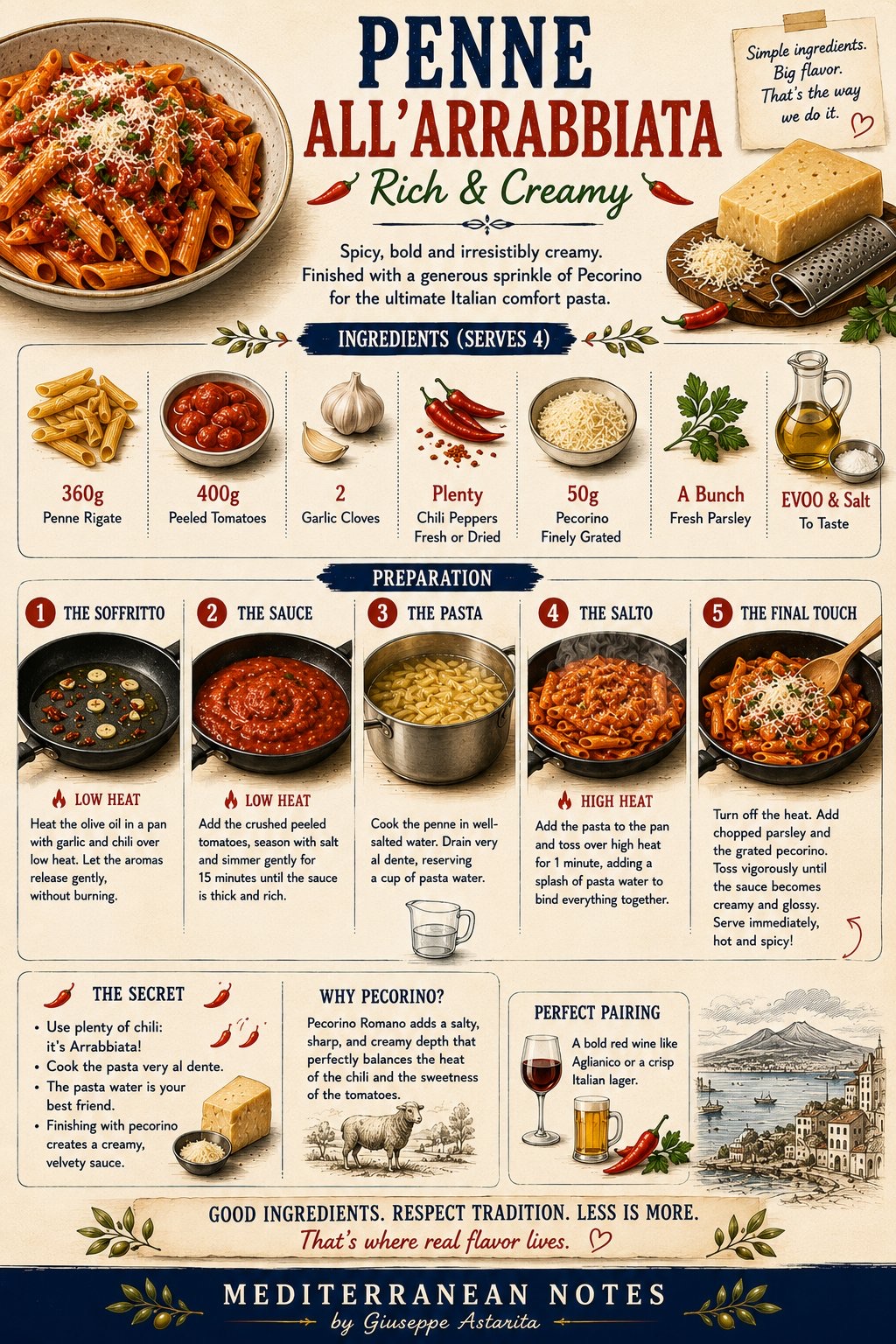
The creaminess produced by adding pecorino off the heat is the same mechanism as any cheese-based sauce emulsification: the fat and protein in the cheese, when added to the hot starchy pasta water coating the pasta, form a temporary emulsion that coats the pasta surface and gives the sauce its unified, glossy texture. Pecorino Romano specifically works well here because its higher salt content and sharper flavor profile — from sheep's milk and a more aggressive aging process than Parmigiano — cut through and balance the acidity of the tomato and the heat of the chili without sweetening or rounding them the way Parmigiano would.
The heat sensation from chili — whether fresh or dried — comes from capsaicin binding to TRPV1 receptors on the tongue and palate, triggering the same neural pathway as actual heat. Interestingly, tolerance to capsaicin is genuinely acquired: regular consumption of spicy food desensitizes the TRPV1 receptors over time, which is why the threshold shifts — why a child who found a small amount of peperoncino overwhelming grows into an adult for whom that same amount registers as background flavor rather than heat. The salt in the pecorino does not chemically neutralize the capsaicin but it does shift the perception: the saltiness occupies attention alongside the heat, changing the balance of what is noticed. This is the flavor principle behind the pairing — not to suppress the chili but to give the palate something to do alongside it.
The infographic closes with the line that appears on the keep it simple post: Good ingredients. Respect tradition. Less is more. That's where real flavor lives. The arrabbiata earns that line more than almost any other dish in the collection — seven ingredients, twenty minutes, and a result that is specifically and entirely itself. No variations required. No additions that improve it. The chili, the garlic, the tomato, the pecorino. Anger and salt and heat and acid. That is the dish.
Still making it. Still adjusting the chili upward. Still finishing with pecorino. The daughters approach it with caution, which is the correct childhood response. In ten or fifteen years the chili will not be enough for them either.
Facciamo le penne all'arrabbiata —
sempre, quando non sai cosa fare.